A couple of summers ago, when “Blind Owl” Wilson overdosed; well, it looked like curtains for Canned Heat. The band added Harvey Mandel as lead guitarist and dropped a live album onto the market. After that LP whisked into oblivion, so did Canned Heat.
But wait, just released is Historical Figures and Ancient Heads complete with new member Joel Scott Hill at vocals and guitars, Harvey Mandel, who since left the band, is back for guitar work, and Little Richard himself.
What’s a critic to do? The band has retired the “boogie” theme for a more ballsy rock ‘n blues format. Gone are Bob “The Bear” Hite’s embarrassing growls. Gone are the inane lyrics. In their place stand a new band gleaming and ready to be accepted.
Side One is the stomping side – sizzling with good new rock ‘n roll. The side is, I might add, completely swiped by Little Richard on “Rockin’ with the King” where the Georgia Peach plays honky-tonk piano and shares the arrogant lyrics with Hite. I guess that’s the way it should be, but “Long Way From L.A.” gives it a good run-for-the-money which epitomizes all the “gotta-get-my-ass-back-home” theme songs.
Well, if you’re gonna change the tune of a band, you might as well go all out. The group has added a Mexican rhythm section with Adolfo de la Parra and Antonio del la Barreda on drums and bass respectively. The two jam away, weaving in and out between all the verses with their tasty subdued Latin-flavored style.
Side Two is the setting for the extended jam tunes “That’s All Right” and “Utah,” the former being Harvey Mandel’s homecoming cut. These two tracks seem to best describe the new and refreshed state of the band. They have not lost their snotty sense of raw humor, or their snotty sense of raw instrumentation. For once, I feel the group has tried their utmost to produce a great album… and succeeded.
by Cameron Crowe – Courtesy of the Door (aka San Diego Door) March 30, 1972 – April 13, 1972
Tracks
1. Sneakin' Around (Jessie Mae Robinson) - 4:53
2. Hill's Stomp (Joel Scott Hill) - 3:03
3. Rockin' With The King (Skip Taylor, Richard Wayne Penniman) - 3:17
4. I Don't Care What You Tell Me (Charles Lloyd) - 3:58
5. Long Way From L.A. (Jud Baker) - 3:05
6. Cherokee Dance (Robert Landers) - 4:25
7. That's All Right (Jimmy Rogers) - 5:30
8. Utah (Canned Heat) - 8:25
9. Long Way From L.A. (Single Version) (Jud Baker) - 2:53
Canned Heat
*Bob Hite - Vocals
*Henry Vestine - Lead Guitar
*Joel Scott Hill - Rhythm, Lead Guitar, Vocals
*Adolfo De La Parra - Drums, Piano
*Antonio De La Barreda - Bass Additional Personnel
*Little Richard - Piano, Vocals
*Clifford Solomon - Saxophone
*Charles Lloyd - Flute
*Harvey Mandel - Guitar
*Ernest Lane - Piano
*Kevin Burton - Organ
*Ray Bushbaum - Piano
The Unicorn’s first album, Uphill All the Way, sounds like a band simply ecstatic at the possibilities of this new brand of folk-rock; they cover all the greats of the genre: Neil Young, Jimmy Webb, John Stewart, James Taylor, Joe Cocker, and Gerry Rafferty. But the originals by Ken Baker show that he was just as good at evoking the sun drenched canyons of the beaches of Southern California as his influences; which is all the more impressive considering he was writing and singing from the famously overcast and rainy London.
Still Baker’s songwriting wasn’t yet up to snuff, the best song here is their beautiful interpretation of Webb’s P.F. Sloan, a tribute to the American songwriter. The amazing harmonies on this track reveal Unicorn was more than just a CSN rip-off like so many bands of this breed; these guys are the real deal.
by Stephen Belden
Tracks
1. P.F. Sloan (Jimmy Webb) - 4:30
2. 115 Bar Joy (Ken Baker) - 3:51
3. I've Loved Her So Long (Neil Young) - 2:42
4. Don't Ever Give Up Trying (Ken Baker) - 5:08
5. Country Road (James Taylor) - 4:16
6. Something To Say (Joe Cocker) - 4:43
7. Ain't Got A Lot Of Future (Ken Baker) - 6:49
8. Never Going Back (John Stewart) - 3:21
9. You, You, Hate Me (Ken Baker) - 5:38
10.Please Sing A Song For Us (Gerry Rafferty) - 3:13
11.Going Back Home (Ken Baker) - 3:36
12.Cosmic Kid (Ken Baker) - 2:57
13.All We Really Want To Do (Bonnie Bramlett, Delaney Bramlett) - 3:17
14.P.F. Sloan (2006 Remix) (Jimmy Webb) - 4:40
Bonus Tracks 11-14
Unicorn
*Peter Perrier - Drums, Congas, Percussion, Vocals
*Pat Martin - Bass Guitar, Vocals
*Ken Baker - Electric Guitar, Acoustic 6, 12 String Guitar, Organ, Piano, Harmonium, Electric Piano, Vocals
*Trevor Mee - 6, 12 String Electric Acoustic Guitars, Flute, Vocals With
*Kevin Smith - Guitar, Mandolin
*Hugh Murphy - Tambourine
Brian Auger and his band outdo themselves on this extraordinary album, which boasts playing that is both passionate and of virtuoso caliber, and encompasses just the right repertory. From the opening of the soaring rendition of "I Wanna Take You Higher" through the jazzy interpretation of Gabriel Faure's Pavane, the Albinoni-based Adagio per Archi e Organo, the impassioned rendition of Traffic's "No Time to Live" (sung by lead guitarist Gary Boyle), and the smooth interpretation of Herbie Hancock's "Maiden Voyage" (featuring some elegant lead playing by Boyle before Auger's organ moves into the foreground), Befour delivers superb musicianship, crossing the lines between jazz and rock with touches of soul and even some lingering traces of psychedelia.
The one fully experimental track, "Listen Here," which was cut in a single take of nine-minutes-and-22-seconds, is a hard, pounding piece driven by Boyle's jagged lead guitar and showing off the band augmented by three additional drummers (Mickey Waller, Barry Reeves, and Colin Allen) and an extra bassist (Roger Sutton) -- it reminds one somewhat of the kinds of experiments that the Nice sometimes attempted a lot less successfully. "Just You and Me" is a worthy finale to the original album, a hard-rocking showcase for each of the players.
by Bruce Eder
Tracks
1. I Want To Take You Higher (Sylvester Stewart) - 5:08
2. Pavane (Gabriel Fauré) - 3:49
3. No Time To Live (Jim Capaldi, Steve Winwood) - 5:27
4. Maiden Voyage (Herbie Hancock) - 5:03
5. Listen Here (Eddie Harris) - 9:26
6. Adagio Per Archi E Organo (Brian Auger) - 3:30
7. Just You Just Me (Brian Auger) - 6:31
8. Rain Forest Talking (Live) (Brian Auger) - 4:07
9. Pavane (Demo Version) (Gabriel Fauré) - 3:44
10.Fire In The Mind (Previously Unreleased) (Brian Auger) - 4:47
11.Pavene (Live) (Gabriel Fauré) - 4:49
12.I Got Some (Live) (Brian Auger) - 5:02
Brian Auger And The Trinity
*Brian Auger - Keyboards, Electric Piano, Organ, Vocals
*Gary Boyle - Guitar, Vocals, Harmony Vocals
*Dave Ambrose - Bass, Harmony Vocals
*Clive Thacker - Drums, Harmony Vocals
*Colin Allen - Bass, Drum Rhythms, Bells,
*Roger Sutton - Bottom Bass Line
*Barry Reeves - Snare Drum, Cowbell
*Mickey Waller - Cymbals
The South African heavy prog act the Third Eye recorded three albums over the course of as many weekends in 1969. This second release is slightly more aggressive than the group's debut, and the horn section that sometimes caused Awakening... to become a little too ersatz-soulful is absent.
The opening title track, driven by Dawn Selby's churning organ, almost has the impact of some of the Doors' heaviest, least jazzy material. Vocalist Maurice Saul is still a little too clean, in a weirdly middle-of-the-road way; he's neither a hoarse blues shouter nor a high-pitched frontman like Yes' Jon Anderson, and he winds up sounding like the frontman for a show band specializing in covers, not a unique and interesting band making compelling, original music. Which is too bad, because at their best (which is anytime guitarist Ronnie Selby gets to really cut loose; on this album, it's "Listen to the Bells"), they muster up a roar that Deep Purple would pack concert halls with only a couple of years later.
This album's other high point is its final track, an eight-minute suite that includes poetry and a grinding, amped-up version of the Crazy World of Arthur Brown's "Fire" -- the only cover on this album, by the way, as contrasted with the trio of adaptations on the debut. Brother roars to its conclusion, Saul shrieking with all the power he can muster as the band explodes around him.
by Phil Freeman
Tracks
1. Brother - 4:02
2. Once Upon A Time Part 1 - 3:46
3. Once Upon A Time Part 2 - 4:01
4. Listen To The Bells - 5:40
5. Sister - 4:04
6. Young Folk And Old Folk - 3:32
7. Fire A) Prelude B) Poem C) Fire (Arthur Brown, Vincent Crane) - 8:00
All songs by Maurice Saul and Third Eye except where indicated
The Third Eye
*Ronnie Selby - Lead Guitar
*Maurice Saul - Vocals, Lead Guitar
*Dawn Selby - Piano, Hammond Organ
*Robbie Pavid - Drums
*Mike Sauer - Six String Bass
The contents of this album are meant to be a combination of music, positivism and thoughtfulness aimed at both gut and the mind. Joyous Noise formed in the Spring of 1971. Their individual experiences are considerable in number and scope and their collective axperience a key to their ensemble ability.
Joyous Noise have been bringing audiences to their feet to dance on tables, chairs, floors and other available surfaces. This record may get you up on yours, moving, thinking and having a high old time. It will tell you what you need to know about Joyous Noise, and it may tell you something about yourself.
by Jim Bickhart (Original album sleeve notes)
Tracks
1. Joyous Noise (Part 1) (Lee Montgomery) - 2:25
2. Music Song (Lance Wakely) - 4:23
3. Lady Beside Me (Marc McClure) - 4:28
4. Funky Lady (Lee Montgomery) - 5:15
5. Question Of Direction (Ron Elliott, Gary Downey) - 4:26
6. Never Been To Spain (Hoyt Axton) - 4:35
7. Lost Man (Lance Wakely, Gabe Lapano) - 4:15
8. If People Could Just Get Together (Lance Wakely) - 4:00
9. Joyous Noise (Part 2) (Lee Montgomery) - 2:45
In late 1971 we moved into a house in Hollywood with our bass player Rick Carlos, and John Mauceri, drums. All we did was music and it was a magical time. A sound was evolving, and that sound inspired new songs: "Home Again","All I Need" , "Let Me Live The Life", "Under Five" to name a few.
This experience was different that the first album. Because we were working together as a band we knew exactly what these songs would sound like and we were excited to get started on a new album.
Because Ahmet was on the East coast again it was very hard to reach him at times and our manager asked us if we would be interested in moving to a newly formed West Coast Atlantic- owned label called Asylum. It was run by another legendary music mogul, David Geffen. As much as we absolutely loved Ahmet, it was the right move.
We needed a producer. We loved how the CSNY and Steve Stills solo records sounded and sought out Bill Halverson who engineered them all. He hadn't done much producing but when we recorded a demo for him at the Record Plant, he realized he simply needed to guide an already tightly rehearsed band. Man, could he make those acoustics sing. Bill was awesome. We cut the entire album's basic tracks in three days and then started working on the vocals and other overdubs. David Geffen brought the group America to one of our sessions and the next day and we got booted off our scheduled session so America could record with Bill. Man were we pissed!!
Tracks
1. Poor Man's Dream - 3:20
2. Oh, Can You Tell Me - 4:31
3. Between The Ages - 4:06
4. Home Again - 6:31
5. By Today 4:09
6. Happy Town - 3:35
7. All I Need - 3:51
8. Under Five - 5:08
9. Let Me Live The Life - 3:35
All Songs written by John Batdorf
Musicians
*John Batdorf - Acoustic, Electric Guitars, Lead, Vocals, Piano
*Mark Rodney - Acoustic Guitars, Vocals
*John Mauceri - Drums
*Rick Carlos - Bass
*Bruce "The Creeper" - Harmonica
*String Arrangements - Jimmie Haskell
A great title for this one – given that the album's got a full, spacious sound – one that definitely lives up to the "suite feeling" you'd expect! The style here is even more sophisticated than on the group's debut – still a mix of jazzy horns and rockish rhythms, but fused together even more perfectly – but with a leanness that's a good contrast to some of the more overblown groups of the same generation!
There's just the right balance here to allow some standout solos – on horns, natch, but also some sweet Hammond too – and a young Howard Shore is also in the group on alto sax, and handled some of the arrangments for the record. Titles inlcude a great version of "A Day In The Life" – plus originals "Taking A Walk", "Could You Be Concerned", "Chest Fever", "Feel So Good", "Places On Faces Four Blue Carpet Traces", and "What Sense"
Dusty-Groove.
Tracks
1. Chest Fever (Robbie Robertson) - 5:02
2. Feel So Good (Grant Fullerton, Paul Hoffert, Skip Prokop) - 2:59
3. Places On Faces Four Blue Carpet Traces (Grant Fullerton, Paul Hoffert, Ralph Cole, Skip Prokop) - 10:51
4. Could You Be Concerned (Paul Hoffert, Skip Prokop) - 4:16
5. Presents Of Presence (Paul Hoffert, Skip Prokop) - 3:52
6. Taking A Walk (Paul Hoffert, Skip Prokop) - 4:37
7. Eight Loaves Of Bread (Paul Hoffert, Skip Prokop) - 3:31
8. What Sense (Paul Hoffert, Skip Prokop) - 3:31
9. A Day In The Life (John Lennon, Paul McCartney) - 6:19
In the annals of freakdom there are fewer more celebrated ‘musicians’ as Hapshash and the Coloured Coat – but not at the time of release as original copies of these vinyl albums have sold at auction for more than £70. These reissues are a fine indication of just how far ‘out there’ the psychedelic funsters of the mid-sixties could get and the albums take a few listens before the light-bulbs go on and the music begins to make real sense.
The origins of the band lie in the talents of Michael English and his partner Nigel Waymouth. At the beginning of the psychedelic revolution in London they were producing posters for the likes of Cream, The Jimi Hendrix Experience, Pink Floyd and even The Crazy World Of Arthur Brown and were encouraged into the studio by their manager Guy Stevens. Not actually beong of a musical bent they hooked up with a band called Art (featuring a young Luther Grosvenor and who later emerged as Spooky Tooth) and created the first of these ‘freakouts’.
Actually, the first album has a mesmeric quality, with pounding and shamanic drumming and chants with the occasional electronic additions and screams. The music is highly ‘druggy’, resembling an altered state of consciousness and was actually credited creating a trance-like state in listeners of the time – with the same assistance it would probably be highly effective today! There is a certain joyousness to the music when the band play – very much of its time but no less interesting for that.
After English left the project Waymouth teamed up with Michael Mayhew and attracted a very young Mike Batt to the cause. They hooked up with ‘proper’ musicians to make the second album, ‘Western Flyer’ which featured no less than Tony (TS) McPhee on guitars. The album is comprised of more conventional songs, although still not exactly ‘pop’ material, and while the singing is still less than perfect the album has real coherence and presence. There is a similar feeling to albums by Country Joe or Wild Man Fischer and strong touches of the ‘Krautrock’ scene in their mixing of musical and electronic elements.
All told a fascinating insight to one of the more extreme bands of the sixties and soime damn fine moments along the way.
by Andy Snipper
Tracks
1. Telephone Budreaux - 1:00
2. Colinda (Traditional) - 2:57
3. Chicken Run - 5:53
4. Big Bo Peep - 3:31
5. Blue Narcissus - 4:42
6. Car-Car - 2:10
7. Milk Shake Knock - 2:15
8. Wall - 4:47
9. You For Ophelia - 5:02
10.Fare You Well (Traditional) - 8:51
All songs by Michael Mayhew, Nigel Waymouth, Mike Batt except where stated
Personnel
*Nigel Waymouth - Vocals
*Michael Mayhew - Guitars
*Mike Batt - Piano, Accordion
*Michael Ramsden - Lead Vocals
*Andy Renton - Drums
*Tony T.S. Mcphee - Lead Guitar
*Eddie Tripp - Double Bass
*Freddie Ballerini - Violin
*The Rock'n Roll Women - Vocals
The album starts off well on an upbeat number: Art Reynolds's "Glory Glory." With a rolling piano, 12-string guitar, female backing, and a gospel beat, this song is just as appealing as the earlier Reynolds track "Jesus is Just Alright" on "Ballad of Easy Rider." Next, the band slows it down with the McGuinn-Parsons track "Pale Blue." Like McGuinn's "Untitled" compositions, this is a sentimental ballad. Unlike the "Untitled" tracks, however, this song is awash with strings.
Although many object to these as a pretentious addition, they don't intrude and actually enhance the song's beauty. Track 3 is McGuinn's Norman Vincent Peale inspired "I Trust." It starts off with a country-rock feel and then melds into country-gospel through more female backing and honky-tonk piano. With the catchy chorus and inspired feel good lyrics, this song is truly a pleasure to listen to. Unfortunately, the album and possibly the Byrds career, reach their nadir throughout the next three songs.
First comes the Battin-Fowley novelty "Tunnel of Love." The combination of piano, organ, horns, and carnival lyrics coming from a Byrds album is more than most fans with be able to take. This is, of course, until the listener moves on to the next track, the Battin-Fowley tune "Citizen Kane." Like "Tunnel" this is another novelty complete with 1930s style horns and inane lyrics. It's not a bad song necessarily, but as a Byrds track, it is over the top. Next follows the McGuinn-Levy "Gene Tryp" song "I Wanna Grow Up To Be A Politician." This composition also borders on the "novelty," but is much more listenable than the two Battin-Fowley tracks. Although "Politician" is a good song, following two out of character novelty songs, it's hard not to want to fast forward through this one too.
Although much maligned by critics and fans (oftentimes unfairly), the Battin-Fowley songwriting team occasionally scores and the seventh track "Absolute Happiness" delivers the goods. Inspired by Battin's Buddhist faith, this song has a nice mellow country-rock feel to it. After this, the band tackles bluegrass music on "Green Apple Quick Step," which is mainly a chance for Clarence White to show off his skills. Believe me, he does this well and demonstrates why he is such a highly rated guitarist. It also features his father Eric on harmonica and Byron Berline on fiddle.
Although an instrumental, it is an enduring, pleasant track to listen to. Next comes another song from Clarence White's roots: "My Destiny." This beautiful hymn features the vocals of Clarence White as he asks thoughtfully concerning the questions of life: "Is this my destiny?" The only problem with this track is that White's voice seems a little frail and he's difficult to understand. Next comes the beautiful and sentimental McGuinn-Levy "Kathleen's Song," which just might be McGuinn's best ever composition. The addition of warm strings has been controversial, but I personally think they make the song more wistful and enhance it. If you prefer the un-orchestrated version, it is on "Untitled/Unissued" and the Boxed Set. The original album closed with Jackson Browne's classic "Jamaica, Say You Will" that receives a loving treatment from his friend Clarence White. The rest of the Byrds chime in to provide eerie harmonies, proving they could still do it.
The bonus tracks are interesting too. First, there is an excellent cover of Bob Dylan's "Just Like A Woman," which at last puts a Dylan tune on Byrdmaniax. The next track is a stripped down version of "Pale Blue," which for those who dislike Melcher's additions, will be pleasing. The album ends with a lively Gene Clark composition "Think I'm Gonna Feel Better" featuring McGuinn's 12 string and another lead vocal by Clarence White. For Byrds fans this is an excellent inclusion; it doesn't matter that White's vocals are a bit strained.
"Byrdmaniax," since its original release, has been derided by many. Some of this has been justified, some of it not. For example, McGuinn's decision to include 2 Battin-Fowley novelty songs is difficult to understand. However, the worth of Melcher's additions is still debatable. Many fans like them, while many fans loathe them. However you feel about them, there are some genuinely good tracks on Byrdmaniax.
by Jonathan Bennett
Tracks
1. Glory, Glory (Arthur Reynolds) - 4:03
2. Pale Blue (Roger McGuinn, Gene Parsons) - 2:22
3. I Trust (Roger McGuinn) - 3:19
4. Tunnel Of Love (Skip Battin, Kim Fowley) - 4:59
5. Citizen Kane (Skip Battin, Kim Fowley) - 2:36
6. I Wanna Grow Up To Be A Politician (Roger McGuinn, Jacques Levy) - 2:03
7. Absolute Happiness (Skip Battin, Kim Fowley) - 2:38
8. Green Apple Quick Step (Gene Parsons, Clarence White) - 1:49
9. My Destiny (Helen Carter) - 3:38
10.Kathleen's Song (Roger McGuinn, Jacques Levy) - 2:40
11.Jamaica Say You Will (Jackson Browne) - 3:27
12.Glory, Glory (Single Version) (Arthur Reynolds) - 3:28
13.I Trust (Live) (Roger McGuinn) - 4:05
14.You Ain't Going Nowehere (Bob Dylan) - 2:28
15.Nothing To It (Traditional Arr. Doc Watson) - 1:38
16.Think I'm Gonna Feel Better (Gene Clark) - 2:35
17.Just Like A Woman (Bob Dylan) - 3:55
18.Pale Blue (Alternative Version) (Roger McGuinn, Gene Parsons) - 2:32
19.Glory, Glory (Stereo 45 Mix) (Arthur Reynolds) - 3:28
The Byrds
*Roger McGuinn - Guitar, Vocals
*Clarence White - Guitar, Vocals
*Skip Battin - Electric Bass, Vocals
*Gene Parsons - Drums, Harmonica, Banjo, Vocals
Additional Personnel
*Larry Knechtel – Piano, Organ
*Terry Melcher - Piano
*Sneaky Pete Kleinow - Pedal Steel Guitar
*Byron Berline - Fiddle
*Eric White, Sr. - Harmonica
*Jimmi Seiter - Percussion
*Merry Clayton - Vocals
*Jackson Browne - Piano
A truly unique and wonderfully American band, the Lovin' Spoonful released nearly all of their creative legacy between 1965 and the end of 1966. The first album, Do You Believe in Magic, hit in 1965, with the second, Daydream, and the third, Hums of the Lovin' Spoonful, arriving in 1966. Also in 1966, the group delivered the soundtrack to Woody Allen's first film, What's Up, Tiger Lily? This set combines that soundtrack with Hums on a single disc, and truthfully, it works mostly because Hums, which contained such classic Spoonful numbers as "Lovin' You," "Rain on the Roof," "Coconut Grove," "Nashville Cats," and "Summer in the City," is such a fine album. Aside from the minor song "Pow" and a redo of "Fishin' Blues," the music on What's Up, Tiger Lily? is of the instrumental soundtrack variety. Things went downhill after 1966 for the Lovin' Spoonful. The two albums the band released in 1967,
by Steve Leggett
Tracks
1. Lenny Maxwell, Woody Allen - Introduction To Flick - 2:03
2. Pow (Theme From "What's Up, Tiger Lily?") (J. Butler, J. Sebastian, Skip Boone, Steve Boone, Z. Yanovsky) - 2:28
3. Gray Prison Blues (Joe Butler, John Sebastian, Steve Boone, Zal Yanovsky) - 2:15
4. Pow Revisited (Joe Butler, John Sebastian, Skip Boone, Steve Boone, Zal Yanovsky) - 2:30
5. Unconscious Minuet (Joe Butler, John Sebastian, Steve Boone, Zal Yanovsky) - 2:05
6. Fishin' Blues (Traditional) - 1:58
7. Respoken (John Sebastian) - 1:48
8. A Cool Million (Joe Butler, John Sebastian, Steve Boone, Zal Yanovsky) - 2:20
9. Speakin' Of Spoken (John Sebastian) - 2:40
10.Lookin' To Spy (Joe Butler, John Sebastian, Steve Boone, Zal Yanovsky) - 2:30
11.Phil's Love Theme (Joe Butler, John Sebastian, Steve Boone, Zal Yanovsky) - 2:15
12.End Title (Joe Butler, John Sebastian, Steve Boone, Zal Yanovsky) - 4:05
The Lovin' Spoonful
*Steve Boone - Bass, Piano
*Joe Butler - Drums
*John Sebastian - Autoharp, Guitar, Harmonica
*Zal Yanovsky - Guitar With
*Henry Diltz - Clarinet
*Larry Hankin - Jew's Harp
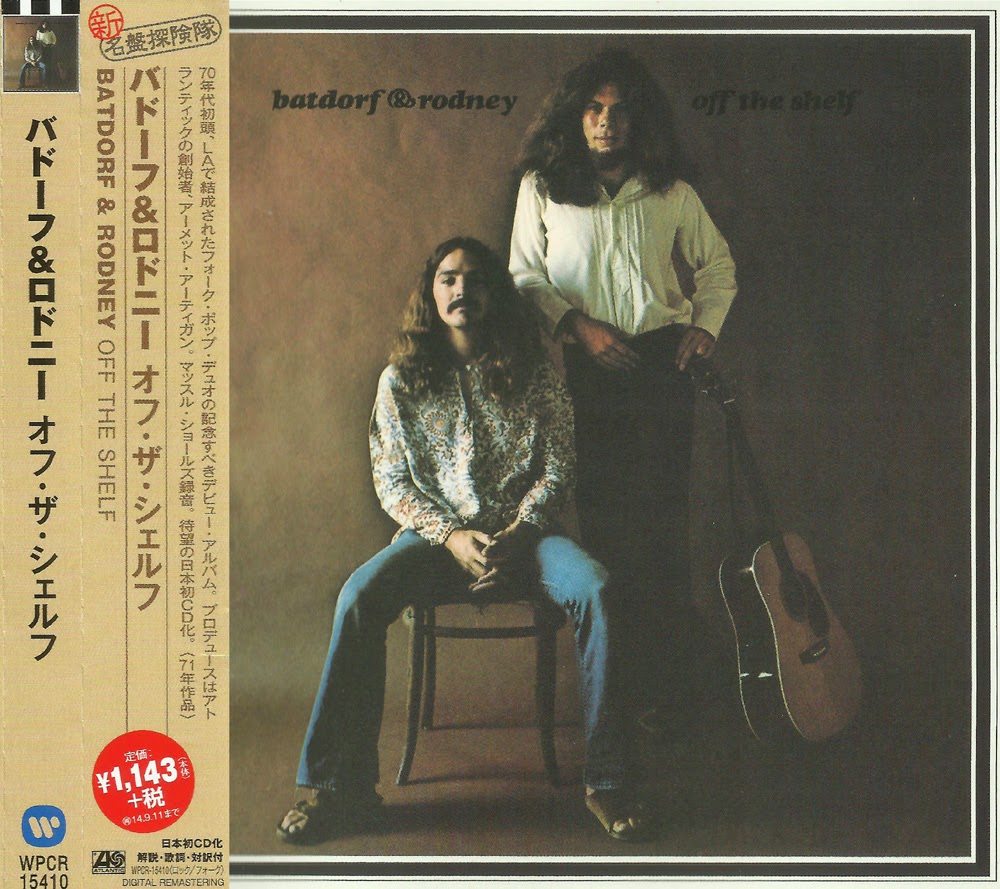
In the summer of 1970 at the ripe old age of 18, my girl friend and I packed our bags and left our apartment in Hollywood for Las Vegas. It was time for a change of scenery, and it didn't hurt that her parents had a home there. They were devout Jehovah's Witnesses and I am sure they were thrilled to have a hippie musician who'd been shacking up with their runaway daughter in LA move into their home. But the power of music can never be underestimated. Once they heard me sing they warmed up to me and I used to do shows for them and their friends. (For the record, no pamphlets were distributed during the performances).
I soon found employment at the University of Las Vegas in a coffee house. Although I'd played music all my life I did have a few other marketable skills that helped me get the gig: I worked in the kitchen, served drinks, cleaned up the place, even worked the cash register. But singing was more fun. As with most coffee houses of that era, each night featured various singers and songwriters. Before long I became the headliner. I did two or three sets a night depending on the crowds. Then, as a special reward for packing 'em in I had the priviledge of cleaning up when the show was over.
One night Mark Rodney's younger brother Jeff showed up and liked what he saw. He went home and told his brother that he HAD to go check out this guy at the coffee house. Apparently he told Mark my distinguising features were: "he sings really high like a girl and plays really cool original music." Mark showed up the next night and watched a set and was impressed. Although both of us had been from LA and actually went to the same High School, Mark had been living with his dad Red Rodney who owned a home in Vegas. Red was a famous Jazz trumpet player and I'm convinced he passed on that great musical feel to his son.
Mark introduced himself during a break and asked if he could sit in on the next set and play some guitar. That was the first time Batdorf and Rodney played. I loved the way the guy found such cool and tasty guitar parts that took the songs to a better place. Oh yeah, and it was fun.
We decided to rehearse and see what would happen. We practiced everyday either at Red's house, the park, or up at Mt. Charleston. We got really excited about this sound that was happening as we played, and we weren't alone. Soon we were packing them in at the coffee house. The manager there was so into the sound and the potential that he took us to a College entertainment show in Fresno to show off what UNLV had going on campus. We were a big hit and before long we had people wanting to join us, manage us, promote us, you name it. We were getting the offers.
We were feeling really good about what we had to offer and wanted to record it. On October 24, 1970, Mark and I were joined by our roadie Dan Bisker and a few others and we went up to Mt. Charleston armed with our guitars, a stereo cassette deck and two mics. We played a set of originals and really liked what we heard. Mark and I decided that we wanted to go back to LA and see if we could get a record deal.
We eventually booked some more sessions but this time in LA at Elektra Studios. Ahmet hired John Barbata on drums and Chris Etheridge on bass. Our engineer was Ross Myering. The sessions went great and everyone was pleased. Unfortunately because Ahmet was such a busy guy, it was hard to track him down and pin point a release date so the weeks passed and still nothing.
We hooked up with a manager, Harvey Kresky, who had managed Sonny and Cher among others and had a history with Ahmet. He got Atlantic to finally schedule a release date in late 1971 to the newly named duo Batdorf and Rodney, another good Ertegun idea. Off The Shelf Because the record sat on the shelf for so many months we appropriately named the record, " Off The Shelf". The album was finally out!!! We immediately got airplay everywhere. The playlists were not like today. AM radio actually played album cuts. A very famous DJ in LA at KRLA AM radio B. Mitchell Reid played many cuts and often. Mark and I went to the Beverly Hills Hotel on Thanksgiving to have dinner with Ahmet, David Geffen, Eve Babitz, Earl McGrath and a few others he invited. He had a boom box playing in the background and on came "Can You See Him". We all freaked and I told Ahmet, "Man we're going all the way, we're going platinum!!!" Ahmet said "Don't worry about that man, we made our mark," and he was right again.
That album didn't quite go platinum or gold or any other color but we toured and people loved us! On the road I was busy trying to write new songs for what would be our second album.
Tracks
1. Oh My Surprise - 2:45
2. Me And My Guitar - 3:28
3. Can You See Him - 6:04
4. Workin' Man, Blind Man - 3:49
5. You Are The One - 3:37
6. Don't You Hear Me Callin' - 4:40
7. Where Were You And I - 2:21
8. Never See His Face Again - 2:53
9. One Day - 2:47
10.Farm (John Batdorf, Mark Rodney) - 1:55
11.Let Me Go - 5:24
All songs by John Batdorf except track #10
The second and final collection of Wicked Lady tracks all came from 1972, following the replacement of original bassist Bob Jeffries with Del Morley. Nothing else about either the band or its recording approach changed otherwise, with what proved to be the group's remaining recorded legacy being more of the same style and approach on The Axeman Cometh. Still, there's a little more of a frenetic edge on songs like "I'm a Freak," with faster tempos as well as lines like "I don't know right from wrong/I think I'm gonna be a politician."
The band's one recorded cover shows up, a reasonable enough lumber through Jimi Hendrix's "Voodoo Chile" that has lead figure Martin Weaver throwing in a couple of queasy guitar moments all his own. Similarly, the hints of a little more stretching that can be heard at the end of The Axeman Cometh, with the stately enough near conclusion of "Tell the Truth," is more than welcome. "Ship of Ghosts," the final song on the collection, is also the band's longest at 22 minutes; while there are a couple of longueurs, its ambition is reasonably matched by the performance, from full adrenaline overdrive to near silence and back again, concluding on a gently lyrical note. "Passion" deserves a note as well for two reasons -- Morley's more notable basswork and Weaver's concluding line for the chorus: "Just tell me that you love me/And I won't throw your grandma on the fire."
by Ned Raggett
Tracks
1. I'm A Freak - 5:01
2. Tell The Truth - 5:08
3. Passion - 9:29
4. Voodoo Chile (Jimi Hendrix) - 4:41
5. Why Don't You Let Me Try - 5:00
6. Sin City - 7:04
7. Ship Of Ghosts - 22:00
All songs by Wicked Lady except where stated.
Wicked Lady
*Del "German Head" Morley - Bass
*Dick Smith - Drums
*Martin Weaver - Guitar, Vocals
Few Xian psych records got wackier or more harsh than this one. Tamalpais Exchange were an egalitarian sextet who emerged from the NYC area and somehow got signed to a big label, probably as a result of their work's obvious nod to the popular hippie musical trend of Christian themed Broadway shows like Hair, Godspell and Joseph & The Technicolor Dream Coat. The Tamalpais crew really hams it up on their only album, overloading the mics of these low budget takes with painfully wailing group vocals in performances that blast along with the power of an apocalyptic Mamas & The Papas, but way more punk.
Some songs slip into Anglo folk territory a la Buffy St. Marie or Joni Mitchell's early stuff, so the record has a truly schizo feeling as the group rarely hits any kind of middle ground between the quiet/loud extremes. The loud stuff here is the deal breaker though, so if you think your psych rock dream-come-true could be the sound of a church camp hootenanny screamin’ along to a pounding folk punk accompaniment then this one is a must-have.
by Mike Apichella
Tracks
1. Anthem - 2:20
2. If I Had The Answeres (Michael Knight, Mike Brandt) - 2:46
3. Here We Are - 3:06
4. Never Ever Land - 2:41
5. King - 2:35
6. Flying Somehow - 3:49
7. L.A. Incident - 2:35
8. World (Michael Knight, Mike Brandt) - 3:23
9. Balnesmoor Lane - 3:03
10.Pied Piper - 2:16
11.Maybe Tomorrow - 2:13
12.Understand It (Buckets Lowery, Mike Brandt) - 4:15
13.Why Don't You Believe Me? -
14.Wish (Michael Knight, Mike Brandt) - 2:10
All songs by Michael Knight except where noted.
In late 1968, Savoy Brown's schedule was booked solid with never fewer than six gigs a week. Audiences' reactions was always enthusiastic, as Kim explained to Beat Instrumental: "Since we've got the new line-up together, the band has been working much better. Interest in our sort of music is on the upsurge, and we're doing very well now."
In November, the band discharged bassist Jobe and asked former member Brunning (who had recently filled in for some gigs) to join again permanently. Brunning again declined, and so Tone Stevens (b. September 12, 1949) joined instead.
On December 6, 1968, the band performed at the City of Leicester College of Education. The performance was taped with Dave Peverett substituting for Chris Youlden, who was sick and couldn't sing well enough to perform. They recorded the set anyway, and three tracks, "Maybe Wrong," "It Hurts Me Too" and "Louisiana Blues" appeared on their next album. "Louisiana Blues", a largely instrumental song, became a showstopper on their forthcoming U.S. tour. A fourth live track, "Sweet Home Chicago," appears to have been lost in the Decca vaults. All of Peverett's vocals were re-recorded in the studio.
In December, the band returned to the studio to record more two tunes, "She's Got a Ring in His Nose and a Ring on Her Hand" and "Don't Turn Me from Your Door." On January 22, 1969, they recorded "Grits Ain't Groceries (All Around the World)." "Grits" was composed by Titus Turner and under the name "All Around the World" was a Top Ten r&b hit in 1955 as covered by Little Willie John. Little Milton revived the song in 1969 as "Grits Ain't Groceries". The song featured an explosive horn section and was paired with "Ring" for the U.S. market. In spite of the high calibre of both sides of this release, the single nevertheless failed to chart.
by Martin "Jet" Celmins and Jeff Wat
Tracks
1. Train To Nowhere (Chris Youlden, Kim Simmonds) - 4:12
2. Tolling Bells (Chris Youlden, Kim Simmonds) - 6:33
3. She's Got A Ring In His Nose And A Ring On Her Hand (Chris Youlden) - 3:07
4. Vickburg Blues (Bob Hall, Chris Youlden) - 4:03
5. Don't Turn Me From Your Door (John Lee Hooker) - 5:04
6. Grits Ain't Groceries (Titus Turner) - 2:42
7. May Be Wrong (Dave Peverett) - 7:50
8. Lousiana Blues (McKinley Morganfield) - 9:06
9. It Hurts Me Too (Elmore James, , Mel London) - 6:53
10.Raise Some Thunder (Kim Simmonds) - 2:33
11.Since You've Been Gone (Kim Simmonds) - 5:22
12.Medley - 20:45
a.I'm Tired
b.Hard Way To Go
c.Lousiana Blues
d.Street Corner Talkin'
e.Hellbound Train
f.Guitar Solo
Savoy Brown
*Chris Youlden - Guitar, Piano, Vocals
*Lonesome Dave Peverett - Guitar, Vocals
*Kim Simmonds - Guitar, Harmonica, Piano
*Bob Hall - Piano
*Rivers Jobe - Bass
*Tony Stevens - Bass, Percussion
*Roger Earl - Percussion, Drums With
*Alan Moore - Trombone
*Terry Flannery - Trombone, Tenor Trombone
*Keith Martin - Trombone, Tenor Trombone
*Brian Perrin - Trombone, Tenor Trombone
*Derek Wadsworth - Trombone, Tenor Trombone
*Mike Vernon - Percussion
Jack Grunsky's career as a singer-songwriter began in the mid 60's, spanning two continents and exploring a variety of musical genres from folk, pop, children's to jazz. In the past 20 years he has become one of Canada's leading voices in the children's music scene. His 12 self-produced recordings for children have received all of the most prestigious awards in children's media both in Canada and the US, including 3 JUNO Awards for Best Children's Recording (1993, 2000 & 2006). With his family concerts, symphony shows, festival appearances, school programs and keynote and music workshop presentations for early childhood educators, he has toured across Canada, US, central Europe and as far a-field as South Africa.
His singing and performing began in high school in Toronto, where he played drums in the dance band or strummed guitar in his folk singing trio. After graduating, he moved to his native Austria, where his music began to flourish. In 1966, he formed the popular folk group, Externe Verknüpfung 'Jack's Angels', who signed a 4-album record deal with Amadeo Records in Vienna. The group was short-lived, but Jack continued to record three more solo albums for the label and had a number of songs climb the European pop charts. One album was titled ‘Toronto' and was produced in London, England, by blues legend Alexis Korner, which featured several tracks with slide guitar playing by Mick Taylor of the Rolling Stones.
Jack performed and toured extensively throughout most of central Europe. Production and session work included, composing and producing three musicals for Austrian National TV - ORF, and creating music for film and TV. He has collaborated with pop icon Udo Jurgens, and a host of other European artists. He has recorded with bassist Jimmy Woode, (Duke Ellington), and jazz pianist, Friedrich Gulda. He shared the stage with Joan Baez, and was a featured guest on numerous radio and TV specials. For two years he also hosted his own weekly half-hour radio show on Austrian National radio, called ‘Folk With Jack'. In 1970 Jack was signed to the progressive German label, Kuckuck Records of Munich, where he produced three more critically acclaimed albums of original songs. These have currently been reissued in CD box sets. One song was titled, ‘Back Home To Canada' which became the theme of a short film for Austrian TV and expressed Jack's strong desire to return to his musical roots in Canada.
Tracks
1. I'll Live My Life Just Loving You (Peter Katzler) - 3:07
2. Julie Knows - 3:10
3. My Ship - 2:35
4. Good Moring Der Night - 2:39
5. In This Room - 3:23
6. I'm Turning Home - 3:00
7. Here I Come Again - 3:42
8. Train Station Blues - 2:52
9. Sally McGregor (Arthur Luber) - 2:35
10.These Hands - 3:20
11.South End Of The Town - 2:43
12.Raining In My Wine - 3:32
All copmpsitions by Jack Grunsky except where stated
Telegraph Avenue were formed in 1970, after lead guitarist Bo Ichikawa returned to Peru, after having stayed half a year in San Francisco, where he had been exposed to the vivid local hippie rock culture. On his return he assembled all kinds of American influences, in a very convincing powerful way, with songs in English, but with ideas for arrangements which were more typical for the best Peruvian bands from those days.
The full arrangements are incredibly contrasting. Nowadays it would be hard to find any other example of so many arrangements without any overlapping or blurring note, which is a combination of basically bass, acoustic guitars, drums, vocals and vocal harmonies with lots of rather exotic percussion. It is because there were two percussionists in the band. The first percussionist is Walo Carrilo (drums, percussion, maracas, tambourine), who, before Telegraph Avenue, had been a bandleader from Los Holy’s.
This previous, mostly instrumental group had been the earliest movement towards psychedelia in the mid ‘60s. They made one album called “Sueno Sicodélico”, in a conceptual psychpop style, as well as several singles. The additional percussionist is called Chachi Lujan (acoustic guitar, bongos, piano). The final member is the bass player Alex Nathanson (who also plays acoustic guitar, clavichord, piano). The styles of the songs are very varied, have bluesrock, Californian feelings, influences of soulrock and sixties flavoured styles. The “psychedelic” element is rather unique and can only be heard in the top Peruvian bands.
Gonn formed in Keokuk in 1965 as The Pagans, by the summer of ‘66 founding members Craig Moore (bass) and Gerry Gabel (organ) had been joined by Gary Stepp (rhythm guitar) from Keokuk, Rex Garrett (lead guitar) and Brent Colvin (drums) from Fort Madison.
The band changed the name because Rex’s mom didn’t like it and it was time for a change. The name was the result of throwing words around and settling on the hip term “gone.” They psychedelicized the spelling in the style of the era as a tribute to a great band from Ottumwa, MADD, that GONN held in highest regard.
GONN quickly evolved into a heavily English and West Coast-influenced no-holds-barred garage band; taking their sound and attitude from the likes of the Yardbirds, Rolling Stones, Chocolate Watchband, Doors, and Raiders.
They quickly became known as the “Loudest Band In Town” both on and off stage. By that winter the band had recorded a song written by Craig and Rex that has become legendary — “Blackout Of Gretely”; issued on Bur1ington’s Emir Records with b/w “Pain In My Heart.”
In 1967 former Pagan guitarist Larry LaMaster rejoined the group and Colvin was replaced by 14-year-old drummer Dave Johnson. They went to Freddie Tieken’s Quincy, Ill., IT Studio and recorded their second single “Come With Me” b/w “You’re Looking Fine.”
During 1966-1968, GONN opened concerts at the Burlington Memorial Auditorium with such acts as The Trolls, Mob, American Breed and many others. The band packed teen centers, KC halls all over their corner of the world, traveling in the same 1951 hearse that was used for Craig’s aunt’s funeral!
The original lineup played the 1966 Iowa State Fair to a positive response and in 1967 they came in second to Echos V (Hall of Fame 1998). The band felt their ever-expanding hard-edged psychedelic approach was maybe a little more than the Fair judges could assimilate. GONN appeared for the last time at the state fair in 1968.
Although a working band for a short 2 — years, the group’s members were never out of touch, reuniting in 1990 for a Keokuk riverfront show. In 1996 six of the seven 66-67 members got together to record an entirely new album “Gonn With The Wind” and released a CD of all their 60’s recordings “Frenzology — Punks Along The Mississippi.
Over the years the band received an endless stream of fan letters from around the world. “Blackout” and their intended but never released single “Doin’ Me In” (issued on the Voxx LP) were covered by nuevo garage bands from California to Paris and Rome and beyond. In February of 1997, a six-piece GONN toured Europe for the first time with shows in Rome, Turin, Amsterdam, Paris and others.
Tracks
1. Don't Need Your Lovin' (Arnold Arr. by Aguilar) - 3:46
2. Death Of An Angel (Donald Woods) - 2:40
3. Sometimes Good Guys Don't Wear White (Ed Cobb) - 2:34
4. Hey Joe (Billy Roberts) - 3:24
5. Blackout Of Gretely (Rex Garrett, Craig Moore) - 4:35
6. Doin' Me In (Rex Garrett, Craig Moore) - 2:53
7. You're Looking Fine (Ray Davies) - 3:44
8. Come With Me (Rex Garrett, Craig Moore) - 2:09
9. Alabama Song (B. Brecht, K. Weil) - 3:07
10.Doin' Me In (Rex Garrett, Craig Moore) - 3:20
11.Oh Yeah (Elias McDaniel) - 2:59
12.Fellow Slave (Walt Stewart) - 2:50
13.When I Was Young (Burdon, Weider, Briggs, McCulloch) - 3:23
14.Head In The Clouds (Craig Moore) - 3:27
15.Pretty Girl (Craig Moore) - 4:32
16.The Wind (Craig Moore) - 6:09
17.Shame On You (Rudi Prodrudi) - 3:47
Tracks 1-5 Recorded 1966
Tracks 6-8 Recorded 1967
Tracks 9-11 Recorded Live in 1990
Tracks 12-16 From the 1996 LP "Gone With The Wind"