The origins of Nucleus lay in late- 60s Toronto combo The Lords Of London. They were a popular live attraction and appeared at the Canadian National Exhibition in Toronto, which ran from 15th August to 2nd September 1967, alongside The Guess Who and Kensington Market, as well as US bands including Moby Grape.
Though they'd had minor Canadian hits with Cornflakes And Ice Cream, The Popcorn Man and Candy Rainbow in 1967-68, a US breakthrough never came, and by September 1968 they were evolving into a different sort of act. Agnello was replaced by Bob Home, and - having changed their name to Nucleus and adopted a jazzier, more improvisational approach in daylong rehearsals - they recorded their sole LP for Chicago's Mainstream label, with all songs penned by Fitzpatrick.
Musically it ranges from the deranged Jenny Wakes Up to the intense Communication. Issued as Mainstream S-6120 in April 1969 (its release having been briefly delayed by what Billboard described as 'a technical complication'), the album sold poorly, though it attracted considerable cult interest, with the single version of Communication receiving heavy underground airplay.
On May 24th 1969 Billboard reported that 'Nucleus seem to be on the verge of breaking through internationally', but it wasn't to be. By 1970 the band was frustrated with their failure to make commercial headway, and though further 45s had appeared (Johnny Peace / Ernie's Gone and Wonder Girl / Help Me Find Some Peace), they split at the end of the year, with Taylor, Leggat and Home joining ex-Leather members Alex Machin and Paul Naumann to become A Foot In Coldwater.
Tracks
1. Jenny Wake Up - 8:57
2. All About Me And The Spidery Bass - 3:25
3. Judgment Day - 6:24
4. Lost And Found - 6:41
5. Share Your Color - 2:59
6. Communication - 10:57
All songs by Greg Fitzpatrick.
Nucleus
*Greg Fitzpatrick - Vocals, Keyboards, Bass
* Bob 'Tonto' Horne - Organ
* Hughie Leggat - Rhythm Guitar, Vocals
* John Richardson - Lead Guitar
* Danny Taylor - Drums
British rock band from Liverpool in the mid 70's. They released two albums, Rush and Back to Thunder. Strife were formed by Paul Ellson in 1969 with Peter Trotman on guitar, Peter Hobbs on bass , and Ellson on drums. Within a few gigs, Gordon Rowley had replaced Hobbs on bass and also became chief vocalist. Around that time, Graham Kin also joined on keyboards and vocals, leaving within a year to return to studies.
Soon (1971), the band were joined by John Reid, ex The Klubbs, on guitar and vocals. They recorded a demo - 'Preparation' c/w 'Jerafter' as a four peice but soon after, Peter Trotman left the band and they were joined by singer Paddy Breen also ex The Klubbs. Breen's sojourn, however, was short-lived.
In '72, John Reid was badly injured whilst Stock Car racing. Peter Trotman stepped in temporarily but, at a Liverpool Club, Gordon Rowley was electrocuted and almost died on stage, being resuscitated by medics from the stunned audience.
Back together again, the 3 piece record "Magic of the Dawn" a demo recording organised by soul singer Edwin Starr who had seen the band at the Mardi Gras club in Liverpool. (Whist gigging nationally, Strife also often played local, Merseyside venues, sometimes playing Liverpool's Cavern Club, two or even three nights in a week.)
In 1973 Strife went to Los Angeles, they had an invitation to contact Mal Evans, Apple executive and former Beatles road manager. They had met Mal on a film set, 'Little Malcolm'. Although their act was considered too wild and attention-grabbing for the film's club scenes (some audience members spontaneously jumped on the tables, thus spoiling the shots) it's possible that the band may be seen as extras (has anyone out there checked?). Mal Evans was working in L.A. with John Lennon, George Harrison and Ringo Starr. However, the media frenzy at this get-together was so intense that, a few hours prior to the arranged meeting, the ex-Beatles and their entourage had left the city for a secret destination where they could continue their work in peace. No-one, including Strife, were told of the departure or the destination.
As the band walked away from the abandoned meeting place, a pink Cadillac did a U-turn and pulled alongside. It was Edwin Starr. Through Starr they soon met up with R.Dean Taylor and recorded a demo album, both in L.A. and in San Francisco, with Taylor as producer. One of these songs, 'Better Man than I' turned up on the album 'Rush'. These sessions also resulted in the acetate 'Worry', believed to be now owned by renown Liverpool DJ, Billy Butler. Whist on a second trip to the US that year, Strife were offered a deal by the William Morris Agency to replace Grand Funk Railroad on their roster. For some reason, the band were unimpressed and returned to the UK to tour; gigs included the last night of the original Cavern Club.
Strife signed with Chrysalis Records in the UK in '74 and recorded 'Rush'. It was released in early '75 with a strong appearance in the Virgin chart (at the time, the main barometer of UK rock music). As the album was released, Strife toured with Ginger Baker led outfit, The Baker Gurvitz Army. Shortly after this tour, they were joined by guitarist Vic Pappaleo but, despite Vic being an amazing guitarist, the format didn't work out. Strife continued as a three piece, working solidly and increasing their fan-base. However, despite the band's popularity, Chrysalis, whilst going through a corporate identity crisis, refused to release any further material - yet they held Strife to their contract. Regardless of the legal situation, Strife were determined to keep recording and recorded the EP 'School', releasing it on their own label, Outlaw. (Their agent, Paul King was later to take the name 'Outlaw' for his highly successful concert promotions company). After Strife eased out of the Chrysalis contract, 'School' was quickly picked up and released by EMI .
During this mid-70s period the gigging figures showed that Strife were the most in-demand rock band in Britain. No band was safe from being blown offstage. Procol Harum paid Strife off, Judas Priest pulled out, The Average White Band turned plain nasty and Slade's manager, Chas. Chandler, gave instructions that his band should never have to appear with Strife again. Moving from support, from '73 onwards, the band headlined in major venues as well as famous rock clubs such as the London's Marquee and Frankfurt's Zoom.
This version will have three bonus tracks from their 1973 Universal Studio Demo of unreleased songs. Both versions will have updated original artwork, but enhanced and redesigned more in line with how the band would have wanted it to look like originally.
Tracks
1. Back Streets Of Heaven - 3:19
2. Man Of The Wilderness (Gordon Rowley) - 4:30
3. Magic Of The Dawn - 3:27
4. Indian Dream (Gordon Rowley, John Reid, Paul H. Ellson) - 6:53
5. Life Is Easy - 2:55
6. Better Man Than I - 3:07
7. Rush - 12:02
8. Magic In My Mind (Gordon Rowley, John Reid, Paul H. Ellson) - 3:40
9. Tawny Eyes (Gordon Rowley, John Reid, Paul H. Ellson) - 3:09
10.Worry (Gordon Rowley, John Reid, Paul H. Ellson) - 6:42
All Songs written by John Reid except where indicated
Tracks 8-10 Demo recordings at Universal Studios, Los Angeles
Thomas Jefferson Kaye's second solo work “First Grade'' is perfect. Along with the 1st, it can be recommended as a masterpiece of a swamp singer-songwriter. All three albums he released in the 70's, including White Cloud, are all essentials, and the works he has been involved in producing are all wonderful.
The participating members are all famous, Steely Dan's Donald Fagen, Walter Becker, Jeff Baxter, Rick Derringer, Richie Huley, Timothy Schmidt, Jim Gordon, Joe Osborne, Dean Parks, Clydie King, Dusty Springfield, and a strong lineup including Jimmy Haskell, who arranged the horn and strings.
Thomas Jefferson Kaye a talented man was also active as a producer for Bob Neuwirth, Gene Clark, Gordon Waller, Link Wray, he also produced and participated on Dr. John's, Hammond's and Bloomfield's "Triumvirate" in 1973. Thomas Jefferson Kaye (real name Kontos), died in hospital in Warwick, New York, September 16th, 1994.
by Scott Blackerby
Tracks
1. Northern California (Thomas Jefferson Kaye) - 1:12
2. Easy Kind Of Feeling (Thomas Jefferson Kaye) - 3:38
3. She Bout To Drive Me Wild (Alvin Robinson, Jessie Hill, King Floyd, Mac Rebennack) - 4:13
4. Say That You Love Me (Loudon Wainwright III) - 2:26
5. American Lovers (Donald Fagen, Walter Becker) - 5:00
In just under three years, Ian Matthews split from Fairport Convention, went solo, formed Matthews' Southern Comfort - with whom he scored a number one U.K. hit - left the group at the height of its popularity, recorded three more records on his own (only two were released at this time) and in early 1972 started Plainsong, his fourth band in five years. And while his track record led one to believe that Plainsong may be just another short stay, the subsequent album, In Search of Amelia Earhart, proved to be worth the venture.
Ian Matthews was of course the obvious draw, but Plainsong seemed to be formed as more of a collective effort, with lead guitarist Andy Roberts, who shares the lead vocal duties, the other focal point in the band. On the other hand, Matthews, whose folk and country-tinged tunes set the tone for the record, is the only member to contribute original material. Included among these is the thematic "True Story of Amelia Earhart," which along with the haunting "For the Second Time," leads a pack of five Matthews compositions that range from good to excellent. Elsewhere, Paul Siebel's heartbreaking "Louise," the dulcimer and harmony driven Appalachian gospel of "I'll Fly Away," and Roberts' readings of the playful "Yo Yo Man," Jim & Jesse's "Diesel on My Tail" and the mournful 1939 tale of "Amelia Earhart's Last Flight" are all highlights.
Its title and artwork, along with notes by Charles Goerner on the flight and disappearance of Amelia Earhart and Frederick Noonan, gave In Search of Amelia Earhart the feel of a concept album, even though the title is nowhere to be found on the outside jacket and there are only two songs related to the subject contained within. It wasn't really a surprise when a follow-up, though recorded, failed to materialize, with the band parting ways on less than amicable terms, and Matthews going on to record two more records for Elektra. Still, In Search of Amelia Earhart fits nicely alongside the rest of his terrific early-'70's catalogue.
by Brett Hartenbach
Tracks
1. For The Second Time (Ian Matthews) - 3:51
2. Yo Yo Man (Rick Cunha, Marty Cooper) - 2:13
3. Louise (Paul Siebel) - 3:18
4. Call The Tune (Ian Matthews) - 5:22
5. Diesel On My Tail (Jim Fagan) - 2:03
6. Amelia Earhart's Last Flight (Dave D. McEnery) - 4:05
7. I'll Fly Away (Albert E. Brumley) - 2:03
8. True Story Of Amelia Earhart (Ian Matthews) - 4:32
The amusingly titled "100 Ton Chicken' represents Chicken Shacks third album on the Blue Horizon label. Released in late Spring '69 it heralded a shift in the band's recorded output brought about mainly as a result of the departure of Christine Perfect, who had handled not only the keyboard chores bust also a substantial part of the vocal work with the hand (it was her vocal on the reworking of Etta .lames' "I'd Rather Go Blind" that gave the Shack their top ten single success) left to persue a solo career.
Organist Paul Raymond was recruited immediately and thrown as it were, into the deep end. The decision had been taken to get to work on a new studio album as quickley as possible. Stan in particular was keen to get away from the sound associated with the first two albums. We thought it a good idea to look for a new venue and come April of 1969 we found ourselves at Barry Morgan's Studios in North London.
Apart from recordings that had been made on location abroad , this was to be the first time any Blue Horizon act had recorded anywhere other than CBS Studios. Bond Street. The results sounded quite different and gave The Shack what they were looking for - a "heavier" sound. Now you know how the title "100 Ton Chicken" was coined !
Far more care was taken will the choice of material for this project. Stan took to writing new material with a s ightly more commercial appeal to it. We ' rere all acutely aware of the need to ;ome up with a follow-up to "I'd Rather Go Blind" and we knew to a man it wouldn‘t be easy. In fact "Tears In The Wind" prc 'ved to be something of a success when one considers that many media people expected the follow-up to feature the dulcet tones of Christine.
Stan also penned a couple of fine instrumentals of his own (in the Freddie King mould of course) and got another opportunity to make ise of some Cockney rhyming slang ("Horse & Cart"). We covered a Clarence Carte tune ("Weekend Love"): took a nood once again in the direction of the great Freddie King by covering "Look Ma, I'm Cryin' " and cut versions of Lowell Fulson's "Reconsider Baby" and Gatemouth Brown's "Midnight Hour".
Stan even expertly handled a rendition i if Davy Grahams erstwhile instrumental "Anji". More time was also spent pulling this set together than had been taken by their predecessors. Whereas in the past we had tended to rush in. book two days and complete the job we made several visits spanning almost four weeks. This gave everyone the chance to regroup and analyse what had gone before and then re-record it : if we felt it necessary.
We also recorded a I number of other titles that in fact have never been released. Now this may be because they were never finshed or just ; weren't good enough. No attempt has been made to discover whether these multitracks (16 tracks as I recall) still exist or not, so who's to say.
Further potential points of interest in relation to this release? Well, Morgan Sound still exists today except that the name has changed. It's still in the same place - although its expanded to both sides of the street. Look for Power Plant and Battery Studios. Our engineer on those dates was Roy Baker - nowadays better known as Producer Roy Thomas Baker (Queen. etc...)
The album artwork was as bizarre as always - Terence Ibbott in charge. For those of you who may still have the original vinyl release (with gatefold sleeve) particular note should be taken of the exceptional photographic work. The basic theme for these sessions was jointly planned by Stan and Terence. Quite where they got the idea from heaven knows ! You can however have fun with sticky pieces of paper and your own "bubble" quotes .
Personally. I think we were all mad. But at least its made people stop and look and hopefully, listen. But - despite all our efforts. "100 Ton Chicken" was not. regretfully, the success we had all hoped for. It did not make the album charts as the two earlier efforts had done - but then you win some and lose some. The Chicken Shack continued to work the college and club circuit, here and throughout Europe increasing their already substantial fan base. One thing that Stan and his band members have never been are quitters. More power to the Parson's Nose I say.
One of the last great '60s bands hailing from the San Jose area, People followed in the homegrown tradition of such fabled South Bay combos as the Syndicate of Sound, Count Five, Chocolate Watchband, Mourning Reign and the E-Types.
Mikel Hunter Herrington, the legendary KLIV disc jockey known as Captain Mikey and the man who helped break the Syndicate of Sound's national smash "Little Girl" in 1966, agreed to manage People if they found a new lead singer. When high school pals Larry Norman and Gene Mason both sounded outstanding at an audition, Hunter suggested the band use both as frontmen. The rest of the classic People lineup would include guitarist Geoff Levin, Albert Ribisi on keyboards, bassist Robb Levin and drummer Denny Fridkin. Everybody agreed the name People-in contrast to the common practice of the day of anthropomorphic band names (Beatles, Animals, Byrds, Doors)-was a winner.
Produced by Captain Mikey, People's "I Love You" single vaulted into Billboard's Top 20 by the spring of 1968, then circled the globe as a chart-topper wherever it was released. Of course, "I Love You," originally a 1965 B-side by British pop maestros the Zombies, is a knockout. Penned by Chris White, bass player of the St. Alban's combo, the song, as were most Zombies melodies, is a minor-key gem, and it still resonates heavily today with Summer of Love vibrations.
But anyone who thinks People were just a vehicle for little-known Zombies songs should have a listen to I Love You, the San Jose outfit's first album. One of their debut LP's more remarkable tracks is Denny Fridkin's "Crying Shoes," which incorporates the familiar strains of Edward Elgar's "Pomp and Circumstance" march into a tune whose bridge is right out of the Absolutely Free album by Frank Zappa's Mothers of Invention.
And, not to be missed is "The Epic," a sprawling work-often compared to the Who's rock opera Tommy-that occupies the entire second side of People's debut longplayer. In reality, "The Epic," which features some dialogue in Spanish, wields a lighter touch than Tommy, more in the vein of an earlier extended work by the Who, "A Quick One While He's Away."
A full understanding of People also requires total immersion in Both Sides Of People, the band's second Capitol LP, cut in an era where albums not singles had the power to make or break an artist. Norman had left the band upon the 1968 release of their first album, reportedly because the record's name had been changed by the label from What We Need Is A Lot More Jesus And A Lot Less Rock 'n' Roll to what Capitol deemed a safer title: I Love You.
Although Larry Norman was gone, three of his tunes-in particular the brilliant, Small Faces-like "I've Got You On My Mind"-grace People's sophomore effort as testament to his songwriting prowess. But People soldiered on with Gene Mason now singing lead full-time, opening large concerts for the likes of the Doors, Janis Joplin and the Byrds. People had proved they belonged on the national stage, and they took full advantage of the opportunity.
by Jud Cost
Tracks
1. I've Got You On My Mind (Larry Norman) - 2:36
2. Hasty Heart (Larry Norman) - 3:23
3. You'll Never Know For Sure - 3:35
4. Think (Loman Pauling) - 3:02
5. Hey Sweetheart - 3:43
6. Lucky John - 4:12
7. She's A Dancer (Larry Norman) - 7:41
8. Pirate Bill - 6:00
Songs written by Albert Ribisi, Denny Fridkin, Gene Mason, Jeoff Levin, Larry Norman, Robb Levin except where stated
People
*Denny Fridkin - Drums
*Jeoff Levin - Guitar
*Robert Levin - Bass
*Gene Mason - Vocals
*Larry Norman - Vocals
*Albert Ribisi - Organ
The second and final collection of Wicked Lady tracks all came from 1972, following the replacement of original bassist Bob Jeffries with Del Morley. Nothing else about either the band or its recording approach changed otherwise, with what proved to be the group's remaining recorded legacy being more of the same style and approach on The Axeman Cometh. Still, there's a little more of a frenetic edge on songs like "I'm a Freak," with faster tempos as well as lines like "I don't know right from wrong/I think I'm gonna be a politician."
The band's one recorded cover shows up, a reasonable enough lumber through Jimi Hendrix's "Voodoo Chile" that has lead figure Martin Weaver throwing in a couple of queasy guitar moments all his own. Similarly, the hints of a little more stretching that can be heard at the end of The Axeman Cometh, with the stately enough near conclusion of "Tell the Truth," is more than welcome. "Ship of Ghosts," the final song on the collection, is also the band's longest at 22 minutes; while there are a couple of longueurs, its ambition is reasonably matched by the performance, from full adrenaline overdrive to near silence and back again, concluding on a gently lyrical note. "Passion" deserves a note as well for two reasons -- Morley's more notable basswork and Weaver's concluding line for the chorus: "Just tell me that you love me/And I won't throw your grandma on the fire."
by Ned Raggett
Tracks
1. I'm A Freak - 5:01
2. Tell The Truth - 5:08
3. Passion - 9:29
4. Voodoo Chile (Jimi Hendrix) - 4:41
5. Why Don't You Let Me Try - 5:00
6. Sin City - 7:04
7. Ship Of Ghosts - 22:00
All songs by Wicked Lady except where stated.
Wicked Lady
*Del "German Head" Morley - Bass
*Dick Smith - Drums
*Martin Weaver - Guitar, Vocals
One of the more curious acts in the Bay area group scene was a band (or collective) called One, or, more specifically. 1, acquaintances of Paul Kantner and Grace Slick from Bolinas. A nine-piece ensemble including two female vocalists, they engaged in lengthy, drifting tunes that drew as much from raga as from rock, with touches of jazz and country. One member, Roger Crissinger, the only semi-known quantity, had previously enjoyed notoriety having been a member of the progressive rock group Pearls Before Swine. But the leader of the group was a mysterious man who didn't always sing so much as vocalise in his own unique way, often without words, who needed words?
This character went by the name of Reality D. Blipcrotch. A former Marine and former actor, Blipcrotch was originally from Elgin, Illinois, where he first sang professionally aged just three years old in his father's barbershop quartet. No one knew anything else about him. not even his original name, he'd had it legally changed, swears former Airplane manager, Bill Thompson.
The story behind the making of One's self-titled album for Grunt, which was released in 1972, is one that still rankles producer Pat Leraci (aka Maurice). It's a tale that both defies reality and defines the broad absurdity of the post-Aquarian times with equal measure.
Although these anecdotes shed light on the bizarre situation confronting the producer, they reveal only half the story of the musicians and their own paths that lead them to the mercy of Reality D, Blipcrotch and his herb-driven vision of exploding records and free groove-sprung hashish. Although Blipcrotch and his identity has always proved a mystery to those around him, on online source made remarks in a message that was totally un-related to the band or music as a whole and was instead more concerned with Volkswagen vans and a loose relative of his father, namely one Jerry Leroy.
As the commentator states: Jerry Leroy, aka Reality D. Blipcrotch, aka Jerry Wiley (I'm not making this up) parked his (VW) in the driveway of our home when I was about ten years old, Jerry Wiley was his birth name and the one he used as a young up-and-coming actor. The second one was his stage name when he became a hippie rock musician with a group called 1 (I saw them do a sound check at the Fillmore in San Francisco). His third name came when he was born again and moved to Hawaii and started writing Christian operas".
Aside from solving the mystery of Blipcrotch, an elementary spectacle on our part surely, the remainder of the band appear to be the threads of a social circle or to be more specific in this case, a Chicago hippie commune. The band was assembled in the Bolinas district of Chicago, ft. under the supervision and direction of Jerry Leroy In 19TO- Their most earnest recruit was Roger Crissinger who had fared better than his counterparts as a founding member of Pearls Before Swine alongside Tom Rapp. Although Crissinger would split from PBS in 1968 he would leave 1 and rejoin Rapp to assist on his solo debut album Stardancer in 1972. Grunt records itself was a vanity label formed in 1971 by Jefferson Airplane assisted by RCA records, ft helped to promote Bay area bands such as “1”, Papa John Creach, Hot Tuna and the Airplane before their transition into Jefferson Starship.
CD Liner-Notes
Tracks
1. One Of A Kind (Marc Granat, Reality D. Blipcrotch) - 4:31
2. Two Car Raga (Marc Granat, Roger Crissinger, Reality D. Blipcrotch) - 8:37
3. Free Rain (Reality D. Blipcrotch) - 5:09
4. Three Songs (Frank Trevor Fee, Marc Granat, Reality D. Blipcrotch) - 10:08
5. Old Englishhh (Marc Granat, Reality D. Blipcrotch) - 7:51
One
*Mark Baker - Drums
*Reality D. Blipcrotch - Voice, Percussion
*Roger Crissinger - Organ, Piano
*Frank Trevor Fee - Bass
*Donald Ensslin - Rhythm Guitar, Banjo
*Marc Granat - Guitar, Sitar, Dulcimer
*Sarah Oppenheim - Voice, Autoharp
*Laurie Paul - Voice, Tanpura
*Theodore Teipel - Flute, Harmonia, Piano
Thomas Jefferson Kaye was a bit of a prodigy. Born in North Dakota, by the age of 18 he was already in New York working for the record label Scepter as an A&R man. In next to no time he was producing and writing material for their acts The Shirelles, Judy Clay, Maxine Brown, Chuck Jackson and The Kingsmen. But it was when he produced Loudon Wainwright III first release for Columbia in 1972 that his stock really rose. He then followed that up with work on the country funk fuelled Be What You Want to by Link Wray and it was around this time that Kaye moved to the sunnier climbs of California and started recording the self-titled solo album we're looking at here. He passed over the production duties to Gary Katz dedicating himself to the writing and performing of this collection of music.
The opening number Body Song creeps in unsteadily, like a drunk with his shoes in his hands, sneaking through the door before inevitably tumbling over and collapsing in a heap on the floor while the room spins round and round. The tempo lifts with Collection Box and the sound toughens up with a groove still lazy enough for the band to dig in deep and then completely out of nowhere the strings come in. Oh yeah! The Stonesy strut of The Door Is Still Open is up next, followed by some finger picking boogie on Learning How to Fly. Although I'll Be Leaving Her Tomorrow is in serious danger of veering too far into slushy country ballad territory it is saved by some excellent vocal harmonies courtesy of Donald Fagen. His Steely Dan cohort, Walter Becker, also appears on the album and his bass playing on the next track Hole in The Shoe Blues helps create the Dr John-ish spooky-funk groove that underpins the songs repeated refrain "I read in the paper this morning that you were dead". The tune Snake in The Grass sounds like it was recently exiled from Main Street for bad behaviour while the wistful air of Thanks For Nothing is complimented by the subtle interplay of Tom Salisbury's piano dancing round the steel guitar of Bobby Black.
But if you need just one reason to track this hidden gem down then it's the albums closer Hoe Bus. Driven along by some seriously salty guitar playing from Rick Derringer, the song is a full-on embodiment of the Whiskey Preachin philosophy, all wrapped up in a five-minute mind-meld of country, soul, blues, gospel, rock and funk. There's even a middle eight detour into something akin to High Heeled Sneakers and the final few bars of the track wouldn't even sound out of place on Sly Stone's There's a Riot Goin On. It's a real renaissance song from a real renaissance man who would then arguably go on to produce Gene Clark's finest recording, No Other, to be reviewed here sometime soon. But that's a whole other story.
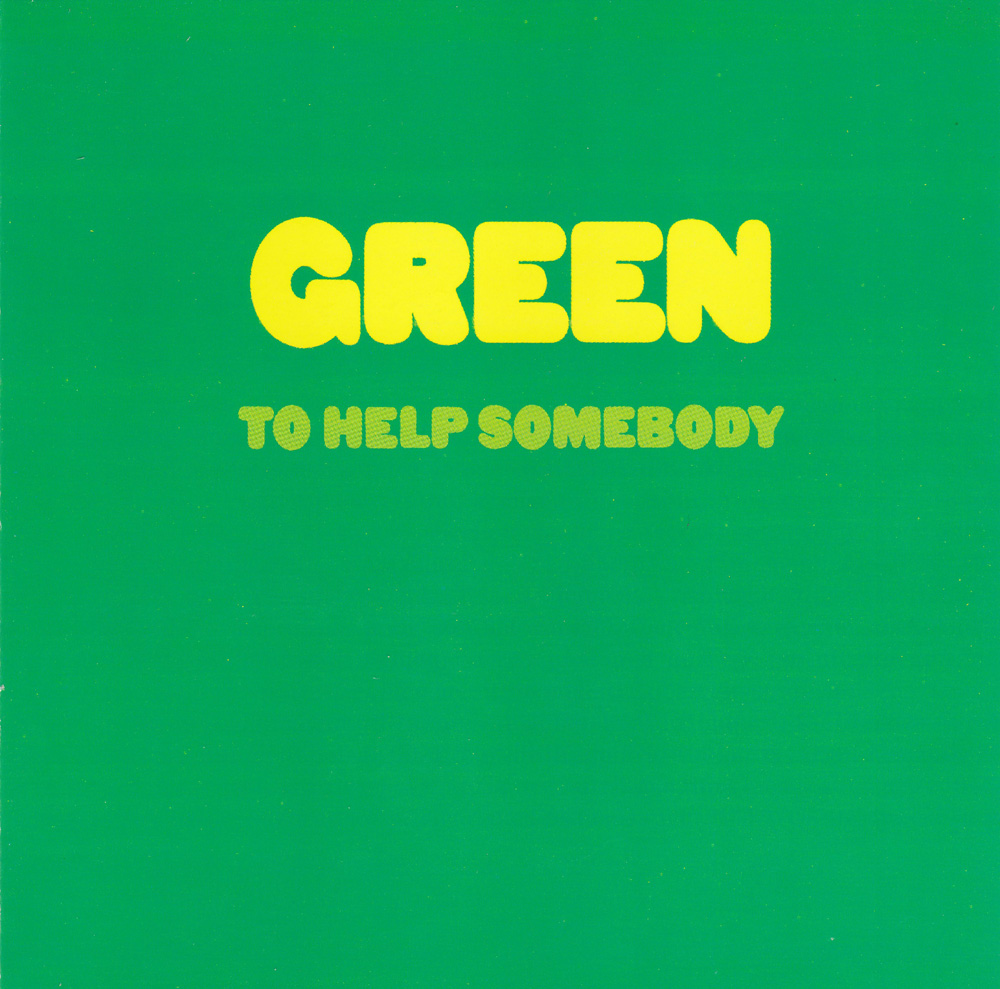
One of the most unjustly-neglected bands of their time, Green got together at North Texas State University in the late '60s, and released a stunning psych-pop debut in 1969. Their largely-overlooked second LP first appeared in September 1971. In the interim between albums, multi instrumentalist James Neel had been replaced by pianist / trumpeter Jay Pruit.
"To Help Somebody" was self produced, and recorded at 2545 North Fitzhugh, Dalla Texas. It's still largely unknown, perhaps because it doesn't sound much like its predecessor, a punchy pop rock record, tightly performed and well recorded.
A classy combination of rock and roll and ballads, with acid-tinged guitar and tasteful horns, it comes across as an idiosyncratic amalgam of The Beatles, The Zombies and Buffalo Springfield, making it a must-have for fans of classic '60s psychedelia and early 1970s rural rock.
Tracks
1. All My Bells - 3:24
2. To Help Somebody - 1:53
3. She Dont' Love Me - 2:58
4. Mary Magdalena - 2:04
5. Can You See Me (Wilson Fisher) - 2:52
6. Teenage Woman (Gary Casebeer) - 2:34
7. Lady, Oh Lady - 1:49
8. Big Dipper (John Martin, Wilson Fisher) - 3:48
9. High Time (Jay Pruitt, John Martin) - 3:02
10.Suzy - 2:49
11.Funny Faces - 3:11
12.San Fernando Valley Girls - 3:11
13.Forest Lawn - 1:35
All compositions by John Martin except where indicated
Like many bona fide lost classics, Green is still largely shrouded in mystery. It sold badly on its original release (in the spring of 1969, on Atlantic subsidiary Atco), and still hasn't received its due as one of the most imaginative psych-pop albums of the period.
Certain members were from Denton, Texas, while Richard Gardzina (now a distinguished saxophonist and flautist) hailed from Manchester, New Hampshire. The group are thought to have coalesced at North Texas State University, and recorded four songs as demos in a local studio, an acetate of which has recently surfaced (included here as bonus material). It shows them to have been a superbly tight unit well before they got to cut an album.
Their eventual debut, produced by veteran songwriter and composer Fred Darian, reflects little of the crazed psychedelia of fellow Texan musical travellers like the 13th Floor Elevators and the Golden Dawn. If anything, it's more Englishinfluenced, a taut collection of acid pop tunes set to distorted guitar and taut horn arrangements that complement, rather than swamp, the material.
Though four separate band members are credited with contributing brass to the record, selfindulgence is entirely avoided in favour of complex arrangements that consistently take unexpected turns. This means that, like many other neglected gems, the album reveals itself best on repeated listening. The songs veer from the mellow ballads Sunrise #7 and Footprints In The Snow to the hard psychedelic Green and Eastern-tinged Where Have I Been?', and - though most feature an impressive range of instruments - they are never cluttered.
Ultimately, however, the band's very breadth of talent may have damaged their chances of commercial success, for the album sank without trace. Its follow-up, 1971's To Help Somebody (also on Atco) was less focused (though still impressive in parts) and didn't sell either, prompting the band to fall apart. It is to be hoped that this first CD reissue will help to shed more light on the story behind this widely-admired LP.
Tracks
1. To Be (John Martin) - 2:52
2. Where Have I Been? (John Martin) - 3:10
3. Sunrise # 7 (Wilson Fisher) - 3:37
4. Just Try (John Martin) - 2:13
5. Sparkle (John Martin) - 2:20
6. Green (Wilson Fisher, Gary Casebeer, Bobby Blood, Richard Gardzina, John Martin) - 3:24
7. Footprints In The Snow (John Martin) - 2:23
8. At The Time (John Martin) - 2:15
9. RCMPB (Wilson Fisher) - 3:06
10.Don't (John Martin) - 2:11
11.Have You Ever? (John Martin, Richard Gardzina) - 3:05
12.Where Have I Been? (John Martin) - 3:25
13.Have You Ever? (John Martin, Richard Gardzina) - 3:19
14.At The Time (John Martin) - 2:22
15.Sunrise # 7 (Wilson Fisher) - 3:28
Bonus Tracks 12-15
A singer/guitarist and folk-influenced songwriter, Barbara Keith's curious career began when she was discovered at Greenwich Village's famous Café Wha?. Her first appearance on record was in 1968, with her background vocals and one of her songs appearing on the self-titled debut from Kangaroo.
Verve Records released the first of two self-titled albums in 1969. Some critics fell in love with the album but as far as sales the album went nowhere. Her second self-titled album -- released by Reprise in 1972 -- coupled Keith with producer Doug Tibbles. Keith and Tibbles married and soon became unhappy with the music industry. Deciding to focus on family and develop their art with a major-label influence, Keith and Tibbles gave back their Reprise advance, a move that caused the label to under-promote her album.
Once again, the album didn't achieve much as far as sales, but Keith's songwriting skills were being noticed throughout the record industry. Barbra Streisand, Lowell George, Tanya Tucker, Delaney & Bonnie, the Dillards, and many others covered songs from the album, "The Bramble and the Rose" and "Detroit or Buffalo" being the favorites.
Keith reappeared in the '90s with her "AC/DC meets Patsy Cline" band the Stone Coyotes with her husband, and son John Tibbles, rounding out the band. The band found a cult following of which writer Elmore Leonard was a member. Leonard included the band in his sequel to Get Shorty, Be Cool, and included five Keith songs in the text.
by David Jeffries
Barbara Keith dropped out of the music scene before anyone really had a chance to appreciate her work. Originally recorded for Warner Bros. in 1971, Barbara Keith was withdrawn when Keith, not completely happy with the results, gave the advance money back and walked away from the music business.
With the re-release of the album 30 years later by Water, all of this will seem a bit odd, because Barbara Keith is a fine effort highlighted by great writing and solid production. Only one cover, Dylan's "All Along the Watchtower," is included, which is surprising in that the original material -- by a fairly unknown artist -- is both strong and familiar. Delaney & Bonnie covered "Free the People" (so did Barbra Streisand), and singer/songwriter Mary McCaslin sang "The Bramble and the Rose." Keith's own versions, highlighted by country-rock and classic rock treatments, respectively, are equally fine.
Keith's an expressive, soulful singer who sounds like she would've fit into Delaney & Bonnie's band, or passed for an American version of Sandy Denny. Other standout songs include the country-folk of "Detroit or Buffalo" and the rocking closer, "A Stone's Throw Away." The album is fairly short -- 35 minutes -- but it's not weighted down by filler or subpar cuts. Barbara Keith is an excellent album, and one hopes that its author is more inclined to appreciate it in 2004.
by Ronnie D. Lankford Jr.
Tracks
1. All Along The Watchtower (Bob Dylan) - 3:14
2. Rolling Water - 3:12
3. The Bramble And The Bush - 2:55
4. Burn The Midnight Oil No More - 3:09
5. Free The People - 3:48
6. Detroit Or Buffalo - 4:32
7. The Road I Took To You - 3:20
8. Shining All Along - 3:11
9. Rainy Nights Are All The Same - 3:27
10.A Stone's Throw Away (Barbara Keith, Doug Tibbles) - 4:47
All songs by Barbara Keith except where noted
When buying albums by '60s rock bands, ground zero is 1966. If I'm hesitant to spend the cash, proximity to that year makes a difference in whether I end up springing for something or not. One of the better discs I've ponied up for in the past year is Everything But ... The Kitchen Cinq, the only album by a fairly obscure band with origins in Texas. From what I can tell, it actually came out in early- to mid-1967, but I'd bet it was recorded in '66, which would place it right in the magic 8-ball of my unscientific theory. Unfortunately, the mono copy I scored online is pretty beat up, but the music more than justified the cost of finally obtaining a copy.
Information about the band is scarce, but Mike Dugo of 60sgaragebands.com has come to the rescue once again with his excellent interview of guitarist Jim Parker, the best place to learn the Kitchen Cinq's story. To summarize briefly, the band was active as early as 1961 as The Illusions. They first had their name changed to the Y'Alls by impresario Ray Ruff for a single in '66, and again modified their moniker after moving to Los Angeles and getting involved with more famous impresario Lee Hazlewood. They released an album and several non-LP singles, before a lineup change and yet another name change, to Armageddon (not to be confused with the later Keith Relf band).
The music on Everything But... is a winning blend of harmony-drenched, poppy folk-rockers with the occasional fuzztone flip-out, such as band originals "Determination" and "Please Come Back to Me." Also excellent is the stop-start "You'll Be Sorry Some Day," not written by the band but a song probably first recorded by them, judging by the publishing credits.
The band proves very adept at integrating covers into their own sound, including managing to create a somewhat different spin than usual for Buffy Sainte-Marie's oft-recorded "Codine." They also take shots at Neil Diamond, the Beau Brummels, the Hollies (brave), Gene Pitney (extremely brave) and one song by Hazlewood. Luckily, it mostly all comes out sounding like the Kitchen Cinq.
Their album ended up being the first released on Hazlewood's LHI Records, an imprint best remembered today as the original home for Gram Parsons' International Submarine Band and Hazlewood's own cult classics. Everything But... was produced by Hazlewood flame/pre-Nancy Sinatra duet partner Suzi Jane Hokom, who gave it a bright and reverb-y, typically '60s production. In fact, the mysterious Ms. Hokom can be seen in the collage of band pictures on the back cover, surrounded by the band. There's also pics of the band surrounding Bill Cosby and Dick Van Dyke, apparently included to drive home a "we're in Los Angeles" message to the record-buying public.
These days, records on LHI rarely turn up, and this one is no different. Perhaps compounding its rarity is the fact that LHI's first distribution deal, with Decca, apparently lasted less than a year. After the label's first few albums the catalog numbers were reused for new LPs under a different distribution deal!
So, the Kitchen Cinq album was likely only available for a very short time originally. Like most of the LHI catalog (aside from the ISB album and Hazlewood's own work), it's never been given a proper reissue, but it can be tracked down from fellow collectors with a bit of internet searching, if one can't turn up an original LP. Now, if I could just find the Honey Ltd. and Eve LPs... (LHI, 1967).
by Bob Koch
Tracks
1. You'll Be Sorry Some Day (Bob Corso) - 2:34
2. Solitary Man (Neil Diamond) - 2:27
3. Determination (Johnny Stark, Mark Creamer) - 2:00
4. Please Come Back To Me (Johnny Stark, Mark Creamer) - 2:26
5. Codine (Buffy St. Marie) - 2:44
6. Young Boy (Ervan James Parker) - 2:27
7. Last Chance To Turn Around (Victor Milrose, Tony Bruno, Bob Elgin) - 3:07
8. Still In Love With You Baby (Ronald Elliot) - 2:32
9. If You Think (Raul Danks, Jon Taylor) - 2:05
10.I Can't Let Go (Chip Taylor, Al Gorgoni) - 2:25
11.Need All The Help I Can Get (Lee Hazlewood) - 2:44
The Kitchen Cinq
*Mark Creamer - Guitar, Vocals
*Dale Gardner - Bass, Vocals
*Jim Parker - Guitar, Vocals
*Dallas Smith - Guitar
*Johnny Stark - Drums
"Timothy” really was about a mule, but a lot of people thought he was another trapped miner." Rupert Holmes, the man who wrote "Timothy", was still trying to explain his 1971 hit for The Buoys in a 1988 interview to promote his new Broadway musical, "The Mystery of Edwin Drood." Laughing, Holmes swore the anguished song about the two survivors in a trio of trapped miners was not an ode to cannibalism.
It was easy to laugh then, but it wasn't so funny when Scepter Records issued the single by the Wilkes-Barre, Pennsylvania quintet. Even though the song would eventually go into Billboard's Top 20, many radio programmers were reluctant to play the song, especially when listeners called demanding to know why some band was singing about eating this poor miner. It also didn't help when there were media reports about college students holding 'Timothy For Lunch Bunch" gatherings.
Whatever the song was about, the notoriety did help get a hit for the group made up of Fran Brozena - keyboards, Gerry Hludzik - bass, Chris Hanlon - guitar, Carl Siracuse - drums, and Billy Kelly - lead vocals. They were discovered by a Scepter engineer, who then approached Holmes about writing a song to help the quintet get some attention. He agreed, and the song ultimately became Holmes' first real hit as a writer. Holmes also wrote a number of songs and played keyboards on The Buoys' debut Scepter album.
It featured 'Timothy" and two other minor chart successes that also told odd stories. "Bloodknot" was said to be about a reform-school ritual while "Give Up Your Guns" was about an old West shootout. Although Holmes would go on to chart success as a singer, going Top 10 with "Escape (The Pina Colada Song)" and "Him", The Buoys soon sank out of sight. Scepter issued a few other singles, all featured here.
The group then signed to Polydor, cutting two singles, "Don't Try To Run" and "Liza's Last Ride", also included on this album. In 1980, a couple of Buoys - Billy Kelly and Gerry Hludzik, who was also known as Joe Jerry - were back in music as a group called Dakota. Their self-titled album on Columbia failed to generate any attention.
by Mark Marymont
Tracks
1. Timothy (Rupert Holmes) - 2:49
2. Give Up Your Guns (Rupert Holmes) - 4:16
3. Sunny Days/Memories - 5:02
4. Tell Me Heaven Is Here - 3:33
5. The Prince of Thieves (Rupert Holmes) - 4:17
6. Castles - 2:27
7. Bloodknot (Rupert Holmes) - 2:13
8. Tomorrow (Rupert Holmes) - 3:26
9.Streams Together - 2:48
10.Good Lovin' - 2:30
11.Pittsburgh Steel - 4:13
12.Absent Friend - 3:51
13.These Days - 2:47
14.Sunny Days - 1:25
15.Don't Try to Run (Brozena, Kelly, Hludzik) - 3:21
16.Dreams (Brozena, Kelly, Hludzik) - 3:26
17.Look Back America - 6:34
18.Liza's Last Ride - 2:55
All songs written by the Buoys except where noted
The Buoys
*Bill Kelly - Lead Vocals, Guitar
*Jerry G. Hludzik - Bass, Vocals
*Chris Hanlon - Guitar
*Fran Brozena - Keyboards
*Carl Siracuse - Drums with
*Sally Rosoff - Cello
Mouzakis were an East coast basement garage psych group and this is their full LP from 1971. The band started with R&B rock standards, adapted on its way bits of rock’n roll, early rock, and stayed mostly rather on the edge with a more garage rock sound. They learned songs like from Animals, and did a cover from Blues Magoos.
Groups of that time like The Who, Animals and even the Rolling Stones very much liked to keep that rawness of garage alive in their more into the 70s directing rock expressions, also Fabulous Pharoahs and Mouzakis fitted with that approach.
The tracks are a bit longer and especially the first two tracks show complex rhythm use in combination with their adapted R&B influence into rock territory. “Magic Tube” has a complex fast rhythm, (bass and drums) almost funky in its bluesy rock way, while on top is slower bluesy singing, with rhythm guitar, creating a unique kind of complexity I have not heard elsewhere. “Rock Around the clock” with additional organ parts continues a bit in the same direction.
Fred Dawson opined 'after trying to get 4-5 people to agree on 'stuff to play,' we ended up as a three piece band. What we lacked in personnel we made up for in amplification.' Magic Tube, very much the rough and ready hard garage psych album, features almost complete material from the collective pen of Dawson and Stevenson.
Of the band, one critic was moved to proclaim 'Mouzakis has to be heard to be believed. They are totally unique...and as a trio, they accomplish more in their sound than groups double their size!'" Two of the members continued to play under the name Capone until the 80s.
Tracks
1. Sometimes, I Think About You (Ronnie Gilbert, Ralph Scala, Emil Theilheim, Mike Esposito) - 3:01
2. Hold Me Tight (Fred Dawson, Ed Stevenson, Bill Rylander) - 2:41
3. Church Key (Aubry Fisher, Ed Stevenson) - 2:41
4. Route 66 (Bobby Troup) - 2:11
5. Run And Hide (Fred Dawson, Ed Stevenson) - 2:03
6. Fire Street (Fred Dawson, Ed Stevenson) - 2:59
7. Don't Need Your Money - 3:08
8. Gonna Give You Rock 'n' Roll - 2:33
9. Looking Back (Johnny Guitar Watson) - 2:28
10.We Will Be Together (Dick Taylor, Phil May, John Stax) - 3:14
11.Lady (Fred Dawson, Steve Stipo) - 3:06
12.Hey Hey Hey (Richard Penniman) - 2:13
13.Morning Sun (Fred Dawson, Ed Stevenson) - 2:40
14.Don't Want You No More (Fred Dawson, Ed Stevenson) - 2:46
15.Magic Tube - 7:26
16.Rock Around The Clock (Jimmy DeKnight, Max Freedman) - 2:30
17.White Horse - 3:28
18.Love Everyday - 3:56
19.Long Haired Bombardier - 4:07
20.Party Ball - 2:18
21.Lady - 5:31
22.Both Do Fine - 3:09
All songs by Fred Dawson, Eddie Stevenson, Steve Stipo except where stated