In The Land Of FREE we still Keep on Rockin'

It's Not Dark Yet

Plain and Fancy

Music gives soul to universe, wings to mind, flight to imagination, charm to sadness, and life to everything.

Plato

Saturday, November 4, 2017

Graham Nash David Crosby - Graham Nash David Crosby (1972 us / uk, amazing blend of country folk blues and classic rock, 2008 remaster)


This self-titled release is one of -- if not arguably the -- most impressive side project to arise from CSN. Taken beyond face value, Graham Nash/David Crosby is a direct reflection, if not an extension, of the musical and personal relationship between its co-creators. Likewise, the results remain true, enhancing rather than detracting from the very individualistic styles of Crosby and Nash. The best elements of each are readily available here, punctuated at every turn by their complicated vocal arrangements and air-lock harmonies. 

In the wake of the enormous successes garnered by the albums Crosby Stills & Nash, Déjà Vu, and Four Way Street, the principal members were essentially given carte blanche studio access to pursue solo projects as well. This release is the first in what would turn out to be a series of collaborative efforts between Crosby and Nash. Musically it continues in much the same vein as their respective debut solo releases, If I Could Only Remember My Name and Songs for Beginners. Nash's contributions include "Girl to Be on My Mind," "Stranger's Room," and "Southbound Train" -- a twangy piece of Americana featuring a high and lonesome steel guitar solo from Jerry Garcia that likewise hearkens to the Grateful Dead's American Beauty, Elton John's Tumbleweed Connection, or the Band's Music From Big Pink. These tracks co-exist in stark contrast to Crosby's more cerebral and incisive contributions, such as "Whole Cloth," "Games," and "The Wall Song." The latter features some outstanding instrumental support from the Grateful Dead's Jerry Garcia (guitar), Phil Lesh (bass), and Billy Kreutzman (drums).

The core band revolves around another set of all-stars: Russell Kunkel (drums), Leland Skylar (bass), Craig Doerge (keyboards), and Danny "Kootch" Kortchmar (guitar). This same band would more or less continue to back up Crosby and Nash's duo efforts throughout the remainder of the '70s. Graham Nash/David Crosby offers much of the same unique songwriting and personal style which informed their better contributions not only to the CSN-related efforts, but as far back as their offerings with the Hollies and the Byrds. Interested enthusiasts are also urged to locate Another Stoney Evening -- a live acoustic release from October 10, 1971 -- which includes seminal live versions of "Southbound Train," "Where Will I Be," "Immigration Man," and "Stranger's Room." 
by Lindsay Planer


Tracks
1. Southbound Train (Graham Nash) - 3:55
2. Whole Cloth (David Crosby) - 4:35
3. Blacknotes (Graham Nash) - 0:57
4. Strangers Room (Graham Nash) - 2:27
5. Where Will I Be? (David Crosby) - 3:22
6. Page 43 (David Crosby) - 2:55
7. Frozen Smiles (Graham Nash) - 2:19
8. Games (David Crosby) - 4:01
9. Girl to Be on My Mind (Graham Nash) - 3:27
10.The Wall Song (David Crosby) - 4:26
11.Immigration Man (Graham Nash) - 2:59

Personnel
*David Crosby - Vocals, Electric Guitar, Guitars
*Graham Nash - Vocals, Piano, Organ, Harmonica, Guitar
*Danny Kortchmar - Electric Guitar
*Jerry Garcia - Pedal Steel Guitar
*Dave Mason - Electric Guitar
*Craig Doerge - Electric Piano
*Leland Sklar - Bass
*Chris Ethridge - Bass
*Phil Lesh - Bass
*Greg Reeves - Bass
*Russ Kunkel - Drums
*Johnny Barbata - Drums
*Bill Kreutzmann - Drums
*George Price - French Horns
*Dana Africa - Flute
*Arthur Maebe - French Horns
*David Duke - French Horns

1964  The Byrds - Preflyte (2012 double disc edition)
1973  Byrds (Reunion Album, 2004 issue) 
1971  Graham Nash - Songs For Beginners (2008 digipak remaster)
1973  Graham Nash - Wild Tales
1974  Crosby Stills Nash And Young - Live (2013 four discs box set)

Free Text
Just Paste

Wednesday, November 1, 2017

Youngbloods - Ride The Wind (1971 us, marvellous jazzy psych rock with country traces, 2003 remaster)


This live disc followed up Rock Festival (1970), another batch of live recordings. However, Ride the Wind (1971) is far from simply a stop-gap effort between studio discs. The trio of Jesse Colin Young (bass/kazoo/rhythm guitar), Banana (guitar/piano), and Joe Bauer (drums) are definitely in their element on these half-dozen sides. In much the same way as their Marin County contemporaries, the Grateful Dead, the Youngbloods' live experience allowed the band to stretch out and take their improvisational interplay to a level that is merely hinted at on their studio sides. The disc begins with a nearly ten-minute version of the title track, which was initially issued on Elephant Mountain (1970). 

Banana really shines, as his laid-back electric piano runs are ably complemented by some interesting contributions from both Young and Bauer. The centerpiece is the extended instrumental interplay that ebbs and flows as the groove builds incrementally. The happy-go-lucky "Sugar Babe" sticks closely to the up-tempo ragtime version featured on Earth Music (1967). The band returns to Elephant Mountain for an easygoing and pastoral rendering of "Sunlight" that again allows for some well-tempered improvisation. 

The cover of Fred Neil's "The Dolphin" is another not-to-be-missed epic, as the Youngbloods never issued a studio version and once again a strong jazz influence dictates the performance's overall vibe. "Get Together" was the band's best-known side and still holds up in what is a spirited reading with just enough alteration to make it a worthwhile inclusion. Ride the Wind concludes with a final track from Elephant Mountain, as the optimistic "Beautiful" is given a lengthy and funky workout. When paired with the harder-edged Rock Festival, this live volume gives listeners another aural vantage point from which to rediscover the Youngbloods' unique country-rock leanings. 
by Lindsay Planer


Tracks
1. Ride The Wind - 9:26
2. Sugar Babe - 2:58
3. Sunlight - 6:25
4. The Dolphin (Fred Neil) - 7:52
5. Get Together (Chester Powers) - 4:23
6. Beautiful - 7:00
All songs by Jesse Colin Young except where noted

The Youngbloods
*Banana - Guitar, Piano
*Joe Bauer - Drums
*Jesse Colin Young - Bass, Rhythm Guitar, Kazoo, Vocals

1967/69  The Youngbloods / Earth Music / Elephant Mountain (2014 Japan Blu Spec Edition)
1969  Elephant Mountain (Sundazed expanded and  2014 Japan Blu Spec Edition)
1970  The Youngbloods - Rock Festival
1971  Beautiful! Live In San Francisco (Sundazed edition)
1972  High On A Ridge Top (Sundazed remaster)

Jesse Colin Young releases
1972  Together
1973  Song For Juli (2009 remaster)
1974  Light Shine
1976  On The Road (Japan remaster)

Free Text
Just Paste

Sunday, October 29, 2017

Mark Farner And Don Brewer - Monumental Funk (1974 us, amazing funky soul psych beat, 2017 digipak edition)


"Monumental Funk" put out by the people at the original label who released music by Terry Knight & the Pack, a company called Lucky Eleven; This is an amazing record that Don Brewer and Mark Farner have every right to be very proud of. While Grand Funk Railroad's manager, Terry Knight, may have been a fine producer and a marketing genius, his own efforts at songwriting and singing were the worst aspects of the Pack. Here Farner and Brewer absolutely shine, their version of "Harlem Shuffle" more fun than the hit version by the Rolling Stones. 

When Don Brewer formed Flint and released a disc on Columbia in 1978, he covered the Supremes' "Back in My Arms Again." Here Mark Farner trumps him with "Come See About Me," a great non-Motown version by these Michigan boys. Farner's original, "We Gotta Have Love," is worthwhile, as is the tremendous rendition of "Hey Everybody." Yes, this record was released to cash in on the fame of Grand Funk Railroad, and there is even a picture disc version of it. The release of this music made the boys in the band angry, but there is a silver lining. Monumental Funk shows that Grand Funk Railroad was no fluke and that Mark Farner was a major talent before Capitol Records signed him and brought him to the attention of millions of fans. 
by Joe Viglione


Tracks
1. We Gotta Have Love (Mark Farner) - 5:10
2. Hey Everybody (J. Tuttle) - 3:37
3. I've Got News For You (Dick Wagner) - 4:43
4. Come See About Me (Lamont Dozier, Brian Holland) - 4:17
5. Harlem Shuffle (Bob Relf, Earl Nelson) - 5:19
6. Love Light (Joseph Scott) - 7:04

Personnel
*Mark Farner – Guitar, Harmonica, Keyboards, Vocals
*Don Brewer – Drums, Vocals

1966-67  Terry Knight And The Pack - Terry Knight And The Pack / Reflections (2010 issue)
1969  Grand Funk Railroad - On Time (2002 remaster and expanded)
1969  Grand Funk Railroad - Grand Funk (2002 bonus tracks remaster)
1970  Grand Funk - Closer To Home (japan remaster with bonus tracks)
1970  Grand Funk Railroad - Live (japan remaster)
1974  Grand Funk - Shinin' On (Japan extra track issue and 2014 SHM remaster)

Free Text
the Free Text

Thursday, October 26, 2017

Brother Fox And The Tar Baby - Brother Fox And The Tar Baby (1969 us, 2009


Boston's Brother Fox and the Tar Baby featured the talents of former Profits and The Front Page Review guitarist Richie Bartlett, Pugsley Munion bassist Tom Belliveau, guitarist Dave Christiansen, drummer Bill Garr, singer Steve High. and keyboardist Joe Santangelo.  One of the era's isolated multi-racial bands, the group were signed by the small Oracle label, which released 1969's Bruce Patch produced "Brother Fox and the Tar Baby".  Christiansen was credited with penning all eleven tracks, the result being an odd hodge-podge of musical styles. 

Quite diverse, the set included stabs at conventional hard rock ('We All Love Him'), ballads ('I Start To Cry') and the plain bizarre ('Maxie the Meanie').  The first couple of times I listened to the album I'll readily admit to being a little under whelmed, but repeated spins saw me start to warm up to the collection. To my ears the highlights included 'Metal Soldier', 'Three Tots and a Man and their most psych-oriented track 'Mr. Sleepy'. (The album was original released in a gatefold sleeve.)


Tracks 
1. Electric Chair - 4:19
2. Old Ladies - 2:56
3. Steel Dog Man - 3:47
4. Maxie The Meanie - 3:03
5. We All Love Him - 2:30
6. To Your Dreams - 3:34
7. Three Tots And A Man - 4:03
8. I Start To Cry - 3:12
9. Metal Soldiers - 4:42
10.Mr. Sleepy - 4:48
11.Crazy John - 3:54
All songs by Dave Christiansen

Brother Fox And The Tar Baby
*Richie Bartlett - Guitar
*Tom Belliveau - Bass
*Dave Christiansen - Guitar
*Bill Garr - Drums, Percussion
*Steve High - Vocals, Percussion
*Joe Santangelo - Keyboards

Related Acts
1968  Front Page Review - Mystic Soldiers
1970  Pugsley Munion - Just Like You

Free Text
the Free Text

Sunday, October 22, 2017

Hookfoot - Headlines (1975 uk, astonishing guitar rock with southern tastes prog shades and funky vibes, 2016 two discs set)


Hookfoot were,  very much a band of "musician's musicians". All of them were in great demand as session players, both individually and collectively. As well as backing Elton John on many of his early albums they also perform en masse on Mick Grabham's 'Mick The Lad' solo LP (possibly it was this which led to the misinformation that Grabham was himself a Hookfoot member) and on Steve Swindell's solo LP from 1974 (the astute amongst you may recognise Swindell's name as a former Hawkwind member). The band also backed Harry Pitch and Zack Laurence on the chart-topping one-hit wonder 'Groovin' With Mr Bloe'; and although his voice is perhaps an acquired taste, Long John Baldry's 'It Ain't Easy' LP from 1971 also featured bassist Dave Glover, drummer Roger Pope and guitarist Caleb Quaye throughout, some of the songs sounding distinctly Hoofoot-esque.

Great songwriters, great musicians, with their tastes strayed too far towards bluesy country funk for the heads to ever fully embrace them. A bit like Steve Stills, in some ways: you kinda dug the way he did it, but not always what he actually did. Thing is though, Caleb Quaye was undeniably one of THE finest guitar players the UK has ever produced - not for nothing did Eric Clapton surprise David Letterman a lttle while ago by informing him "I'm not the world's best guitar player. Caleb Quaye is." - and I can't help wondering, if Hookfoot had played hard rock and psychedelia, whether their albums might not today be held in the same kind of reverential, big-dollar high esteem by collectors as, say, Little Free Rock, Ashkan, Aunt Mary, Blonde on Blonde and especially I suppose Black Cat Bones (who likewise featured a stellar guitar player in the shape of a young Paul Kossoff). I still challenge any fan of the above not to go into a toe-curling trance of guitar-fuelled ecstasy on hearing Hookfoot blister through 'Nature Changes' on the 'Live in Memphis' album though, or to goggle in awe at the pyrotechnics on display on all twelve minutes of 'Shoe Shine Boy', one of the otherwise unreleased songs on the 'Headlines' compilation album.

Headlines', the double LP compilation put out by DJM 1975,a year or so after Hookfoot's demise. Interestingly, it includes 4 non-album cuts, but no live material and none of the band's singles!
by Phil McMullen, April 2010


Tracks
Disc 1
1. Don't Let It Bring You Down (Neil Young) - 3:07
2. Movies (Ian Duck) - 4:53
3. S.B.W. (Ian Duck, Caleb Quaye) - 2:36
4. Shoe Shine Boy (Caleb Quaye) - 12:05
5. Nature Changes (Caleb Quaye, Ian Duck) - 5:25
6. Bluebird Revisited (Stephen Stills) - 4:03
7. Coombe Gallows (Caleb Quaye) - 3:09
8. Gimme Shelter (Mick Jagger, Keith Richards) - 4:19
9. Fire And Rain (Caleb Quaye) - 3:38


Disc 2
1. Sweet Sweet Funky Music (Caleb Quaye) - 3:18
2. Living in the City (Caleb Quaye) - 4:57
3. If I Had the Words (Ian Duck, Roger Pope, Caleb Quaye, David Glover) - 3:31
4. Good Times a Comin' (Ian Duck, Fred Gandy, Roger Pope, Caleb Quaye) - 6:18
5. Cruisin' (Ian Duck, Fred Gandy, Roger Pope, Caleb Quaye) - 5:32
6. Just a Little Communication (Caleb Quaye) - 5:38
7. Nothin' Changes (Caleb Quaye) - 4:44
8. Tradin' Riffs (Caleb Quaye) - 4:45
9. Rockin' on the Good (Ian Duck) - 5:09
10.So You Want to Be a Rock 'n' Roll Star (Chris Hillman, Roger McGuinn) - 3:18

The Hookfoot
*Caleb Quaye - Electric, Acoustic Guitars, Keyboards, Pianos, Organ, Percussion, Tambourine, Vocals
*Ian Duck - Electric, Acoustic Guitars, Harp, Percussion, Tambourine, Vocals
*Roger Pope - Drums, Percussions, Tambourine, Cow-Bell
*Dave Glover - Bass (1969-72)
*Fred Gandy – Bass (1973)
With
*Dicky Birds – Whistling
*Bob Kulick – Guitar, Vocals

1969  Hookfoot - A Piece Of Pye (2010 japan Remaster)
1971  Hookfoot - Hookfoot (2010 japan remaster)  
1972  Hookfoot - Good Times A'comin (japan 2010 bonus track remaster)
1972  Hookfoot - Communication (2005 reissue)
1973  Hookfoot - Roaring (2005 expanded edition)

Free Text
the Free Text

Thursday, October 19, 2017

Colin Scot - Just Another Clown (1973 uk, gorgeous progressive folk rock, 2017 korean remaster)


There was a time when the demarcation lines between folk and rock were well drawn though one or two brave souls would occasionally pop their heads above the parapet.

Colin Scot was one of them and his tactic of covering Buddy Holly songs in his live set might have caused frowns from the folkie purists but probably stood him in good stead when it came to supporting rock bands such as Van der Graaf Generator or King Crimson in the bigger venues in the early 70s. The graveyard support slot was always a tough spot, and Scot was better at it than many of his more famous contemporaries.

Scot died in 1999 having only released three albums none of which attracted much in the way of sales or critical acclaim. Though long forgotten now, Scot was well plugged into the rock circuit rather than the folk scene, having the kind of juice that attracted various members of Genesis, Lindisfarne, Van der Graaf Generator, Yes, Rare Bird, and Robert Fripp from King Crimson to populate his 1971 debut.

That he could count on such distinguished company was due in no small measure to producer John Anthony - the behind the desk for albums such as progressive rock classics such as Nursery Cryme and Pawn Hearts.

"Just Another Clown" was recorded and released in 1973, two years after his debut, accompaniment with a much different and not so famous (like in his first recording) cast of musicians. His voice is amazing and remises the incredible set of progressive jazzy folk rock, some psychedelic touches with excellent guitar outbursts, emerge an unbelievable magic, melancholic in a way, like a tearful clown of a circus..

Alcohol dependency and a lack of original material meant Scot quickly became a marginal figure a fact underlined by his decision to quit the UK to make a living in Europe where he resided until his untimely death. Colin Scot does deserve a warm welcome, after all, he was a dreamer.


Tracks
1. I'm A Dreamer - 4:42
2. Then You Won't Be Blue - 2:39
3. Sunday Morning - 3:53
4. It's Over Now - 3:28
5. Baby I Got News For You - 4:19
6. Bluebird - 1:58
7. Lament - 6:51
8. Edward And Charley And Me - 3:10
9. You're Singing My Song - 3:03
10.A Simple Song - 4:41
Words and Music by Colin Scot

Personnel
*Colin Scot – Twelve String Guitar, Trombone, Whistle, Banjo, Vocals
*Micky Binelli - Accordion
*Nic Potter - Bass
*Peter Poole - Bass
*Terry Weil - Cello
*Fred Kelly - Drums
*Ray Glynn - Electric Guitar
*Mox Gowland - Flute, Harmonica
*John Pearse - Guitar
*Dave Kaffinetti - Keyboards
*Ray Cooper - Percussion
*David Hentschel - Synthesizer
*Madhukar D. Kothare - Tabla

1971  Colin Scot - Colin Scot (2006 remaster, korean Limited Edition) 

Just Paste

Friday, October 13, 2017

Mordicai Jones - Mordicai Jones (1972 us, raw blues country roots 'n' roll, feat Link Wray, 2010 korean remaster)


In the early '70s, first-generation rock guitar hero Link Wray was looking to make a comeback, and after his self-titled 1971 album for Polydor -- in which he set aside the raw, feral guitar tone of his early instrumental hits for a more casual country blues mood -- failed to make an impression with record buyers, Wray and his buddies decided to try making an end-run around the charts with this album. The Mordicai Jones of the title was actually Bobby Howard, who played piano and mandolin on the Link Wray sessions and whose strong, blues-leaning voice lacked the idiosyncrasies of Wray's TB-ravaged instrument; on the surface, "Mordicai Jones" seemed like a more appealing frontman than Link (who by this time was already 44 years old), and his name was on the front cover when the album hit the stores. 

However, the music had the same casual and laid-back tone as the Link Wray sessions, and Link kept his trademark barking axe just as far under wraps as he did on his own album. However, the album has a tough and heartfelt vibe that sets it apart from the more pastoral country-rock albums of the time -- while lots of musicians were talking about getting back to the land, Mordicai Jones sounds like music made by folks who actually worked the farm they lived on, and the rough and flinty energy of these sessions wears a lot better than what most of their contemporaries were doing. Link also plays some fine slide guitar, too, even if "Rumble" fans might wish for more meat. Cuts from Mordicai Jones later surfaced on the compilation Guitar Preacher: The Polydor Years, and it was included in its entirety on Wray's Three Track Shack. 
by Mark Deming


Tracks
1. Walkin' In The Arizona Sun - 2:56
2. Scorpio Woman - 3:49
3. The Coca Cola Sign Blinds My Eyes (Link Wray, Bobby Howard, Yvonne Verroca) - 6:23
4. All I Want To Say - 3:14
5. All Because Of A Woman - 3:19
6. On The Run (Link Wray, Bobby Howard, Yvonne Verroca) - 5:46
7. Son Of A Simple Man - 4:24
8. Precious Jewel (Roy Acuff) - 2:17
9. Days Before Custer - 4:01
10.Gandy Dancer (Link Wray, Bobby Howard, Yvonne Verroca) - 3:33
All songs by Link Wray, Yvonne Verroca except where stated

Musicians
*Link Wray - Electric Guitar, Dobro, Steel Guitar, Bass Guitar
*Doug Wray - Rhythm Guitar, Proccnail Can Percussion, Vocals
*Mordicai Jones (a.k.a. Bobby Howard) - Lead Vocals, Piano, Mandolin, Harp
*Bill Hodges - Organ, Piano, Scratcher Percussion, Vocals
*Steve Verroca - Drums, Vocals
*John Grummere - Electric Rhythm Guitar, Vocals
*Norman Sue - Bass Guitar, Vocals
*Ned Levitt - Foot Stomp, Hand Claps, Vocals

Free Text
Just Paste

Tuesday, October 10, 2017

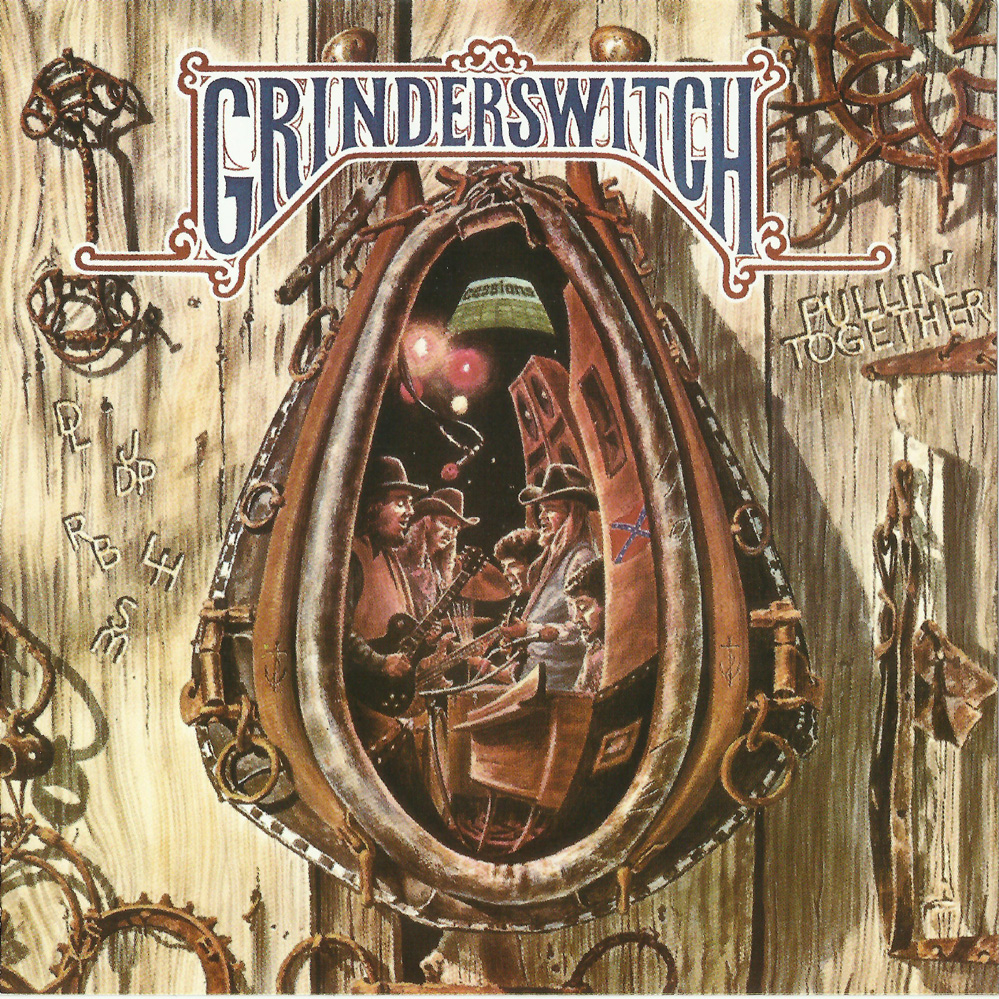
Grinderswitch - Pullin' Together (1976 us, excellent southern boogie rock, 2010 reissue)


Grinderswitch was a white blues-rock band that never rose above being a second-tier Capricorn Records act, not remotely as popular as the Allman Brothers or the Marshall Tucker Band. But Dru Lombar (vocals, guitar, slide guitar), Larry Howard (guitar), Stephen Miller (keyboards), Joe Dan Petty (bass), and Rick Burnett (drums) built a loyal following in the tens of thousands playing music that was influenced by British blues outfits like John Mayall's Bluesbreakers, Cream and T.S. McPhee's Groundhogs, but also the real article, especially Albert King and Booker T. & the MG's -- Lombar sounded more Black than any White rock singer you've ever heard. 

They could have been a more soulful and exciting competitor to Canned Heat, but they weren't lucky enough to appear in hit festival movies or get the right single out at the proper time. Working in the commercial shadow of better-known acts, they counted as fans members of the Marshall Tucker Band and a lot of other musicians who felt they deserved a break. The group failed to emerge as much more than a top regional act and an opener for the Allmans and Charlie Daniels, among others, despite recording seven album between 1972 and 1982, first for Capricorn and later for Atlantic.
by Bruce Eder


Tracks
1. Higher Ground - 3:47
2. I'm Satisfied - 3:25
3. That Kind Of Women - 4:12
4. Kill The Pain - 5:38
5. You're So Fine (Willie Schofield) - 3:33
6. Open Road - 4:11
7. Fact Of Life (Stephen Miller) - 2:27
8. Nobody Can - 3:04
9. As Sure As Tomorrow - 3:33
All compositions by  Rick Burnett, Larry Howard, Dru Lombar, Stephen Miller, Joe Dan Petty except where stated

The Grinderswitch
*Rick Burnett - Drums
*Larry Howard - Lead, Acoustic Guitars, Vocals
*Dru Lombar - Lead, Slide Guitars, Vocals
*Stephen Miller - Keyboards, Vocals
*Joe Dan Petty - Bass, Vocals
With
*Jimmy Hall - Harmonica
*Jerry Joseph - Congas

1974  Grinderswitch - Honest To Goodness
1975  Grinderswitch - Macon Tracks (2009 edition) 
1977  Grinderswitch - Redwing (2010 edition)
Related Acts
1968 Linn County - Proud Flesh Soothseer 
1969 Linn County - Fever Shot 
1970  Linn County - 'Till The Break Of Dawn
1969-70/72  Elvin Bishop - Party Till The Cows Come Home

Just Paste

Saturday, October 7, 2017

Christopher Kearney - Christopher Kearney (1972 canada, outstanding bluesy folk classic rock, 2016 SHM remaster)


Canadian born, Christopher Kearney’s career began with the support and encouragement of Gordon Lightfoot, who saw Christopher first perform at the age of 22 in Montreal. Within a year Christopher signed with Gordon’s Early Morning Productions and moved to Toronto.

Shortly thereafter Christopher inked a deal with Capitol Records and went on to record three albums on that label, Christopher Kearney,Pemmican Stash,and Sweetwater.

During this time period after a successful concert tour across Canada and a closing performance at Massy Hall in Toronto Christopher was asked to represent Canada at the Rio International Song Festival in Brazil.

A few years later Christopher joined forces with Bill King and Danny McBride and formed the band China.

Inking a new deal with CBS Epic and Charlie Daniel’s Production Company in Nashville, China joined forces with Bob Dylan’s Grammy Award producer Bob Johnston and Christopher was back in the studio.

During this project many other great players joined forces with Chris and the other members of China including Jeff “Skunk” Baxter, Albert Lee, Jay Graydon, Lee Ritenour, Andy Newmark, Abe Laborial, Danny Lanois, and Paulino Da Costa. 

In the early 90’s Christopher moved to Puerto Vallarta Mexico and resided there until 2005.

Within a year or so of returning to California he was writing once again and back in the studio. In 2007 a new set of sessions began and by the fall of that year "Just A Step Away" was completed.

Rich musically and lyrically strong this offering from Christopher paints wonderful visuals of not only just the writer as he navigates through life's twists and turns but it also honestly touches on all of us. At close listening,the chances are very good that you will remember,see,or think of someone you know.

Excellent well crafting songwriters have always been a real commodity, and it is in that is category that Christopher quite comfortably belongs.


Tracks

1. Country Lady - 3:09
2. Loosen Up - 2:31
3. Let It Be Gone (Henry McCullough) - 3:41
4. Speical Day - 3:36
5. Long Old Train (John Schanck) - 4:50
6. House Of D (Chris Rawlings) - 4:11
7. Rocking Chair Ride - 2:33
8. Everything Here (Frank Thomas Talton) - 2:27
9. 20% Off - 2:53
10.Get Back Home - 2:49
Music and Lyrics by Christopher Kearney except where stated

Musicians
*Christopher Kearney - Vocals, Acoustic Guitar
*Josh Onderisin - Acoustic, Electric Guitar
*David Bromberg - Slide Guitar, Dobro
*Cguck Aarons - Electric Guitar
*Jim Ackley - Keyboards
*James Rolleston - Bass
*Scott Lang - Bass
*Terry Clarke - Drums
*Diane Brooks - Vocals
*Steve Kennedy - Vocals
*Rhonda Silver - Vocals

1973  Christopher Kearney - Pemmican Stash (2014 korean remaster) 

Thursday, September 28, 2017

Bob Brown - Willoughby's Lament (1971 us, tremendous progressive jazzy folk country rock, 2016 issue)


In December 1971, Billboard magazine wrote, “Willoughby’s Lament conveys a quiet tenderness and charm.” With this album, D.C. singer-songwriter Bob Brown delved deeper into the jazz and classical-influenced folk sound established on The Wall I Built Myself, his 1970 debut. Willoughby’s Lament was chapter two for Brown, and the musician’s craftsmanship and experience lent the LP a spiritual energy that remains intact decades later.

One of the record’s most transcendent tracks is “In These Flames.” He wrote this powerful song in 20 minutes while fighting the flu, and folk legend Richie Havens covered it on his 1971 album The Great Blind Degree. Havens and Brown hit it off after a chance encounter in 1966. Havens signed Brown to his MGM label, Stormy Forest, and produced his first two albums.

Brown picked up the guitar at 14 and began playing in D.C. coffeehouses before graduating from high school. He put together his core ensemble—guitarist Orin Smith and multi-instrumentalist Joe Clark—while a freshman at the University of Maryland. That’s also where Brown met his muse, Pamela, and where he completed the compositions for The Wall I Built Myself.

After completing his debut, Brown added two new musicians to his band, violist Rusty Clark and drummer Rob Windsor. In the summer of 1970, when Brown started writing Willoughby’s Lament, he brought the band to a Baltimore club called the Classroom. The Baltimore venue, like D.C.’s esteemed Cellar Door, attracted its share of regulars and luminaries, among them rising star Emmylou Harris. Brown and Harris would go on to split a concert bill at George Washington University.

Iconic D.C. radio personality Don “Cerphe” Colwell conducted his first of many interviews with Brown for progressive rock station WHFS. “Usually, you’ve got musicians who can either write or sing or play or maybe two out of those three things. But Bob could do all three things really well. He was a great writer, great singer, and great player, and he was great onstage,” says Colwell. “Listeners found and gravitated toward him, loved his music like I did.” Colwell says he played The Wall I Built Myself on the air “quite a bit.”

As Brown worked on Willoughby’s Lament, his relationship with Pamela dissolved. The break-up inspired “Death in Dreams,” a stark lamentation influenced by Neil Young. Brown spent most of the writing process while on the road opening for Havens, who was riding high off his star-making performance at Woodstock. They traveled to college towns—Kansas City, Bloomington, Madison—and played for crowds as large as 10,000.

Brown’s biggest show with Havens took place in October 1971. Brown and his ensemble flew to London for a sold-out show at the iconic Royal Albert Hall. “It was the crowning jewel for opening acts,” says Brown.  The show was a break from the Willoughby’s Lament sessions recorded at RKO General Studios in New York because of Havens’ fascination with recording on 35-millimeter film.

Havens brought in peerless bassist Eddie Gomez, who was discovered by pianist Bill Evans and performed with jazz legends Miles Davis, John Coltrane, and Herbie Hancock. Brown was blown away by Gomez’s intuitive musicianship. He synchronized with Joe Clark, Orin Smith, and Rusty Clark and added a new dimension to Brown’s music by progressing the alchemical, haunting interplay among band members.

Havens offered Brown the assistance of a handful of famous studio musicians, including renowned Grammy winning composer Jan Hammer. Brown turned down the offer. “I didn’t think anybody else could do what Joe and Orin could do,” Brown says.

Like The Wall I Built Myself, the intimacy of Willoughby’s Lament, combined with Brown’s soulful vocals, creates a mix of raw tenderness and power. This was a departure for Brown, who explored a new realm by focusing on the piano. This style expresses the influence of his pianist grandmother, who played classical music for him when he was a child. Brown also expanded his sound on the title track, a two-part suite featuring a string ensemble arranged by Jeff Kaufman.

Willoughby’s Lament fulfilled Brown’s two-album deal with Stormy Forest, and he parted ways with the label in 1972. Brown moved to New York and lived in the Chelsea Hotel as he continued to write and perform. He went on to record three more albums—two with renowned producer and engineer George Massenburg and one with Greenhouse and the Eagles’ Steuart Smith. None of these records saw the light of day, and Brown abandoned his career in the early 1980s.

Brown eventually found success in the hospitality industry. Today he’s a trainer, author, and keynote speaker, using his insights to help companies like Disney, Marriott, and Ritz-Carlton. Brown tours the world as a consultant, which is how he met his wife, Judith. As his second career took off, Brown’s music didn’t entirely disappear. His records have long been out of print and hard to locate, but in recent years fans have come out of the woodwork to find the LPs and the man who made them.

Tompkins Square has rescued The Wall I Built Myself and Willoughby’s Lament from oblivion with these official reissues. More than 40 years have passed, but the albums still hold the effervescent spark that made Brown’s work irresistible. The records carry the spirit of his close collaborators who have since passed—Joe Clark, Orin Smith, David Franks, and Richie Havens.

Together they brought the work of Bob Brown to life, and since then the world continues to seek out his special brand of magic. For producer and future collaborator Mark Greenhouse, Brown’s music remains unparalleled, and Willoughby’s Lament was life-changing. “It was a lovemaking event—the songs, the music, the sound, the composition and the instrumentation caressed me, entertained me, excited me, and steered me into a life of music,” says Greenhouse. “Each time I listened I heard something new, always discovering something unpredictable and unexpected.”
by Leor Galil


Tracks
1. If I Live Alone - 3:24
2. Interlude - 2:12
3. Baby Child - 5:37
4. Of Breath And Skin - 2:15
5. Willoughby's Lament (Part I) - 1:46
6. In These Flames - 3:44
7. Kindly Leave My Heart - 2:51
8. Death In Dreams - 4:03
9. For Pamela - 4:15
10.Light Of Children Come - 6:17
11.Willoughby's Lament (Part II) - 1:16
All compositions by Bob Brown 

Musicians
*Bob Brown - Vocals, Acoustic Guitar, Piano
*Richie Havens - Backing Vocals
*Aleta Greene - Backing Vocals
*Eddy Gomez - Bass
*Rob Windsor - Drums
*Eric Oxendine  - Electric Guitar
*Orin Smith - Electric Guitar, Acoustic Guitar
*Bill Keith  - Pedal Steel Guitar
*Rob Windsor  - Percussion
*Joe Clark - Piano, Percussion, Vibraphone
*Rusty Clark – Viola
*Lorna Beard - Violin

1970  Bob Brown - The Wall I Built Myself (2016 remaster)

Free Text
the Free Text

Monday, September 25, 2017

Marc Benno - Minnows (1971 us, splendid guitar swamp blues rock, 2016 SHM remaster)


Marc Benno has been giving blues, rock n roll, and pop music an unmistakable Texas flavor for years. A singer/songwriter who plays the guitar and piano, Benno is a strong force behind some of rock and blues greatest talents making them sound even better. The list of legends he’s worked with includes The Doors, Eric Clapton, Lightnin' Hopkins, Stevie Ray Vaughan, Bill Wyman, Georgie Fame, Rita Coolidge, Eddie Murphy, Leon Russell and many more!

In the 60's, after performing in Dallas with Steve Miller, Boz Scaggs, the Eagles, first known as Felicity and The Moving Sidewalks, aka ZZ Top, Benno headed to Los Angeles to further his career. That put him in the right place at the right time!

Marc Benno recorded a pair of albums with Leon Russell as a duo under the name The Asylum Choir. These recordings are considered rock classics by Billboard Magazine. Benno was then picked to play guitar on an album by the psychedelic rock greats The Doors. The sessions were for the classic L.A. Woman (1971), the group’s last LP before Jim Morrison’s death.

Benno recorded four albums for A&M Records in Hollywood in the 70’s. Eric Clapton played guitar on two tracks from Benno’s 1979 album Lost in Austin, recorded in London, produced by Glyn Johns who was famous for producing The Beatles and The Rolling Stones.

He toured with Rita Coolidge as lead guitarist and band leader opening for The Byrds at Royal Albert Hall in London!

After two years serving as Lightnin' Hopkins bandleader and lead guitarist, Benno formed Marc Benno & The Nightcrawlers, opening shows across America for Humble Pie and The J. Geils Band. One of the Crawlers was a young guitarist named Stevie Ray Vaughan.

Benno’s career got an unexpected boost in 1985, when his song «Rock & Roll Me Again”, recorded by The System for the movie Beverly Hills Cop, won a Grammy for Best Composition for a Motion Picture Soundtrack!
...

Marc received serious airplay from Freeform radio during the early '70s. Enough, in fact, that A&M Records kept him for four records. David Anderle, around since the '60s Elektra days, and at the time well established, produced three of Benno's albums. Minnows was the best in many ways, it contained a handful of wonderfully introspective, well-crafted songs; "Speak Your Mind" and the stunning "Don't Let the Sun Go Down," were classics. Marc's vocals showed a certain vulnerability not heard on other releases. Personnel were picked from the A&M/Shelter/Oklahoma Mafia/Leon Russell stable, except for the interesting appearance by Clarence White.
by William Ashford 


Tracks
1. Franny - 2:59
2. Put A Liitle Love In My Soul - 2:54
3. Stone Cottage - 4:49
4. Speak Your Mind - 4:56
5. Back Down Home - 4:42
6. Good Times - 2:46
7. Baby I Love You - 3:06
8. Baby I Like You - 6:35
9. Before I Go - 4:48
10.Don't Let The Sun Go Down - 2:57
All songs by Marc Benno

Personnel
*Marc Benno - Guitar, Organ, Piano, Marxophone, Vocals
*Jesse Ed Davis - Guitar, Slide Guitar
*Gary Illingsworth - Organ, Piano
*Carl Radle - Bass
*Jerry Scheff - Bass
*Chuck Domanico - Acoustic Bass
*Jimmie Lee (Jim) Keltner - Drums, Percussion
*Nick De Caro - Accordion
*Jerry Mcgee - Guitar
*Clarence White - Guitar, Acoustic Guitar
*Bobby Womack - Guitar
*Rita Coolidge - Background Vocals
*Venetta Fields - Background Vocals
*Clydie King - Background Vocals

1970  Marc Benno - Marc Benno (2012 korean remaster)
1973  Marc Benno And The Nightcrawlers - Crawlin (with young Stevie Ray Vaughan, 2006 release) 
1968  The Asylum Choir - Look Inside (2007 remaster)
1971  Leon Russell And Marc Benno - Asylum Choir II (japan SHM 2016 remaster) 

Free Text
the Free Text

Monday, September 18, 2017

Magna Carta - In Concert (1971 uk, peerless folk silky rock, 2014 remaster)


One of the six Magna Carta albums that went gold in Europe, In Concert was recorded live in Amsterdam in 1971, and remains one of the most atmospheric concert recordings of its age. A wonderful venue (the Concertgebouw), an appreciative audience, and a genuinely intimate selection of songs result in performances that cannot even be compared to their studio counterparts.

They're not better, they're not worse, they're just delightfully different, spun with a spontaneity and warmth that truly place the listener stage center. "Airport Song" opens the proceedings, of course, but the band was preaching to the converted that night -- every song is received as a conquering hero, and the band responds with equal generosity. 

A playful "Banjo Man," a haunting "Seven O'Clock Hymn," an eerie "Ring of Stones" -- every track is a highlight, while the newly arrived Davey Johnstone, making his recorded debut with the band, shines so brightly that it's hard to believe he was still unknown at the time. 
by Dave Thompson


Tracks
1. Introduction - 0:51
2. Airport Song - 3:39
3. Speech - 0:39
4. Time For The Leaving - 4:25
5. Speech - 0:26
6. The Boatman (Davey Johnstone) - 3:10
7. Speech - 1:07
8. Sea And Sand - 4:19
9. Speech - 0:39
10.Banjo (Traditional) - 4:36
11.Speech - 1:02
12.Old John Parker - 2:49
13.Speech - 0:47
14.Seven O´Clock Hyme Midwinter - 12:51
15.Speech - 0:41
16.Country Jam (Chris Simpson, Guy Stuart, Davey Johnstone) - 1:48
17.Speech - 0:21
18.Ring Of Stones - 5:42
All songs written by Chris Simpson except where indicated

Magna Carta
*Chris Simpson - Acoustic Guitar, Vocals
*Glen Stuart - Vocals, Glockenspiel, Harmonium
*Davey Johnstone - Acoustic, Electric Guitars, Mandoline, Sitar, Banjo, Vocals

1969  Magna Carta / Times Of Change
1969-2006  Tomorrow Never Comes-The Anthology (2007 double disc remaster)

Free Text
Text Host

Thursday, September 14, 2017

Rare Earth - Live In Chicago (1974 us, high energy classic rock with funky vibes, 2014 remaster)


In the early days before they became Rare Earth, two of this legendary band's founding members, Gil Bridges and Pete Rivera, were playing together around Detroit in a band called the Sunliners, a name they took from the car Gil drove at the time, a 1956 Ford Sunliner. They played top forty-style music including many popular Motown hits at their club dates, which led the band inevitably into its trademark, crossover musical terrain halfway between rock and R’nB. 

Not long after they changed their name to Rare Earth, their manager's friend convinced Barry Gordy's wife, Margaret, to see the band play live. She loved them, and Rare Earth would become the first band recruited by Motown for its fledgling rock music label that was so new it didn't have a name. Improbably, this groundbreaking imprint took the name of the first act it signed, Rare Earth Records.

Rare Earth had recorded the album Dreams/Answers for the Verve label in 1968 and that LP already featured several reinterpretations of soul and R’n’B songs blended with psychedelic rock, including the memorable harpsichordinfused mashup of two Supremes tunes, "Stop/Where Did Our Love Go," and an early version of their breakthrough single, "Get Ready." But when they recorded their first album for Motown their revised take on "Get Ready" had evolved into a solid, 21-minute rocking tour-de-force. The three-minute version of this song that gave the LP its title became a mega hit.

Ecology was their second release on Rare Earth Records and it featured another Temptations cover, "(i Know) I'm Losing You," which was also a hit, plus the driving, popular single, "Born to Wander." "I Just Want To Celebrate" was a highlight of their next album, One World, and it became the band's signature dosing number in concerts, as it is on the Live In Chicago album. A double LP Rare Earth In Concert was released in 1971, followed by Willie Remembers comprised of all band composed original songs. 

Then Rare Earth teamed up with the legendary Motown producer Norman Whitfield for the studio album Ma. Whitfield had produced the band's version of "(I Know) I'm Losing You" on Ecology and during their studio sessions he would constantly encourage the band to play on and on in ultra-long versions of the classic Motown songs they covered, stretching them out with the extended jams and improvisations that became Rare Earth's calling card. Ma included the song "Big John Is My Name" that is heard in the Live In Chicago set.

When Rare Earth decided to put out a second live album they recorded their concert at the Arie Crown Theater in Chicago, a hall where the band had previously performed many times. According to original member, saxophonist and vocalist, Gil Bridges, "We had many loyal fans in Chicago and our Arie Crown Theater shows always sold-out. We always enjoyed a good response from Chicago audiences" The night in 1974 when they recorded Live In Chicago is no exception - the crowd sounds ecstatic, even singing along on "I Just Want To Celebrate." But through personnel changes and a long stretch since Rare Earth had a strongselling album, Live In Chicago was never released - untii now!

Rare Earth continues to tour with two longtime members performing Gil Bridges and Ray Monette. The other members in the current lineup have been with the band for over 20 years. Today, in 2014 - just as 40 years ago in 1974 - there is nothing in the world like the elemental live sound of Rare Earth!
CD Liner-notes


Tracks
1. Hey, Big Brother (Dino Fekaris, Nick Zesses) - 7:54
2. Born To Wander (Tom Baird) - 8:29
3. Big John Is My Name (Norman Whitfield) - 7:20
4. (I Know) I'm Losing You, Pt. 1 (Cornelius Grant, Edward Holland Jr., Norman Whitfield) - 7:53
5. (I Know) I'm Losing You, Pt. 2 (Cornelius Grant, Edward Holland Jr., Norman Whitfield) - 11:42
6. Get Ready (Smokey Robinson) - 14:37
7. I Just Want To Celebrate (Dino Fekaris, Nick Zesses) - 10:55

Rare Earth
*Pete Rivera - Drums, Lead Vocal, Percussion
*Mike Urso - Bass, Vocals
*Gil Bridges - Saxophone, Flute, Vocals
*Ray Monette - Guitars, Vocals
*Mark Olson - Keyboards, Vocals
*Ed Guzman - Conga, Percussion

1968  Dreams/Answers (2017 remaster)
1969-74  Fill Your Head (three cds box set, five studio albums plus outtakes and alternative versions)
1971  One World  (2015 audiophile remaster)

Free Text
Text Host

Sunday, September 10, 2017

Grinderswitch - Macon Tracks (1975 us, splendid southern boogie rock, 2009 edition)


The genesis of Grinderswitch occurred in 1972 when Allman Brothers crew member, Joe Dan Petty, decided to put together a band of his own. Word reached guitarists Dru Lombar and Larry Howard and along with drummer Rick Burnett, they relocated to a farm outside of Macon, GA and began writing and rehearsing the band into shape. They soon gained the attention of Capricorn head honcho Phil Walden and the following year they recorded their debut album, "Honest To Goodness."

Over the course of the next three years, the band would work virtually non-stop. Macon Tracks album came out in 1975, Grinderswitch were signed to legendary southern label Capricorn, Pickin’ The Blues is a stomping instrumental boogie and was used by the influential British DJ John Peel as theme music for his radio show.

Grinderswitch would soon face major challenges, and eventual collapse of Capricorn Records right around the corner. However, at the time of this recording, they were at their peak.


Tracks
1. Mail Train Blues - 4:00
2. Put It All In Today - 4:10
3. Now I'm Lovin' You - 4:06
4. Happy Like Me - 3:23
5. The Best I Can - 2:55
6. Let The South Wind Blow - 4:10
7. Drifter - 4:13
8. Get It While It's Hot - 3:32
9. Pickin' The Blues (Lloyd Copas) - 5:01
All songs by Dru Lombar, Joe Dan Petty, Larry Howard, Rick Burnett except where stated

The Grinderswitch
*Dru Lombar - Guitar, Vocals
*Rick Burnett - Drums
*Larry Howard - Guitar, Vocals
*Joe Dan Petty - Bass, Vocals
With
*Charlie Daniels - Fiddle, Banjo
*Paul Hornsby - Piano, Organ, Clavinet

1974  Grinderswitch - Honest To Goodness
1977  Grinderswitch - Redwing (2010 edition)

Just Paste
Text Host

Thursday, September 7, 2017

Seatrain - Watch (1973 us, wonderful blend of country folk blues jazz and classic rock, 2017 remaster)


Seatrain was an American roots fusion band based initially in Marin County, California (and later in Marblehead, Massachusetts) and was formed in 1969. They played a mixture of rock, country, blues, folk and jazz and had a highly distinctive sound not dissimilar to that of The Band, Little Feat, Grateful Dead and It's A Beautiful Day. Eclecticism was their calling card, and Seatrain notched up both hit singles and albums (two of them produced by Beatles producer George Martin) and garnered a cult following before call in it a day in 1973.

Seatrain's origin, however, lay in one of the most important American roots bands of the early 1960s - the Blues Project. Although calling themselves a blues band, they were not "pure blues" per se and while it was a pivotal aspect to their sound and approach, they didn't dwell on one specific type of blues music only. Unlike their contemporaries The Paul Butterfield Blues Band and the Jim Kweskin Blues Band (who delved into Chicago blues and ragtime respectively) they, like The Yardbirds, introduced a wider span of musical influences drawing on folk, classical, jazz and baroque strains to produce a music both exciting and unpredictable.

Drummer Roy Blumenfeld and flutist/bassist Andy Kulberg formed Sea Train in August 1968. They relocated to Marin County, CA, recruiting a new line up of vocalist/lyricist Jim Roberts, ex-Mystery Trend guitarist John Gregory, former Jim Kweskin Jug Band violinist Richard Greene and saxophonist Don Kretmar. Sea Train recorded their first album in 1968, Planned Obsolescence, however, it was issued under the Blues Project name for contractual obligations. guitarist Bill Lussenden and Country Joe and The Fish keyboardist David Cohen to the trio of Kalb, Blumenfeld and Kretmer. The original Blues Project would reform in 1973 for a concert in Central Park New York but this was some time later

In September 1971, Seatrain toured Great Britain for the first time, performing as a support act for Traffic. They also recorded a TV special in Copenhagen, Denmark which has recently surfaced on YouTube and features them playing material from Seatrain and Marblehead Messenger and displays their improvisational prowess, especially those of Andy Kulberg and Richard Greene. However, Greene and Peter Rowan would depart Seatrain in 1972 and resurface in Muleskinner, while Jim Roberts and Larry Atamanuik joined the backing band of Emmylou Harris (Atamanuik would later tour and record with Alison Krauss and Union Station). Andy Kulberg and Lloyd Baskin replaced these departing members with guitarist Peter Walsh, keyboardist Bill Elliot and drummer Julio Coronado, but only released one more album, 1973's Watch.

Jim Roberts would return to supply lyrics and vocals for Seatrain. Watch is the fourth and final album by Seatrain, recorded in 1973. It is marked with a departure from the electric violin which featured so much on Seatrain (and to a lesser extent on Marblehead Messenger), and incorporated the use of more session musicians on instruments like vibraphone, cello, accordion, tuba and oboe. The guest list of supporting musicians was impressive, featuring Bill Keith on banjo and Paul Preston on guitar (both well-known folk session players), rock and roll revivalists Sha Na Na on vocals, along with a string section, flute, tuba and oboe, and producer Bueli Neidlinger playing bass. It was their first and last album for Warner Bros. Record with whom they signed after leaving Capitol Records. In a brief retrospective review, All Music called Watch "A strange, but intriguing release." The material included a revised take on Al Kooper's 'Flute Thing' (originally performed by Andy Kulberg as a member of the Blues Project on their second album Projections) and Bob Dylan's 'Watching The River Flow'. 

These tracks were added to with several new compositions, kicking off with the up-tempo 'Pack Of Fools' by Kulberg and Jim Roberts. Lloyd Baskin wrote 'Bloodshot Eyes' and 'We Are Your Children Too', while Kulberg and Roberts also contributed 'North Coast' and 'Freedom Is The Reason'. Richard Greene co-wrote 'Abbeville Fair' with Kulberg, and Kulberg's 'Scratch', a simple acoustic folk story, completed the band's input. The musical span included country, rock, folk, gospel and blues styles as in previous Seatrain recordings, with Peter Walsh's strident guitar style dominating the proceedings and replacing Peter Rowan in the guitar/vocal chair. This time Seatrain also became susceptible to mid-1970s hip musical trends, adding in funky passages and 'Shaft'-like guitar. However, this diversity is not necessarily a bad thing, and while it is a product of its time. Watch is still distinctive and sound worthy enough to bear a Seatrain moniker although minus two of its major previous practitioners.

Seatrain broke up shortly after the release of Watch and this coincided with Andy Kulberg re-joining the Blues Project, who had reformed in 1971. The Original Blues Project Reunion in Central Park featured Al Kooper (but not Tommy Flanders) and the concert was released as a live double album that found them recapturing much of their early energy and innovation. There was also a 1997 double album compilation, The Blues Project Anthology, which was the last known recording of the Blues Project (bar a more recent issue of recordings cut at The Matrix in San Francisco in 1966). Since then, the group's activity has been confined to a few sporadic reunions such as when the Blues Project played a fundraising concert at Valley Stream Central High School in New York, promoted by Bruce Blakeman with the proceeds going to the Youth Council and the US Olympic Committee.

In the period between 2001 and 2007, Roy Blumenfeld drummed in the Barry Melton Band. Steve Katz, in the meantime, formed American Flier with Eric Kaz, Craig Fuller and Doug Yule, recording two albums for UA Records: American Flier (1976) and Spirit Of A Woman (1977). He also produced three albums for Irish Celtic rock band Horslips (The Man Who Built America (1978), Short Stories Tall Tales (1979) and The Belfast Gigs from 1980), the Lou Reed albums Rock n Roll Animal and Sally Can't Dance, and the Elliott Murphy album Night Lights. Becoming interested in Celtic music he worked in management for Green Linnet Records in the early 1990s. Al Kooper had a successful solo career recording for CBS and also producing Lynyrd Skinner's debut album Pronounced 'L h-'nerd 'Skin-'nerdanA also wrote his autobiography, Backstage Passes And Backstabbing Bastards, in 1998. Seatrain became embossed in legend after their 1973 dissolution, but their individual albums still stand up. With Andy Kulberg's return to the Blues Project, both their story and that of Seatrain retain an internal connection that crosses decades and combined musical ideals in both bands' eclectic mixes of rock, folk, blues and jazz, the results of which fusions were and remain highly original and under-appreciated.

The story of Seatrain is that of one of the most accomplished and intriguing rural rock bands to emerge from America. It's a story littered with creative opportunity used and built upon, its quality and versatility subject to the swings and roundabouts of commercial acceptance and popularity. Seatrain's albums are still tantamount to a golden period of American music in all its post-psychedelic diversity and difference. Watch, the final chapter in the Seatrain story, is no idle bookend; it's as diverse, intricate and innovative as its predecessors.
by John O'Regan, October 2016

Tracks
1. Pack Of Fools (Andy Kulberg, Jim Roberts) - 4:36
2. Freedom Is The Reason (Andy Kulberg, Jim Roberts) - 4:15
3. Bloodshot Eyes (Lloyd Baskin) - 3:01
4. We Are Your Children Too (Lloyd Baskin) - 3:42
5. Abbeville Fair (Andy Kulberg, Richard Greene) - 4:54
6. North Coast (Andy Kulberg, Jim Roberts) - 4:26
7. Scratch (Andy Kulberg) - 3:45
8. Watching The River Flow (Bob Dylan) - 3:23
9. Flute Train (Al Kooper) - 7:53

The Seatrain
*Bill Elliott - Keyboards, Accordion, Arp
*Andy Kulberg - Bass, Flute, Vocals
*Julio Coronado - Drums
*Peter Walsh -, Guitar, Bass, Vocals
*Lloyd Baskin - Keyboards , Clavinet, Vocals
*Jim Roberts - Lyrics, Vibes, Ideas
Assisting Musicians
*Sandra Lee - Vocals;
*Paul Prestopino - Dobro, Acoustic Guitar
*Bob Stuart - Tuba
*Bill Keith - Banjo
*Paul Shure - Violin
*Bonnie Douglas - Violin
*Myra Kestenbaum - Vioia
*Doug Davies - Cellο
*Buell Neidlinger - Contrabass
*Jill Shires - Flute
*Allan Vogel - Oboe
*Wayne Daley - La La
*Fredric Myrow - String Arrangements

1969  Sea Train - SeaTrain 
1970-71  Seatrain / Marblehead Messenger

Relatd Acts
The Blues Project
1966  Live At The Cafe Au Go Go
1966  Projections
1967  Live At Town Hall
1968  Planned Obsolescence
1973  Reunion in Central Park

1972  Rowan Brothers - Rowan Brothers
1975  Rowans - The Rowans
1976-77  The Rowans - Sibling Rivalry / Jubilation

1968  Earth Opera - Earth Opera
1969  Earth Opera - The Great American Eagle Tragedy


Free Text
the Free Text