The politically charged David Peel & the Lower East Side directly contrasted their 1968 acoustic live debut, Have a Marijuana (recorded in New York City's Washington Square Park), with 1970's American Revolution, an amplified studio outing. The real similarity between the two remains Peel's no-holds-barred, in-your-face attitude and staunchly liberal espousing. Once again joining in the festivities are Peel (guitar/vocals), Billy Joe White (guitar/vocals), and Harold C. Black (tambourine/vocals), as well as new instrumentally intensive recruits Tony Bartoli (drums), Herb Bushler (bass), David Horowitz (organ), and Richard Grando (soprano sax).
Although Peel's earlier effort hinted at the band's proto-punk and garage rock leanings, the aggressive electric bashing that accompanies "Lower East Side," "Hey, Mr. Draft Board," and "Girls, Girls, Girls" allows them to bring that restless spirit to complete fruition. While Peel's work has been considered as little more than a hippie novelty, the sheer range of his topical lyrics is often a direct reflection of the then-current anti-establishment movement.
His music deals candidly with their attitudes regarding Vietnam ("I Want to Kill You"), the repression of local law enforcement ("Oink, Oink, Oink"), hypocritical drug laws ("Legalize Marijuana"), sex ("Girls, Girls, Girls"), and even more contemplative esoteric concepts ("God"). Peel also takes on other sacred cows; "Pledge of Allegiance" is a parody that not only reaffirms his pro-pot perspective, but could likewise be interpreted as expressing anti-American sentiments. But that would be missing the point entirely, as Peel's anger and sarcasm are both well-founded and rooted in his love for the freedoms that the United States has stood for.
by Lindsay Planer
Tracks
1. Lower East Side (White) - 3:14
2. Pledge Of Allegiance - 0:35
3. Legalize Marijuana - 2:52
4. Oink, Oink - 4:30
5. I Want To Get High - 2:27
6. I Want To Kill You - 4:18
7. Girls, Girls, Girls - 3:55
8. Hey, Mr. Draft Board - 3:42
9. God - 2:23
10.Here Comes The Cops (Bonus Track) - 3:15
11.Have A Marijuana (Bonus Track) - 2:27
All songs written and composed by David Peel, except where noted. Extra tracks 10-11 taken from their 1968 "Have a Marijuana" LP
Musicians
*Tony Bartoli – Drums
*Harold C. Black – Vocals, Tambourine
*Herb Bushler – Bass Guitar
*Richard Grando – Soprano Saxophone
*David Horowitz – Organ
*David Peel – Vocals, Guitar
*Billy Joe White – Vocals, Guitar Free Text Just Paste
By 1972, Gene Clark had settled into a new life in Mendocino far from the intrusive media glare and fan adulation that still surrounded someone of his stature as a former member of the Byrds. However, he still owed A&M Records one more album. Gathering together the cream of the Los Angeles country-rock fraternity—innovative guitarist Clarence White, Chris Ethridge on bass, ex-Byrd and Burrito Brother Michael Clarke on drums, pedal steel guitarist extraordinaire Sneaky Pete, Byron Berline on fiddle and pianist Spooner Oldham—Gene set about recording an album of pure country rock unfettered by any commercial dictates.
Although the spring 1972 recording sessions were ultimately abandoned, Gene left eight precious songs in the vaults. “Full Circle Song” (later recorded by the reunited Byrds and a bona fide country-rock classic) and “Shooting Star” reveal a deep, introspective soul-searching. “I Remember the Railroad” and “In a Misty Morning” reflect a longing for the simpler days of his youth. The sessions also produced spirited versions of Flatt & Scruggs’ “Rough and Rocky,” the country standard “I Really Don’t Want to Know,” Freddie Weller’s rollicking “Roadmaster” and a reinterpretation of his standout Byrds song, “She Don’t Care About Time.”
Gene’s manager Jim Dickson took these eight tracks and paired them with three additional unreleased recordings to assemble Roadmaster. The unreleased tracks chronicled two previous attempts at a Byrds reunion (“One in a Hundred” and “She’s the Kind of Girl”) as well as the stunning “Here Tonight,” with Gene backed by The Flying Burrito Brothers.
Originally a 1973 European-only release, imported copies of Roadmaster soon found their way to North America as fans came to recognize the brilliance in the ill-fated sessions. “The album itself I was proud of,” acknowledged Gene years later. “I was proud of the writing and proud of the bunch of people who played on it.” This legendary recording makes its Sundazed debut on compact disc and wondrous vinyl. It has been painstakingly mastered from the original A&M session tapes and is packaged in new album artwork. CD includes extra photos and new liner notes by Gene Clark biographer John Einarson. Add this recording to your collection and bear full witness to Gene Clark’s panoramic musical vision.
Tracks
1. She's The Kind Of Girl (Clark) - 2:59
2. One In A Hundred (Clark) - 2:45
3. Here Tonight (Clark) - 3:29
4. Full Circle Song (Clark) - 2:44
5. In A Misty Morning (Clark) - 4:56
6. Rough And Rocky (Lester Flatt, Earl Scruggs) - 3:14
7. Roadmaster (Clark) - 4:12
8. I Really Don't Want To Know (Howard Barnes, Don Robertson) - 4:35
9. I Remember The Railroad (Clark) - 2:31
10.She Don't Care About Time (Clark) - 3:37
11.Shooting Star (Clark) - 4:38
Musicians
*Gene Clark - Vocals, Acoustic Guitar
*Clarence White - Electric Guitar, Vocals
*Spooner Oldham - Keyboards, Vocals
*Byron Berline - Fiddle
*Sneaky Pete Kleinow - Pedal Steel Guitar
*Michael Clarke - Drums
*David Crosby - Electric Guitar, Vocals
*Roger Mcguinn - Electric Guitar, Vocals
*Chris Hillman - Bass Guitar, Vocals
*Rick Roberts - Acoustic Guitar, Vocals
*Bud Shank - Flute
By 1967 manager of The Crusaders Barry Kaye, who was a real Hollywood creep, took every penny they made off of some real big gigs, persuaded The Crusaders to change their name to The Love Exchange, and moved to San Francisco, California.
By late November 1967 The Love Effect released a single "Swallow the Sun" (written by John Merrill) (backed by "Meadow Memory"), which is described as the band's "chief claim to fame", and "a nice folk-rock-psychedelic tune that's emblematic of the time with its trippily optimistic lyrics, garage-like Mamas & the Papas female-male harmonies, and swirling organ". "Swallow the Sun" was "a re-titled cover of 'Dark On You Now' (with some different lyrics) by the Peanut Butter Conspiracy", which had previously been recorded by Merrill's previous band, The Ashes. The song was anthologized on the Los Angeles portion of the Highs in the Mid-Sixties series, and also on the folk-rock volume of the vinyl Nuggets series on Rhino in the 1980s.
The Love Exchange's eponymous 1968 album Love Exchange was recorded in one day at Leo de Gar Kulka's Golden State Recorders Studios at Harrison Street, San Francisco, produced by Number One Productions of Larry Goldberg, who "put his name on our songs", and was credited with writing most of the songs, with the exception of "the appropriately melancholy and ghostly 'Ballad of a Sad Man' (written by bassist Mike Joyce)".
In an act of "psychsploitation", Goldberg took some of the LP's backing tracks and used them on a soundtrack album for a musical titled How Now, Dow Jones, credited there to the Floor Traders". These songs were "Step to the Rear" and "Live a Little", both with lyrics by Carolyn Leigh and music by Elmer Bernstein. The original soundtrack album "How Now, Dow Jones" was released by RCA Victor by January 1968.
In April 1968 Love Exchange was released without the two Broadway songs, and received a favorable rating by Billboard magazine The Love Exchange played often in Los Angeles, including gigs at the Pandora's Box and other Sunset Strip clubs, the Los Angeles Sports Arena, and at some festivals, but broke up after appearing at the Newport '69 Pop Festival in June 1969.
Tracks
1. Get Out Of My Life, Woman (Alain Toussaint) - 2:28
2. Swallow The Sun (Jack Merrill) - 2:46
3. Flying High (Larry Goldberg) - 2:40
4. Meadow Memory (Larry Goldberg, M. Andrews) - 2:00
5. Saturday Night Flight 505 (Larry Goldberg, M. Andrews) - 2:25
6. Give Up On Love (Kenny Smith) - 3:00
7. Two-O-Tango (Walter Flannery) - 3:02
8. Ballad Of A Sad Man (Mike Joyce) - 2:48
9. Nothing At All (Danny Hutton, Larry Goldberg) - 2:35
10. Mrs. Ansel Griffith (M. Cooper) - 2:37
11. Boston (Fred Barnett,Walter Flannery) - 4:11
12. Live A Little (Elmer Berstein, Carolyn Leigh) - 2:12
13. Step To The Rear (Elmer Berstein, Carolyn Leigh) - 1:54
14. Get Out Of My Life, Woman - 2:26
15. Meadow Memory - 2:00
16. Swallow The Sun - 2:32
Bonus tracks 11-16 previously unissued.
The Love Exchange
*Dan Altchuler - 12 String Guitar
*Jeff Barnett - Drums
*Fred Barnett - Six String Guitar
*Walter Flannery - Organ
*Mike Joyce - Bass
*Bonnie Blunt - Vocals, Tambourine
Cykle produced one album's worth of solid garage rock, and it certainly proves that the band was an enthusiastic bunch of musicians. Despite claims to the contrary, Cykle's music cannot be called psychedelia; instead, it's closer in sound to the garage punk that started to come out a couple years before the album was released, in 1969.
Jimmy Sossamon came up with decent songs, and the band played the hell out of them. Cykle may have been somewhat derivative, but they could occasionally be thrilling, too, and their playing sometimes bursts with a teenage energy that makes the songs fun to listen to. Rave-ups like "If You Can," "Walkout," "Walkin' Through My Mind," and "It's Her" are exciting punkers full of scorching guitar along the lines of the Chocolate Watchband and the great, final raga-fied incarnation of the Vejtables.
This Gear Fab reissue adds some recordings from Sossamon's pre-Cykle band, the Young Ones, who were certainly of their day, combining hints of the Beatles, instrumental party music, soul, and beach music. The album is filled out with a couple of songs Sossamon wrote for and helped record with the Rhodes Scholars. A distinct departure from Cykle, the Rhodes Scholars played straight pop/rock with full brass arrangements -- much closer to the sound of bands like Chicago and the Buckinghams -- and their songs were actually pretty solid, with quite a bit of commercial potential.
by Stanton Swihart
Tracks
1. Too Much Lovin' - The Young Ones (The Young Ones) - 2:12
2. Harbor Melon - The Young Ones (Trad. Arr. The Young Ones) - 2:49
3. Big Teaser - The Young Ones (Sossamon, Hayes, Warwick) - 1:55
4. It's You - The Young Ones (Warwick) - 2:14
5. If You Can - Cykle (Sossamon) - 2:40
6. Walkout (Of My Mind) - Cykle (Sossamon) - 2:13
7. Maiden Girl - Cykle (Sossamon) - 3:06
8. Walkin' Through My Mind - Cykle(Sossamon) - 2:30
9. A Little Faith - Cykle (Sossamon) - 2:49
10.It's Her - Cykle (Sossamon) - 2:01
11.Lesson To Learn - Cykle (Sossamon) - 3:14
12.In Love My Friend - Cykle (Sossamon) - 3:38
13.Do My Thing - Cykle (Sossamon) - 4:03
14.What You Do To Me - Cykle (Sossamon) - 7:26
15.In My Dreams - Jimmy Sossamon (Sossamon) - 2:45
16.In My Dreams - The Rhodes Scholars (Sossamon) - 3:49
17.What's On Your Mind - The Rhodes Scholars (Sossamon) - 2:17
The Young Ones
*Carlton Warwick - Lead Guitar, Lead Vocals
*Johnny Hayes - Bass Guitar, Vocals
*Ronnie Baxley - Rhythm Guitar, Vocals
*Jimmy Sossamon - Drums
*Dicky Britt - Organ
Cykle
*Ralph Stephens - Lead Guitar, Rhythm Guitar, Backup Vocals
*Ken Allen - Lead Vocals
*Jeff Hardin - Rhythm Guitar, Backup Vocals
*Grady Pope - Bass Guitar, Backup Vocals
*Rick Wilson - Organ, Backup Vocals , Lead Vocals ("It's Her")
*Jimmy Sossamon - Drums, Piano, Harpsichord, Vibraphone
Vibist Lynn Blessing is best known for his membership in the jazz-rock band Advancement, who recorded a single, self-titled album in 1969, and as a member of Bill Plummer's Cosmic Brotherhood and Gabor Szabo's studio band. Previously, however, he and Plummer were also an integral part of cornet master Tommy Peltier's Jazz Corps, one of the house bands at the famed Lighthouse between 1963 and 1967.
Born Cicero, Indiana, 12/4/38, started playing drums at age 10, vibes at age 17, Blessing met Freddie Hubbard in high school and formed his first jazz group with him at that time (Blessing played drums). He also worked with Paul Horn, Martin Denny, Tony Bennett, and Fred Katz. Sunset Painter is Blessing's only date as a leader and was originally issued on Epic in 1969. Produced by Paul Horn, the LP also features pedal steel guitar whiz Sneaky Pete Kleinow, bassist Wolfgang Melz, drummer Mel Telford, and guitarists John Beck and Robert Hirth. Sunset Painter is deeply influenced by sounds coming from Los Angels and San Francisco at the time, particularly those of Laurel Canyon.
As such, this is not a "jazz" record per se. It is a collection of almost entirely instrumental pop tunes, four of which were written by the rock icons of the day: "Mother Nature's Son," by Lennon and McCartney; "Pinball Wizard," by Pete Townshend; "Country Pie," by Bob Dylan; and "Child of the Universe," by Roger McGuinn. The rest were either self-penned or by the sidemen on the date; Melz and Hirth wrote one apiece.
The sound is loose, breezy, laid-back, and full of Eastern tinges (acoustic guitars played like sitars with open droning lead and rhythm parts as on the title track with its shimmering 12-string, and Blessing's single-note melodies). Then there is "Mother Nature's Son" done country-raga style -- no kidding. The warm feel of the set offers the same feel as many of Gary McFarland's sides on Skye but is less pop-oriented and more psychedelic in texture. The opener, "Cosmic Cowboy," features Blessing on a pair of harmonicas playing one just behind the other, a popping electric bassline, and breakbeats skittering around the middle before Blessing's vibes enter, resembling something cut out of the hoedown section of Aaron Copland's Billy the Kid.
The lithe openness on most of this recording is caught perfectly in "Anacalyspsis," where the pedal steel -- playing more like a slide guitar -- engages with Blessing's vibes, and the drums widen out in a slippery country stroll given dimension, texture, and depth by Blessing's solo and sophisticated melodic improvisation. And while it's true that the album is relatively brief, clocking in at exactly 38 minutes, it is a minor masterpiece.
It's very much of its time and stands in stark contrast to so much of the jazz that was being recorded on the American side of the pond at the time. In some sense, it's not a jazz record, but neither is it a pop, or psych or folk or rock record either. It is all things at once and none of them, but its sense of order, focus, and attention to melody, atmosphere, and brevity make it a wonderfully focused listen.
While Charles Lloyd was messing about trying out his singing in trying to bring the rock and blues sensibilities to his records, he might have tried hanging out with Blessing, who had the boundaries down and was interested in integration more than extrapolation. Fallout Records in the U.K. reissued this gentle treasure in 2007, and it is well worth seeking out as an experiment that succeeded aesthetically, even if it failed commercially.
by Thom Jurek
Tracks
1. Cosmic Cowboy (Lynn Blessing) - 3:27
2. Sunset Painter (Lynn Blessing) - 2:39
3. Mother Nature’s Son (John Lennon, Paul McCartney) - 2:24
4. Anacalypsis (Lynn Blessing) - 3:32
5. From Deep Within For Lynn (Wolfgang Melz) - 2:13
6. An Awakening (Robert Hirth) - 5:14
7. Country Pie (Bob Dylan) - 3:21
8. Pinball Wizard (Pete Townshend) - 3:14
9. Emerald River (Judee Sill) - 2:37
10. Child Of The Universe (Dave Grusin, Roger McGuinn) - 1:49
11. “Monk 136” (Robert Hirth) - 4:22
12. Where There Is Grass (Wolfgang Melz) - 3:09
Glass Prism's first album, 1969's Poe Through the Glass Prism, was one of the most unusual early concept albums of the psychedelic era. Despite some initial encouraging promotional push from RCA however, it and a single drawn from the LP, The Raven TEl Dorado," didn't make the national impact for which the band and their management had hoped.
Glass Prism did get to put out another album on RCA, On Joy and Sorrow, but not under ideal circumstances, the group's momentum having been curtailed by business complications. Explains Glass Prism guitarist Tom Varano, 'We're pretty sure (our managers) Mort Lewis and Gene Weiss made a deal with RCA that when they released the album, if RCA would do everything possible, they would do everything possible on their end. Which means, they were gonna put us on tour with Blood, Sweat & Tears. That was gonna be a major tour."
The tour was canceled, however, "and as soon as that broke off, RCA shut down their promotional campaign. It killed the whole thing. Because we were gonna be punished, along with Mort Lewis, for losing what was gonna help RCA to sell more records." Complicating the situation was Lewis's withdrawal from the music business, which to some degree is a mystery that's persisted to this day "He managed Dave Brubeck, the Four Freshmen, Simon & Garfunkel and Blood, Sweat & Tears, and we were his fifth act," says Varano. 'That was it. I met Paul Simon at his office, and Paul had listened to our stuff.
I remember Paul saying, 'Hey, why don't you guys write your own words?'" he laughs, Poe Through the Glass Prism having been devoted to the band's adaptations of Edgar Allan Poe works to music. The following year Simon, continues Varano, "married Mori's wife. I'm pretty sure Mort probably had a breakdown. He never, ever again managed anybody. He went down to Florida. I could never reach him again by phone, ever. Gene Weiss went down to Florida, and could not get in touch with him; he was out on his yacht and wouldn't come in. And he never spoke to Gene Weiss again, according to Gene's wife, in all those years." In the meantime, however, "we were still performing.
We still had to make a living, but it was really somewhat depressing because of what happened. We were still trying to communicate '••.in Lewis; It wasn't happening. I didn't know whether something was gonna still happen, whether we were gonna end up still having another shot. Gene called up one day and said, 'Oh, your record contract calls for a second album.' I said, 'Well, are we supposed to do something?1 He said, 'Yeah, you're supposed to record it. And you got eleven days to get ready.'" Taken aback, the band would have to get enough original material together almost on the fly. 'We were writing just a little bit, a few songs," notes Tom. 'We weren t doing any more Edgar Allan Poe stuff.
That whole thing became depressing to us. We would still play 'The Raven' and maybe a couple of songs, 'cause people would ask for them. But we were sick and tired of it. Because of the way things worked out, it wasn't of interest. We were just playing copy music, and there were just a couple of original songs." Nonetheless, "Gene said, 'You have to record an album.' I said, 'We don't even have an album. We don't have songs.' So I went home and just wrote a bunch of songs, and we got together in rehearsals. Augie wrote a couple songs, and we just worked those out within a few days.
When we got to the studio, we weren't ready; we didn't even have enough songs. We had to pull some stuff together in the studio. So you're hearing songs that were all written within a few days for the most part. There may have been one or two songs written on that album that were written before, but not many. We practiced for a few days, and went into the studio and recorded the songs. I don't even remember being in there for the mix." With RCA's diminishing interest in the band, giving Glass Prism more time to prepare and record their second LP did not seem to be a priority, "'cause we didn't have any notice.
I just figured they could care less about the contract, 'cause they shut everything down. They stopped all the ads, they stopped doing everything. We had a great distribution situation; the first album went everywhere, that's why there were so many of those albums around. The second album, it was just part of their contract" - which likely accounts in part for why original copies of On Joy and Sorrow are so much more difficult to find than original copies of Poe Through the Glass Prism. Like Poe Through the Glass Prism, On Joy and Sorrow was recorded in just three days, though this time Glass Prism would use RCA's Studio A in New York, rather than guitar legend Les Paul's studio in Nyack.
One day, Varano reveals, "Pat Boone was upstairs. He had a priest with him that would pray before he would go and record. He ended up leaving early that day, because he just couldn't get it right or something." Yet despite not being hatched under optimum conditions, On Joy and Sorrow did showcase the distinctive elements of Glass Prism's sound that had been introduced on the musical arrangements of their Poe adaptations. There was bassist Augie Christiano's husky soul-rock singing, balanced by songs on which drummer Rick Richards took lead vocals; B3 organ in the spirit of bands like the Spencer Davis Group (whose "I'm a Man" the band covered onstage), Procol Harum, and Vanilla Fudge; and Varano's versatile lead guitar, equally accomplished at fuzzy hard rock riffs and deft jazz-influenced picking.
Most of the material was written by Tom, with Augie contributing "Maggie Don't You Hear Me" and "Renee," and organist/guitarist Carl Siracuse coming up with "I Laugh." "There are little pieces of each song, I guess, that were kind of interesting, but it never got developed," reflects Tom. "She (On Joy and Sorrow)' and 'She's Too Much' had the theme of the album, and we tried to write songs kind of around that, so we would keep within some kind of a focus. 'Cause we thought we were supposed to; that's what the first album was. I kind of like the song 'She (On Joy and Sorrow)' that Rick sings; the way the harmonies come in, it's a little different, it has some unusual chords in it. 'She's Too Much was going to be a single.
It was kind of like a John Kay and Steppenwolf thing. But again, listening to it, it's like that really needed work to get it where it needed to be." Still, he adds, "I kind of like some of the ideas. 'Maggie Don t You Hear Me' is neat, kind of a rhythm and bluesy thing. The song that a lot of people like, which has two chords in it,'I Laugh,'was written in the studio. It was just, 'Let's fill the album.' It was also kind of a bluesy thing." The jazzy lick that kicks off "Here You Are," he says, has been sampled, as has the wah-wah guitar from Poe Through the Glass Prism's "Dream Within a Dream," and guitar from the same LP's "Hymn."
As for Christiano's two songs named after girls, Varano confirms that both "Renee" and "Maggie Don't You Hear Me" are about real people. That was the Edgar Allan Poe thing, when you write about a girl, but you change her name," he explains. "Maggie"s about one of his girlfriends." Released by RCA with minimal promotion and no accompanying 45, On Joy and Sorrow would be Glass Prism's final record for the label. In retrospect, Varano muses, "we probably should have been sticking with the Edgar Allan Poe thing. We should have been going further with it, and that's what they should have been telling us to do. Because if it was working, why would you want to change it? I know Augie, that's all he ever wanted to do - just do more and more of it, as much as possible.
He thought the second album should have been the same way. But we weren't prepared for that. Even though there were more songs [based on Poe's work] that I had written, I hadn't brought them to the group. When it was time to do the second album, nobody said, 'Do some more.' They just said, 'Come and do an album, do what you have.' All we had was a couple of songs that we were playing live - I think 'She's Too Much' was one of them - that were not even really related." But while Glass Prism's association with RCA had ended, the band continued, if not always under the Glass Prism name.
Playing not just in the northeast Pennsylvanian region that was their base, but also New York, New Jersey, and Ohio, they shared bills over the course of their career with Procol Harum, Vanilla Fudge, Three Dog Night, and Guess Who. In 1971, with Carl Siracuse departing and Louie Cossa joining on bass and keyboards, they evolved into Shenandoah. The self-titled album they recorded was, in Varano's view, "a better album than the first two. We wrote all the songs; we actually figured out how to write our own words." But "it never got released. The guy who was producing, Seth Greenkey, could not get a deal. Almost had a couple deals that never happened." Two years later, in 1976, "we quit." In October 2007, however, this lineup reunited as Glass Prism to play a concert in Philadelphia at the Edgar Allan Poe National Historic Site, naturally featuring material from Poe Through the Glass Prism.
A reunion concert at the Scranton Cultural Center on June 7, 2008 was filmed and used for a recent 55-minute documentary on the band. On Joy and Sorrow: The Glass Prism Story. They're now working on a new studio album {details on their website, www.glassprismband.com) that will combine new material, a medley of classic rock tunes, and re-recordings of songs from Poe Through the Glass Prism. "Five of those songs are gonna be on the new album, and they're gonna be different," says Varano. "You're still gonna have the song, but you're gonna have some things that have happened.
Like we've created an introduction to The Raven' that's a piece within itself. It's just a piano and bass; it's like a mood, it brings the song in, and the song itself is much more powerful. You can't change it that much, but we did. We changed it just enough." In addition, "we have a song on the new album that is about Edgar Allan Poe, as opposed to using his words." Summarizes Tom Varano when looking back at Glass Prism's RCA albums, "I think if you listen to the two albums, they're from a long time ago, written by young guys writing their first songs. They're simple. We would have progressed.
We just did what we did, 'cause that's what we liked to do. We didn't really think that we could have done it any different at the time, although listening to it 40 years later, you say, 'oh wow, what about this, what about that, and where are the strings,' you know? You think of all these other different things. But that was the true band in 1969. "Really, it was the Poe stuff that caused the attention. Those songs were being developed based on the theme of the music. 'Can I capture what this guy's trying to say here?' As a musician, I like the fact that something doesn't sound like something else. And something happens maybe by itself."
by Richie Unterberger
Tracks
1. She's Too Much (Lay Your Body Down) - 4:10
2. Extention 68 - 2:18
3. What Can We Do - 2:32
4. Who Loves Me - 2:13
5. Nothin's Wrong Song - 2:46
6. Maggie Don't You Hear Me (T. Varano, A. Christiano) - 3:53
7. She (On Joy And Sorrow) / I Want To Play - 4:22
8. Here You Are - 3:07
9. Renee (T. Varano, A. Christiano) - 2:01
10.I Laugh (Rick Richards) - 3:07
All songs by Tom Varano except where indicated. *Note that by mistake the Korean label merged two songs together, (She (On Joy And Sorrow) / I Want To Play), that's why we have 10 songs listed, actually all 11 original songs are included.
This very rare 1973 private press hard rock record in that Primevil, Magi, Wedge vein but even more primitive and down and dirty with filthy acid guitar like you love.
Euphoria formed Wiscons round 1973, showed amazing songwriting talent plus musical ability Classic midwest American heavy psych with somewhat biker vibe Raging agressive Fuzz-guitar leads with great echoey-reverb effects ,true sledgehammer bass ,crunching drums ,very melodic tunefull vocals. A Must for all 70 s heavy psych enthusiasts.
This is a heavy rock album with lots of fine guitar work, particularly on the title track, Lost In Trance, the most psychedelic cut, and Enchanted. All the songs on the album were written by lead guitarist D. Walloch.
Tracks
1. Brotherhood - 5:00
2. Just for a Moment - 6:35
3. Lost in Trance - 6:32
4. Oriental News - 5:15
5. Enchanted - 4:51
6. Middle Asian Lament - 6:09
The music of the turn of the 60 -
and 70-these can say almost anything, but certainly not that it was boring and
uninteresting. The fifth album (and yes with hand at heart - last really good)
recorded in February 1974 in Escape Studios, Smarden, Kent,but released a year
later,only the German effort EMI Harvest.
In March 1974 the musicians finish
work on a new album, in which he helped them to Jeff Beck.
-Martin Fisher - "Mr. Beck,
lived closely, and came by the studio, in Kent, most days"
-Jeff Allen - "The engineer
Tony Taverner also worked a lot with Jeff Beck who dropped in now and then when
we were recording."
The session finishes a month later,
in March 1974 (info from New Musical Express). But the group aren't content
with their work :
- Joe O'Donnell - "At the end
of the session, we put all the material for the development of the ... Colon
Music. (?) But we were not satisfied with their work and release the LP is
paused."
- Martin Fisher - "Actually, we
were not happy with the album. Should write and record more material, more
fine-tune it, but it was pressure from the label, although the album, in our
opinion was not yet ready."
Recordings wander on the shelf, to
be released officially on sale in 1975, the LP "Another Eden" EMI
Harvest (C06297101). The team suspended operations, and individual musicians
centered on their private activities.
This LP, however, only shows itself
in Germany. Jeff Allen remembers edition of the album: "Another Eden. We
did not have control over the release of the album. Decisive factor for the
label. Did not have any bearing on the cover of which is" Nicky Debus.
"Then it was my girlfriend."(Under the pseudonym, Nicky Debus, hiding
Nicky Coleman, who in the mid-70s participated in numerous photo shoots for
female nudes.)
New songs have been little to do
with jazz-rock and oriental variations from the "Mercator Projected".
But no one thought about it in the meantime to take care of the new the corresponding music .
by Adamus67
Tracks
1. Mandarin's Daughter - 3:45
2. Hey Zimmerman - 4:01
3. Kensington Cowboy - 3:06
4. Catalina Troubour - 3:55
5. What's Happening - 5:51
6. Summer Days - 3:32
7. Hey Baby - 5:00
8. Fancy Nancy - 3:43
9. Sin City Girls (UK Single A-side, 1973) - 3:37
10.All Our Yesterdays (UK Single B-side, 1973) - 2:47
11.Kensington Cowboy (BBC Session, July 1973) - 3:06
12.To Mrs. V (BBC Session, May 1971) - 4:39
13.Wonderful Feeling (BBC Session, May 1971) - 5:49
14.Brand New Day - 4:49
15.Wonderful Feeling - 4:12
16.Instrumental - 4:04
17.What Can I Do - 2:57
18.She Wants Your Love - 4:46
19.Instrumental Jig - 2:04 Bonus tracks 9-19 Tracks 14-19 Live in Germany 1972
East Of Eden
*Garth Watt-Roy - Guitar Vocals
*Jeff Allen - Drums
*Joe O'Donnell - Violin
*Martin Fisher - Bass, Keyboards, Vocals
*Dave Arbus - Violin
*Davy Jack - Vocals, Bass
*Jim Roche - Guitar
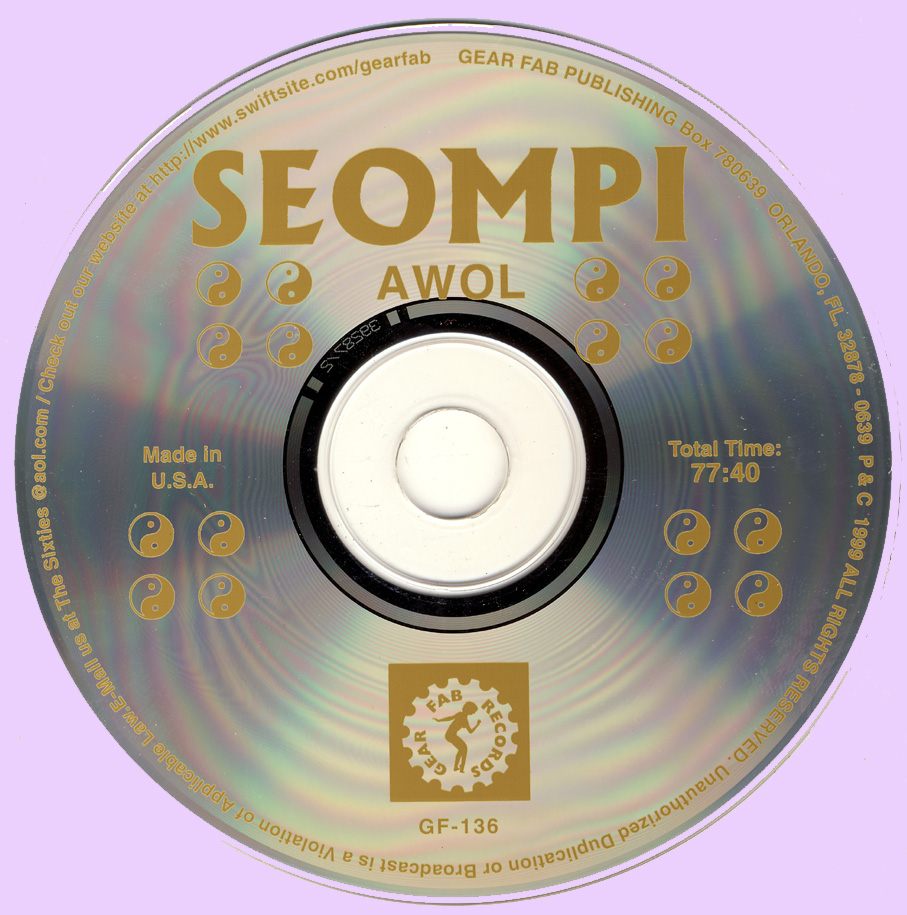
The year was 1970 and Dave Williams was done with his stint at one of Texas's finest barbed wire facilities. The same path that had landed Roky Erickson at Rusk Stale Hospital had put Dave behind bars. Five years earlier, Dave was a founding member of the Headstones, McAllen Texas's answer to teen angst driven rock music. Not content with being the usual 'cover’ band, Dave began to write original tunes and worked long and hard in rehearsal sessions to perfect them.
After releasing legendary singles on the Pharaoh label and being courted by numerous major labels, the band called it quits in 1968. Dave formed the short-lived band The Meat" in 1969 just prior to his marijuana possession conviction that made him a guest of the State of Texas for the next year. Always an innovator, Dave formed SEOMPI as a three piece, 'no guitar* band, with Dave and Patrick Rockhill on bass, and Bill Reid on drums. Seompi was an acronym for 'Serf Expression On Musically Potential Instruments" and a synonym for 'loud’.
This dual bass attack released their first 45 "Summer's Comirv On Heavy” b/w "Lay On The Floor' on the Black Star label and later re-cut it adding guitarist Mitch Watkins to the mix for a more accessible sound. Mitch was a phenomenal guitarist and stayed who with the band and can be heard on their other material on this CD. During 1971, the band moved to Austin which would remain their home base. They built a solid local following and were best known for their awesome sound system, loud playing, and Purple Tour Bus.
Local soundman David Gardner worked closely with the the band, manning the soundboard lor their many live gigs which included opening for ZZ Top, Buddy Miles, Foghat, and Trapeze. Their sound system included the heavy duty Kustom triple 15" woofer, "Ice Box' style amps and later added an even more powerful Altec Lansing Sound System to allow for the vocals to catch up to the levels of the instruments. Dave also recorded many of the band's tedious rehearsals at which they would experiment with intricate time changes and 30+ minute songs.
This was NOT your typical three chord heavy rock band. By 1974. Seompi was ready to call it quits. Just prior to their final demise Mitch Watkins had been replaced by Billy "Skirt" Rowe on guitar. Other band members included Lee Manley on drums. Mitch has gone on to have a very successful career in the "New Age" music field and has a large following in Europe. Drummer Bill Reid moved back to his hometown of McAllen where he remained close to the music biz by working in speaker design and manufacturing. Pat Rockhill could not be contacted to participate in this project but was last known to be on trie West Coast and out of the music business.
Dave Williams continued to play in 'The Remaining Few* from 1974- 1978 with Lance Woodbum on guitar, and ex-Headstone Winston Logan on drums. Today, Dave plays with his band "Free Wine' and is looking forward to his final release from incarceration in the near future. His efforts have spanned a period of over 30 years and, represent some of the finest music the State of Texas can claim as their own. While he may not have received the recognition that some of his Lone Star brethren received, those who were lucky enough to see or play with Dave appreciate his awesome talent. Hopefully, with this release his music will live on and entertain future generations of music.
Tracks
1. Summer's Comin On Heavy (D.Williams, P. Rockhill) - 3:41
2. Slide, Slide (D. Williams, P. Rockhill) - 3:22
3. Almost In The Hole (D. Williams, P. Rockhill) - 3:36
4. Lay On The Floor (D. Williams, P Rockhill) - 3:11
5. Kittens (D. Williams, M. Watkins) - 3:56
6. Awol (Williams, Rockwell, Reid) - 5:59
7. A Question Of Nobility (Williams, Rockhill, Watkins) - 7:07
8. Voodoo Chile (J. Hendrix) - 7:02
9. Summer's Comin' On Heavy (D.Williams, P. Rockhill) - 3:24
10.Slide, Slide (D. Williams, P. Rockhill) - 4:43
11.Almost In The Hole (D. Williams, P. Rockhill) - 3:19
12.Lay On The Floor (D. Williams, P. Rockhill) - 3:09
13.And I Ain't Seen Him Since (D. Williams, P. Rockhill) - 5:53
14.Do You Hot Know? (Williams, Rockhill, Watkins) - 3:40
15.Sticky Situation (Rockhill, Watkins) - 7:20
16.Elijah (Williams) - 2:55
17.What Is The Reason? (Williams, Rockhill) - 4:49 Tracks 5-17 previously unreleased
In love with the British band Traffic and full of Latin American feeling, brothers Charles and Jorge Spiteri decided to move to London at the start of the 70s and try their luck as musicians. In that adventure they did all Kinds of things: washing dishes, studying cinema, flirting, drifting around and honing their instruments and songwriting style. The tracks that make up this album were born in the middle of the cold weather, poverty and the contact with the epicenter of London's rock scene.
'Spiteri' - or 'the snake record', as it was known in Venezuela in 1973 - became a cult record for Venezuela's rock. They were Venezuelans recording in Europe and making fusion rock that hadn't been heard before: it was Venezuelan music but in a completely contemporary format, almost before its time. Jorge and Charles rubbed shoulders with Georgie Fame. Alan Price, Steve Winwood. Bob Marley. Osibisa and the whole UK underground Scene. They soon became the British answer to the Santana phenomenon.
35 years later, 'Spiteri' still sounds fresh. We can listen to this record and travel to a specific moment in rock's evolution, but we can equally appreciate how some of its elements could be taken up again, like a DNA that must be passed on.
Tracks
1. Campesina (Stelio Bosch Cabruja. Arranged Jorge Spiteri) - 5:26
2. Hey Tono (Jorge Spiteri) - 5:07
3. Monday Morning (Jorge Spiteri) - 4:34
4. Barlovento (Eduardo Serrano, Arranged Charlie Spiteri) - 1:53
5. Don't You Look Behind (Jorge Spiteri) - 2:53
6. No Time For Hesitation (O Mai O Mai) (Jorge Spiteri) - 2:28
7. Soul Inside (Joe Romero) - 8:30
8. Summer After Winter (Jorge Spiteri) - 3:14
9. Piroro (Jorge Spireri) - 2:45
10.Girl (Jorge Spiteri) - 3:33
11.Stop Now You' Re Wasting My Time (Jorge Spiteri, R Valera) - 4:14
12.Retorno #2 (Charlie Spiteri) - 4:40
13.I'm A Man (Winwood, Miller, Arranged Spiteri) - 4:22
14.Voz Charlie - 0:14
15.Piroro (Demo) (Jorge Spiteri) - 2:44
16.Knowing Someone (Jorge Spiteri) - 2:31
17.Girl (Demo) (Jorge Spiteri) - 4:43
18.Summer After Winter (Demo) (Jorge Spiteri) - 2:28
19.Voz Charlie - 0:46 Bonus Tracks 12-19
Spiteri
*Jorge Spiteri - Acoustic Guitar, Some Piano, Lead Vocals
*Charlie Spiteri - Congas, Lead Vocals
*Joe Romero - Electric Guitar, Timbales, Sax, Lead Vocals on 'Soul Inside'
*Chema - Bass Guitar
*Micho - Flute
*Bernardo Ball - Drums, Percussion
*Barry Kirsch - Piano
Shawn Phillips shares with Tim Buckley and Van Morrison the passion for black music and a constant innovation in vocal techniques.
Texas-born, Phillips began his career as a folk-singer in California, where he recorded his early albums Favourite Things - I'm a Loner (Columbia, 1965), that included only three original compositions, and First Impressions (Columbia, 1966), which was a little bolder but basically also in the tradition of the New York folksinger. After living in England and Paris, Phillips settled in Italy. Sessions with Steve Winwood, Chris Wood and Jim Capaldi of the Traffic yielded the material for Contribution (A&M, 1970), a much more original work.
First of all, the material was entirely composed by Phillips. Second, it included three lengthy songs (L Ballad, Withered Roses, Screamer For Phlyses) that looked more like jams. Third, Phillips mixed folk, rock, psychedelia, jazz, classical and Indian music. The opening Man Hole Covered Wagon was the only conventional song. Withered Roses was closer to a raga than to a ballad. L Ballade was virtually a classical sonata.
The pieces on Second Contribution (1970) were even more abstract, free-form, disjointed. Phillips was no longer restrained in his innovative use of the guitar and the sitar, and was even self-indulgent in his display of his three-octave vocal range. Orchestral arrangements by Paul Buckmaster enhanced the magic. The impressionistic power of Steel Eyes, The Ballad Of Casey Deiss (vibraphone, horns), Song For Sagittarians and She Was Waitin' For Her Mother was unique.
by Piero Scaruffi
Original Vinyl Album Liner Notes
The Shawn Phillips music. Kaleidoscopic and organic. Flowing. Living for a time. Incorporating every musical style from Bulgarian to quarter tone to African. But going its own way. Fulfilling one of the prerequisites of art -- It doesn't leave you feeling quite the same.
"If I had to describe my music in a few words, I would say it's about freedom -- the frequency of intensity that any individual being feels in a moment of unselfish experience."
"I'm trying to take a musical sound heard by the ear -- and then take the sound which continues from the ear to the mind -- and try and paraphrase that sound through electronics."
"I believe every bit of the music I play is within each individual already."
"My music is an attempt to move the inner self, in each individual who listens to it. I've tried to cover the beauty and the ugliness."
"It takes a musician to translate it from the mind into the mechanical."
"I want everyone who hears my music to experience the sadness, perplexity, the great thoughts, the grave thoughts, the joy, the freedom, the fullness of the experiences I've had, which in turn, were expressed to create the music."
"Some of my music tries to create a crisis in the mind of the individual who listens to it, and leave it to him to resolve it ... it requires both intellectual and emotional response -- the two tied together."
"In Mexico with Donovan -- my music began to come out. I threw off all the crap and I played with twice the energy and drive I ever had before. It was funny. I just suddenly came into harmony with all things."
"I'm in Italy standing on the outside looking in. But I'm not in a hermitage."
"No -- not a hermitage. But right in the middle of everything that's happening."
"It's all created for people."
"As my self arrived at harmony -- I don't like the word spiritual, but I guess that's what it is -- my music arrived there too. When I recorded the album, I told the musicians: I'm a man. I've created this much. You're men. I want you to put what you feel to it."
Tracks Contribution
1. Man Hole Covered Wagon - 4:34
2. L Ballade - 6:47
3. Not Quite Nonsense - 1:45
4. No Question - 3:37
5. Withered Roses - 8:18
6. For JFK RFK & MLK - 4:54
7. Lovely Lady - 4:56
8. Screamer for Phlyses - 6:09 Second Contribution
9. She Was Waiting for Her Mother at the Station in Torino ... - 4:54
10. Keep On - 3:21
11. Sleepwalker - 1:32
12. Song for Mr. C - 3:49
13. Ballad of Casey Deiss - 6:12
14. Song for Sagittarians - 3:43
15. Lookin' Up Lookin' Down - 3:55
16. Remedial Interruption - 1:56
17. Whazz At - 1:56
18. Schmaltz Waltz - 1:44
19. F Sharp Splendor (Paul Buckmaster) - 0:36
20. Steel Eyes - 4:18
All titles written by Shawn Phillips except where noted.
Linn County were formed in Iowa, round 1967. They moved to San Francisco prior to recording their first album in 1968.
The third and last Linn County LP, came out in 1970. Their sound follows the steps from their previous release, tasty psychedelic blues with slices of soul, and bit more mature essence. Though the band had slightly changed it's name by the time this LP was released.
They split up in 1970. A solo album released by band member Stephen Miller the same year included 4 tracks recorded by the final Linn County line-up.
Tracks
1. Tell The Truth (R. Charles) - 5:02
2. Monkey Man (Stephen Miller) - 3:38
3. TV Free (Stephen Miller) - 3:10
4. Wine Take Me Away (T. Collins, M. Haggard) - 3:00
5. Next Time You See Me (Forest, Harvey) - 4:21
6. Let The Music Begin (Stephen Miller) - 3:03
7. Black Nights (Legenross) - 4:52
8. Further On Up The Road (Veasey, Robey) - 2:19
9. Boogie Chillun (J. L. Hooker) - 8:41
10.'Till The Break Of Dawn (Stephen Miller) - 1:48
Musicians
*Stephen Miller - Organ, Vocals
*Larry Easter - Saxophone, Flute
*Dino Long - Bass
*Clark Pierson - Drums
*Fred Walk - Guitar, Sitar
Edward Bear’s sophomore lp came in the form of Eclipse the summer in 1970. Featuring a healthy dose of well-written tight folk-inspired pop, it was an obvious continuation of the first album. The first single "You Can't Deny It" was issued amid high hopes.
Also a graphic artist, Weldon designed a sleeve for the 45 that actually had something for the buyer to look at, one of rock's first 45 sleeves to have some actual thought put into it. Again the group received a good critical response and decent airplay.
Soon after their second release, Danny Marks left the band and their got more softened but gained much more popularity.
Tracks
1. Four Months Out to Africa (Paul Weldon) - 3:13
2. Chris' Song (Larry Evoy) - 6:23
3. You Can't Deny It (Danny Marks) - 4:40
4. Pickering Tower (Larry Evoy) - 2:57
5. T-1 Blues (Danny Marks) - 3:24
6. Pirate King (Larry Evoy) - 3:23
7. Long Forgotten Day (Danny Marks) - 4:55
8. Monday (Danny Marks) - 5:40
Can you imagine paying $100,000 for a group and then hiding it away for over a year?" So ran the first line in an article about Archie Whitewater back in August 1970. in the Free Lance-Star newspaper out of Fredericksburg. Virginia. "Well, that's exactly what Chess Records did with the group..." Not that Chess's eventual publicity campaign made stars out of the nine musicians in the band. In fact. Archie Whitewater's lone album for Chess's cool spin-off label Cadet Concept, is a best-kept secret among collectors - and this reissue, remastered from the original tapes, marks its first-ever appearance on CD.
Copies of Archie Whitewater now sell for upwards of £100. fuelled chiefly by the plethora of funky drum breaks and beats scattered across the album. The album's most acknowledged track is probably 'Cross Country', a mellow funk track with some sublime electronic piano and serene vocals, because it was exhumed by Chicago hip-hop artist Common (or Common Sense. as he then called himself) for the track 'Chapter 13 (Rich Man Vs Poor Man)' on his second album Resurrection from 1994.
Another Archie Whitewater song. 'Hulk', was borrowed by 90s New York hip-hop act Blahzay Blahzay. Other rap artists followed suit, usually recycling some aspect of 'Cross Country' within their music. Since the 90s. the cult status of Archie Whitewater's sole album has grown steadily: a quick glance at websites like Popsike reveals just how many copies of the album have sold for silly money on eBay and the record is praised by numerous blogs which pride themselves on their crate digging credentials.
And yet despite the plethora of information now available about myriad acts via the internet, precious little has been documented about their story. Simply put, Archie Whitewater adopted the big band 'horn rock' mould pioneered by the likes Blood Sweat And Tears in the late sixties, fusing elements or funk soul. psychedelic rock and jazz into their songs. Also some debate dwelt on their possible association with other acts on the Cadet Concept labels (namely Rotary Connection and the productions of Charles Stepney) or even whether they were black or white.
Archie Whitewater captures a period in American music when musicians adopted a carefree approach to combining their influences. In so doing, they created some idyllic music which sounds unrestrained by the usual straitjacket imposed on artists on major labels. After some forty years. RPM is proud to usher this fine record into the digital age.
by John Reed. November 2011
Tracks
1. Don't Be Short (Bob Berkowitz, Travis Jenkins) - 2:09
2. Northstar (Bob Berkowitz, Charles Hyams) - 4:17
3. Mist Of The Early Morning (Bob Berkowitz, Charles Hyams) - 3:52
4. Life Is A River (Travis Jenkins) - 3:23
5. Friends And Neighbors - 3:46
6. Country To The City - 4:27
7. Home Again - 4:09
8. Cross Country - 3:21
9. Lament For The Walking Dead (Travis Jenkins) - 4:35