In The Land Of FREE we still Keep on Rockin'

It's Not Dark Yet

Plain and Fancy

Music gives soul to universe, wings to mind, flight to imagination, charm to sadness, and life to everything.

Plato

Wednesday, June 1, 2016

Thee Image - Thee Image / Inside The Triange (1974-75 us, sparkling light prog rock with funky affects, 2014 remaster edition)


Thee Image were formed in 1973 by former Blues Image, Iron Butterfly and Cactus guitarist Mike Pinera and keyboard player Duane Hitchings, formerly with Buddy Miles. Pinera's first band, Blues Image scored a US hit with the single "Ride Captain Ride" and had begun life as the house band of a Miami rock club called Thee Image. Pinera's skill as a guitarist meant he was a much in demand musician. After a spell in a reformed line-up of the hard rock group Cactus in 1973 Pinera formed Thee Image with Duane Hitchings on keyboards and talented drummer Donny Vosburgh (who had also played with Blues Image). The band was signed to Manticore  in 1974 by Mario Medius who had known Mike Pinera from his time at Atlantic Records in New York whilst Pinera was a member of Iron Butterfly.

Thee Image recorded their self-titled debut album at Criteria studios in Miami, producing a work of polished and sophisticated rock. The album enjoyed a release both in the USA and Europe (where Manticore was distributed by WEA Records).

Although "Thee Image" failed to chart, sales were encouraging enough for Manticore to continue to support the band with the recording of their next album, "Inside the Triangle" in 1975. Once again recorded at Criteria studios in Miami, the band's second album was released in the USA only and arguably fell victim to ELP's waning interest in Manticore as an entity. In hindsight, Motown Records were perhaps not best suited to distribute and market rock music. 

As result, despite gaining positive notices as a live act, sales of "Inside the Triangle" failed to live up to expectation and by 1976 Thee Image had cense' to exist. Mike Pinera soon embarked on a solo, career and would later work with Alice Cooper among others and remains a much respected and in demand session guitarist.

The demise of Thee Image seemed to pre-empt the demise of Manticore itself. Although the label was releasing some remarkable music by the middle of 1976 it was apparent that the label that had begun as a worthy outlet for the music of Emerson Lake & Palmer and other fine acts was swiftly becoming a burden. The harsh light of day revealed that aside from Emerson Lake and Palmer, few, if any of the other acts signed to Manticore had the commercial success hoped for them (with the possible exception of PFM). Greg Lake would later reflect; "At the beginning it was all very exciting having your own label, but quite soon we realized that it was a huge task running Manticore and also recording and touring as ELP in our own right. It was also unfair on the other acts we had signed as we simply didn't have the time to devote to the proper promotion of their albums. As a result, Manticore lasted only a few years, but in that time some wonderful music was released by the label". 

The final album released on the Manticore imprint was the album "Jet Lag" by PFM, issued in the early months of 1977. By now, the Punk rock explosion had begun and groups such as Emerson Lake and Palmer were the target of Punk's protagonists. Although lasting a little over three years. Manticore Records released a body of music that now bears much worthy reappraisal. The passage of time has been kinder to the music of the acts signed to the label.

This compilation gathers together the tracks from both albums Thee Image recorded for Manticore and is a fine collection of sophisticated rock music by three talented musicians.
by Mark Powell


Tracks
Thee Image 1974
1. Good Things (Mike Pinera) - 2:53
2. For Another Day (Mike Pinera) - 4:05
3. Drift Off Endlessly (Duane Hitchings) - 4:22
4. Love is Here (Mike Pinera, Duane Hitchings, Buddy Miles) - 4:05
5. So Hard to Say (Mike Pinera) - 3:45
6. It Happens All the Time (Mike Pinera, Ted Webb) - 3:07
7. Come to You (Duane Hitchings) - 3:02
8. Temptation (Donny Vosburgh, Mike Pinera) - 5:13
9. Show Your Love (Duane Hitchings, Mike Pinera, Donny Vosburgh) - 6:43
Inside The Triangle 1975
10.Fly Away (Mike Pinera) - 6:41
11.Far Away Places (Mike Pinera, Tommy Curtiss) - 3:03
12.High Time Feeling (Mike Pinera, Duane Hitchings) - 3:39
I3.I.O.U.'s (Mike Pinera) - 2:35
14.All Night Long (Mike Pinera, Donny Vosburgh, Duane Hitchings) - 4:19
15.Good To You (Mike Pinera) - 6:09
16.Alone With You (Mike Pinera) - 5:08
17.Rapture Of The Deep (Mike Pinera, Duane Hitchings) - 1:44
18.Nobody Wins 'Til the Game is Over (Mac Rice, B. Crutcher) - 4:14

Thee Image
*Mike Pinera - Guitars, Vocals
*Duane Hitchings - Keyboards, Moog, Keyboard Bass, Univox Synthesizers, Univox Stringman, Vocals
*Donny Vosburgh - Drums, Percussion, Vocals

Related Acts
1969-70  Blues Image - Blues Image / Red White and Blues Image 
1970  Iron Butterfly - Metamorphosis (Japan SHM edition)
1972  Ramatam - Ramatam  

Free Text
Text Host

Saturday, May 28, 2016

Various Artists - Heavy Prog Fallout (1969-73 uk, extraordinary downer rock melted with prog blues and psych, 2011 comp)


A trailblazing compilation of rare, previously unreleased and live material recorded between 1969-73 by a number of obscure and unknown UK bands alongside some AA nuggets from our Prog-Rock catalogue. This collection spotlights ultra-rare material by Heavy Prog-Rock Blues outfits White Rabbit, Sweaty Betty and Spread Eagle with powerful additional material by Underground bands Khayyam, Cathedral and St James Infirmary. Other forgotten acts included are head-splitting Midlands rockers Stallion plus the Uriah Heep-esque Hot Air who few people know but will not forget when they hear this! A rare Necromandus demo is also included together with other blitzkrieg renditions by the likes of Argus and Chapel Farm plus a potent Slowbone studio recording of very high quality featuring some blistering guitar and exploding Hammond organ. 

A special live bonus track has been added showcasing legendary prog-rockers Fusion Orchestra weighing in at eight minutes. This contribution from the bands own archives is the only live and previously unreleased recording of this truly great band to be officially released and thus we are delighted to be able to round this CD off with their thunderbolt Winter Nights.


Artists - Tracks
1. Stallion - All Of The While - 4:40
2. Chapel Farm - Vacuum - 4:06  
3. White Rabbit - Mindworm - 5:38  
4. Sweaty Betty - Gunsights - 3:09  
5. St James Infirmary - Sunshine Help Me (Live) - 5:33  
6. Spread Eagle - Too Tired To See - 3:07  
7. Cathedral - Reflections In Black Glass - 4:41  
8. White Rabbit - It's A Fact - 5:09  
9. Khayyam - Collusion - 5:12  
10.Slowbone - The Last Goodbye - 4:31  
11.Hot Air - Goin' Away - 3:24  
12.Necromandus - Judy Green Rocket - 3:35  
13.White Rabbit - Still The Same - 4:22  
14.Cathedral - Passing Shadows - 5:58  
15.Argus - Road Of Life - 3:26  
16.Fusion Orchestra - Winter Nights (Live) - 8:10

Related Acts
1969  Levee Camp Moan ‎– Levee Camp Moan Plus Peacock Farm Free Concerts
1969  Rare Amber - Rare Amber  
1970-73  Various Artists - Downer Rock Genocide
1972-73  Three Headed Dog - Hound Of Hades
1973  Fantasy - Paint A Picture (with bonus tracks)
1973  Fusion Orchestra - Skeleton In Armour (2009 japan remaster)
1973/77  Argus - Argus

Free Text
Just Paste

Tuesday, May 24, 2016

Soft Shoe - For Those Alone (1978 uk, delicate folk rock with psych traces, 2007 issue)


"For Those Alone"  originally released in 1978, this incredibly rare privately pressed UK progressive folk album was the product of Ron Fellows and Paul Toplis, and features strong vocals and intriguing arrangements, superbly presented in 12" X 12" gatefold card sleeve with the disc mounted on a 12" card insert, housed in sticker-numbered PVC dust jacket!) Limited to 777 copies!

Elegant sensitive acoustic ballads, sometimes turns to electric, kneating with colored psychedelic reminiscences. There's one song with Italian lyrics, grafted with traditional local folk. 


Tracks
1. Say I Love You To Me Please - 3:52
2. Out On The Plain - 3:36
3. Anna - 3:11
4. Let Me Be The One - 3:00
5. She Dosn't Care About You Anymore - 3:34
6. For Those Alone - 5:02
7. Girl In A Million - 3:45
8. The Sky Is Crying - 5:11
9. Final Curtain - 4:01
10.Trailer - 4:27
Music and Lyrics by Ron Fellows, Paul Toplis

The Soft Shoe
*Ron Fellows - Vocals, Rhythm, 12 String Guitars, Mandolin, Percussion
*Paul Toplis - Vocals, Lead, Rhythm Guitar, Bass, Organ, Synth

Free Text
Just Paste

Friday, May 20, 2016

Frantic - Conception (1970 us, exciting hard blues psych rock, 2007 digi pak issue)


Formed in 1965 and originally known as The Frantics (note the plural), this six piece bounced all over the country. Leaving Montana, the mid-1960s found them alternately calling Santa Fe, New Mexico, Colorado Springs, Colorado and Los Angeles, California their home.

A mid-1960s single for the small Sunco label ("Route 66" b/w "La Do Da Da") vanished without a trace and by 1971 the band found themselves poised for the big time having signed to the newly formed Ampex-affiliated Lizard label. Produced by Stan Farber, "Conception" offered up a rather conventional set of guitar rock.

Among the highlights were their molasses  cover of 'Hey Joe', 'More of a Man' (reflecting a touch of psychedelic guitar) and the guitar-propelled 'Her and Her Mountain'.  Elsewhere the dayglo gatefold sleeve was certainly cool.


Tracks
1. Baby (Mort Shuman, Cllve Westlake) - 3:13
2. Wicked Woman (Max Byfuglin, Kim Sherman) - 3:17
3. Scitnarf (Max Byfuglin) - 1:56
4. Hey Joe (William Moses "Billy" Roberts) - 5:15
5. More Of A Man (Fergus) - 3:49
6. Little Girl (Van Morrison) - 2:59
7. Shady Sam (Max Byfuglin) - 3:45
8. Her And Her Mountain (Kim Sherman, Dennis Devlin) - 2:37
9. Morning Dew (Bonnie Dobson) - 4:00
10.Midnight to Six Man (Dick Taylor, Phil May) - 4:05

The Frantic
*Kim Sherman - Lead Guitar, Vocals
*Max Byfuglin - Lead Vocals
*Dennis Devlin - Rhythm Guitar, Vocals, Harmonica
*David Day - Bass Guitar, Vocals
*Jim Haas - Keyboards, Vocals I
*Phil (Gordo Head) - Drums

Free Text
Text Host

Thursday, May 12, 2016

Essra Mohawk - Essra Mohawk (1974 us, elegant avant jazzy funk smooth rock, 2010 bonus tracks edition)


Philadelphian Essra Mohawk is best known as the answer to the trivia question: “Who was the first female Mother (of Invention)?” She joined Frank Zappa and the band in 1967. Her name was Sandy Hurvitz back then, although Zappa dubbed her “Uncle Meat” for obscure reasons.

But Mohawk had been in the music business for several years before her association with the Mothers at age 19. She recorded a single for Liberty when just 16 years old (“The Boy with the Way”, b-side “Memory of Your Voice”) and wrote songs recorded by the Shangri-Las and Vanilla Fudge. In 1969, Mohawk, nee Hurvitz, put out her first solo album, Sandy’s Album Is Here at Last!, on Zappa’s Bizarre record label. The record went basically unproduced (fellow Mother Ian Underwood is credited) and suffers from poor sound quality and other technical issues. Collectors’ Choice has recently reissued this album and Mohawk’s next two releases, Primordial Lovers (1970) and Essra Mohawk (1974).

Critics frequently compare Mohawk with other female singer songwriters from her era, especially Laura Nyro and Carole King, because all three write piano-based jazz rock that frequently concerns issues of Mother Earth spirituality and distaff loneliness. However, the three have distinct personalities and anyone with even a glancing familiarity of the musicians could easily discern their differences. Mohawk is the most, um, out there. What would one expect from the original woman Mother? Conventionality? Her songs meander all over the place and use serial repetitions rather than hooks to catch the audience. 

Mohawk’s self-titled third album may be her most conventional. She covers the George Gershwin “Summertime” in a bluesy way, and only one of the 11 original tracks clocks in at more than four minutes, and that one (“I Cannot Forget”) is only four minutes and 24 seconds long. The lyrics are more sedate as well, frequently about love between a man and a woman. Yet Mohawk still takes risks and sings the odd lyrics about life and death, nature and transcendence, faith and reason, etc. The Elektra album comes off as quirky (“My right hand has six fingers”) more than weird. 
by Steve Horowitz

Essra Mohawk has never recorded for the same record label more than once, but it's rarely affected the consistency of her songwriting. Here, she left behind the free-form, rambling qualities of her earlier work, and, working within slightly more conventional rock confines, rocked 'n' rasped her own inimitable way through ten finely crafted psych-pop gems, as well as one frenetic take on Gershwin's "Summertime." "New Skins for Old" starts as the album means to go on: "Can we doubt when we don an old animal skin/that it's really a previous state we were in"; birth, death, reincarnation and the universe are the album's recurrent themes. 

Despite its muscled-up rock power, the set also captures Mohawk solo at the piano for "You're Finally Here" and "I Cannot Forget," two warm, candid love ballads. Porgy and Bess fans may balk at her unusual treatment of "Summertime," but approached without prejudice, it's a fine tribute. As usual, though, it is the romantic, spiritual and sensual imagery that never fails to impress. "Openin' My Love Doors" is a case in point -- Mohawk describes a post-coital moment of bliss ("We made love while the clouds cried/Now the birds sing as we lie side by side") and runs with it throughout the song. A great achievement from start to end, and Mohawk at her vivid and insightful best. 
by Charles Donovan


Tracks
1. New Skins For Old - 2:30
2. Openin' My Love Doors (Essra Mohawk, Tom Sellers) - 2:24
3. Full Fledged Woman - 3:10
4. You're Finally Here - 2:56
5. Summertime (Ira Gershwin, George Gershwin, DuBose Heyward) - 2:28
6. Back In The Spirit - 2:40
7. You Make Me Come To Pieces (Kenny Jenkins, Essra Mohawk) - 3:09
8. I Cannot Forget - 4:47
9. Song To An Unborn Soul - 2:19
10.If I'm Gonna Go Crazy With Someone It Might As Well Be You (Essra Mohawk, Tom Sellers) - 3:32
11.Magic Pen - 2:25
12.I Cannot Forget (Alternate Version) - 5:01
13.I Stand Here Naked - 3:08
Words and Music by Essra Mohawk except where stated.
Bonus tracks 12-13

Musicians
*Essra Mohawk - Vocals, Keyboards, Guitar
*Larry Carlton - Guitar
*Eric Errison - Congas
*Gene Estes - Percussion, Vibes
*Wilton Felder - Bass
*Ed Green - Drums
*Tony Hensley - Piano
*Keny Jenkins - Flute
*Dave Kempton - Piano
*Dennis Parker - Bass
*Dean Parks - Guitar
*Geno Pello - Drums
*Joe Sample - Piano
*Tom Sellers - Piano, Bass, Guitar
*Skip Switzer - Drums
*Bert Wilson - Sax
*Zitro - Drums, African Talking Drums

1969  Sandy Hurvitz - Sandy's Album Is Here At Last!  
1970  Essra Mohawk - Primordial Lovers

Just Paste
Free Text
Text Host

Tuesday, May 10, 2016

Cold Blood - First Taste Of Sin (1972 us, spectacular funk soul brass rock)


Many of the greatest groups in rock and roll history have made their home in San Francisco and the surrounding Bay Area. While 'Frisco was at the forefront of the psychedelic music movement spinning around the intersection of Haight and Ashbury,  some ' serious funk was springing up as well. Free-form DJs like Tom Donahue, who coined the term ; "underground" radio  and Abe "Voco" Kesh interspersed hip soul and jazz in between the ^extended jams of the Dead and Quicksilver in their nightly shows.

Sylvester Stewart, aka Sly Stone, was also a noted Bay Area DJ and record producer and an influence on the scene. Latin music was always in the air as well, and bands like Santana, Tower of Power, and Malo vibed to the incantory force of the extended boogaloo.  Many of the greatest groups in rock and roll history have made their home in San Francisco and the surrounding Bay Area.While 'Frisco was at the forefront of the psychedelic music movement spinning around the intersection of Haight and Ashbury, some ' serious funk was springing up as well. 

Free-form DJs like Tom Donahue, who coined the term ; "underground" radio and Abe "Voco" Kesh interspersed hip soul and jazz in between the ^extended jams of the Dead and Quicksilver in their nightly shows.Sylvester Stewart, aka Sly Stone, was also a noted Bay Area DJ and record producer and an influence on the scene.Latin music was always in the air as well, and bands like Santana, 

Tower of Power, and Malo vibed to the incantory force of the extended boogaloo. One of the best bands in combining the punch of great rhythm and blues with the hippie aesthetic of brotherhood and freedom was Bay Area's legendary Cold Blood.With the backing of pioneer rock impresario Bill Graham, they won over area audiences almost immediately after their formation in 1968.

The Fillmore Auditorium was the epicenter of San Francisco rock, and no better place to see a band "let it all hang out," as many shows ran all night long.The band's first two albums on Bill Graham's San Francisco Records — Cold Blood, released in 1969 and produced by David Rubinson, and Sisyphus, a 1970 release produced by Santana engineer Fred Catero, are excellent representations of a powerhouse band that could really move an audience. 

They were a winning combination of good songs, excellent covers and the powerful, expressive voice of Lydia Pense, their extraordinarily beautiful lead singer. A change in management and a move to Reprise Records in 1972 would see the release of their third album First Taste Of Sin.The twenty-something members of Cold Blood had quite a few years of touring and recording under their belts by now, and while their records did not have the massive commercial success of some of their peers, they still had many fans around the country. 

There were some personnel changes in the group at this time most notably the departure of founding member guitarist, Larry Field.Lydia Pense, their lead singer was still fronting the band. While she had the burden of being compared to Janis Joplin, the preeminent female white soul singer of her day, Lydia's individual style and beauty was continuing to blossom.Another evidence of maturation in the abilities of the group was their choice of budding soul genius Donny Hathaway as producer for First Taste Of Sin.Despite his relative youth, this Chicago-born singer and a songwriter had already received kudos for his work with Curtis Mayfield, Jerry Butler and The Impressions. 

His reputation in the industry as the next generation's leading soul music auteur was spreading throughout the music industry.Warner Bros, and its sister label Reprise were a stronghold in the Seventies for the production of records of high artistic integrity, that were also a gas to listen to. The combo of Hathaway and Cold Blood produced a sophisticated blend of R & B and rock that appealed to both soul and progressive crowds.Hathaway contributed two excellent songs to the album, the slow blues You Had To Know, a showcase for singer Lydia, and Valdez In The Country, as well as his gospelinfluenced piano and jazzy organ playing.  

The presence also of Bay Area session veterans Coke and Pete Escovedo on congas, timbales,and percussion generated fire in the rhythm section with their Third World poly-rhythms. Also beefing up the horn section is noted jazz tenor saxophonist Pete Christieb.A longtime member of Doc Severensen's Tonight Show Band, he was an in-demand session player.A rare cover version of fellow Warner-  Reprise artist James Taylor's Low And Behold is an adventurous choice of song, and Cold Blood adapts the tune to their rough and ready rockin' soul style.Cold Blood recorded three more albums in their life span before disbanding in 1976. Thriller was released in 1973 and Lydia in 1974, both also for Warner-Reprise. 

Their swansong was Lydia Pense and Cold Blood, produced by Stax Records stalwart and respected guitarist/songwriter Steve Cropper for ABC Records.There have been continued rumblings of activity in the Cold Blood camps , so the book may not yet be closed on the contributions of this relatively unheralded group to rock's legacy.  Here then is one of Cold Blood's finest endeavors ‘First Taste Of Sin’.
by Al Fichera


Tracks
1. Visions (Donny Baldwin, Boroquez) - 3:23
2. Lo And Behold (James Taylor) - 4:12
3. Down To The Bone (Danny Hull, Cecil Stoltie) - 5:45
4. You Had To Know (Donny Hathaway) - 5:50
5. My Lady Woman (Danny Hull, Cecil Stoltie) - 4:04
6. No Way Home (Danny Hull, Cecil Stoltie) - 3:25
7. Inside Your Soul (Max Haskett) - 3:28
8. All My Honey (Danny Hull, Cecil Stoltie) - 3:31
9. Valdez In The Country (Donny Hathaway) - 3:44

The Cold Blood
*Lydia Pense - Vocals
*Michael Sasaki - Guitar
*Danny Hull - Tenor Saxophone
*Bill Atwood - Trumpet
*Raul Matute - Hammond Organ, Piano,
*Mel Martin - Baritone, Tenor Saxophone, Flute
*Max Haskett - Trumpet, Vocals
*Rod Ellicott - Bass
*Sandy McKee - Drums, Vocals
Additional Musicians
*Donny Hatthaway - Piano, Organ
*Coke Escovedo - Timbales, Percussions
*Pete Escovedo - Congas
*Pat O'Hara - Trombone
*Gordon Messick - Trombone
*Bill Baker - Alto, Baritone Sax
*Peter Christlieb - Tenor Sax
*Ernest Diridoni - Tuba
*Paul Beaver - Moog

1969-70  Cold Blood - Cold Blood / Sisyphus

Free Text 
Just Paste

Sunday, May 8, 2016

Cold Blood - Cold Blood / Sisyphus (1969-70 us, exceptional funk soul rhythm and blues brass rock)


In the heady days of the '60s pop music explosion in the San Francisco Bay area numerous bands formed, played a few dates and then their members dispersed to more successful groups. One example of that was the New Invaders, who had success in the Bay Area. But a re-formed group, Cold Blood, scored a national hit single and six of their albums made the Billboard charts.

The band was an artful blend of rock elements with soulful horns and a powerful vocalist, a bit like Tower Of Power, another successful Frisco band. Cold Blood sported the singing prowess of Lydia Pense, whose strong stage presence and bluesy voice generated comparisons to Janis Joplin. 

Pense even held her own on a version of "Piece Of My Heart," one of Joplin's signature songs. Pense was accompanied in the band by original members Raul Matute (piano and organ), Rod Ellicott (bass) and Danny Hull (sax). A number of other players came and went,  including Jerry (also cited as "Larry" in some sources) Jonutz (trumpet or sax), David Padron (trumpet), Larry Field (guitar) and Gaylord Birch (drums).

The band often played the Fillmore, a hugely popular and influential San Francisco theater owned by Bill Graham. In the fall of 1968, Graham opened his own Millard booking agency.  In early '69, he established a holding company, the Fillmore Corp., which included divisions dealing with management, lighting and soundtracks.  He also started Fillmore and San Francisco Records. Cold Blood signed to San Francisco, which issued their debut self-titled album in late 1969. 

It was produced by David Rubinson, who worked with most of the artists in the Graham fold.  He also oversaw albums by everybody from the Chambers Brothers and LaBelle  to Moby Grape and the Pointer Sisters as well as numerous Santana releases. "Cold Blood" was a mix of originals and covers, including a take of "You Got Me Hummin' ", a 1966 soul smash for Sam & Dave written by Memphis stars Isaac Hayes and David Porter. Issued as a single in late 1969, it charted in early 70. 

The success of "Hummin"' and substantial airplay for a follow-up, "I'm A Good Woman," placed the album into the Billboard Top 30, where it enjoyed a 29-week run. Their next album - which is also included in this collection - was issued in early 1971. "Sisyphus" was produced by Fred Catero and the band.  Catero had been the engineer on their first release and would go on to work with Santana and other Frisco artists.

There were other local artists who played on "Sisyphus," including the Pointer Sisters, who sang on "Your Good Thing," and Jose "Chepito" Areas, a member of Santana's band  who played congas and timbales on "Funky On My Back" and "Shop Talk." "Sisyphus" was another success, moving onto the Billboard chart for more than three months. 

A single, "Too Many People," also generated a lot of airplay. Then came problems with Graham's business ventures and, in 1971,  he announced plans to close the labels and the Fillmore in San Francisco along with the Fillmore East in New York City. Always a colorful and creative businessman, Graham documented the years of the Fillmore with the three-album "Fillmore: The Last Days," drawn from a series of live concerts at the San Francisco venue. 

One of the featured bands on the best-selling set was Cold Blood, which tore through the blues standard "I Just Want To Make Love To You," one of the highlights of their first album.

While Rubinson moved on to open a state-of-theart studio in San Francisco and Graham continued to produce concerts and tours by acts such as the Rolling Stones and Bob Dylan,  Cold Blood wasn't about to give up because their label had called it quits. Signing with the Reprise division of Warner Bros., they issued the "First Taste Of Sin" album in the spring of 1972. 

It sold well and was followed a year later by "Thriller!," also on Reprise. In 1974, the band moved to Warner Bros, for "Lydia," which acknowledged the focus on their lead singer.  In 1976, signed to ABC Records, they worked with Memphis producer Steve Cropper (guitarist for Booker T. and the M.G.s) on "Lydia Pense & Cold Blood?'

By the late 70s, Pense and the members of Cold Blood disbanded. She spent time raising a family while the rest of the members turned to other projects. One, drummer Gaylord Birch, worked with Santana on the album "Festival" and joined the guitarist on "The Healer," his 1989 project with John Lee Hooker. 

In 1998 Cold Blood briefly re-formed for some dates and there was even talk of a new album, but nothing was out by the end of the decade. Meanwhile, fans of the band can enjoy the best of their output from the San Francisco Records days with these two albums
by Mark Marymont


Tracks
1.I Wish I Knew How It Would Feel to Be Free (Billy Taylor, Dick Dallas) - 5:58
2.If You Will  (Raul Matute) - 5:32
3.You Got Me Hummin' (Isaac Hayes, David Porter) - 5:45
4.I Just Want to Make Love to You (Willie Dixon) - 5:12
5.I'm a Good Woman (Barbara Lynn) - 3:01
6.Let Me Down Easy (James McDougal, Wrecia Holloway) - (5:27
7.Watch Your Step  (Bobby Parker) - 5:26
8.Shop Talk (Cold Blood) - 7:16
9.Funky on My Back (Cold Blood) - 6:54
10.Your Good Thing (Is About to End) (Isaac Hayes, David Porter) - 5:17
11.Understanding (Cold Blood) - 6:33
12.I Can't Stay (Cold Blood) - 4:24
13.Too Many People (Cold Blood) - 4:05

The Cold Blood
*Lydia Pense - Vocals
*Larry Field - Lead Guitar
*Danny Hull - Tenor Saxophone
*Larry Jonutz - Trumpet
*Raul Matute - Hammond Organ, Piano
*Jerry Jonutz - Baritone, Alto, Tenor Saxophone
*David Padron - Trumpet
*Rod Ellicott - Bass
*Frank Davis - Drums

Free Text
Just Paste

Tuesday, May 3, 2016

Satisfaction - Three Ages Of Man (1971-72 uk, extraordinary hard prog jazz brass rock, 2014 remaster)


Lucas and the Mike Cotton Sound were a British R'n'B band who never broke through as recording artists but enjoyed a successful run playing clubs and college dates. However, in the late '60s they decided it was time to move on to something more creatively ambitious, and the group evolved into Satisfaction, who divided their energies between original material and idiosyncratic arrangements of popular rock tunes. A six-piece band with a three-man horn section, Satisfaction walked a fine line between jazz fusion, progressive rock, folk-rock, blues rock, and the brassy stylings of Chicago and Blood, Sweat & Tears, and all of these elements dance around one another on Three Ages of Man, the group's long-lost second album, recorded in 1971 and 1972 but not released until it was discovered by Richard Searle of Acid Jazz Records in 2014. 

The opening track, "My Fixation," sounds like an arty variation on Cream with the addition of a horn chart, the closing reprise is a nearly nine-minute epic with plenty of guitar heroics from Derek Griffiths, and their instrumental take on "House of the Rising Sun" is dominated by Nick Newall's flute, including a coda that finds him riffing largely unaccompanied for over three-and-a-half minutes. However, while chops-intensive daring-do dominates Three Ages of Man, for the sake of contrast the album does feature a few more subdued guitar-and-vocal features with thoughtful lyrics, most notably "One Man Band" and the title track, and the band kicks the more complicated stuff to the side for the hard rock bombast of "Liar Liar."

Three Ages of Man often seems a bit too pretentious and overdone for its own good, but there's no arguing the instrumental virtuosity of this band, and the scope and ambition of this music is a vivid evocation of the time and place in which it was created. Hike up your bell bottoms, grow out your moustache, and play this good and loud. 
by Mark Deming


Tracks
1. My Fixation (Derek Griffiths) - 7:52
2. Don't Turn Away (Derek Griffiths, Traditional) - 1:47
3. House of the Rising Sun (Traditional) - 9:03
4. Three Ages of Man (Derek Griffiths) - 1:59
5. Don't Rag the Lady (John Beecham, Lem Lubin) - 5:10
6. One Man Band (Lem Lubin) - 1:59
7. Liar Liar (Lem Lubin) - 5:58
8. Hotel (John Beecham, Lem Lubin) - 2:25
9. My Fixation (Reprise) (Derek Griffiths) - 8:45

The Satisfaction
*John Beecham - Horn Arrangements, Trombone, Tuba
*Mike Cotton - Flugelhorn, Horn Arrangements, Trumpet
*Derek Griffiths - Guitar, Vocals
*Bernie Higginson - Bongos, Drums, Percussion
*Lem Lubin - Bass, Vocals
*Nick Newall - Flute, Horn Arrangements, Tenor Sax
*Jim Toomey - Drums

1971  Satisfaction - Satisfaction (bonus tracks remaster)

Free Text
Text Host

Friday, April 29, 2016

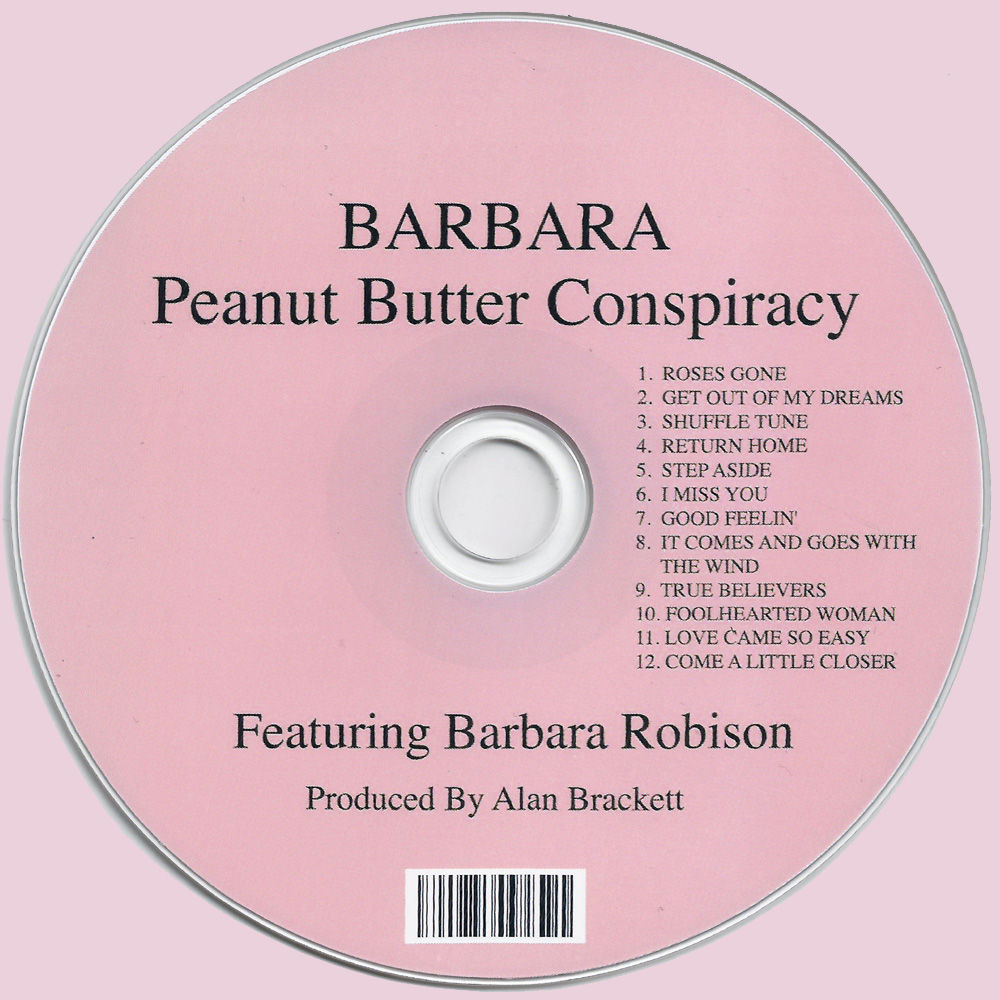
Barbara 'Sandy' Robison With The Peanut Butter Conspiracy - Barbara (1966-70 us, gorgeous emotional psych jazzy folk rock with heavenly vocals, 2014 release)


This is a collection of recordings featuring Barbara (Sandy) Robison during the time she was a member of the Peanut Butter Conspiracy. On various recordings not all of the other members were included. Some of the songs were recorded for other projects but involved Barbara as vocalist and some were written during the time the group was recording but were not included on a Peanut Butter Conspiracy album. They did, however, feature her wonderful voice and for that reason, even more than it being the Peanut Butter Conspiracy, it makes this a very collectible collection to their fans that love to hear her sing.

"I put a lot into this 'work of love' release featuring Barbara", states Alan Brackett, "because I knew that there were people out there that would love to hear her sing more songs than what are already released on PBC records. She was blessed with a warm, natural and beautiful voice and I feel these recordings should be shared with her fans.

"Roses Gone" was recorded by The Ashes in 1966. This is the group that Barbara, John and Alan were in prior to the Peanut Butter Conspiracy along with Jim Chernis and Spencer Dryden, later to be the drummer with the Jefferson Airplane.

"Get Out Of My Dreams", "I Miss You", "It Comes And Goes With The Wind" "Foolhearted Woman" and "Love Came So Easy" were songs written by Alan and recorded between 1967 and 1970 but never released. PBC vocal harmonies can be recognized in all of these except "I Miss You", which Barbara sang solo.

"Shuffle Tune" was recorded during a vocal rehearsal at Alan's house on a Teac A1200 in 1968 with Barbara, John and Alan playing and singing live "Return Home" and "Good Feelest" were recorded in 1969 and ended up on the PBC Ip, "For Children Of All Ages". "Step Aside (You're Crushing All The Flowers)" was recorded by PBC in 1969 for the movie "2000 Years Later"

"True Believers" was recorded in 1969 by the PBC using the name  The Windows for the Hell's Angels movie, "Run Angel Run" It features Barbara with an overdubbed harmony sung by her on the last verse.

"Come A Little Closer" is a song written by David Bennett.  Alan produced the recording and David's brother, Steve, sang the 'echo' lines to Barbara's vocal.
CD Liner-Notes

Barbara (Sandy) Robison is at last featured on every song in this Peanut Butter Conspiracy release. The recordings date from 1966 through 1970. Five of them have never been previously released, two are from rare movie soundtracks, and five are hand-picked from previous PBC releases. There has always been consensus from their fans that Barbara possessed the most beautiful voice of the 1960's rock and roll era. This release is for those who have always wanted and now can hear more of her warm, soulful voice.

On April 6, 1988, Robison was performing in Butte, Montana. During her concert, she fell ill and was transported to a hospital in Billings, Montana. Robison did not recover, and died on April 22, 1988 from toxic shock poisoning at the age of 42.


Tracks
1. Roses Gone (John Merrill) - 2:48
2. Get Out Of My Dreams (Alan Brackett) - 3:33
3. Shuffle Tune (Alan Brackett) - 2.14
4. Return Home (Alan Brackett) - 3:38
5. Step Aside (You're Crushing All The Flowers) (Stu Phillips, Neil Sedaka) - 3:02
6. I Miss You (Alan Brackett) - 3:13
7. Good Feelin' (Alan Brackett, John Merrill) - 2:49
8. It Comes And Goes With The Wind (Alan Brackett) - 2:06
9. True Believers (Alan Brackett, John Merrill, Stu Phillips) - 2:21
10.Foolhearted Woman (Alan Brackett) - 3:12
11.Love Came So Easy (Alan Brackett) - 2:10
12.Come A Little Closer (David Bennett) - 2:16

Musicians
*Barbara "Sandy" Robison – Lead Vocals, Percussion
*Alan Brackett – Bass Guitar
*Lance Fent -Lead Guitar
*John Merrill – Rhythm Guitar
*Bill Wolff - Guitar
*Jim Voigt - Drums
*Ralph Schuckett - Organ, Piano
*Michael Ney - Drums

1965-71  Ashes - Ashes
1967-68  The Peanut Butter Conspiracy - Living Dream
1969  Peanut Butter Conspiracy - For Children Of All Ages (2008 bonus tracks remaster)

Free Text

Tuesday, April 19, 2016

The Rowans - Sibling Rivalry / Jubilation (1976-77 us, marvelous country silky rock, 2004 issue)


Jerry Garcia called them the California Beatles. Rock critic Dave Marsh quipped that Garcia must have been tripping at the time. The truth about the Rowans can be found where the truth often resides: somewhere in the middle. Between Garcia's adulation and the critics' damnation with faint praise, the Rowans made an eclectic and uneven body of work for Asylum Records in the mid-'70s—a trio of albums through which disparate styles, from bluegrass and reggae to straightforward pop and rock, intersected and combined. Some of the Rowans' songs from this period continue to be sung today and, thanks to Collectors' Choice, their original albums are back in print nearly thirty years later.

Peter, Chris and Lorin Rowan recorded their self-titled Asylum debut in 1975, and that story can be found in the booklet of The Rowans, reissued on compact disc by Collectors' Choice in 2002. This disc is the second chapter in the Rowans' saga, pairing the group's second and third Asylum albums, Sibling Rivalry Wlb) and Jubilation (1977). Herein is some of the Rowans' best and most commercially successful music.

Many fans consider Sibling Rivalry to be the Rowans' finest moment, and with good reason. For starters, it has the Rowans' sole charting single, "If I Only Could," which peaked at #74 on the Billboard pop chart but fared a little better in Cash Box, where it reached #69. The Rowans were no strangers to the charts, though: Chris and Lorin, as the Rowan Brothers, made a single that "bubbled under" the Billboard Top 100 in 1972, and Peter reached the Top 100 in 1969 with the band Earth Opera. "If I Only Could," written by Chris, features the delicate sound of Peter's mandola and the brothers' three-part harmonies on a gem of California country-rock that bears a passing resemblance to America or Crosby, Stills & Nash.

The Rowans' Asylum debut was filled with sounds of, and allusions to, Eastern spirituality and music. Sibling Rivalry showed their continuing interest in the East with the Chinese dragon on its cover and song titles like "Fire Dragon" and "Mongolian Swamp." But the album veered into other exotic realms with the Spanish story-song "Joaquin Murrieta," the faux reggae of "Love Is," and "Ya Ba Da Ba," which Billboard described as a "'40s-sounding Pointer Sisters type of number," in apparent reference to the Pointer Sisters' nostalgic 1974 album That's a Plenty. Keeping with the countercultural currents that were always on or just below the surface of the Rowans' music, Sibling Rivalry was co-produced by Bill Wolf, one-time member of legendary hippie rock band the Fugs.

The progressive bluegrass group Northern Lights later recorded Sibling Rivalry's closing cut, "Soldier of the Cross," and the song showed up again as the title track of Ricky Skaggs' Grammy award-winning bluegrass gospel album in 1999. In spite of the Rowans' accomplished songwriting and musicianship, Sibling Rivalry M not chart, nor did a follow-up single release of "Ooh My Love." Billboard reviewed the album in their Recommended LPs column, but weakly praised it as "wholly acceptable" and opined that "the boys could use some more bite intheirvocals next time out."

The Rowans released Jubilation late the following year—their final album for Asylum. On the surface it seemed like an attempt to make an overtly commercial pop album, but the music is in some ways a return to the sunny pop sound first heard on Chris and Lorin's 1972 album, Rowan Brothers. When Peter joined the group for the Rowans' Asylum debut, he brought his interests in bluegrass and Eastern mysticism to the table, but on Jubilation those contributions are not in evidence, and Peter's songs are much more pop-oriented than before. In particular, there is nothing that even a charitable critic would identify as progressive bluegrass. If you listen closely, however, there are still a few unusual things happening in the grooves.

The title and cover art of Jubilation convey a youthfulness and energy that is only furthered by the bright harmonies and melodies within. The previous albums' experimentation is all but gone, replaced with a sugary pop glaze and Beatlesque melodies. Even the fiddle on "Don't Say Goodbye" adds no particular country flavor, which should not come as a surprise since the man behind the bow is famous jazz violinist Stephane Grappelli! The album, in fact, is full of jazz players, right down to the steel drummer, Andy Narell. "Best of Friends," another light, harmonydrenched pop song in the direction of Bread, was paired with "Makin' It Easy" for the album's single but didn't register on the charts. "Hoo Doo Love" is only a few steps away from the dance floor with its pulsing rhythm, high harmonies and synthesizer solo (the Sheila Escovedo on the conga drums became better known in the mid-'80s as pop star Sheila E). "Love's Secret Sighs" and "Don't Say Goodbye" are distinctly Beatlesque, and "Lovelight" features more synthesizer sounds by Bernie Krause, George Harrison's collaborator on his 1969 album Electronic Sound. In the end, one minor hit was not enough to placate the bean counters, so the Rowans and Asylum parted company.

The Rowan brothers complained that Asylum didn't know quite what to make of—or how to market— their albums, and failed to give them much of a promotional push. Listening to their music, it isn't hard to understand the label's bafflement—today the Rowans' albums are often filed under progressive bluegrass, but Billboard categorized them as pop, and—with the exception of isolated cuts like Sibling Rivals "Tired Hands"—it would take a broad and permissive definition of bluegrass to accommodate the Rowans' music. The fact is, the Rowans were and are three individuals with distinct styles and interests, and the albums they made for Asylum were melting pots overflowing with their creators' eclecticism and ideas. If their styles didn't always gel, perhaps it was because their interests were so broad. 

The Rowans went on to record other albums for other labels, separately and together, and continue to actively record and perform. The trio released a new album as the Rowan Brothers, Crazy People, on their own Rowantone Records in 2002. Stepping back in time, the two albums reissued here capture the brothers at their major label peak, going for broke in a commercial arena and striving to make, in Lorin's words, "the best successful records possible."
by Greg Adams


Tracks
Sibling Rivalry 1976
1. Ooh My Love (Chris Rowan) - 4:30
2. Love Is (Lorin Rowan, Dudley Glanz, Mark Stein) - 4:10
3. Tired Hands (Lorin Rowan, Peter Rowan) - 5:07
4. If I Only Could (Chris Rowan) - 3:52
5. No Desanimes Amor (Peter Rowan, Juanita West, Amanda Lynn, Woody West) - 3:55
6. Ya Ba Da Ba (Chris Rowan) - 2:52
7. Fire Dragon (Chris Rowan, Lorin Rowan, Peter Rowan) - 0:58
8. Mongolian Swamp/King's Men (Lorin Rowan, Peter Rowan) - 4:14
9. Joaquin Murrieta (Peter Rowan) - 8:29
10.Sword Of Faith/Soldier Of The Cross (Lorin Rowan) - 4:59
Jubilation 1977
11.Best Of Friends (Lorin Rowan) - 3:06
12.Give Ya Good Lovin' (Peter Rowan) - 3:16
13.Hoo Doo Love (Chris Rowan) - 5:20
14.Love' Secret Sighs (Chris Rowan, Peter Rowan) - 2:35
15.Don't Say Goodbye (Peter Rowan) - 3:40
16.Lovelight (Chris Rowan) - 4:17
17.New Horizons (Lorin Rowan) - 4:42
18.Makin' It Easy (Chris Rowan, Peter Rowan) - 3:41
19.Calle Music (Lorin Rowan) - 5:14

Musicians
Sibling Rivalry 1976
*Peter Rowan - Guitar, Mandolin, Vocals
*Chris Rowan - Guitar, Piano, Vocals
*Lorin Rowan - Guitar, Vocals
*Joe Carroll - Bass
*Wally Drogas - Drums
*Bill Elliott - Organ, Piano
*K. Dudley Glanz - Drums
*Richard Greene - Violin
*Jim Hodder - Drums
*Mark Stein - Drums
Jubilation 1977
*Peter Rowan - Guitar, Mandolin, Vocals
*Chris Rowan - Guitar, Piano, Vocals
*Lorin Rowan - Guitar, Mandolin, Vocals
*Terry Adams - Cello
*Susan Bates - Viola
*Nancy Ellis - Viola
*Brad Bilhorn - Drums
*Stephne Busfield - Guitar
*Joe Carroll - Basss
*Ralph Carter - Bass
*Peter Barshay - Bass, Drums
*Brian Cooke - Piano
*Glenn Cronkhite - Percussion
*Glen Deardorff - Violin, Guitar
*Keith Glanz - Drums
*Stephane Grappelli - Violin
*Lee Carlton - Drums
*Bob Hogins - Keyboards
*Daniel Kobialka - Violin

1972  Rowan Brothers - Rowan Brothers
1975  Rowans - The Rowans
Related Act
1968  Earth Opera - Earth Opera
1969  Earth Opera - The Great American Eagle Tragedy

Free Text

Sunday, April 17, 2016

The Frantics - Relax Your Mind (1968 us, magical trippy psychedelic rock, rare issue)


The Frantics were from the same era and area as The BlueThings the '60s and the Midwest. They were musicians from parts of Montana and North Dakota who formed The Frantics in Billings, Montana. All of them were in bands previously and some had released singles locally. They were fans of The BlueThings and the first Frantics1 single in 1966 was The BlueThings version of "La Do Da Da”, backed with "Route 66". Only 1,000 copies were pressed and today they are much sought-after by collectors.

Through 1966 and 1967, The Frantics progressed as artists. After becoming the top draw in Montana and most of Wyoming and 9outh Dakota, they became a "KOMA" band (along with The Tracers, The Fabulous Flippers, 9pider &• The Crabs, The Red Dogs and The BlueThings).

They headlined all over the country and were also second billed on concerts with The Who, The Young Rascals, The Everly Brothers, The 9teve Miller Band and other groups, including a week-long, three-state tour with The Yardbirds with Jeff Beck and Jimmy Page ("...who were real friendly when we partied with them after the concerts back at the motel") and three tours with The McCoys, during which they became friends with Rick Derringer (Zehriger). Later when fhe Frantics were based in New York City, Rick, in his first role as producer, produced some demos tor them (including the first recorded version of "Just For A While").

The Frantics, then based out of Santa Fe, New Mexico ("The best place to be during the psychedelic days," says Kim Sherman), later moved to New York City in early 1968. They were quickly signed up with Premier Talent, one of the biggest national booking agencies then and now. The Frantics played the top East Coast circuit, including the legendary Steve Paul's "The Scene" in New York City. It was the best place for famous and upcoming groups to perform and jam after hours. Steve Paul liked The Frantics and they got to play there a lot. On off nights or after other gigs in town, they would go back to The Scene, where Steve would always let them in for free to watch other groups.

Says Kim, "Jimi Hendrix would often come down to The Scene and jam with other great musicians like B.B. King and Rick Derringer. Some of us also jammed with Jimi. One night Jim Morrison got up on stage with Jimi and literally screamed into the mike in a drunken stupor, fell down and had to be carried out."

The Frantics tired of the East Coast weather and rat race and after a tour of Florida they moved back to New Mexico. They rented two houses in the mountains around Ruidoso. They went out on weekends playing around New Mexico, Colorado and West Texas and spent the rest of the time jamming in their rehearsal house and working up more original songs.

This CD, a result of those jams, was recorded at Norman Petty’s legendary 4-track studio in Clovis, NM during a week's time. All of the songs were performed live with the exception of "She", which was too psychedelic to be played live. Some of these songs were later re-recorded and appeared on The Frantics' official 1970 album.

The Frantics then moved to Colorado Springs, CO, becoming the top local Colorado draw before relocating in 1969 to Los Angeles where they felt their psychedelic/hard rock frame of mind and stage show would be better suited to pursue their career. They shortened their name to "Frantic" and headlined at the Whiskey A Go-Go (where they were told to turn down their amps because they were so loud) and became well-known around Southern California. They signed up with manager Robert Fitzpatrick (who used to co-manage Cream and The Bee Gees) and in 1970 released their first official album which got a 4-Star pick in Billboard magazine.

Their record label, Lizard Records, was owned by Gabriel Meckler, who produced all the Three Dog Night and Steppenwolf records. Although Frantic received a $20,000 advance to sign with the label (a considerable amount at the time), the record did not sell well due to a lack of distribution. Amazingly, the album was bootlegged in Europe a few years ago and recently was also released on CD. The original album commands good money as a collectors1 item.

In 1971, after seven years, the band began to splinter and disbanded. However, half of the members stayed together and went on to create many more original songs and demo recordings, some of which got airplay on Los Angeles radio stations even though there was no record. 

Their legacy continues today as most of the members are still active in the music business performing, producing and doing session work. Kim says, "During our career we had a lot going for us. We had the musicianship, vocals, songs and  stage snow, as well as the equipment, clothes, confidence and the best light show. We were also the first group in the Midwest to have roadies to set up our equipment and were probably the best group most of our audiences had ever seen. We graduated to one-set concerts and blew away all of our backing groups, as well as some major groups when we did concerts with them. Our version of 'My Generation' was so powerful that when we played with The Who, their manager, after hearing us playing it during our sound check, wouldn't allow us to perform it that night?

Kim went to Hawaii, Dennis to London, England, and the rest of The Frantics stayed in Los Angeles. Please keep in mind that the original master tapes of this demo album were lost many years ago and all that exists of that session was a very old, fourth-generation tape from which this CD was made.
CD Liner-Notes


Tracks
1. Her and Her Mountain (Kim Sherman, Dennis Devlin) - 3:27
2. Lady of the Night (Max Byfuglin, Jim Haas) - 3:38
3. Child of the Universe (Kim Sherman, Dennis Devlin) - 5:29
4. Sweet Mary (Kim Sherman, Max Byfuglin) - 2:38
5. Think About It (Max Byfuglin, Jim Haas) - 2:59
6. Relax Your Mind (Max Byfuglin, Jim Haas) - 3:22
7. JJust for a While (Kim Sherman, Max Byfuglin) - 2:53
8. Stranger (Max Byfuglin) - 3:29
9. She (Jim Haas) - 4:24
10.Great Tomato (Dennis Devlin) - 2:42
11.Scitnarf (Kim Sherman, Dennis Devlin) - 2:36
12.Stone Goddess (Kim Sherman, Dennis Devlin) - 4:41

The Frantics
*Kim Sherman - Lead Guitar, Vocals
*Max Byfuglin - Lead Vocals
*Dennis Devlin - Rhythm Guitar, Vocals, Harmonica
*David Day - Bass Guitar, Vocals
*Jim Haas - Keyboards, Vocals I
*Phil (Gordo Head) - Drums

Free Text
the Free Text

Tuesday, April 12, 2016

Jim Sullivan - Jim Sullivan (1972 us, fascinating swamp folk rock, 2011 korean edition)


Sullivan’s second, self-titled and final essay was released in 1972 and hosted by Hugh Heffner’s record label “Playboy”. Three years after U.F.O., Sullivan began his new musical adventure exactly where he stopped.  To be precise he rerecorded and included two songs from his first album “Sandman” and “Plain to See” –each one was the final track on every LP side-. 

Rough folk blues mixed with brass jazz tunes and a hard (cry baby) guitar rockin’, named “Tom Cat”. Travelling from smoothness to sharpness, like riding a beautiful wild horse in a harsh country,  with an edged blade cutting the desert’s silence. 


Tracks
1. Don't Let It Throw You - 3:14
2. Sonny Jim - 3:11
3. Tea Leaves 3:18
4. Biblical Boogie (True He's Gone) - 3:36
5. Lonesome Picker (John Stewart) - 3:09
6. Sandman - 2:45
7. Tom Cat - 3:10
8. You Show Me The Way To Go (Ronald Bertram Greaves, Jonathan Rowlands) - 3:32
9. Amos - 4:31
10.I'll Be Here - 2:26
11.Plain To See - 4:09
Words and Music by Jim Sullivan except where indicated

Personnel
*Jim Sullivan - Vocals, Guitar, Strings Arrangement
*David Cohen - Guitar, Banjo
*Jim Hughart - Bass
*Allen Reuss - Bouzouki
*Gene Estes - Percussion
*Colin Bailey - Percussion
*Mike Melvoin - Piano

1969  Jim Sullivan - U.F.O. (2010 issue)

Free Text
Just Paste

Friday, April 8, 2016

Jim Sullivan - U.F.O. (1969 us, tremendous folkish psychedelia, 2010 issue)


In March 1975, Jim Sullivan mysteriously disappeared outside Santa Rosa, New Mexico. His VW bug was found abandoned, his motel room untouched. Some think he got lost in the desert. Some think he fell foul of a local family with alleged mafia ties. Some think he was abducted by aliens.

By coincidence – or perhaps not – Jim’s 1969 debut album was titled U.F.O. Released in tiny numbers on a private label, it too was truly lost, until Seattle’s Light In The Attic Records begun a years-long quest to give it the full release it deserves – and to solve the mystery of Sullivan’s disappearance. Only one of those things happened.

For record collectors, some albums are considered impossible to get hold of, records so rare you could sit on eBay for years and not get a sniff of a copy. U.F.O. is one of those albums. A seventh son, Jim Sullivan was a West Coast should-have-been, an Irish-American former high school quarterback whose gift for storytelling earned him cult status in the Malibu bar where he performed nightly. Sullivan was always on the edge of fame; hanging out with movie stars like Harry Dean Stanton, performing on the Jose Feliciano show, even stealing a cameo in the ultimate hippie movie, Easy Rider.

Friend and actor Al Dobbs thought he could change all that, and founded a label – Monnie Records – to release Jim’s album, enlisting the assistance of Phil Spector’s legendary sessioneers The Wrecking Crew to do so. That’s Don Randi, Earl Palmer and Jimmy Bond you can hear, the latter also acting as producer and arranger.

U.F.O. was a different beast to the one-man-and-his-guitar stuff Jim had been doing on stage; instead, it was a fully realised album of scope and imagination, a folk-rock record with its head in the stratosphere. Sullivan’s voice is deep and expressive like Fred Neil with a weathered and worldly Americana sound like Joe South, pop songs that aren’t happy – but with filled with despair. The album is punctuated with a string section (that recalls David Axelrod), other times a Wurlitzer piano provides the driving groove (as if Memphis great Jim Dickinson was running the show). U.F.O. is a slice of American pop music filtered from the murky depths of Los Angeles, by way of the deep south.

With no music industry contacts, the record went largely unnoticed, and Jim simply moved on, releasing a further album on the Playboy label in 1972. But by 1975, his marriage breaking up, Jim left, for Nashville and the promise of a new life as a sessioneer in the home of C&W. That’s where it gets hazy.

We know he was stopped by cops for swerving on the highway in Santa Rosa, some 15 hours after setting off. We know he was taken to a local police station, found to be sober, and told to go to the local La Mesa Motel to get some rest, which he did. Some time later, his car was spotted on a ranch belonging to the local Genetti family, who confronted him about his business there. The next day his car was found 26 miles down the road, abandoned. His car and his hotel room contained, among other things, his twelve-string guitar, his wallet, his clothes and several copies of his second album, but no note, and no Jim. It was as if he had simply vanished into thin air.

Jim’s family travelled out to join search parties looking for him, the local papers printed missing person stories, but the search proved fruitless. Around the same time, the local sheriff retired and the Genettis moved to Hawaii. Jim’s manager Robert “Buster” Ginter later stated that during the early morning hours of a long evening Jim and Buster were talking about what would you do if they had to disappear. Jim said he’d walk into the desert and never come back.

Tracking down the truth behind Jim’s mystery became an obsession of Light In The Attic’s Matt Sullivan (no relation) when he happened upon a copy of the album and fell in love. He took on a cross country pilgrimage in search of master tapes and truth, and came back with neither, despite hundreds of phone calls, e-mails, letters, faxes, private detectives, telepathy, palm readings and meetings with Jim’s wife, son and producer. Thanks to superb digital mastering techniques, Light In The Attic is still able to present a clean, near perfect copy of Jim’s masterpiece for general consumption for the first time. Enjoy. And remember, beyond the mystery, there’s the music.


Tracks
1. Jerome - 2:47
2. Plain As Your Eyes Can See - 2:27
3. Roll Back The Time - 2:14
4. Whistle Stop - 2:37
5. Rosey - 3:21
6. Highways - 2:51
7. U.F.O. - 2:5
8. So Natural - 3:2
9. Johnny - 4:5
10.Sandman - 2:31
All Music and Lyrics by Jim Sullivan

Musicians
*Max Bennett - Bass
*Lyle Ritz - Bass
*Earl Palmer - Drums
*Don Randi - Keyboards
*Jimmy Bond - Double Bass
*Jim Sullivan - Vocals, Guitar

Free Text
Just Paste

Monday, April 4, 2016

Shawn Phillips - Furthermore (1974 us, brilliant prog folk rock with funky vibes, 2014 issue)


Shawn Phillips is one of those legends that had been swept up in mystery, disappeared under the cloak of the sixties, or stripped of acknowledgement due to dirty management and contracts. Such is the case with the twelve-string acoustic genius, Shawn Phillips, one time flat partner with Tim Hardin, who played the Indian sitar for Donovan on “Sunshine Superman” and exquisite “Three Kingfishers”. 

At the age of twenty Shawn moved to London and became known as a prolific writer, musician, and vocalist. Not only did he tutor Joni Mitchell at a very young age, but also this Texas born folk musician was a regular at the Bleecker / McDougal folk clubs of the early sixties. 

Shawn’s 1974 Furthermore release has ex Big Three / Quartermass bassist John Gustafson ploughing into the progressive intro “January First”. It is here that you realize that Shawn was far from folk, but more in the jazzy confines of intricate Progressive Rock. As if to pacify the mayhem Shawn paints his brushes through the tranquil “Starbright” with Peter Robinson etching the canvass with his rippling keyboards while ex Blue Mink Anne Odell bends the mellotron on this choral stargazer. Shawn once told me on a 10min radio interview that Furthermore was his absolute assault and creation. 

The album also boasts the ethereal cello of Paul Buckmaster, a master arranger of note. This album has dimension beyond the shifting sands of Camel or Caravan such as the spacey “Cape’ Barras” airlifting Shawn’s yodel vox. Shawn recruited phase axe innovator Caleb Quaye for the guitar inquisitions that sprouted out of “Ninety Two Years” and “Talking In The Garden”.Perhaps the most moistening deliverance saddles the infectious “Breakthrough”, a master in it’s own reflection. Each of Shawn’s albums has a dazzling gem that often blinds the listener, namely Collaborations that gave us the stirring “Moonshine” and “Spring Wind” while Furthermore, shimmered through “Talking in the Garden”, and then there was Bright White and the underrated Rumpelstiltskin Resolve.
by Shiloh Noone


Tracks
1. January First (Shawn Phillips, Peter Robinson) - 3:11
2. Starbright - 3:51
3. Breakthrough - 5:45
4. Ninety Two Years - 3:07
5. See You - 4:14
6. Planscape (Shawn Phillips, Paul Buckmaster) - 4:16
7. Troof - 4:24
8. Cape Barres - 4:01
9. Song For Northern Ireland - 2:06
10.Mr. President - 3:35
11.Talking In The Garden - 3:13
12.Furthermore - 2:32
All selections written by Shawn Phillips except where noted

Musicians
*Shawn Phillips - Vocals, Guitars
*Peter Robinson - Keyboards
*John Gustafson - Bass
*Barry De Souza - Drums
*Caleb Quaye - Guitar
*Paul Buckmaster - Cello
*Raul Mayora - Percussion
*Ann Odell - Mellotron On "Starbright"

1969-72  Shawn Phillips - Faces (2014 remaster)
1970  Shawn Phillips - Contribution / Second Contribution (2009 remaster)

Free Text
Just Paste