Largely forgotten, even among the crate-diggers, Horn was a Toronto jazz/rock outfit that seems to have fallen off the musical map even though the band contained drummer Bill Bryans (M.G. and the Escorts, the Government, the Parachute Club) and trumpeter Wayne Jackson (Downchild Blues Band). What's more, it appears that TV mogul Moses Znaimer had his fingers in this pie, right about the same time that he was launching Citytv, and starting up the late-night Toronto airwaves with those soft-core Baby Blue Movies.
The band's only release, On the People's Side melds socially conscious lyrics with the then cutting-edge sounds of jazz fusion - that means plenty of Rhodes pianos, vibraphones and trumpet. And though lyrically the record has aged poorly, with its hoary "brothers and sisters" references, the galloping Zappa-esque signatures and Bitches Brew-era riffs raise the stakes somewhat. The lead-off 'Things in Themselves' and the spry 'Vibrations (vee-bra-syohn)' are cases in point, straddling both prog and jazz, and thus infinitely more interesting than the pedestrian fare of the title track or the seventies rock cliches of 'Free All My Brothers'.
by Michael Panontin
Tracks
1. Things In Themselves (Bruce Burron, David deLaunay) - 3:49
2. Free All My Brothers And Sisters (Bruce Burron, Gary Hynes) - 2:34
3. Roach (Bruce Baron) - 3:46
4. Vibrations (Gary Hynes, Les Clackett, Pierre Martin) - 3:10
5. Pony Buns (David deLaunay, Bruce Burron, Gary Hynes, Les Clackett, Alan Duffy, Bill Bryans, Wayne Jackson) - 9:37
Douglas Riley began playing music with the R&B group the Silhouettes in Toronto. Throughout the late '60s and '70s he worked in Canadian television as a musical director and arranger for various music and variety shows, including Music Machine and The Wolfman Jack Show. The jazz group Dr. Music, that included saxist Steve Kennedy who played in a pre-Hawkins group with Robbie Robertson, began on The Ray Stevens Show, touring and recording after the show was cancelled in 1970.
Dr. Music released two eponymously-titled albums, in 1972 and 1973, both on the same label. The 1973 album included a cover version of The Band's "Where Do We Go From Here" from Cahoots, described by Canadian musicologist Bill Munson as "more effective" than The Band's version.
For the first 1972 LP, the group had about 16 members - half of them singers - doing what might be called gospel-rock, not so much in content, but in feel. All of the singers, aside from those who also played instruments, were gone by the time the second LP came out in 1973. By then the gospel was gone, replaced by more jazz-tinged rock, and the next album, Bedtime Stories (1975?) is all jazz, with just one vocal. When Dr. Music Circa 1984 came in 1985, Dr. Music was no longer a group, just whoever Doug Riley chose to use. Riley released the solo album Freedom in 1990 for PM, he passed away on August 28, 2007 of heart failure.
by John Bush
Tracks
1. Long Time Comin' Home (Doug Riley) - 3:58
2. On The Road (Keith Jollimore, Larry Smith) - 5:55
3. In My Life (Doug Riley) - 5.46
4. 6-5 (Steve Kennedy) - 6:35
5. Tryin' Times (Doug Riley) - 3:38
6. Doctor Doctor (Doug Riley) - 5:35
7. Rollin' Releases (Doug Riley, Steve Kennedy) - 7:00
8. Where Do We Go From Here (Robbie Robertson) - 6:40
Dr. Music
*Doug Riley - Organ, Piano
*Doug Mallory - Acoustic, Electric Guitars, Lead Vocals
Woody Kern had its beginning with trio Rik Kenton (who was the focal point during live performances), Mick Wheat and Steve Harris forming the band in 1967 in their hometown of Nottingham. As the pivotal figure, Kenton was often mistakenly identified as the mythical 'Woody' by individuals in the audience at gigs as well as promoters. Later that year, John Sanderson was invited to join the group and the foursome played the Working Men's Club circuit in the Nottingham area.
Their music was a mix of blues, jazz, soul and psychedelia. At the beginning of 1968, after the previous year's psychedelic 'summer of love', recording labels were looking for blues bands to sign. The British Blues Boom was considered the next big thing about to happen in the music world. Woody Kern would travel down the M1 to play at the Marquee. Spotted there at a gig one night, Birmingham agency, Inter City Artists, offered to represent them.
The agency, with other artists such as the Velvet Fogg in its fold, presented Pye records with a package lot of groups that the agency represented, including Woody Kern for recording purposes. In the summer of 1968, Pye requested an album from the group. The album title "The Awful Disclosures of Maria Monk" was inspired by a book of the same name published in 1836 and written by a nun (or, as has been attested, her ghostwriters) describing forced sexual encounters by the priests who lived in the seminary next door.
The original album cover concept, as conceived by Pye, involved a 'nun' (actually a stripper named Lucy) whose habit was falling away from her body in a lurid fashion. (Pye had produced a similarly trashy album cover for the Velvet Fogg.) The finished photos for the projected Woody Kern release looked ridiculous and farcical and as a result Pye used a close-up photo of Steve Harris instead.
The band were teamed with Jack Dorsey, formerly a big band leader, as producer and the album was created in an almost live fashion. The group wanted to overdub additional instrumentation but as John Sanderson relates, all Jack Dorsey "was really interested in was whether we could introduce him to any of the type of girls that he thought must follow a rock band". The group were dissatisfied with the final mix since Dorsey had added effects, without the group's knowledge, that interfered with the blues atmosphere. The album and a single were released but failed to achieve any sales success and the band went their separate ways.
Tracks
1. Biography - 4:25
2. Blues Keep Falling (Traditional) - 6:05
3. That's Wrong Little Mama (B.B. King) - 3:00
4. Tell You When I'm Gone - 4:11
5. Xoanan Bay - 4:34
6. Uncle John - 6:20
7. Gramophone Man (Mark Andes, Randy California, Ed Cassidy, Jay Ferguson, John Locke) - 4:01
8. Fair Maiden - 4:48
9. Vile Lynn - 5:47
10.Mean Old World (Walter Jacobs) - 2:41
11.Vegtable - 9:54
12.Biography - 4:21
13.Tell You When I'm Gone - 4:08
All songs by John Sanderson, Mick Wheat, Rik Kenton, Steve Harris except where stated
Has anybody met Chrissie Harwood? Let us introduce to you an elusive British artiste who made an equally elusive, immaculate LP, which in the 35 years since its original release, as if by tragic magic, has materialised into thin air.
Recorded for an obscure British label it was the only record she ever made and no singles were ever released. In fact it was seldom heard beyond these shores (aside rumours of an Australian vanity pressing), and alongside Vertigo’s obscure Linda Hoyle LP, late period Transatlantic releases such as CMU’s Space Cabaret and Julie Covington’s early solo LP Beautiful Changes, it remains one of the most sought after English female folk rock records ever released. Until now it has been a mystery amongst pop-historians, DJs and record collectors alike.
For a short time in the early 90s the original LP became a regular exhibit at UK record fairs where aspiring collectors and DJs like myself would be the only buyers willing to take a gamble on this anonymous slab of vinyl housed in its uninspiring black and white sleeve which was devoid of any information likely to inspire any of the old-faire to take a punt. A record shop in Stockport called ‘The 78 Record Exchange’ was rumoured to have a whole box of these LPs sat outside in the rain throughout the late Eighties until the final copy was snapped up for the modest 50 pence asking price. The old cliche “never judge a book by the cover” couldn’t be more apt – and although, in hindsight, the LP has all the enigmatic trappings of an American private press, Smithsonian, folksploitation LP the bland packaging didn’t quite cut the mustard. Since then copies of the LP rarely crop up, only two have cropped up on the ‘necessarily evil’ eBay within the last 3 years and both have commanded figures around the £200 mark (£192 and £228 retrospectively). With a notable resurgence in vintage British folk rock it is little wonder that ‘an original Chris Harwood’ has become something of a holy grail amongst collectors, but few can say they actually know the history behind this sacred LP – the original artist, as I already mentioned, has remained somewhat elusive to say the least.
Throughout the heady summer of 1970 a regular folk tinged fixture at Rick Wakeman’s notorious ‘Brewer’s Droop’ rock pub in London was an unnamed blues-folk outfit featuring a sixteen-year-old singer called Chrissie Harwood. Spellbinding performances were warmly received by the progressive-pop cognoscenti which inspired Chrissie’s latter day squeeze and future husband and rock hack, Mark Plummer, to pursue a record deal resulting in an overnight guinea-pig contract with the launch of a CBS distributed new label owned by an uber-legendary, Mickie-Most-alike called Miki Dallon.
The first release on the short lived Birth imprint (which acted as a sister-label to Dallon’s Youngblood Records) was realised with a half baked business plan, and after a short run of break-neck off-peak studio sessions at Marble Arch (one of which witnessed a temporary power cut) – the LP, ‘Nice To Meet Christine’, was written and recorded with Plummer behind the desk and Ms. Harwood in the vocal booth. In his debut role as producer, Plummer enlisted the services of a host of up and coming progressive rock and folk stars drawing from a little black book of celebrity friends who he had previously interviewed for the likes of Melody Maker and in turn they then created the blueprint for a Rock Family tree-surgeons breakfast.
The original ‘Yes’ guitarist Peter Banks, who would later reform ‘Blodwyn Pig’ was drafted in to play acoustic and pedal steel guitar throughout the entire LP alongside a young Guitarist Dave Lambert who would go on to work with Dave Cousins in ‘The King Earl Boogie Band’ and later join ‘The Strawbs’. Lambert wrote three tracks for the album, a country-rock-boogie number ‘Ain’t Gonna Be Your Slave’, the up-tempo ‘Flies Like A Bird’ and a quasi-political intro track ‘Mama’ which included a Gainsbourg / Melody Nelson-esque choral arrangement courtesy of folk-rock vocal group ‘Design’ (craftily recording under the moniker ‘The Designettes’ to avoid legal wranglings with their new label Epic).
By contacting Joe Cocker’s Hammond organist Tommy Eyre, Plummer would inject ‘the funk’ into the proceedings, which goes some way to explaining why the LP has become a regular inclusion on record collectors wants-lists, especially sought after amongst Hip-Hop producers and die-hard Acid-Jazzers over the last ten years. Eyre (who would play on albums by ‘Juicy Lucy’, ‘The Sensational Alex Harvey Band’ and John Martyn) added sublime twinkles of Fender Rhodes and bursts of Hammond B3 to the LP, most notably on an astonishing, orchestral-funk cover of CSN’s ‘Wooden Ships’ as well as Chrissie’s self penned ‘Gotta Do My Best’ complete with pulsating backbeat courtesy of rock journalist veteran Chris Welsch drumming under the pseudonym J.K. Boots. Chris Welsch also supplied a future-DJ-friendly drum break on another of Chrissie’s original compositions ‘Never Knew What Love Was’, a stripped down arrangement exposing the raw fender bass played on the album by Roger Sutton, fresh from recording the seminal Brian Auger and Julie Driscoll LP ‘Open’.
With extra percussion from drum workshop legend Peter York, more guitars by folk-festival stalwart Mike Maran, and ‘Macdonald & Giles’ saxophonist, Ian MacDonald, contributing to a version of Traffic’s ‘Crying To Be Heard’ the LP unintentionally became an all star super-session (library music enthusiasts might revel in the fact that violins were contributed by session-man and Michel Legrand side-kick Johnny Van Derrick whilst taking a break from recording incidental music for The Pink Panther). Three further tracks were recorded in the session which have never been heard since the original recording.
After the studio bill was paid the LP was delivered, manufactured and sadly, mysteriously disappeared in to the purple ether with minimum commitment in the artwork, marketing and radio-plug department. A crest fallen Chrissie was given the cold, ambiguous explanation that ‘nothing happened’ with her only handcrafted stab at fulfiling the teenage dream. In later years Chrissie would hide her only copies of the ultra rare original release in a cupboard only to smash and tear them to pieces to save the potential humiliation of the record re-appearing at family functions like an embarrassing photo album. To this day since, the mysterious Chris Harwood has shyly put her singer songwriter days behind her and successfully covered the tracks. Fruitless, feeble attempts to track Chrissie down have lead to a string of ‘dodgy’ bootlegs from France, Italy and the UK which have only highlighted ‘Miss Christine’s’ enigmatic position in the mystery of pop history. In a topsy-turvy chain of events, the solo artist would step down the pop-ladder and become a session vocalist. Chrissie’s voice can be heard clearly on two tracks by the Peter Grant discovered ‘Stone The Crows’ backing up lead vocalist Maggie Bell on ‘Sunset Cowboy’ and ‘Crystal Palace Bowl’. The Twickenham born singer also spent extra studio time in an unnamed rock combo recording for Bell Records before a twist of fate saw her take the disappointing music industry in to her own hands and until recently she has worked behind the scenes, promoting pop music overseas.
As original member Peppy Thielhelm and original producer Bob Wyld expanded the Blues Magoos' foray into Latin music meets mainstream blues, these May 1970 recordings take the previous years' Never Going Back a step further. Gulf Coast Bound is an improvement, retaining John Liello's vibes and percussion and pianist Eric Justin Kas, who is the major songwriting contributor here (strangely enough, he is listed as "Kas" on the album jacket and "Kaz" on the songwriting credits). "Slow Down Sundown" could be the band Chicago vamping without their horn section, some strange imitation monkey-sound vocals making their way onto the platter mixed in with Daddy Ya Ya's out-of-place tambourine as the song fades.
Erik Kas does the lead vocal on the 12-minute-plus opus "Can't Get Enough of You," which sounds like a strange marriage between Steely Dan and Traffic. The problem here is that the band is a notch or two below Traffic and Steely Dan, and despite the general improvement over the last disc and their initial dip into this musical bag, there is no Walter Becker or Dave Mason or Steve Winwood here, or, for that matter, a song as strong as Malo's "Suavecito" or Steely Dan's "Do It Again," which resembles "Can't Get Enough of You." To be fair to this new Blues Magoos, they came two full years before Malo and Fagen/Becker would all hit in 1972, so this album can be viewed as pioneering work.
It's too bad ABC records didn't keep releasing this musical journey. Liello's vibes add a marvelous touch, and if they were given a few more chances, maybe they could have found another hit single. The seven-minute 54-second instrumental "Magoos Blues" is lightweight John Barleycorn Must Die-era Traffic, and the new rhythm section of drummer Jim Payne and bassist Cooker Lopresti is nondescript enough to not get in the way. Of the pyschedelic/garage rock bands which changed over to another format -- the Electric Prunes, H.P. Lovecraft, etc. -- in what seemed like gambles to become "respectable," this is the best of the lot. Eric Kaz takes "Tonight the Sky's About to Cry" and it, like the rest of this album, would make for good FM radio filler in the middle of the night. "Sea Breeze Express" follows suit, competent and pleasant music, but nothing outstanding, and, unfortunately, nothing as breathtaking as the Electric Prunes' "Get Me to the World on Time" or the Blues Magoos' own "We Ain't Got Nothing Yet," and that is the bottom line.
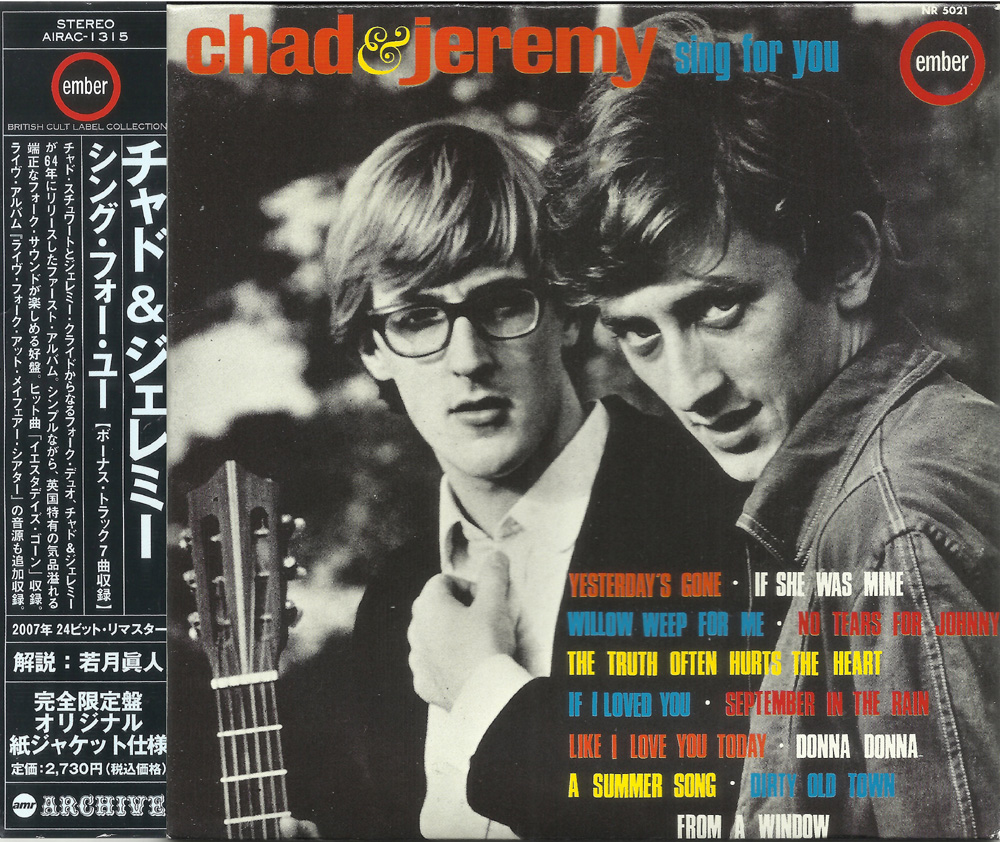
Generally relegated to footnote status, folk/rock duo (heavier on the folk) Chad & Jeremy nonetheless managed a certain level of influence among a group of navel-gazing sensitive types who couldn’t totally commit to either the Beatles or Stones camps. And yet they still managed to make something of a splash riding the crest of a wave that was the British Invasion. At a time when it seemed every artist was copping the sound of the Beatles and/or Stones, Chad & Jeremy remained (relatively) committed to their folk origins. The trouble with this was their particular brand of folk was slowly falling out of favor following the arrival of Bob Dylan.
As if an attempt to split the difference, they embraced an approximation of the British Invasion sound while still attempting to adhere to their folk roots. But it didn’t quite suit the soft folk within which they best operated, and their attempts at continued relevance beyond a few early singles (“Yesterday’s Gone” and the song for which they are perhaps best known, “A Summer Song”) sound forced. They only truly succeeded when sticking closest to their roots; any venture into mainstream pop tended to fall short, sounding like a feeble attempt to tap into a commercial market quickly losing interest in them
Yet throughout, they prove to be fine interpreters of contemporary folk and standards of the genre. They take on Ewan MacColl’s perennial folk classic “Dirty Old Town”, giving it a decidedly country bent. “No Tears for Johnny”, while sounding feather-light, possesses a lyrical profundity and anti-war stance that far surpasses anything Simon & Garfunkel and their ilk ever attempted. It is within these unexpected moments that the music of Chad & Jeremy rises above much of the filler that weighed down their studio albums and prevented them from finding the favor they perhaps deserved. And while they would eventually surrender to the times with their generally well-regarded psychedelic albums Of Cabbages & Kings and The Ark, these early recordings show the pair trying desperately to get their music heard
Unfortunately the music of Chad & Jeremy has been unfairly overlooked by all but the most ardent fans of ‘60s pop music. The duo stands as a fine reminder that the pop landscape wasn’t all Beatles, Stones, Dylan, and Motown.
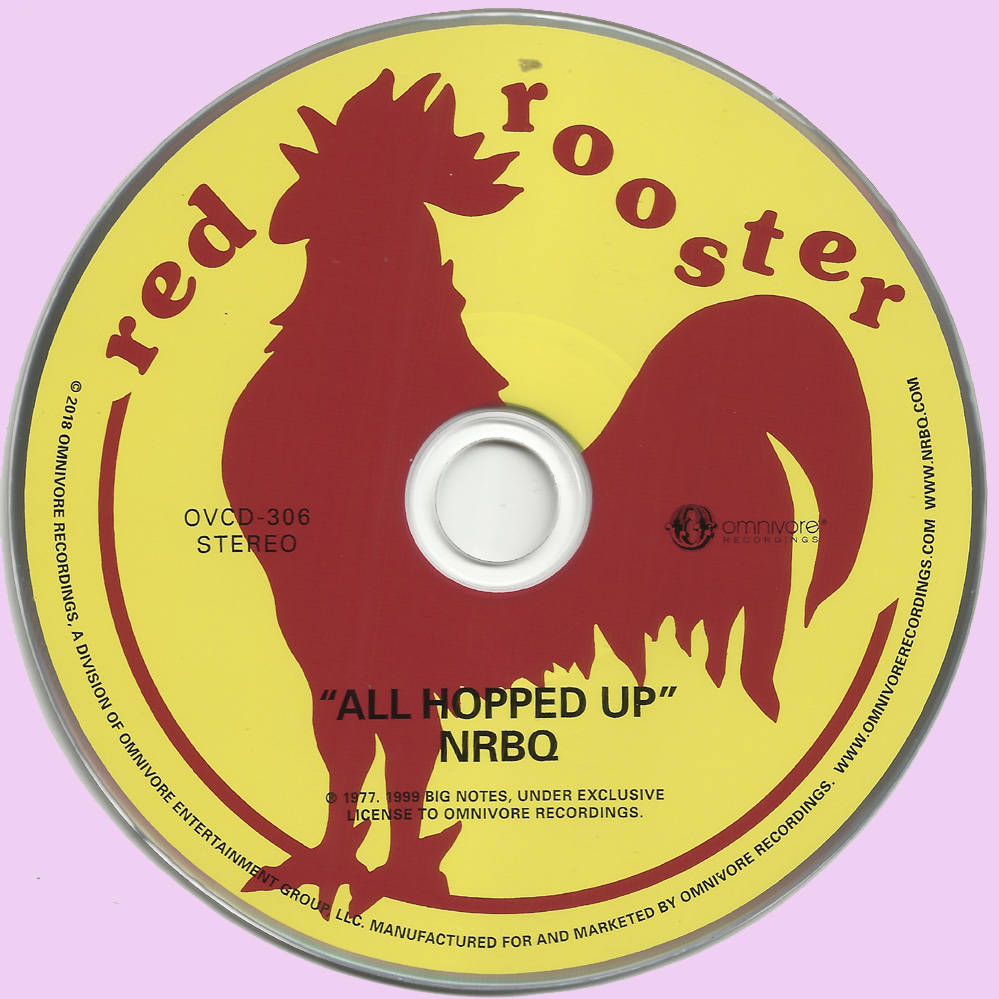
The music on All Hopped Up covered a period of a few years, 1974-1976. The LP was released in the Spring of 1977 by Red Rooster Records. NRBQ has released several fine albums but this has to rank as one of their very best – a minor masterpiece. Released during the height of the new wave/punk era, it sounds like nothing else from the time.
In fact, none of these 13 songs sound alike. NRBQ cover an enormous amount of ground on this release, from rockabilly, country, folk rock, power pop, jazz, and more. Even more amazing that they make it work as well as they do. It’s pointless to list highlights as the album is strong all the way through but a few special tracks need to be singled out. Al Anderson’s Ridin’ In My Car is a timeless pop classic. It Feels Good and That’s Alright are excellent power pop tracks on par with the best from this era. Call Him Off Rogers is a weird, offbeat country rock number with a melodic guitar solo. Things to You, a Terry Adam’s original that would later resurface on NRBQ’s country outing with Skeeter Davis (a great record), is another outstanding track.
NRBQ never took themselves too serious and for this reason they are never ranked among the important bands of the classic rock era. But when one reviews their body of work and its consistency, you can definitely pose the argument for NRBQ being one of America’s great rock n roll/roots bands.
by Jason Nardelli, May 12th, 2020
Tracks
1. Ridin' In My Car (Al Anderson) - 2:55
2. It Feels Good (Terry Adams) - 2:36
3. Cecilia (Harry Ruby, Dave Dreyer) - 2:57
4. I Got A Rocket In My Pocket (Jimmy Logsdon, Vic McAlpin) - 2:40
Long after Fardon split, however, some of the band grabbed a last chance (for an extended holiday, at least) and relocated to Italy in 1966 to try and cash in on an Anglophilic scene. During this footnote era, they did achieve some squealing success as a placebo live draw, and hung around for years playing Family and Traffic songs, plus numbers by the ex-pat rockers who made up a bewildering, revolving cast list (two relatively major players are remembered only as “Kit” and “Rod”).
They recorded singles for a tiny Italian indie label and, eventually, an LP. Old Songs New Songs is rare, inevitably hailed as a legendary cult classic. This two-disc set contains a complete bonus demo album and various 45 sides, including the sole outstanding track Ypotron – feedbacking freakbeat recorded in ’66 for an Italian spy caper movie.
by Derek Hammond , 21 August 2009
The first-ever official reissue of this legendary Italian-only late sixties album! British freakbeat/garage R&B giants the Sorrows relocated to Italy in 1966, recording the album Old Songs New Songs a couple of years later for a small independent label based in Milan. Now extremely rare as an original pressing, the album has been shoddily bootlegged a couple of times, including a CD pressing that slowed down the recordings and also managed to chop off the final minute of the album's title track!
This new, band-approved reissue features the fully restored album in sparkling sound quality and adds an extra 100 minutes of music, nearly all of which is previously unreleased. Among the highlights are the magnificent heavy psychedelia of the band's aborted early 1968 Pye single 'Which Way'/'My Way Of Thinking,' the theme song to the cult Italian spy caper Ypotron, a couple of movie collaborations with soundtrack maestro Ennio Morricone, and even an entire late 1968 demo album that, following the departure of two group members, was eventually scrapped and replaced by Old Songs New Songs!
Completed by a previously unheard live gig from 1980 that proved the Sorrows' savage garage band instincts were fully intact a decade later, this package features new, extremely detailed sleevenotes concerning their time in Italy, with fresh band quotes and some superb, previously unpublished photos. Forget what you may have read and heard elsewhere, this incredible 2CD package is the final word on the band's lengthy but previously little-documented Italian sojourn!" Includes 16-page booklet.
Tracks
Disc 1
1. Same Old Room (Chuck Fryers) - 3:13
2. Hey Mr. Policeman (Charlie Whitney, Roger Chapman, Rick Grech) - 3:28
3. Heaven Is In Your Mind (Jim Capaldi, Steve Winwood) - 4:03
4. Mary J (Chuck Fryers) - 2:12
5. Hey Hey (Chuck Fryers) - 2:51
6. The Makers (Chuck Fryers) - 6:24
7. Io Amo Te Per Lei (Which Way) (Bruce Finley, Chuck Fryers) - 2:56
8. Dear Mr. Fantasy (Jim Capaldi, Steve Winwood, Chris Wood) - 5:01
9. Rollin' Over (Ronnie Lane, Steve Marriott) - 3:01
10.Per Una Donna...No! (Listen To Me) (Claudio Fontana, Tony Hazzard) - 2:47
11.6 Ft. 7½ Inch Shark Fishing Blues (Chuck Fryers) - 1:59
12.Old Songs New Songs (Charlie Whitney, Roger Chapman, Rick Grech) - 4:38
13.Per Una Donna...No! (Listen To Me) (Claudio Fontana, Tony Hazzard) - 2:40
14.Amore Limone (Each And Every Day) (Mike Hugg, Vito Pallavicini) - 2:33
15.Hey Hey (Chuck Fryers) - 2:47
16.6 Ft. 7½ Inch Shark Fishing Blues (Chuck Fryers) - 2:47
17.Which Way (Chuck Fryers) - 2:36
18.My Way Of Thinking (Chuck Fryers) - 3:00
19.Pioggia Sul Tuo Viso #1 (Carlo Nistri, Ennio Morricone, Luciano Salce) - 2:26
20.Pioggia Sul Tuo Viso #2 (Carlo Nistri, Ennio Morricone, Luciano Salce) - 2:28
21.Ypotron (Nico Fidenco) - 3:41
Disc 2
1. Hey Hey (Chuck Fryers) - 3:12
2. New York Mining Disaster 1941 (Barry Gibb, Robin Gibb) - 4:48
3. Answer My Questions (Chuck Fryers) - 2:57
4. Dear Mr. Fantasy (Jim Capaldi, Steve Winwood, Chris Wood) - 5:04
5. We Can Work It Out (John Lennon, Paul McCartney) - 4:19
6. The Makers (Chuck Fryers) - 6:41
7. Heaven Is In Your Mind (Jim Capaldi, Steve Winwood) - 3:35
8. Dogs And Cats (Chuck Fryers) - 3:14
9. Don't Let Me Be Misunderstood (Bennie Benjamin, Gloria Caldwell, Sol Marcus) - 5:51
10.Move Da Show (Nevada) - 3:17
11.Matchbox / Rock And Roll Music (Carl Perkins / Chuck Berry) - 5:40
12.Baby What You Want Me To Do (Jimmy Reed) - 3:04
13.Bye Bye Bird (Willie Dixon, Sony Boy Williamson) - 3:27
14.Let Me In (Miki Dallon) - 3:06
15.What'd I Say (Ray Charles) - 3:11
16.Dizzy Miss Lizzy (Larry Williams) - 3:05
17.No Reply (John Lennon, Paul McCartney) - 3:12
18.A Little Rock 'n' Roll (Pip Witcher, Roger Lomas) - 2:07
19.5-4-3-2-1 (Manfred Mann, Mike Hugg, Paul Jones) - 2:20
Although the core personnel had been together in a variety of incarnations since the mid-'60s, most notable of which was the brilliant and criminally short-lived Poet & the One Man Band, Tracks (1972) was only the second long player from Heads Hands & Feet. The U.K. quintet of Pete Gavin (drums/vocals), Albert Lee (guitar/keyboards/vocals), Ray Smith (bass/guitar/vocals), Charles "Chas" Hodges (bass/guitar/violin/vocals), and front man Tony Colton (vocals) had gained significant notice stateside during a week-long residency at the Troubadour in Los Angeles after the release of their self-titled double-LP debut Heads Hands & Feet (1971).
For their second outing, Tracks, they continue their quest for exceptionally crafted country-flavored material. They waste precious little time, as the fiery "Let's Get This Show on the Road" is a high-energy, good-time ode to the rigors and foibles of live performing and concert touring as exemplified in the chorus "Maybe I'll see Margo/Down in Chicago/And I've got a dancer down in New Orleans." Lee's multi-tasking musicianship is particularly noteworthy as his rollicking keyboard work on both acoustic piano and Hammond organ, coupled with the catchy, if not slightly twangy lead electric guitar lines, rhythmically tie the verses to the chorus. "Roadshow" demonstrates quite a different side to the band, examining Lee's capacity for emotive singer/songwriter balladry. His temperate vocals and melodic piano runs recall that of Jackson Browne or early folksy Tom Waits.
Further demonstrating Heads Hands & Feet's wide-ranging musicality is "Hot Property." Remarkably, the combo fuses an energetic bluegrass-inspired instrumental introduction to a funk-driven melody that would not have been too out of place coming from southern rockers Lynyrd Skynyrd. Of equal (if not arguably greater) prowess is the downhome, organic "Jack Daniels," which returns the sound to a loose groove mirroring the Band's rural rockers "Up on Cripple Creek" or "Life Is a Carnival." Tracks...Plus (1996) reissues both the original ten-song platter with a pair of additional non-LP sides, "Silver Mine" and "Warming Up the Band."
by Lindsay Planer
Tracks
1. Let's Get This Show On The Road (Albert Lee, Chas Hodges, Pete Gavin, Ray Smith, Tony Colton) - 3:53
2. Safety In Numbers (Ray Smith, Tony Colton) - 3:36
3. Roadshow (Albert Lee) - 3:16
4. Harlequin (Ray Smith, Tony Colton) - 4:26
5. Dancer (Albert Lee, Chas Hodges, Ray Smith, Tony Colton) - 3:21
6. Hot Property (Pete Gavin, Ray Smith, Tony Colton) - 4:58
7. Jack Daniels (Albert Lee, Chas Hodges, Ray Smith, Tony Colton) - 3:30
8. Rhyme And Time (Albert Lee) - 2:41
9. Paper Chase (Ray Smith, Tony Colton) - 3:54
10.Song And Dance (Albert Lee) - 5:26
11.Silver Mine (Tony Colton, Ray Smith, Albert Lee) - 3:48
12.Warming Up The Band (Albert Lee, Chas Hodges, Pete Gavin, Ray Smith, Tony Colton) - 3:26
As a producer and label owner, Mike Vernon has probably contributed more than anyone to the recording of early British Blues and presenting American original Blues players to the British public. By combining the keen young talent he found in London with the wealth of experience he brought from America, he created a heady mixture that took The Blues a big step forward.
Michael William Hugh Vernon was born in 1944 and brought up in London. As a teenager he played in a band called The Mojo Men (no connection with the US band by the same name), and in 1963 he went to work for Decca records. He cut his producing teeth on the album ‘In London’ by veteran Texan pianist Curtis Jones, and the results led to him producing albums by Champion Jack Dupree and Otis Spann. Keen to have more control of the process, Mike started his own mail-order label called Purdah, pressing short runs of four 7” singles, one of which was by future Blues-rockers Savoy Brown. In tune with the groovy sixties he changed the name to Outasite, and then to Blue Horizon in 1965, still operating by mail-order until he arranged a distribution deal. Blue Horizon’s first release was ‘Flying Eagle’ by Dr. Ross, and records by JB Lenoir, Hubert Sumlin and Driftin’ Slim showed Mike was serious about the Blues. Still working for Decca, Mike produced John Mayall‘s breakthrough ‘Beano’ album ‘Bluesbreakers with Eric Clapton‘ and the follow-up ‘Hard Road’ with Peter Green.
'Bring It Back Home' is his 1st recording debut album presents blues rock, country and jazzy tracks. It's the only album for his label, he is singing and playing various guitars and percussion on mostly original songs plus blues by Dr Ross, Willie Lofton and Jimmy Reed. Accompanying musicians include Rory Gallagher (lead guitar on "Come Back Baby"), Paul Kossoff (lead guitar on "My Say Blues"), Paul Butler, Rick Hayward, Pete Wingfield, &c.
Tracks
1. Let's Try It Again - 4:24
2. Move Away - 4:16
3. Mississippi Joe - 3:59
4. Brown Alligator (Mike Vernon, Rick Hayward, Kenny Lamb, Dick Parry) - 11:47
5. Come Back Baby (Doctor Ross) - 2:06
6. War Pains - 3:48
7. Dark Road Blues (Willie Lofton) - 3:26
8. (She Said) She Didn't Have Time - 5:56
9. Ain't That Lovin' You Baby (Jimmy Reed) - 3:12
10.My Say Blues - 5:43
Amm songs by Mike Vernon except where noted
Musicians
*Mike Vernon - Vocals, Bass, Rhythm, Lead Guitar, Tambourine, Flesh Claps, Guiro, Triangle, Nylon-Bristle Hand Brush, Maraccas
The memories are rich, often as sun-splashed as one might expect, and I wish I had more of them. Seeing Santana at a Day on the Green in 1976, War at Winterland around the same time, Malo in the mix there somewhere as well. Growing up – and into a music obsessive – in late 60’s/early 70’s suburban California meant hearing the legacy of Latino rock’n’roll develop before my very ears, and regardless of my relatively cloistered existence in then-predominantly white East Bay outpost Concord, I’m convinced that being exposed to that ethnic strata helped both seed my imminent escape to the urban wilds of San Francisco and smooth the transition. I only know now, with the release of this long overdue collection, that my incidental education would have been all that much richer had it included seeing God’s Children, preferably prior to MCA subsidiary Uni getting their corporate claws in.
Now, on the surface, that stipulation is an odd one considering said interference involved landing the burgeoning hotshot band – whose pedigree, in the persons of Little Willie G (Garcia) and Lil’ Ray (Jimenez), reached back to genre pioneers Thee Midniters – in the studio with the legendary Wrecking Crew. But as the separation of tracks on Music Is The Answer makes lucently clear, even Carol Kaye and company, in this instance anyway, can’t help but be the applicators of some slickly competent lipstick on the pig of big label intentions. Yes, ruinous industry intrusion (especially back then) is a tale so common as to be the rule not the exception, but, listening to the evidence here, the dispiriting effect of that meddling, so often cited, could hardly be more accurately applied than in this case.
The verve, the vivacity, the inner soul/rock naturalism reflected on the collection’s first eight tracks, recorded, with one exception, with an outfit of local musicians simply referred to as the East LA Band, speaks in that type of single dynamic voice that was one of the era’s most enduring signal traits. In Garcia and Jimenez God’s Children had a pop-savvy duo with the chops and experience to not only compose their own Chicano soul classics but the confidence to pull them off on any hold-their-own stage you’d care to imagine, while in Lydia Amescua they had a spark plug vocal foil that could bring a combined light and fire to her roles as backing and lead singer (check her head-turning out-front performance on Lil’ Ray’s “If You Ever Go Away,” a pure force of intuitive phrasing at the mic). For an all-too-brief moment, the world was theirs, surely.
“It Don’t Make No Difference,” the harmonies divine, percolates along on a riverbed of B-3 organ and a rhythm section brimming like a very finely tuned V-8, the piano-based ballad “I Just Wish” situates somewhere between Frankie Lymon and Carole King, “Brown Baby” could very well be the tune that drew Berry Gordy west to LA, the yearning romanticism of “Lonely Lullaby” poignant enough to soundtrack every lover’s warm night dream of Southern California no matter where they live. And lest it be thought that God’s Children simply couldn’t deal with a larger studio contingent, skip to “Hey, Does Somebody Care.” Recorded at a session with a 40-piece orchestra booked by local entrepreneur Eddie Davis, the band nailed the track on a single take, at which point every hired musician stood and applauded as the conductor Arthur Freeman, in disbelief, said “I’ve never seen anything like this.”
A make-or-break opportunity, it would ultimately do both. Davis played some insider cards and the track became the theme song for Ben Casey star Vince Edwards’ new series Matt Lincoln. Though the show didn’t last past one season, the placement of their triumphant slice of symphonic soul brought God’s Children to the attention of Uni and the quiet tragedy of unforeseen consequences was set in motion. While the vocals on those Wrecking Crew sessions tend to retain their native zest (Lydia’s especially), the backdrops in to which they are plugged feel generic and paint-by-number, rendering what had been innately vital rather anodyne and bloodless. A waste of talent on multiple levels, it nonetheless cannot diminish God’s Children’s moment in the sun. A blink-and-you-miss-it ascendancy it may have been but, in retrospect, due to the talent and drive and dedication the trio brought to the project, what that short-lived burst produced was enough to maintain one’s faith in the concept of timelessness. [find Music Is
by Dave Cantrell
Tracks
1. Music Is The Answer (William Anthony Garcia) - 4:07
2. It Don't Make No Difference (Raymond Titi Jimenez) - 3:24
3. If You Ever Go Away (Raymond Titi Jimenez) - 3:17
4. I Just Wish (Raymond Titi Jimenez) - 3:17
5. Dream (Raymond Titi Jimenez, William Anthony Garcia) - 3:08
6. Brown Baby (Wilbert Wade) - 3:12
7. Hey, Does Somebody Care (Linda Perhaps, Oliver Nelson) - 3:03
8. Lonely Lullaby (Mario Paniagua) - 2:24
9. Music Is The Answer (William Anthony Garcia) - 3:29
10.Music Is The Answer (William Anthony Garcia) - 3:35
11.Little Willie G. - Put Your Head On My Shoulder (Paul Anka) - 2:59
12.That's The Way God Planned It (Billy Preston) - 2:40
13.If You Ever Go Away (Raymond Titi Jimenez) - 3:17
14.If You Ever Go Away (Raymond Titi Jimenez) - 3:17
20 Granite Creek was another comeback disc that Moby Grape issued in 1971, and delivers the goods in a more subdued, laidback country-rock fashion.
The five original members who played on the 1967 debut are all present though Skip Spence only contributes one fascinating original, the instrumental Chinese Song. Chinese Song is incredible, completely unlike anything the Grape would record again and more proof of Skip Spence’s genius. While Spence provided the Grape with an undefinable magic, Mosley, Lewis, Stevenson, and Miller’s contributions were just as important and really an underrated facet.
My first initial reaction to 20 Granite Creek was disappointment. The record’s production reminds me of the Doors’ LA Woman, slicker than their 60s records, making the band sound like a ghost of its former self. That being said, 20 Granite Creek is a much better album than their unfocused 1969 lp, Truly Fine Citizen, which was more or less contractual filler. Each track has something new to offer and as a whole this is one of Moby Grape’s very best offerings. Songs like Gypsy Wedding and Wild Oats Moan show off the group’s loose, bluesy hard rock side and would fit in well with classic rock radio as both these songs are full of great guitar riffs and busy arrangements. Goin Down To Texas is another excellent driving roots rocker with some great guitar hooks and a vibe that’s similar to Fall On You or Omaha. Other surprising highlights are the moody oblique psychedelia of Horse Out In The Rain and the boogie rocker I’m The Kinda Man, That Baby You Can – which bears a passing similarity to prime era Little Feat.
My picks off the album are Apocalypse and About Time, two reflective gems off the first side of the original lp. Apocalypse is more of a country-rocker that comes on like the calm after a storm and highlighted by fiddle and a rock steady beat. About Time is a complex production and notable for its unique tin drum section which gives it a distinct island influence. All in all this is a great guitar oriented roots rock lp that shows Moby Grape trying different ideas in the studio while keeping things fresh and simple. The original lp is fairly easy to find and was reissued on cd (but now out of print) by San Fransisco Sound in the 90’s albeit with shitty cover art though.
by Jason Nardelli
Tracks
1. Gypsy Wedding (Bob Mosley) - 2:23
2. I'm The Kind Of Man, That Baby You Can Trust (Jerry Miller) - 3:32
3. About Time (Don Stevenson) - 2:51
4. Goin' Down To Texas (Peter Lewis) - 1:55
5. Road To The Sun (Bob Mosley) - 2:42
6. Apocalypse (Peter Lewis) - 2:11
7. Chinese Song (Alexander Spence) - 5:45
8. Roadhouse Blues (Jerry Miller) - 2:45
9. Ode To The Man At The End Of The Bar (Bob Mosley) - 3:42
10.Wild Oats Moan (Don Stevenson, Jerry Miller) - 3:03
Named after a poem written in 1835 by Alfred Tennyson, Locksley Hall came from Spokane, Washington. Established 1967, the band was well regarded on the Pacific Northwest circuit until their demise in 1970. In 1969, The group put together an album intended to be released by the Epic label, but the effort failed to materialize. However, the tapes from these sessions were saved, and “Locksley Hall” has recently been reissued.
Operating in the same male-female vocal framework as groups such as Eternity’s Children, the Peanut Butter Conspiracy and It’s A Beautiful Day, the band was clearly a product of their time, yet had enough of their own bright ideas to forge a rather unique identity. Informed by adventure and imagination, “Locksley Hall” offers many mercurial moments to keep listeners interested and satisfied.
The introductory track is a short instrumental propelled by the spooky sound of a church organ, which duly whets the appetite. Plugging in at over seven minutes in length, “Let Me Blow Out Your Candles” is molded of a moody and meditative texture, intensified by spellbinding vocals, wavery acid-flavored guitar pickings and the lilting burr of a flute. Equally mesmerizing is the ghostly hymn-like approach of “When Autumn Leaves Turn To Gold,” while “Boy” rattles and rocks to a snarling edge.
Breezy jazz rhythms and shimmering melodies cement “Que-Ball,” and for a good laugh, there’s the corny “D.O.P.E.,” a strummy hillbilly sentiment about smoking grass. Exploding with sunny harmonies and effective hooks, “Wake Up (Tubby’s Tune)” is a pure pop gem smacking of hit single status, and “Some Say Love” carries a soulful hard rocking flair.
A lot of cool and clever stuff is happening throughout “Locksley Hall.” The vocals are strong and heartfelt, and the interplay between the guitars, keyboards and drums moves and grooves with freewheeling fervor. Containing an alluring mix of colors and tones, the album shows off the band’s vision on a variety of different levels. A homemade quality, coupled with a casual attitude gives “Locksley Hall’ an added dose of charm. As far as true blue hippy rock goes, here’s an album that certainly fits the term.
A sextet from Hamburg, playing the patented, distinctive German type of progressive jazz-rock typified by underground legends like Xhol and Out Of Focus (their 2nd & 3rd albums). The leading soloist in Thrice Mice was Wolfgang Buhre. Vocalist Karl-Heinz Blumenberg had little to do most of the time. Their album was recorded in November - December 1970 in Hamburg and released on Phillips in 1971. Buhre often tried to copy the wah-wah sax style of Ian Underwood of Mothers Of Invention, this was most apparent on the opening track, "Jo Joe". On "Vivaldi" the three soloists were playing duets, taking turns two at a time! Minnemann's organ sound was high, thin and cranky in the late sixties sort of way.
The distinctive German underground sound, rooted in jazz, notably with influences as wide-ranging as Blodwyn Pig (two covers as bonus tracks) and Curved Air. Long jammings by highly talented musicians, all blending into an unique sound with the distinct spirit of krautrock. Bonus material, digitally remastered and with informative booklet.After a couple of years, the group resurfaced as Altona and made two further albums for RCA in 1974 and 1975.
Tracks
1. Jo Joe (Arno Bredehöft) - 8:51
2. Vivaldi (Antonio Vivaldi) - 11:34
3. Trakov (Karl-Heinz Blumenberg) - 12:54
4. Fancy Desire (Wolfgang Buhre) - 8:00
5. Drve Me (Mick Abrahams) - 2:20
6. Pig Ii (Arno Bredehöft, Rainer von Gosen) - 10:56
7. Vivaldi's Revival - 7:18
8. Trying - 5:10
9. New Life - 2:20
10.Dawn - 2:57
11.An Invitation (Rainer von Gosen) - 3:10
Tracks 7-10 written by Wolfgang Buhre, Karl-Heinz Blumenberg, Werner von Gosen, Wolfram Minnemann, Arno Bredehöft, Rainer von Gosen
Bonus Tracks 5-11
Tracks 1-4 Recorded Nov./Dec. 1970, Windrose-Dumont-Time Studio, Hamburg.
Tracks 5, 6 Recorded live, 04.-06.09.1970 at Fehmann-Festival.
Track 7 Recorded live, March 1970, Ernst-Merck-Halle, Hamburg.
Tracks 8-10 Recorded live, Tochstedt (1969).
Track 11 Recorded 1967, Tonstudio Niemann & Richter
Irish bluesman Rory Gallagher was always known as a fierce live performer and those not fortunate enough to catch him first-hand can still feel his power on his new posthumous release Check Shirt Wizard – Live In ‘77. The set comes out March 6th, 2020 via Chess/UMC as two CDs or three vinyl records and contains 20 previously unreleased live recordings from shows in early 1977 in London, Brighton, Sheffield and Newcastle. Many of the selected tracks are from Gallagher’s then-current album Calling Card and his 1975 effort Against The Grain. They’ve all been newly mixed from the original master tapes captured by The Rolling Stones’ mobile studio and were mastered at Abbey Road. This new record follows Gallagher’s successful Blues album of 2019 and is another tremendous batch of music from a talent who left us far too soon.
Rory Gallagher is arguably the greatest guitarist ever to emerge from Ireland and had a deep, passionate gift for playing the blues. His live performances during his 70s and 80s heyday are the stuff of legend and he was never more in his element than when he was onstage. His playing connected blues and rock influences to form a mighty guitar style that’s as relevant now as it was back then and his name is spoken in hushed, respectful tones in the guitar community to this very day. Gallagher died in 1995 at just 47 years old but his reputation has only grown in stature since then. He’s also been cited as an important figure in the development of guitar stars including Jimi Hendrix, Eric Clapton, Queen’s Brian May, and The Smiths’ Johnny Marr. He was a musician’s musician who left an empty spot behind him that’ll never be filled.
Check Shirt Wizard – Live In ‘77 begins with an audience chanting Gallagher’s name and, after a simple introduction, he goes right to work on the funky rocker “Do You Read Me.” Rory wastes no time and gets hot immediately on guitar and vocals. He pushes his battered old Stratocaster into overdrive and skillfully works unique melodic figures in between his blues licks. “Moonchild” follows and raises the tempo and intensity another few levels. Gallagher is bold and expressive, fearlessly taking the blues he loved into a rock environment that still sounds fresh and progressive. His tone and phrasing both shine here and represent a gold standard that emerging guitar heroes must still be judged against.
“Calling Card” is a jazz-tinged shuffle with a jam band flavor to it that gives Gallagher an entirely different context in which to situate his improvisations. The band stretches right along with him and together they touch on an Allman/Santana type of sound that everyone involved wears extremely well. Gallagher’s energy is unrelenting and gives this jam a harder edge than Duane or Carlos could, however, and he throws down like a boss.
Gallagher was one of the few blues/rock players who was just as compelling on solo acoustic as he was with an electric band, a fact made clear by tracks like “Barley & Grape Rag” and “Pistol Slapper Blues.” His acoustic efforts were always a cut above and he easily expanded to fill the space a solo stage gave him. “Too Much Alcohol” showcases Gallagher’s slashing acoustic slide playing and muscular rhythm style. He also engages vocally with his audience and you can tell that those assembled were paying attention to every word he sang.
“Bullfrog Blues” gets into Rory’s practically manic electric slide style and he deals out a seemingly endless string of tight bottleneck licks over a fast rock and roll beat. Gallagher never lets the energy lag even a little and keeps driving himself harder and harder. Impressive bass and drum solos complete the live band experience and help push Gallagher into the stratosphere.
Check Shirt Wizard – Live In ‘77 is a long and wonderful collection that explores a mostly undocumented period of Gallagher’s performance history. It shows us Rory at his best, giving his all to crowds that loved this music as much as he did. Gallagher was a house-rocker of the highest order and deserved to be more famous than he ever became. These live takes are treasures that all fans of blues music need to hear.
by Mike O’Cull
The New York Times obituary for blues rock guitarist Rory Gallagher says he was known for his “flashy guitar work,” which, while certainly true, is a dramatic oversimplification of Gallagher’s legacy. But the tribute, coming in at a scant 150 or so words, also crystalizes Gallagher’s career: misunderstood in the United States, underappreciated, and seen as one-dimensional by those who didn’t choose to delve into his full body of work. Check Shirt Wizard – Live in ‘77, a compilation of four European shows, won’t change Gallagher’s stature in the eyes of the public at large, but it does serve as a strong reminder of just what made him so great.
Gallagher’s live work is well-documented. There’s 1972’s Live In Europe, Irish Tour ’74, and 1980’s Stage Struck, plus some posthumous live releases. So it’s hard to say where Check Shirt Wizard fits into those other shows, other than as a great excuse to delve back into Gallagher’s catalog.
And one thing that comes across Check Shirt Wizard is that while Gallagher was a gifted guitar player, he was also a soulful singer. The vocal performances are impressive. I was particularly struck by “Calling Card,” with Gallagher, notoriously critical of his own abilities, sounding both relaxed and confident. While there’s plenty of “flashy” guitar punctuating the track, the piano and Gallagher’s weathered voice make it special.
Clocking in at twenty generous tracks, you get to hear Gallagher cover a lot of stylistic ground in-depth. There’s a nice run of acoustic songs, which make you feel like you’re hearing Gallagher in a pub. “Barley and Grape Rag,” just Gallagher and his acoustic guitar, sounds like Gallagher is performing across the room from you, a tribute to his ability to convey intimacy, and to the quality of the recording. “Too Much Alcohol,” the J. B. Hutto tune Gallagher tackled with a full band on Irish Tour ’74 is performed here as a Delta blues.
Gallagher also hits some surprisingly glam notes that I wasn’t expecting. “I Take What I Want,” a Sam and Dave soul cover, sounds like Sweet in Gallagher’s energized hands. “Walk on Hot Coals” has a similar power, with an abandon that wouldn’t have sounded out of place on a Led Zeppelin track. And here too, you have to be impressed with Gallagher’s vocals, which have a sexy smokiness. The joke is that European rock singers try to sound American and American singers try to sound British, but Gallagher, across the entire album, does a beautiful job of sounding like his true Irish self, but organically channeled through the American south.
As someone who doesn’t pay for the music being reviewed, I feel funny criticizing the length of an album, but at 20 tracks there’s a lot to process here. “Bullfrog Blues,” a fun tune with some vintagely wild Gallaher slide, clocks in at almost 10 minutes, largely because Gallagher introduces the band during the performance. It’s cute the first time, but as you might expect, the same introduction loses its charm over repeated listenings. It hardly detracts from what is a very strong album, but it would also be nice if labels understood that the things that make a one-time live show work don’t translate across the board for live albums.
by Steven Ovadia, March 2, 2020
Tracks
Disc 1
1. Do You Read Me - 5:51
2. Moonchild - 5:49
3. Bought And Sold - 7:27
4. Calling Card - 6:46
5. Secret Agent - 6:37
6. Tattoo'd Lady - 6:27
7. A Million Miles Away - 7:13
8. I Take What I Want (David Porter, Isaac Hayes, Mabon "Teenie" Hodges) - 5:50
9. Walk On Hot Coals - 7:58
All songs by Rory Gallagher except where stated
Disc 2
1. Out On The Western Plain (Huddie Ledbetter) - 4:44