Brenda Patterson has a fantastic voice, a Memphis based blues rock singer recorded three albums in early 70’s.“Like Good Wine” was her third, released in 1974 on Discreet Records, a label owned in part by Frank Zappa, you'd think that this was going to be a rock album as well as her two previous, well not exactly. Produced by Snuff Garrett, who was also Cher's producer at the time, in the early 70's, but the formula he worked out for Cher did not do Brenda Patterson justice, he gave her soft production, with backing vocalists and strings.
Couple of songs were written by John Durrill (who also worked with Cher), but the best songs are Bill Anderson's “Slippin' Away” a nice upbeat, Ray Price's “I'll Be There (If You Ever Want Me)”, which illustrates the power of Brenda's voice best as she sings accapella on several lines, and probably the best song here “Sweet Amarillo”, first surfacing as a short jam on the outtakes of Dylan’s 1973 Pat Garrett & Billy the Kid sessions, the song was completed a year later by songwriter Donna Weiss, the impromptu track on Dylan’s session was polished for pop splendor with a faster beat, a catchy hook, and a bell-bottom clad Patterson singing “Sweet Amarillo/ You stole my pillow/ You stole my pillow/ Hun, you ruined my mind/ Sweet Amarillo/ Like the wind and the willow/ I never will know/ Just how much you lied.”
The album has some good cuts, but it's very short, with the songs all running around 2 and 3 minutes. Thankfully, she would continue to record, joining The Coon Elder Band.
Tracks
1. Mr. Guitar (John Durrill) - 3:17
2. This I Find Beautiful (Larry Weiss, Mack David) - 2:40
3. Slippin' Away (Larry Weiss, Mack David) - 2:24
4. Blessed Be The Love (Gloria Sklerov, Harry Lloyd) - 2:03
5. Bring Your Good Wine (John Durrill) - 2:40
6. You Can't Have Your Cake And Eat It Too (Molly Ann Leikin, Yutaka Yokokura) - 3:12
7. I'll Be There (If You Ever Want Me) (Ray Price, Rusty Gabbard) - 2:40
8. Crazy (Willie Nelson) - 2:59
9. Sweet Amarillo (Donna Weiss) - 2:46
10.I've Never Been A Fool Like This Before (Lori Jacobs) - 2:38
Subway was a duo, consisting of an American and an UK- guy, who released their only album in France as 200 vinyls in 1971. There they lived and played both for some time as street musicians, who played their compositons even at Parisien subway, hence the bandname. Unfortunately the album fell through, so the unsold vinyls were melted, as usual in France at this time.The band presented a phantastic psych- folk music with prog- rock- elements. An absolutely top- album, which hopefully now will reach a bigger audience, as the original LP is very rare.
Alias I, Dirk Hamilton's sophomore set, opens with a quite appalling scene -- "I saw a dog in a trash can chewin' on a cat" -- but worse is to come, as "In the Eyes of the Night"'s dystopian vision unfolds. It's a stunningly modern view of the world, seemingly ripped from the rhyme book of rappers or hardcore headbangers, but Alias I was originally released back in 1977, and musically it is a chasm away from the fury-firing punks across the sea. The album was Hamilton's follow-up to the previous year's You Can Sing on the Left or Bark on the Right, a deliriously derivative set that hit virtually every musical touchstone of '70s soft rock. Hamilton plundered freely from his idols musically, but his lyrics were breathtakingly unique, dizzying vignettes of poetic splendor.
Alias I picks up where its predecessor left off, but this time the songs are not such obvious rips. Sure "The Ballad of Dicky Pferd" pays tribute to Elton John's "Rocket Man," "The Classic Sweat Poze" tips a hat to Traffic, and "Joanna Ree" nods to the Rolling Stones, but there are unexpected stylings as well. "Los Gatos," for example, is Latin-tinged, while "The Light of Love" has a distinctly Spanish flavor. Elsewhere, bluesier elements come to the fore. The aforementioned "Night" defiantly crosses soul with rock, and tosses in some distinctly Stax-esque brass. "Joanna Ree," Stonesy as it is, is the Stones in their bluesiest mode, with wisps of gospel flicking through the gorgeous guitar work.
"Big Boo Hoo" echoes the Stones circa Black and Blue, with its emphatic rhythm snapping around the sliding lead guitar. Even the Traffic-stopping "Sweat Poze" emphasizes that band's R&B roots. These numbers give the set a dirtier and darker sound than Bark, which dovetails nicely with a clutch of love-lost or world-gone-mad numbers. But salvation can be found, be it in the sweet pace of life in "Los Gatos," in the memories of young romance, or brought by the angel of the morning who hovers over "The Light of Love." And if Hamilton's own prayers are answered, he'll be living large as a rock star striking "The Classic Sweat Poze" on the album's most hilariously ironic song. In an age of singer/songwriters, Hamilton should have seen that dream fulfilled, but his songs were too disconcerting -- so familiar yet lyrically so alien that only the critics sang his praises.
Today, with a more modern soundtrack, these songs could rule the world, but for now he remains trapped in '70s nostalgia. This reissue adds two equally stellar bonus tracks, the aforementioned "Big Boo" and the billowing ballad "As a Matter of Fact."
Born in Hammersmith, London, Andy was in the thick of things even as a boy. He was shot in the left eye with an arrow, his right eye with an airgun and since he enjoyed climbing trees and jumping out of them, he eventually knocked himself out when he landed having jumped from some incredible height.
During the early 60’s Andy had trials with Arsenal Football Club. Also back then, a lot of youngsters used to carry a harmonica in their pocket. It was an ‘in-thing’. Andy was one of these youngsters (listen to “No Russians In Russia” on Radio Stars second album) and after meeting up with his old mates Chris Townson and Louis Grooner from Box Hill Boarding School at an old boy’s re-union, he was quickly invited to meet the rest of the band his mates had formed. He joined up with them shortly afterwards. Dubbed The Clockwork Onions by guitarist Geoff McClelland, Andy joined vocalist Louis at the front of the stage for their debut gig at St. Georges Hall in Ashtead. But since Louis, who was hating the experience more and more with every passing minute – would repeatedly stop the band and start shouting through the microphone at ‘some bloke in the audience who was chatting up his bird’ left the band immediately after the gig. Andy was promoted to vocalist, doubling up on harmonica until someone else could be recruited into the line-up. Finally the search ended when Chris Townson brought along a large East End mod whom he had met at art school called Martin Sheller. Martin later went onto play in the Regents who had a hit single with “7teen” in 1979.
A change of name to The Few during 1965 soon followed and the band started to perform around three gigs every month. These were at village halls, art schools, but best of all was a small pub in Guildford called the Harvest Moon. Then Martin Sheller decided he wanted to leave and Chris Dawsett also decided that he wanted to give up playing bass and concentrate on playing keyboards. The band agreed and that was the cue Geoff McClelland had been waiting for. He brought along John Hewlett, who he had met earlier. John claiming that he knew various prominent members of the local music fraternity as well as pointing out his talents on the instrument. All this wasn’t true of course, it was just John wanting to be in a band. Shortly after John’s arrival, Chris Dawsett’s parents forced him to leave. This paid off as Chris eventually became a Professor of Art at Oxford. His departure coincided with a change of name to The Silence. After building up a good local following, acquiring Simon Napier Bell as their manager, the band changed their name again, this time to John’s Children.
Two singles were released on Columbia Records during 1966 and 1967. Their debut release – “Smashed Blocked” became a minor hit in America and an album was recorded during 1966 for the American market only. But sadly it got shelved at the time and wasn’t released over there until 1970. Guitarist Geoff McClelland was replaced by Marc Bolan during March 1967 and the band also moved to Track Records where they released four singles. “Midsummer Night’s Scene” though was withdrawn shortly after it’s release and now sells for anything around £6,000+. During April, the band was thrown off a German tour with The Who because of their wild stage antics and Marc left the band around June. Along the way they did manage to film three promotional video’s. But after a tour of the South West the band split up.
Still managed by Simon Napier Bell, Andy studied mime and acrobatics, continuing in a solo vain and releasing three singles in six months – “It’s Been A Long Time” from the film ‘Here We Go Round The Mulberry Bush’, “Fool From Upper Eden” and The Beatles “You Can’t Do That”. Lack of publicity helped them to become collector’s items.
Having had enough of the music business for a while, Andy left the country to persue adventures in Europe. But returned during 1973 and the following year joined up with his old mate Chris Townson and ex-Sparks bassist Martin Gordon to form Jet. The band signed to CBS Records and released two singles and an album during 1975, as well as toured with Hunter-Ronson. By 1976 they had been released from their contract.
All was not lost though, as Andy got Ted Carroll at Chiswick Records interested in Jet’s final demo’s and come 1977 Radio Stars were born. Six singles, two albums, numerous gigs, a few TV appearances and a hit single – “Nervous Wreck” happened over a two year period. Andy was even insured for £250,000 in case of injury to any member of the audience. But during 1979 the band were forced into splitting up as funds had run out and they received no support from the record company. The band did reform for a short time during 1982 and released a single on Martin’s own Snat label. Andy revived the band during 1988 and a few years later during 1992 until 1996. Chiswick issued a compilation album of old songs and unreleased songs during 1992 titled “Somewhere There’s A Place For Us”.
During the early 80’s Andy wrote quite a few songs and “To The Beat Of A Different Drummer” was eventually released on a cassette album many years later during 1991. A new version of the John’s Children song “Desdemona” was recorded in 1988 with Boz Boorer and this appeared on a Marc Bolan compilation album during the same year.
1992 saw John’s Children return to the stage making their debut in Darmstadt, Germany 25 years after their last gig. The band have done quite a few gigs since playing in and around London as well as in America, Ireland, Spain, Italy and Germany again.
Andy was involved in the ‘Nothing To Do With Us Tour’ of London, Berlin and Amsterdam during 2000 promoting the re-release of Jet’s album from 1975. The band featuring Chris Townson, Martin Gordon, Ian MacLeod and Trevor White who performed songs by Radio Stars, Jet and John’s Children. Boz Boorer was a guest on the night of the London gig and a live album was released during 2001.
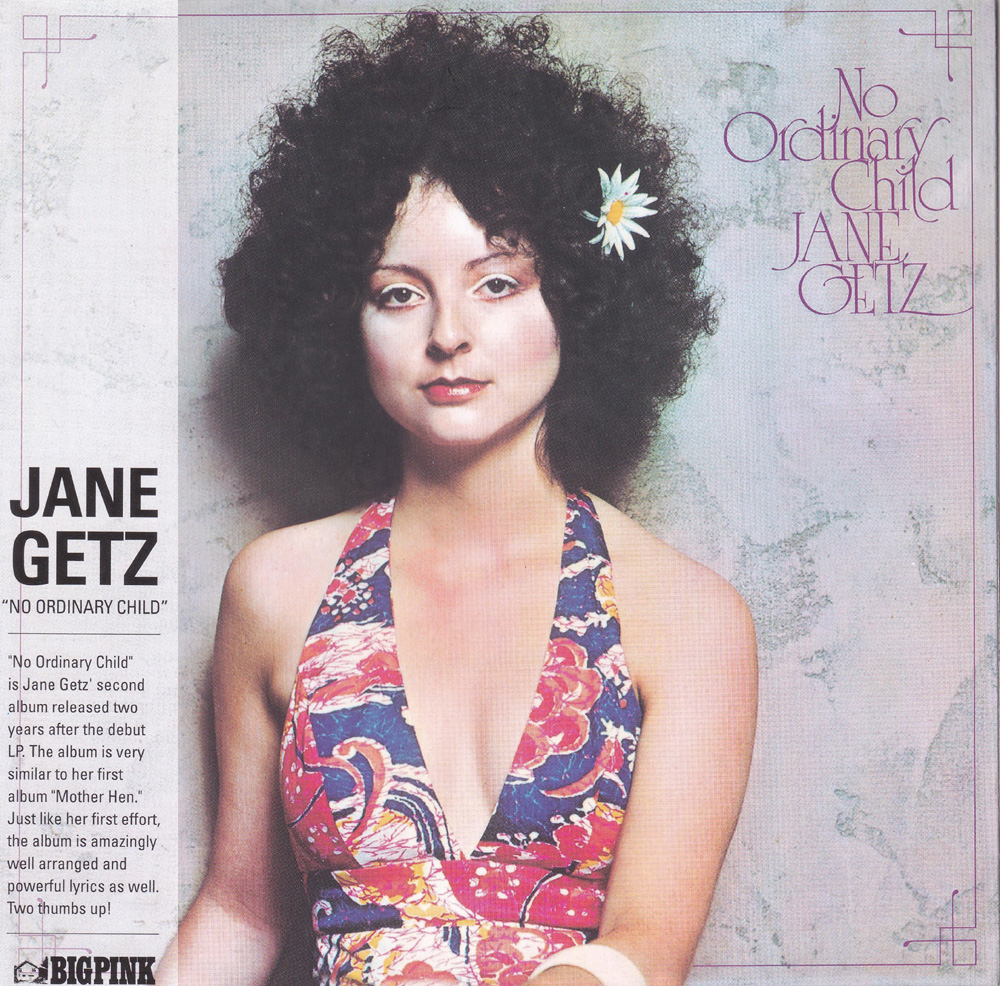
Jane Getz made a strong but brief impression while playing in New York in the mid- to late '60s, and then seemed to disappear until she emerged in Los Angeles in the mid-'90s. The truth is that she never left music, but took a long hiatus from jazz. Considered a prodigy as a child, Getz switched from classical music to jazz when she was nine. She lived in Los Angeles and San Francisco and then at the age of 15, dropped out of high school and traveled to New York City, where within hours she was playing with Pony Poindexter.
Getz worked with a who's who of jazz during her eight years in New York, most notably with Charles Mingus, Stan Getz (unrelated), Rahsaan Roland Kirk, Charles Lloyd, and Pharoah Sanders (with whom she recorded for ESP). In the early '70s, Getz moved back to L.A. and became a studio musician. She was signed to RCA under the name Mother Hen and played country music, in addition to appearing on many rock and pop albums (including with Ringo Starr, Harry Nilsson, and John Lennon). After 20 years outside of jazz, Getz started playing jazz gigs in Los Angeles, often teaming up with Dale Fielder, where it was obvious that her improvising skills were still very much intact. In 1996, she finally recorded her first jazz album as a leader.
by Scott Yanow
“Jane Getz’s 1973 solo album No Ordinary Child is a really unique record more people should know about,” muses. “Getz is a talented pianist, producer and songwriter who did a fair amount of session work in the 70’s playing on albums by Harry Nilsson & John Lennon, Jimmie Spheeris and the Bee Gees, to name just a few. Getz grew up on the West Coast, a child prodigy on the piano, memorizing Mozart pieces at the age of 6. She traveled East in her teens, moving to New York and an early career playing jazz with Pharaoh Sanders, Mingus, Stan Getz and other luminaries. (She wrote a book about her travels in the jazz world called Runnin’ With The Big Dogs) Her songwriting first surfaced with a group she led called Mother Hen and a great album they recorded in 1971. Featuring a stellar cast of heavy cats like Clarence White, Danny Kortchmar, Lee Sklar, Russ Kunkel and Sneeky Pete, Mother Hen introduced Getz’ striking voice and song stylings to the pop world.”
“Sneeky" Pete returns and plays on a lot of No Ordinary Child along with Jim Keltner, John Seiter and an extended cast of LA session players. There’s even a mariachi band on one tune! There are elements of country, boogie woogie, blues, ballads, Broadway; a wide range of sounds and styles that feel easily connected by Getz’ piano and vocals. Everything comes together here with a focus and depth that make the songs feel related, as vignettes in a larger tale. Part of the shimmer of the album includes the lovely arrangements by Nick DeCaro, an incredible talent who was an in-house arranger for A&M Records as well as a musician and performer on his own. His solo album Italian Graffiti is another overlooked gem and a big favorite of mine.
This is one of those entries that solidifies the feature for me. I’d never heard Getz’ name before, let alone this ’73 gem she’s given to the world. The record proves an entrancing listen. This one isn’t in print on LP, but its pretty cheap to pick up second hand. I’d recommend giving it a listen and letting it into your life.
by Andy Cabic
Tracks
1. No Ordinary Child - 4:22
2. Organ-Grinder Music In My Ear - 4:20
3. On The Shores Of Okinawa - 3:40
4. I Shall Build This House Again - 4:22
5. St. John Of The Highway - 2:39
6. Here Comes The Captain - 3:48
7. Gonna See If The Madam`s In - 4:31
8. If The Lady In The Song Had Been Your Mother - 4:06
Fiend's, Friend's, Friend was the second album by British art-rock band Audience, and first for Charisma Records. Now remastered by Cherry Red Records along with a host of bonus material, this sophomore release can now be discovered by those who might not have indulged in the bands eclectic and under-appreciated style back in 1970. Once again, the line-up of Howard Werth (lead vocals, electric classical guitar, banjo), Keith Gemmell (sax, clarinet, flute), Tony Connor (drums, percussion, piano) and Trevor Williams (bass, vocals) remained from the self-title debut, and the true sound of Audience seemed to be emerging in full force.
Williams' huge bass grooves kick off "Nothing You Do", as Werth's devilish vocal delivery (sounding a lot like Axel Rose) and Gemmell's jazzy tenor sax drive home the main melodies. A real fun tune follows, the folk based "Belladonna Moonshine", complete with a hook laden chorus and irresistible country-rock arrangements, while the near 9-minute "The Raid" sees the band launching into epic prog-rock territory for the very first time. Hints of Soft Machine, Van Der Graaf Generator, and early Yes pop up on this adventurous number, complete with rumbling rhythms, scorching sax, a lovely acoustic guitar interlude, and powerful vocals. "Right On Their Side" is a catchy pop/rock number, again featuring Gemmell's robust sax and Werth's gorgeous electrified classical guitar, and the instrumental "Ebony Variations" takes a quirkier, more classical approach (think Gryphon meets Gentle Giant), as soaring clarinet weaves around nimble guitar lines. The darker "Priestess" again hints at prog, and bonus cut "The Big Spell" sees the band in full rock mode for some scorching arrangements. The remainder of the bonus tracks are 1971 remixes of songs from the album, worth a listen but not overly different from their 1970 counterparts.
Cherry Red's remaster sounds great, and the CD booklet contains lyrics, artwork, photos, and info on the band & album. For those who might have missed out on the unique magic of Audience back in the early '70s, this is a good place to start investigating the band.
by Pete Pardo, August 31st 2015
Tracks
1. Nothing You Do - 4:39
2. Belladonna Moonshine - 2:44
3. It Brings A Tear - 2:55
4. The Raid - 8:47
5. Right On Their Side - 5:28
6. Ebony Variations - 5:28
7. Priestess - 6:23
8. Friend's, Friend's, Friend - 3:33
9. The Big Spell - 3:05
10.Nothing You Do - 4:39
11.Belladonna Moonshine - 2:41
12.It Brings A Tear - 2:55
13.The Raid (Keith Gemmell, Tony Connor) - 8:44
14.Ebony Variations (Howard Werth, Trevor Williams, Keith Gemmell, Tony Connor) - 5:29
15.Priestess (Keith Gemmell, Tony Connor) - 6:14
All Music and Lyrics by Howard Werth, Trevor Williams except where indicated
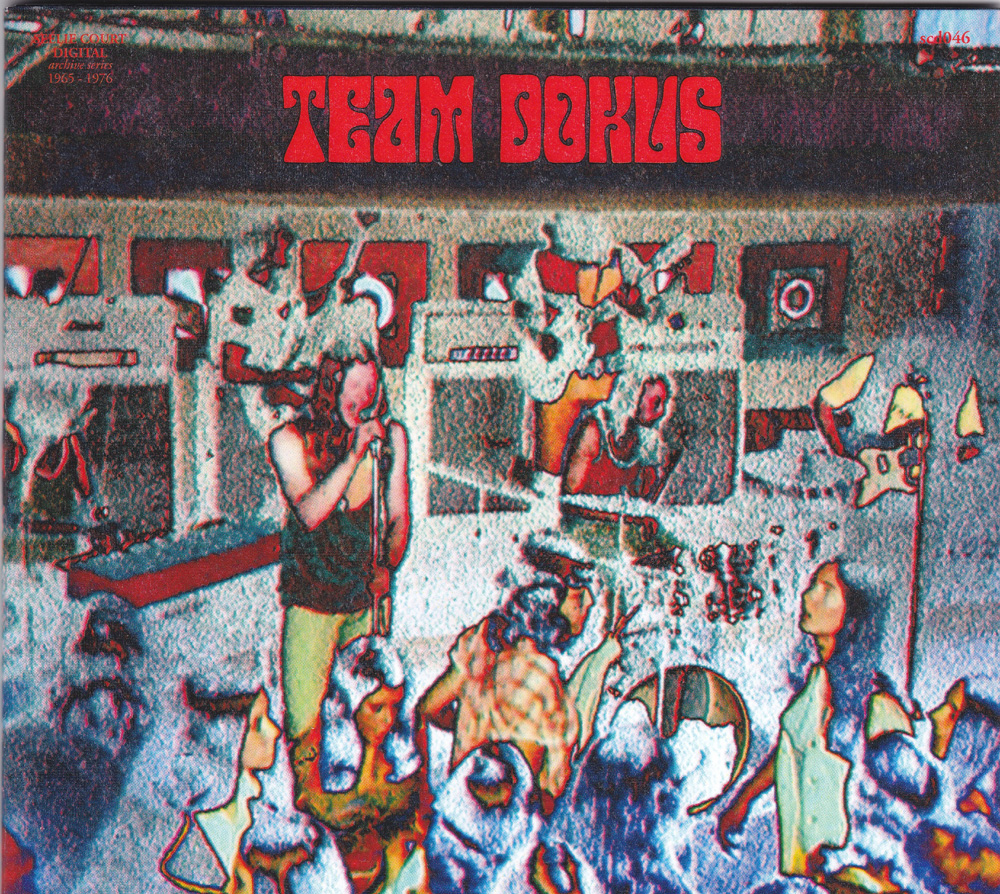
When Blandford Forum resident and vocalist Roger ‘Dokus’ Hope was edged out of local band The Room in favour of Jane Kevern in February 1969, he was approached by former members of The Push, guitarists Stephen Hall and Fred Fry, bassist Terry Lowe and keyboard player Phil Bridle to form their own outfit with eventual drummer Royston ‘Roy’ Stockley. The name they chose for this new band, Team Dokus, was a fusion of Roger’s nickname ‘Dokus’, given to him by Stephen Hall from the TV cartoon character ‘Diplodocus’ and the Formula one racing team Lotus. Managed by Graham Cole of the J. C. Theatrical Agency based in Weymouth, the band honed their repertoire of Black Sabbath, Fleetwood Mac, Deep Purple, Status Quo and Ten Years After covers, plus a smattering of originals, at local venues such as the Chequers Inn in Lytchett Matravers, the Old Harry pub in Poole High Street and the George Hotel, also in Poole.
By 1971, they were making headway on the national college and club circuit and recorded four tracks at Wessex Studios in Highbury New Park, Islington on 15th February. Two of the songs, “Tomorrow May Not Come” and “I Feel Your Fire” turned up years later on their sole album, while “My Name is Death” and “Feel a Little Higher”, have never been released.
Six months later, on 18th September, the band recorded an ambitious concept album with a nuclear holocaust theme set during World War 3 for the miniscule Sphere label, a subsidiary of CBS Records. Sandwiched between dates with Nazareth at The Temple in Wardour Street and Genesis at the Potters Bar Youth Club, the ten songs were hurriedly taped in a matter of hours, leaving no time for overdubs, refinements or corrections. On the day of recording, Terry and Roger were suffering from severe bouts of flu and were promised a chance to return at a later date to re-record their vocal parts, but the opportunity never materialised.
A couple of months later over two Saturdays in October, the band decamped to Regent Sound Studios in Denmark Street to record shorter versions of two songs from the album, “Fifty Million Megaton Sunset” and “Tomorrow May Not Come”, for a single. A small amount were released in London and it was picked up by John Peel who played it on his radio show, but the record never reached the shops nationally.
In 1972, Team Dokus entered the southern area final of the inaugural ‘Melody Maker National Rock and Folk Contest’ (as opposed to the ‘Melody Maker Search’ contest that Roger’s former band Room entered in 1970). Held at the Chelsea Village in Glen Fern Road, they beat off the opposition and progressed to the final held at the Roundhouse in Chalk Farm on Saturday 4th June 1972. The band missed out on a top three places and the chance of a recording contract because they were already signed to Sphere. The blues artist Lloyd Watson came out top in the solo category and the Anglo / American jazz rock outfit Listen was deemed to be the best band, while Team Dokus settled with fourth position. They received a consolation pat on the back from John Peel, plus a brand new Fender bass for Terry Lowe. Later, in 1972, the band broke up and returned to a quiet life in rural Dorset, becoming just another blip in the annals of rock history.
Vangelis, the Greek composer and musician whose synth-driven work brought huge drama to film soundtracks including Blade Runner and Chariots of Fire, has died aged 79. His representatives said he died in hospital in France where he was being treated.
Born Evángelos Odysséas Papathanassíou in 1943, Vangelis won an Oscar for his 1981 Chariots of Fire soundtrack. Its uplifting piano motif became world-renowned, and reached No 1 in the US charts, as did the accompanying soundtrack album.
Mostly self-taught in music, Vangelis grew up in Athens and formed his first band in 1963, called the Forminx, playing the pop music of the time: uptempo rock’n’roll, sweeping ballads and Beatles cover versions, with Vangelis supplying organ lines.
They split in 1966, and Vangelis became a writer and producer for hire, working for other musicians and contributing scores for Greek films. Two years later, he struck out for Paris to further his career, where he formed the prog rock quartet Aphrodite’s Child with Greek expats including Demis Roussos. Their single Rain and Tears was a hit across Europe, topping the French, Belgian and Italian charts and reaching the UK Top 30.
After they split – Vangelis deeming the world of commercial pop “very boring” – he returned to scoring film and TV. Turning down an invitation to replace Rick Wakeman on keyboards in Yes, he moved to London and signed a solo deal with RCA Records: his LPs Heaven and Hell (1975) and Albedo 0.39 (1976) each reached the UK Top 40, the former also used to soundtrack Carl Sagan’s popular TV series Cosmos. The connection with Yes was finally completed later in the decade, when he teamed with the band’s Jon Anderson for the duo Jon and Vangelis, whose debut album went Top 5.
Vangelis had continued his film score work throughout the 1970s, but it was in the 1980s that this reached its commercial heights. Chariots of Fire became inextricable from Vangelis’s timeless theme, and the music became synonymous with slow-motion sporting montages. “My music does not try to evoke emotions like joy, love, or pain from the audience. It just goes with the image, because I work in the moment,” he later explained.
His score to Blade Runner is equally celebrated for its evocation of a sinister future version of Los Angeles, where robots and humans live awkwardly alongside one another, through the use of long, malevolent synth notes; saxophones and lush ambient passages enhance the film’s romantic and poignant moments. “It has turned out to be a very prophetic film – we’re living in a kind of Blade Runner world now,” he said in 2005.
Later in the decade he scored the Palme d’Or-winning Costa-Gavras political drama Missing, starring Jack Lemmon; the Mel Gibson and Anthony Hopkins drama The Bounty; and the Mickey Rourke-starring Francesco. He worked again with the Blade Runner director, Ridley Scott, on 1992 film 1492: Conquest of Paradise, and elsewhere during the 1990s, soundtracked Roman Polanski’s Bitter Moon and documentaries by Jacques Cousteau.
Vangelis drew on Greek instrumentation alongside the typical orchestras used in film scoring on Oliver Stone’s 2004 classical epic, Alexander.
His most recent score is for El Greco, a 2007 Greek biopic of the Renaissance painter. The Greek artist, who moved to Spain and acquired his nickname there, was much admired by Vangelis, who composed albums in 1995 and 1998 that were inspired by and named after him.
Continually celebrated for his evocative Chariots of Fire theme, Vangelis was also commissioned by sporting bodies to soundtrack major events, including the 2000 Olympic Games in Sydney, the 2002 World Cup in Japan and South Korea, and the 2004 Olympics in Athens. He also wrote ballet scores and music for stage productions of Medea, The Tempest and other plays.
Solo releases remained steady alongside his commissioned work, and occasionally included collaborations with vocalists such as Paul Young.
A fascination with outer space found voice in 2016’s Rosetta, dedicated to the space probe of the same name, and Nasa appointed his 1993 piece Mythodea (which he claimed to have written in an hour) as the official music of the Mars Odyssey mission of 2001. His final album, 2021’s Juno to Jupiter, was inspired by the Nasa probe Juno and featured recordings of its launch and the workings of the probe itself in outer space.
"Someone" was an album from Axis, a band with Greek musicians who based in Paris. They played archetypical heavy progressive rock with great organ and electric guitars, with couple of tracks were even in line with the british mellotron-rock.
Axis disbanded in 1974, after the release of their third album. Like their more illustrious compatriots (Aphrodite's Child) they succeeded in breaking into the hit lists, with a Greek traditional called Ela Ela. Axis was also the backing band for the early recotdings by Demis Roussos, after the Aphrodite's Child split.
The last two songs are propably the best on the album, with prog experimentalism that included multi instrumental jams, Keyboard heavy with quirky sounds. One of the listenable obscurities this is worth the spin. Cool album cover.
It all began one manic weekend in 1970 in a recording studio in Johannesburg - and when it was over Astra, one of the greatest rock albums to ever come out of South Africa, had been born.
While the cream of the country's finest bands were strutting their stuff at a rock festival at the 'Out of Town Club' a few kilometres away, Freedom's Children were hard at work laying down the tracks for what was to become their seminal album - a powerful symbol of the rock creativity that flourished in South Africa in the early 70s.
It took three days to completed album, from recording to final mix, but little did anyone involved in the project realise then that what had happened over that magic weekend would live on more than three decades later.
Said Nic Martens, one of the engineers for Astra who also played organ on the album, in an interview in July 2000: "What many are unaware of, is that Astra was recorded from a Friday night, to the Monday morning…on a four track Studer, eight fader Siemans valve mixer, an echo plate, with some help from a Lesley amp and a modified echo box."
This may sound archaic today when powerful software is freely available for anyone with the technical ability to create music using a PC. Seen in context, this makes Astra, if it is possible, even more remarkable.
Not only did the album capture for posterity the unique sounds - dubbed "astral music" or "acid rock" - of arguably South Africa's finest band ever, but it also caught the mood of the drugs infused culture that had taken root on the southern tip of Africa in the post Woodstock love and peace era.
From the driving lead of Julian's lead guitar, a perfect match for the amphetamine and speed culture of the day, to the surreal, trippy sound of the band that tuned into the growing use of LSD, Freedom's captured the mood and the sounds of the early 70s South African music scene.
Not for them the hit parade sounds of the Beatles, Beach Boys and the Monkees. Instead - freakily unconnected in isolated apartheid South Africa - Freedom's, like Pink Floyd, the Grateful Dead and Jefferson Airplane on other ends of the globe, were experimenting with creativity and musical styles that tapped into the new head spaces opened up by the growing worldwide drugs and psychedelic culture.
But the seeds for Astra were planted well before that crazy weekend in 1970 when, two years earlier the band headed off for the testing grounds of England to seek fame and fortune on the international stage.
So it was that Julian Laxton, who with his magical "black box" was responsible for Freedom's trippy sounds, Ramsay Mackay, a tortured poet and the man responsible for penning the music and lyrics to some of the band's greatest songs, drummer Colin Pratley and Harry Poulos, found themselves in London.
But from headlining their own sell-out gigs back home, the band - from hated apartheid South Africa and unable to legally work in London - were frustrated and unable to work.
Says Julian: "We had time on our hands. We got to see lots of gigs, but frustratingly we could not play so we had lots of time to practice. We started working on a new album, which was to become Astra and half of it was written while we were in England.
"By that stage I had invented a gizmo, which was the beginning of my black box. I took it around to some music shops and got some interest from a company that was keen to develop it further and produce a prototype."
In return they gave us a place to stay and some music equipment, which is how we came to start working on Astra. It took about eight months of experimenting and hard practice to get it right.
"When we finally recorded the album back in South Africa we had no idea then of what it would become, it is sheer magic," says Laxton. "When I listen to it now it still brings tears to my eyes, it was the very essence of our creativity at its peak.
"We could do what we wanted, just about everything was patched into the 'black box', the Hammond organ, the piano, the vocals and the guitars. All the phasing, the echoes, all the effects, were the black box. Today these effects would be simple, but certainly not then.
So, is the urban legend that Pink Floyd made use of any early black box - and may even have been influenced by some of Freedom's work, true - or just an urban legend? I want to know.
"When we were creating Astra we were not aware of anything other than what we were doing, we put our hearts and souls into it. They had developed in England, and we were from the other side of the world. We both developed separately and in our own ways," says Julian.
When the album was finally released in South Africa in 1970 it was an overnight sensation and set new standards for local bands. It was also an album, as time has proved, that would not go away.
Behind this is a remarkable story of an album that would not die: a few years after it's release all the master tapes of that magical weekend were destroyed in a fire at EMI, which also saw the destruction of many of the original masters of Hawk's recordings, as well as other important South African musical history. It has survived because of the dedication of many people who fell under the spell of Astra.
So strongly did songwriter and producer Patric van Blerk believe that Astra's songs "would live again", that in the mid 1970s he bought the publishing and recording rights (the master rights were not available because the original tapes had been destroyed)
Amazingly, at that time there were many requests for the now unavailable "Astra" - some even from as far as San Francisco. Some of these people were willing to pay just about any price for a virgin album.
It was then, said Julian, that he and Patric, with the help of Phill Adoire (Engineer at Orange Studios in Orange Grove, Johannesburg), decided to remaster Astra from a virgin copy of the original album. It was released on both vinyl and cassette - but the album bombed, selling only a handful of copies, and was subsequently deleted by EMI from their stock.
"When it was first remixed from an original vinyl copy in 1990, it was done on a 16 track. When we filtered out the surface noise and re-eq'd the upper mids to brighten up the tracks, the sounds that were hidden on the original came out. I was not very happy; the original had a mystical-mist shrouding the music, which was lost in the remix. It unlayered the music, but this latest CD is much truer to the original."
But beyond the music, the stories surrounding the album encapsulate the madness, the bizarre setting, to what was apartheid South Africa at the time Astra was made.
When the original album was ready and samples cut, Freedom's were suddenly faced with the prospect of it not being played on radio after the national broadcaster, the SABC, ruled that one of the tracks, The Kid Who Came From Nazareth, was blasphemous.
Says Julian: "It was a huge problem, the album was already cut and processed and the covers printed, but the SABC would not give us airtime. So we went back into the studio and "fixed" the song, replacing the word Nazareth with Hazareth. The album covers were also reprinted, and only then were the SABC happy.
Equally bizarre was an objection by the SABC to the name Freedom's Children right at the beginning of the band's career, with the national broadcaster objecting to the use of the word "Freedom". Only when they changed the name to Fleadom's Children", used on several early 7-single releases, were the SABC's policies satisfied.
Two of these songs, Freedom's debut single in 1967, The Coffee Song, and its B-side, a cover of the Rolling Stones' Satisfaction, originally released under Fleadom's name, as well as the 1968 single Little Games, are included on this new release.
Along the way, the band also had to deal with Mother Grundies who said the band was evil and their music would turn the youth into drug-crazed addicts.
It was a time in South Africa when it was common practice for bands to tour widely, playing live at clubs, bigger gigs and festivals and Freedom's created controversy and headlines wherever they went. And, as they toured the country, city fathers and local police in some small towns often banned them.
Besides the trippy sound of their music, their image of bad boys was spurred on by their liking for long black capes and publicity photographs that pictured the band in graveyards.
From its earliest beginnings way back in 1966, Freedom's Children (briefly Fleadom's Children) went through many changes in its line up, as some of the country's finest musicians passed through its ranks. Something of a local version of John Mayall's Blue Band - a nursery for some of rock's finest musos - many of South Africa's top rock musicians did stints in the constantly changing line-ups, with many going on to form some of the biggest bands of the day. Some of those who passed through the Freedom's revolving door included Ken E Henson, Mick Jade, Barry Irwin, and Rabbitt's Ronnie Robot and Trevor Rabin.
But it was the line-up of MacKay, Laxton, Davidson and Pratley, with Gerard Nel and Nic Martens, who joined forces with them to record Astra, that many regard as the apex of the band.
Speak to anyone who knew the band and two people, the tortured genius Ramsay, for his words and music, and Julian, with his driving lead and magic black box, are credited with helping shape the band's unique sound.
Looking back today, Colin Pratley, who with his wife runs a shelter for abandoned AIDS babies in Durban, remembers how Astra came together.
"Ramsay had written words and music, there were the skeletons of songs and each of us put something of our own into the album. It was a mad weekend where all that counted was the music - and after three days we had Astra.
"It was insane. At one stage Julian was kicking the echo chamber to get sounds that today with modern equipment, we would take for granted. This was Freedom's at its apex; it was the ultimate expression of its time, of the music and the lifestyle."
There are many fans who believed that Astra, with songs like the Kid Who Came From Hazareth, the Homecoming and Slowly Towards the North, was based on the life of Jesus.
Not so says Julian, who today owns his own rock club in Johannesburg and prefers playing stripped down blues rock: "It was a concept album, but the story about the album being about Christ is not true. But who knows what was in Ramsay's head when he wrote the songs. He was interested in many different things and read a lot, so he got his ideas from all over the place."
The song Aileen - listed as Alien on the 1990 reissue - was written by Ramsay about a girl he once lived with, and Slowly Towards the North was - "I think" , says Julian - about his dream of one day returning to his native Scotland. But the origins of the other songs on the albums, says Julian are anyone's guess. "For all I know he may have read the bible at the time he wrote some of the songs, but I really do not know".
Ramsay, returned to live in Scotland, where he still has a band, from many years ago. He seldom - if ever - granted interviews - and always let his music speak for itself.
And then there was Brian Davidson, a slightly built man with one of the finest rock voices of his time. He was recruited from a soul band during a talent-scouting mission in Cape Town, soon after they returned to SA from England, Davidson, who went on to put together his own band many years later, died mysteriously in Thailand, where he was teaching English, in December 2002.
"Brian was a bit like Robert Plant, he used his voice like a musical instrument," says Julian. "To this day I still cannot say how he managed to create some of his vocal sounds. The sounds on some of the tracks, some of the high harmonies, I honestly cannot say where they came from."
If ever there was an album that has stood the test of time, Astra is it. The music is as relevant and as powerful today as when it was released 34 years ago. The high point of a great band at its peak, so sit back and enjoy and feast your ears on the best of the very best.
by Raymond Joseph, Cape Town, November 2004
Tracks
1. Aileen - 2:02
2. The Homecoming - 6:16
3. The Kid He Came From Hazareth - 5:36
4. Medals Of Bravery - 3:55
5. Tribal Fence - 4:34
6. Gentle Beasts (Parts 1, 2) - 5:26
7. Slowly Towards The North (Parts 1, 2) - 7:04
8. Afterward - 4:57
9. The Coffee Song (Raymond Barry Smith, Tony Colton) - 2:48
Born Nov 13, 1946, raised in Kentucky and Virginia by middle-class parents. I was given piano lessons at age five for a few years, then switched to guitar. My early idols were the Everly Brothers and Elvis. Folk music caught my ear around age fifteen, and I was impressed by Ian and Sylvia and Joan Baez. Jimmy Reed was a big influence and really got me started on the blues.
I started performing at age fifteen at some of the local coffee houses for ten dollars a night. I met a lot of older musicians and learned a lot about singing and playing with feeling. There was no room for phonies in that scene, and I knew I would always be content in that environment. I went off to college like most kids in my high school, spent a couple years at Georgetown University (Bill Clinton was my classmate) and immediately got into the Washington, D.C. music scene. As you might have guessed I spent more time hanging out in blues clubs and psychedelic joints than I did studying. I dropped out after two years and decided to become a full time musician.
I played coffeehouses and bars up and down the East Coast, mostly as a soloist on accoustic guitar, and singing my own songs. After a few years of this the psychedelic band Headstone Circus asked me to join them and I did. That was a fun band and we had some wild times during the late sixties. It was a great time to be alive, to be in a popular band, and of course the women were flocking around us continuously.
When I was offered a recording contract as a soloist, I reluctantly left that band to record in New York City. It was a sad parting, but I felt that I better take my shot when I had the chance. Well, the rest is history. I never got rich and famous but I have had a wonderful career in music, written some good songs, met some great people, and have the satisfaction of knowing that I did and am still doing the thing that I was born to do.
by Glenn Faria
PS. My only complaint is the sound quality, I believe it could be better...
Tracks
1. Born In Georgia -3:57
2. Summer's Gone -4:30
3. Reason To Live -3:16
4. Centuries To Live -2:22
5. Feast Your Eyes -2:32
6. Love Is Calling -6:22
7. No Time For Your Tears -4:26
8. I'm Crazy -5:41
9. I'm Crazy -2:39
10.Get Off My Back -3:19
11.I Can't Take It -3:27
12.Strange Love -3:58
13.I'm Going Down -5:06
14.You Got To Live -4:21
15.Bear Down -5:18
Lyrics and Music by Glenn Faria
*Glenn Faria - Vocals, All Instruments except Drums
For most of its early history, the Elektra label concentrated almost exclusively on the album market. Prior to Love's "My Little Red Book" in 1966, they never had a significant entry on the national singles charts; prior to the same band's "7 and 7 Is" later that year, they never had a Top Forty hit. In 1967, this would change to some degree when the Doors' "Light My Fire" soared to #1, followed in the rest of the 1960s by several other Doors smashes and the Top Ten success of Judy Collins's "Both Sides Now." Yet even into the first half of the 1970s, Elektra's product and aesthetic would remain firmly geared toward the long-playing record.
That didn't prevent the label from often trying, however, to get both singles sales and AM radio airplay. From the mid-1960s through the mid-1970s, Elektra issued quite a few singles, which included a surprising number of non-LP tracks. Some of them, in fact, were by artists who never managed to record an album for Elektra; many of the tracks have seldom or never been reissued since. On this compilation, Collectors' Choice Music gathers ten of the more interesting such non-LP sides from the mid-'60s through the beginning of the '70s.
Although it wasn't until Elektra began recording rock music in the mid-1960s that any of their singles attracted national airplay, the company's ventures into the singles market stretched back further than many realize -- indeed, all the way to its earliest days in the early 1950s, when it was recording little else but folk music. "There was [an] attempt to get radio airplay going back to the very beginning of the label," notes Elektra founder and president Jac Holzman. "In fact, we had a singles label at the very beginning called Stratford Records. We were originally called the Elektra-Stratford Record Corporation. They came out as 78s, this is how early they were." But after a few 78s (including efforts by Jean Ritchie, Frank Warner, and a young Glenn Yarbrough), "I decided that singles were a waste of time. So I stopped doing that immediately, and just concentrated on the LPs."
Still, Elektra never totally abandoned the singles field. Around the late 1950s and early 1960s, there were 45s by two of the label's more popular and mainstream folkies, Yarbrough and Bob Gibson. As the early '60s approached the mid-'60s, there were singles by Dian & the Greenbriar Boys, the Dillards, Fred Neil & Vince Martin, Judy Henske, and Judy Collins. In fact, Henske's "High Flying Bird," which verged on rock'n'roll with its drums and electric guitar, sounds like it could have even been a hit given the right push. For her part, Collins recalled in a 2001 interview that her single of Pete Seeger's "Turn! Turn! Turn!" -- with a young, pre-Byrds Roger McGuinn on guitar -- "became a bit of a minor hit. I remember it was the first time that the Gavin Report took any notice of me; they wrote about 'Turn! Turn! Turn!,' and how terrific it was. And I began to show up on the Billboard and Cashbox lists, I believe."
"Turn! Turn! Turn!" would, of course, become a #1 hit in a folk-rock arrangement for McGuinn and the Byrds in late 1965, about a couple of years after Collins recorded it. It's still not widely known, however, that about a year before the Byrds took Seeger's anthem to AM radio, and about six months before they ignited the folk-rock explosion with a chart-topping cover of Bob Dylan's "Mr. Tambourine Man," Elektra Records had issued the band's debut single. It's not widely known for a simple reason: the single was credited to the Beefeaters, a name chosen by Holzman "because I was enamored of what was going on with the British Invasion." Both sides of that obscure 45, "Please Let Me Love You" and "Don't Be Long," kick off this Elektra non-LP rarities anthology.
Of the five original Byrds, only McGuinn, Gene Clark, and David Crosby performed on this 45, recorded with the assistance of Los Angeles session men Ray Pohlman (on bass) and Earl Palmer (on drums). "Please Let Me Love You" showed the embryonic Byrds at their most Beatlesque, while "Don't Be Long" would be remade, in a more tightly arranged and well-recorded version, by the Byrds on their second album (under the title "It Won't Be Wrong"). Though simplistic and overtly Beatles-influenced, both sides (both penned by Clark, McGuinn, and their friend Harvey Gerst) were charming and catchy tunes, and intriguing (if naive and rudimentary) documents of the band's first steps toward their pioneering folk-rock fusion. The record made no commercial impact, however, and under the name of the Byrds, the band were soon recording for Columbia, where they'd quickly rise to stardom with "Mr. Tambourine Man."
Holzman isn't sure why Elektra didn't record more with the Beefeaters/Byrds. "I don't know why we just got the single, and didn't get the album," he admitted in a 2001 interview. "[Byrds co-manager] Jim Dickson really wanted to be on a larger label. He was concerned that singles would be necessary, and Elektra had no track records with singles. I think they wanted to keep the band a little innocent, in case there was an opportunity to make a deal elsewhere. My recollection is that they were asking for far more money than I was willing to pay. Which, in retrospect, was stupid, 'cause I later paid that same amount of money for Love. But they also wanted a ton of stuff that I didn't want to get started with, stuff that was routine in the '80s. They were asking for this stuff back in the mid-'60s." Specifically, Dickson told me in an interview the same year, he and the Byrds wanted $5,000 from Holzman to buy instruments. He also said the tracks used on the 45 were sold to Jac with the understanding that Holzman select the name and not disclose the identity of the group. In Dickson's view, Jac broke that promise, although Holzman does not recall this.
Though it took a while for Elektra to fully immerse itself in rock, it continued to dabble in it with other non-LP folk-rock singles in the mid-1960s. In the early days of folk-rock, there was a boom in Bob Dylan covers, and Elektra entered the fray with Judy Collins's rendition of "I'll Keep It With Mine" in late 1965. "I'll Keep It With Mine" was, on paper at least, a hot item, being an unreleased song by folk-rock's hottest songwriter. In fact, Nico had wanted to record the song first, but Collins beat her to the punch, though Nico would release her own version on her debut album a couple of years later. Despite organ by Al Kooper (who also played on some of Dylan's best early folk-rock recordings, including "Like a Rolling Stone"), and despite being hailed by future Dylan biographer Robert Shelton in The New York Times as "one of the best folk-rock performances yet recorded," and despite Collins's stature as the most successful Elektra recording artist at that time, the single stiffed.
"There's a very good reason that it never made it onto an album," Collins told me in 2001. "It's not a very good song, particularly. Certainly not a Dylan song that lives up to its name. It doesn't really go anywhere, the lyric's kind of flat, and the singing is very flat." All the same, she added, "I love the idea that he said, at least said to me, that he wrote the song for me. Then he told Joanie Baez that he wrote it for her. There was some talk about that, as to who did what. Of course, he says in his retrospective album [Biograph] that he wrote the song for me."
Another established Elektra artist who used a non-LP single as an opportunity to dive into electric folk-rock for the first time -- with Al Kooper in tow again! -- was Phil Ochs. In its original acoustic folk guise, "I Ain't Marching Anymore" had already been the popular title track of Ochs's second album (as well as quickly becoming a vastly popular singalong anthem at antiwar demonstrations). With backing by Kooper's new rock band, the Blues Project (also including guitarist Danny Kalb, who'd played guitar on Ochs's first album), and production by Elektra stalwart Paul Rothchild, it translated quite successfully into folk-rock. Starting and closing with bagpipes, the song was exponentially more powerful in its new arrangement -- enough so that it seemed like it could have had a chance on AM radio. Yet it was only released in Britain when it came out in 1966, though it did make it onto a flexi-disc in the US folk magazine Sing Out! It would, in fact, be Ochs's only electric rock recording for Elektra, though he'd make numerous others in the following few years after moving to A&M Records.
"It was basically to test the waters," Michael Ochs, Phil's brother and (beginning in 1967) manager, told me in 2001. "He wanted to expand his music, and so he thought, 'Wouldn't this be great, to do a rock version.' I'm not sure that it was his decision to be careful and only put it out in England. Phil was very tight with Murray the K, and Murray the K was on [New York's] WOR-FM at that point, doing a very hip show. Every week he'd play like three new releases for major artists, and people would call in and pick their favorite. I know he played Phil's electric 'I Ain't Marching Anymore' against the latest Stones record and one other major one, and the calls that came in all said they loved Phil's record the best." Roger Daltrey of the Who, however, did not love the record; in his review of the single in Melody Maker's "Blind Date" column, he complained, "It sounds like a punished protest song. Turn it off, turn it off, turn it off! It's not even good for my grandmother."
Along with Judy Collins and Love, the Paul Butterfield Blues Band were the biggest sellers on the Elektra roster just prior to the emergence of the Doors. Though their sales came almost exclusively from album-buyers, they didn't totally ignore the singles market. In 1966, they came up with the non-LP 45 "Come On In," which boasted somewhat of a funkier rock-soul feel than their more customary electric blues approach. It should be noted, however, that the Butterfield Band were never purists, even if they started out playing nothing but the blues. By their second and best album, East West, they were branching out into a cover of the jazz standard "Work Song," the tour de force thirteen-minute psychedelic instrumental "East West," and even a pass at Mike Nesmith's "Mary, Mary." "Come On In" didn't give Butterfield a pass into the hit parade, but his band remained a popular Elektra act throughout the rest of the decade, even after the departures of ace guitarists Mike Bloomfield and Elvin Bishop, both of whom played on the single.
The Doors' phenomenally popular 1967 debut album, including the #1 hit "Light My Fire," launched Elektra into the psychedelic era with a vengeance. While the Doors were by far the label's biggest sellers in the 45 market, Elektra did land some other chart hits in the late 1960s and early 1970s, the biggest of them being Judy Collins's Top Ten cover of Joni Mitchell's "Both Sides Now." Many people who own that single, however, are unaware to this day that the B-side was not issued on LP at the time. For the song on the flip was Sandy Denny's "Who Knows Where the Time Goes," which was used as the title track of her well-received late-'60s album of the same name. However, the recording used on the B-side of the single was an entirely different one than the LP version, which had a full-band production and a dramatic rising key change mid-song. In contrast, the B-side version featured a much sparser drumless arrangement minus that key change. For a non-LP B-side, it must be said, it did get around: it was also used for the film soundtrack of The Subject Was Roses, and later showed up on the 1972 Judy Collins greatest hits collection Colors of the Day: The Best of Judy Collins. And now, naturally, it's on this CD.
Collins had a great knack for introducing the work of as-yet-little-known songwriters to a wider audience via her cover versions, having been among the first singers to record compositions by such outstanding composers as Bob Dylan, Leonard Cohen, Randy Newman, Robin Williamson, Richard Fariña, Eric Andersen, John Phillips, Fred Neil, Tom Paxton, Gordon Lightfoot, and Joni Mitchell. Sandy Denny was one of her lesser-heralded such discoveries, and it's a testament to Collins's adventurousness in recording up-and-coming writers that the song was recorded in the first place. For Sandy Denny, and even her late-'60s group Fairport Convention, were barely known in the United States when Judy recorded "Who Knows Where the Time Goes." As Collins remembered in her autobiography Singing Lessons, it was her producer of the time, David Anderle, who made her aware of the song. "One day David Anderle said, 'I have a tape to play for you,' and put on Sandy Denny's great song, 'Who Knows Where the Time Goes,'" she wrote. "I fell head over heels in love with the song and used it as the title song of the album...She was a great writer and I came to know and hang out with her later in England when Anthea Joseph, a red-haired fireball who worked for Polygram in England, introduced us. Sandy was pretty and blond, with a voice that could cut through a concrete wall or lull a baby to sleep. Her solos with the Fairport Convention are still hauntingly beautiful. On a visit to New York she once came to my apartment and we swapped songs. She sang me a great song called 'Solo,' which I would someday like to record."
In the late '60s, David Anderle was also producing another Elektra artist, David Ackles. Though his darkly theatrical brand of singer-songwriting generated a cult following among album-oriented listeners and some fellow musicians (most notably the young songwriting team of Elton John and Bernie Taupin), Ackles racked up few actual sales for the label. Elektra nonetheless did release a single of his in 1968, "Down River," backed by one of the oddest items in the company's whole catalog, "La Route a Chicago." A French-language version of "The Road to Cairo," one of the stronger numbers on his 1968 self-titled debut LP, it's one of the rarest (and strangest) tracks only to show up on an Elektra 45. "The Road to Cairo," incidentally, was one of Anderle's most commercial numbers, if there could be said to even be any such things; Julie Driscoll, Brian Auger, & the Trinity covered it on a single as the follow-up to their big British hit "This Wheel's on Fire," although it didn't make the UK charts.
It's still a mystery as to how this French version of the song came to pass. " I remember -- and it might have even been Jac Holzman -- but somebody thought that David would have a shot in France, because of the nature of Charles Aznavour and the French ballad singers," Anderle told me in a 2002 interview. "Somebody had a mention that his music was very remindful of French balladeer music. Jacques Brel, I think, was the person that was mentioned. It might even have come from Judy Collins, who I was producing at the time also. I think Elektra figured he would have a shot internationally. And so he did the French version of the song. Maybe it was paid for by the French office? I'm surprised we didn't do an Egyptian one, a Tasmanian one, and...we tried everything with that poor guy." Elektra did indeed try with three separate David Ackles in the late 1960s and early 1970s, though only the third of them made the Billboard charts, and then peaking at a lowly #167. "David Ackles was one of my great disappointments, that we weren't able to do better with him," admits Holzman. "I thought he was terrific. But then the person who admired him most wiped him off the map" -- that person being Ackles fan Elton John, whose songwriting partner, Bernie Taupin, would end up producing that final Elektra Ackles album, American Gothic.
As another overlooked Elektra act of the late 1960s, Eclection put out just one self-titled album before breaking up. Though usually described as a British folk-rock group, only one member was actually British, the others hailing from Norway, Canada, and Australia. The Eclection album is one of the best little-known folk-rock LPs of the era, its strong male-female vocal harmonies and rich orchestral production at times making the group sound more like a California group than a British one. The record was promising enough to make collectors wish there was more, and in fact there is more, in the form of the non-LP B-side included on this CD, "Mark Time." The track could have fit into the Eclection album without a hitch, but didn't make that cut and never surfaced again, Eclection itself marking time before their possibly premature split. Eclection bassist Trevor Lucas would later team up with future wife Sandy Denny (as well as Eclection drummer Gerry Conway) in Fotheringay and a mid-'70s Fairport Convention lineup, while chief Eclection songwriter Georg Hultgreen would (as Georg Kajanus) join Sailor, who had a couple of Top Ten British singles in the mid-1970s.
"I loved that group," Holzman told me in a 2001 interview. "They were a fascinating group, a wonderful band, and I thought the records were wonderful. I think our mistake was not bringing them to the States, because they really needed to get out of England. There was too much other stuff competing in England, and in the States, we might have had an easier time. I don't know why we didn't bring 'em. I think, had we got 'em the right venues and gotten them some help with their show, it would have worked."
At least Eclection got to release an album, an honor denied the Stalk-Forrest Group, although the band recorded quite a bit of material for Elektra in the first half of 1970. Nowadays the outfit are primarily remembered for having evolved into Blue Öyster Cult. But as the Stalk-Forrest Group, they played a far lighter brand of psychedelic-folk-rock that fit in well with the Elektra roster, with some similarities to the sound of fellow Elektra artists Love and the Doors. Legendary rock critic Richard Meltzer was a friend of the band, and contributed lyrics to much of their material, as did fellow rock critic Sandy Pearlman, who also managed the group.
For reasons that are still not totally clear, Elektra decided not to release an LP, though enough songs had been recorded to produce a fairly strong one. "I think I didn't like the group," Holzman frankly states. "Had I heard Blue Öyster Cult more evolved, that would have been another matter. They altered the personnel, and the group then became very solid." Before the band got dropped from the label, however, two tracks -- the A-side co-written by Meltzer and future Blue Öyster Cult keyboardist-guitarist Allen Lanier, the B-side by Meltzer and future Blue Öyster Cult drummer Albert Bouchard -- did eke out in July 1970 as a promotional single, of which only about 300 copies were pressed. Both sides of that 45, "What Is Quicksand?"/"Arthur Comics," conclude our Elektra rarities compilation, which in its own small way reflects the label's evolution as a whole from folk through folk-rock to psychedelia and the dawn of hard rock.
by Richie Unterberger
Artist - Title - Composer
1. The Beefeaters - Please Let Me Love You (Gene Clark, Harvey Gerst, Roger McGuinn) - 2:23
2. The Beefeaters - Don't Be Long (Gene Clark, Harvey Gerst, Roger McGuinn) - 1:56
3. Judy Collins - I'll Keep It With Mine (Bob Dylan) - 3:09
4. Judy Collins - Who Knows Where The Time Goes (Sandy Denny) - 4:44
5. Phil Ochs - I Ain't Marching Anymore (Phil Ochs) - 2:52
6. Paul Butterfield - Come On In (Mel London) - 2:08
7. David Ackles - La Route A Chicago (David Ackles) - 5:16
8. Eclection - Mark Time (Georg Hultgreen) - 2:54
9. Stalk-Forrest Group - What Is Quicksand? (Allen Lanier, Richard Meltzer) - 3:22
10.Stalk-Forrest Group - Arthur Comics (Albert Bouchard, Richard Meltzer) - 3:11