Thursday, July 9, 2015


Wednesday, July 1, 2015
Children Of The Mushroom - Children Of The Mushroom (1968 us, incredible rough garage psych, 2014 issue)

Back in the mid '60s there were lots of garage/psychedelic bands, that only released one or two singles and among them there were kids that apparently found out about psilocybin very soon. Children Of The Mushroom formed in Thousand Oaks, California, which is a small town near Los Angeles. First they were called The Captives and around the summer of love they became Children Of The Mushroom.
The band consisted of Jerry McMillen (guitar, vocals, flute), Bob Holland (organ), Al Pisciotta (bass), Dennis Christensen (drums) and Paul Gabrinetti (guitar, vocals). The band was inspired by The Doors, Iron Butterfly and similar groups, which appeared around the L.A area. In 1968 the Soho label out of Hollywood released their incredible single.
The A-side, 'August Mademoiselle', was written by Holland while the B-side, 'You Can't Erase A Mirror', was written by McMillen and Holland. 'August Mademoiselle' is one of the best garage/psych singles of all time in our opinion and consists of wicked Vox organ playing, huge amount of fuzz and the haunting atmosphere with crazy fast tempo that really blows your brains out.
'You Can't Erase A Mirror' is just the opposite; slow but again a very haunting number from the band. It's easy to say that the band represents the true garage spirit of the late '60s when there were tons of bands with one or two singles out. Some of them were good, some of them just OK, but the Mushroom people released one the most celebrated ones, which is a must to any psych/garage collector.
by Klemen Brezinkar

1. August Mademoiselle (Bob Holland) - 2:27
2. You Can't Erase Α Mirror (Bob Holland, Jerry McMillen) - 3:02
3. Blade - 6:11
4. It Won't Be Enough - 4:08
5. Vortex - 5:05
6. Care for Me - 4:09
7. Exordium (The Mushroom Theme) (Bob Holland, Jerry McMillen) - 7:17
Music by Children Of The Mushroom, Lyrics by Jerry McMillen except where stated
The Children Of The Mushroom
*Jerry McMillen - Lead Guitar, Vocals
*Dennis Christensen Swanson - Ludwig Drums
*Al Pisciotta - Fender Bass
*Paul Gabrinetti - Fender Guitar, Vocals
*Bob Holland - Vox Organ, Vocals
Just Paste
Free Text
Text Host
Wednesday, June 24, 2015
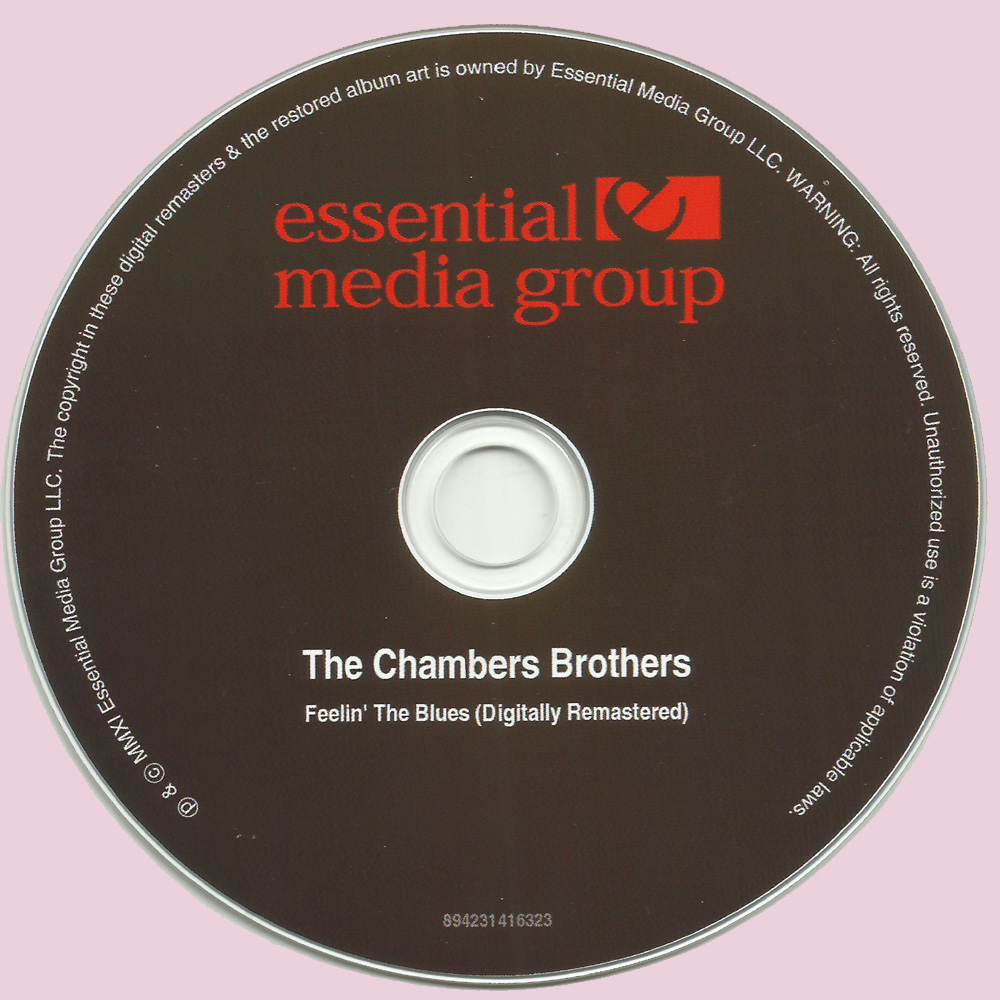
The Chambers Brothers - Feelin' The Blues (1970 us, wondrous rhythm and blues, 2012 remaster)

Musical siblings George Chambers (bass/vocals), Willie Chambers (guitar/vocals), Lester Chambers (harmonica/vocals), and Joe Chambers (guitar/vocals) were raised on rural gospel in their native Mississippi before switching over to folk and then soulful blues and R'n';B-fueled rock. The Chambers Brothers' recordings issued by the Los Angeles-based Vault label were nearly four years old when Feelin' the Blues hit the streets in 1970.
The band's style had changed quite drastically from old-school blues, soul, and pop to the longer psychedelic jams heard on their international hit "Time Has Come Today." Although the mixture of live and studio selections gives the collection an odds-and-sods vibe, several of the performances are among the best of the Vault Records-era material. Somewhat contrasting with the album's title, the Chambers actually cover a wide spectrum of music on Feelin' the Blues. Their roots can be heard throughout the flawless interpretation of the sacred standards "Just a Closer Walk with Thee" and the excellent "Travel on My Way." Similarly, the midtempo reading of Ray Charles' "I Got a Woman" offers the Chambers an opportunity to subtly return to their gospel origins with call-and-response backing harmonies.
The proceedings are far from being pious, however, as the quartet harmonizes the chorus of "Too Fat Polka" during one of the instrumental breaks. Perhaps wishing to remove some of the sting from the real storyline, the reworking of "House of the Rising Sun" -- according to the spoken introduction -- is told from the point of view of the receptionist (huh?) at the infamous bordello. Had The Chambers Brothers decided on a more straightforward translation, the song could easily have been one of the album's best. Other tunes worth spinning include a version of Bobby Parker's "Blues Get Off My Shoulder" -- in a longer form than on 1968's The Chambers Brothers Shout! -- and the comparatively brief but effective update of the jazzy "Undecided."
by Lindsay Planer
1. Girls, We Love You (Lester Chambers) - 3:25
2. I Got A Woman (Ray Charles) - 6:35
3. House Of The Rising Sun (Traditional) - 6:05
4. Don't Lose Your Cool (Joe Chambers) - 1:48
5. Just A Closer Walk With Thee (P.D.) - 5:230
6. Blues Get Off My Shoulder (B. Parker) - 3:18
7. Travel On My Way - 4:05
8. Undecided (C. Shavers, S. Robin) - 3:06
The Chambers Brothers
*George Chambers - Bass
*Joe Chambers - Guitar, Vocals
*Lester Chambers - Harmonica, Vocals
*Willie Chambers - Guitar, Vocals
1967 The Chambers Brothers - The Time Has Come
1969 The Chambers Brothers - Love, Peace and Happiness
Free Text
Just Paste
Tuesday, June 23, 2015


Monday, June 22, 2015
Circus - Circus (1973 us, remarkable blend of folk psych jam rock with west coast view and glam whisper)

Circus was originally formed in 1969 as "Sound Street" in Stevens Point, Wisconsin. They played bars and college dances in Central Wisconsin, specializing in their own particular variety ot blues and rock. Sound Street included Fred Omernik on keyboards. Wayne Kostroski on bass, Gary Konkol on guitar. Randy Glodowski on guitar, and Al Crowe on drums.
Their blend of four-part vocal harmonies and double guitar leads were a featured attraction of the band In 1970. Circus signed with North Central Productions, later known as McMillan and Clary Talent. Circus hired Ray Cyr to replace Al Crowe on drums and moved to Madison. Wisconsin to expand their territory and investigate a recording career.
Soon the band was playing regularly at Madison bars such as Snoopy's Dewey's, and the Church Key. at times opening for regional and national acts such as The James Gang, Rotary Connection, Ben Sidran, the Siegel- Schwall Band, Ted Nugent, and Muddy Waters Circus played at the lola Rock Fest in 1971. which was Wisconsin's version of Woodstock, also referred to as "Woodtick Nation." Circus shared the stage at the lola Rock Fest with such national and international acts as: Ravi Shankar, Buddy Rich, Iggy Pop. Terry Reid, and Siegel Schwall Circus was also one of the first bands to consistently play at Milwaukee's Summerfest.
As their popularity grew. Circus began traveling to such locales as Florida, Colorado, Massachusetts, Maine, Georgia,. Tennessee and the entire Midwest. Their venues included bars, colleges, military academies, band shells, a river boat, and auditoriums. In 1972 disaster struck when guitar player/singer Gary Konkol was diagnosed with a rare form of terminal cancer, and Circus reluctantly had to replace him His death in 1973 left both an emotional and musical hole in the group Respected Wisconsin blues man Mike Richson joined the group in 1973, and Circus once again began their almost constant travels.
Rocker Gunnar Antell replaced Mike Richson for a short period of time, as the band searched for the perfect musical combination Circus hired versatile Brett Peterson on guitar and recorded an album in 1973 at American Music Studios in Sauk City with Corky Siegel as a producer. The album was mixed down at Paragon Studios in Chicago, and was released in 1974. The band toured the country in support of the album, where it was well received in the South, West, and Northeast Jim Ash replaced Ray Cyr on drums in 1974, and Terry Knoll replaced Brett Peterson on guitar in 1975.
With the new lineup Circus recorded a single at a studio in Schaumburg Illinois with the plan that the two original songs would form the basis for a second album The band continued writing originals and toured extensively A demo was recorded with an eye towards a second album At that same time. Circus continued opening for such groups as Styxx. B.B. King. Ted Nugent and the Amboy Dukes, Eric Carmen and the Raspberries. Hot Tuna. John Sebastian. Firefall. Bonnie Bramlett, and the Amazing Rhythm Aces
By 1976, Circus had been touring almost constantly for seven years. By this time, the band was managing and booking itself. Although some contacts were made, no one appeared immediately interested in backing a second album tor the band In November of 1976, the band decided to call it quits and played their last gigs at the University of Wisconsin and the Bronco Bar in Chanhassen. Minnesota.
Although the early lineup of Circus used guitar/organ based instrumentation, they began to experiment with synthesized sound in the early 1970's. They were one of the first Madison bands to add strings and brass to their arrangements, and their distinctive sound is still fondly remembered by many of their fans. From the sounds of the B3. Circus moved on to the Clavinet and the Moog. Their excellent vocals, high quality guitar and keyboards, ability to write both love songs and songs with humor and insight, and great stage presence ensured crowds wherever they played Virtually all of the songs you hear on this album were performed live by the band between 1973 through 1976.
It is difficult to comprehend a twenty-minute version of "Old Age" unless one is standing in the crowd. Nevertheless, it was an experience, to say the least! "Fat Boogie Mama" was another crowd favorite, and served as an excellent counterpoint to Ray Davies' "Skin and Bones." Circus was a force to be reckoned with in the late 1960's and early 1970's. The national music scene didn't extend all the way to Madison, Wisconsin, however. But Circus played to enough audiences during their 300 gig/year, seven year career to touch many fans. Whether it was a bar full of 250 revelers or an auditorium with several thousand fans. Circus got their message across.
by Randy Glowdowski,Oregon, Wisconsin, December, 2000

Tracks
1. Fat Boogie Mama (Fred Omernik) - 4:09
2. You to Me (Wayne Kostroski) - 4:21
3. Let Me Tell You (Randy Glodowksi) - 4:12
4. Skin and Bones (Ray Davies) - 3:53
5. Arrow (Randy Glodowksi) - 3:31
6. Travlin' Blues (Randy Glodowksi) - 2:45
7. Old Age (Larry Leishman, Duke Edwards) - 12:58
8. C'mon If You're Comin' (Brownie McGhee)
9. I'm Walkin' (Fred Omernik) - 3:19
10.Bar Room Wiggy (Randy Glodowksi) - 3:39
Circus
*Brett Peterson - Vocals, Acoustic, Electric Guitars, Banjo, Dobro
*Randy Glodowksi - Vocals, Acoustic, Electric guitars
*Fred Omernik - Vocals, Piano, Clavinet, Organ, Synthesizer
*Wayne Kostroski - Vocals, Bass
*Ray Cyr - Drums, Congas, Percussion
Free Text
Text Host
Saturday, June 20, 2015
The Marshall Tucker Band - Way Out West, Live From San Francisco (1973 us, fantastic southern jam rock, 2010 remaster)

Of all the band's on Phil Walden's Capricorn label during the heyday of Southern rock in the 1970s, The Marshall Tucker Band came closest to The Allman Brothers in its ability to write memorable material and improvise with a real sense of adventure. Way Out West: Live in San Francisco 1973, forcefully illustrates the band's virtues.
MTB distinguished itself even further from its forebears by its eclectic mix of influences. Blues was no more or less important than country music, as evinced in the opening "Hillbilly Band," or traditional jazz, motifs of which become most apparent when Jerry Eubanks is playing flute or saxophone, as he does on "24 Hours at a Time." Vocalist/songwriter Toy Caldwell's lead guitar style mixed all those elements when he takes the spotlight as on "Every Day I Have the Blues" or when the group jams as a unit.
And it's these latter moments, here best exemplified by the way the sextet stretches out on "Take the Highway" and "Can't You See," that Marshall Tucker truly excels. Granted the group's interplay isn't as sophisticated as The Allmans—holding, as it does, too closely to chord change repetition—but its grasp of dynamics, grounded in the splendid rhythm section comprised of drummer Paul Riddle and bassist Tommy Caldwell (sibling of Toy), is impeccable. And the drive of MTB's collective motion never flags, thanks as well to George McCorkle's insistent rhythm guitar work.
As demonstrated on "Another Cruel Love," vocalist Doug Gray's voice is as much an attraction in the MTB sound as the songs and the jams. He not only adds a gospel element to this heady mix, as on "Ramblin,'" but his full-throated singing is no mere precursor or mere afterthought to the improvisational interludes; instead, it's a bona fide attention-getter on its own terms.
Recorded at famed rock impresario Bill Graham's Winterland, Way Out West was compiled and produced by Gray, who leads a realigned ensemble under the Marshall Tucker name today. It contains the bulk of MTB's debut album plus the highlights of the second album, A New Life (Capricorn, 1974), yet to be released at the time of this concert and, bereft of the sometimes superfluous production touches, presenting the group with an aggressive edge in its playing that's missing from its more relaxed studio work. The sleek sound production features just enough definition to highlight the distinctive instrumental lineup individually and collectively.
The Marshall Tucker Band never descended into the generic Dixie rock, even later in its career after the death of bassist Caldwell, when its approach became more conventionally structured. Live in San Francisco 1973 is a brilliant document of the group's glory days that will gratify fans and may even alter the preconceptions about Southern rock for those not inclined to hear the genre with open ears.
by Doug Collette

Tracks
1. Hillbilly Band - 4:05
2. Another Cruel Love - 4:33
3. Take The Highway - 8:11
4. Can't You See - 6:29
5. See You Later, I'm Gone - 3:30
6. Ramblin' - 5:50
7. Everyday (I Have The Blues) (Peter Chatman) - 13:59
8. 24 Hours At A Time - 8:28
All compositions by Toy Caldwell except where stated
The Marshall Tucker Band
*Tommy Caldwell - Bass
*Toy Caldwell - Lead Guitar
*George McCorkle - Rhythm Guitar
*Paul Riddle - Drums
*Jerry Eubanks - Flute
*Doug Gray - Vocals
Free Text
Text Host
Wednesday, June 17, 2015
String Driven Thing - Live On The Foxtrot Tour (1973 uk, fine prog folk rock)

The classic early 70s String Driven Thing line up of Chris Adams guitar and vocals, Pauline Adams vocals and percussion, Colin Wilson bass, and Grahame Smith violin (Hamill/Van der Graaf) recorded on the Foxtrot Tour with Genesis. String Driven Thing were signed to Charisma Records 40 years ago in 1972 already having issued one album.
In fact, their second Charisma album ( and third release in historic terms) The Machine That Cried - originally released 1973- has since been acclaimed not, merely, String Driven Thing’s masterpiece, but one of the finest progressive rock albums of the entire era – its reissue a couple of years back on the British Ozit label was widely heralded as among the most intelligent re-releases of recent years. They are back again with this new CD 40 years later on the anniversary of them signing to Charisma.
On Dec 12th 1972, as Pauline Adams of String Driven Thing passed through customs at JFK Airport, in her suitcase was a full length orange dress. Nothing unusual in that, you might think, but the dress in question actually belonged to Peter Gabriel, to be worn at the climax of Genesis’ Foxtrot set which they were about to debut in New York’s Philharmonic Hall. For both bands, this was a first visit to the States, but whilst Genesis were classic Charisma Prog Rock, String Driven Thing were far harder to pigeonhole. Drummerless, and with a virtuoso lead violinist, they had just released their eponymous album to enthusiastic reviews and their first single “Circus” was already a turntable hit, so there was a real buzz in the city about both bands. On the night, the auditorium was packed and, unusually for a support band, the Thing were brought back for a rapturous encore.
Listening to this free blowing high octane set forty years on, it’s easy to see why. Fast forward six weeks, and the UK leg of the Foxtrot tour is due to start at London’s Rainbow, only in the interim, frontman Chris Adams has suffered a spontaneous pneumothorax (collapsed lung) and is rushed to hospital, where Doctors recommend that he take four weeks rest to let his lung reflate. But unwilling to drop out of the impending tour, Chris elects for the alternative treatment which, in his words involved “watching a brace and bit being used to drill a hole through my chest”.
14 days later, and against doctors’ advice, the band took to the Rainbow stage and, although understandably not being quite at their best, in the following gigs, including Manchester Free Trade Hall where this recently unearthed recording was made, the band performed sets with such stunning energy that multiple encores became the norm. Just listen to the 16 minute version of Jack Diamond and Graham Smith’s incredible virtuosity as he swoops and weaves around the hypnotic groove of Chris’ guitar, Pauline’s percussion and Colin Wilson’s subtly syncopated bass, and I think you’ll agree with me that Ozit has rediscovered a lost masterpiece.

Tracks
1. Let Me Down - 6:04
2. Then I Met The Lady - 6:21
3. My Real Hero - 4:13
4. Regent St Incident - 4:27
5. Circus - 7:57
6. Hooked On The Road - 4:49
7. Jack Diamond - 14:13
Music and Lyrics by Chris Adams
String Driven Thing
*Grahame Smith - Violin
*Pauline Adams - Vocals, Percussion
*Colin Wilson - Bass
*Chris Adams - Vocals, Guitar
1968-72 String Driven Thing - The Early Years
1972/74 String Driven Thing / Please Mind Your Head
1973 The Machine That Cried (Japan remaster)
1975 Keep Yer 'And On It
Free Text
Just Paste
Saturday, June 13, 2015
The Brazda Brothers - The Brazda Brothers (1973 canada / slovakia, magnificent acid folk psych)

By the early 70’s Slovakia-born brothers Bystrik and Andy Brazda had relocated to Ontario, Canada in search of greener pastures. Shortly after settling down in their new home they began writing music together. Canadian owned Dominion Records released their first and only lp, The Brazda Brothers, in 1974. Rumour has it that the brothers laid the entire album to tape in a marathon six hour session at RCA Studios in Toronto. Marathon session or not, The Brazda Brothers is one of the finest psych-folk lps ever pressed to wax.
The first track, “Walking Into the Sun”, sets the warm and peaceful pace that permeates the album when a lightly strummed acoustic guitar gives way to a gentle soft-psych tune that comfortably slinks by–full of melodic, wistful vocals, crystal clear electric guitar, thumpy tubby drums, and a wonderful appearance by what sounds to be a calliope, but is credited as a Cordovox–the same keyboard that shows up frequently to add its unique touch to much of the record. Right off the bat it’s clear that the brothers had a vision to share and they do so in an innocent, heartfelt way. This homegrown feel sets their record apart from the pack, earning it a place at the table with other lost classics of the era.
“Share With Love” is an upbeat number that encourages the listener to consider the needs of their fellow brothers and sisters. With its reverb drenched guitar and minor key refrain this tune has an almost garage flavored folk-rock sound, and its slightly eerie vibe adds a different taste to the record and shows a different side of the brothers’ sound. Midway through the album the brothers turn the volume up a bit with “Gemini”. Complete with gloriously fuzzed-out electric guitar and an almost-boiling Hammond Organ that adds something exotic to the mix, this tune definitely delivers in the psych category and comes out as one of finest cuts on this collection. The entire song has a subtle Eastern-European vibe that becomes most apparent when the brothers harmonize on the refrain. On the next track, “Nature”, Andy dreams of a carefree life spent living in the country, singing “the sun will shine all day/Mother nature will be our neighbor”. Reminiscent of “Hello Sunshine” and other tunes off of the Relatively Clean Rivers lp, this song has a great late sixties soft-psych vibe as well as a catchy chorus, and continues the acid-rural-pastoral-folk vibe that begins with the album opener.
“Lonely Time” is a beautifully sad little gem that finds Andy again longing for the peace and serenity of a home surrounded by nature and the familiar faces of friends and loved ones. In 2008 Panda Bear of Animal Collective fame payed tribute to these Slovak brothers when he released a remix of The Notwist’s “Boneless” that uses the opening riff of “Lonely Time” to fine effect.
The only criticism of this album is that several of the songs, such as “My Little Girl” and “Nature” have a very similar sound. However, it’s hard for it to bother you when it’s such a great sound! In the end, the pure and honest nature of the album along with the wonderfull vibe trumps any criticism.
The Brazda Brothers is a great album that stands shoulder to shoulder with other similar sounding lost classics of the time such as Relatively Clean Rivers, Rodriguez’s Cold Fact, and Jim Sullivan’s UFO. With their laid-back attitude, sunny rural vibe, and unique voices, the brothers crafted the perfect album for a lazy summer afternoon full of good vibes. As you’ve already guessed, original copies are rare, and sell for a very pretty penny when they do pop up. Hallucination CDs out of New Jersey re-released the album on cd with a limited pressing of 1,000 copies, and Void Records has reissued the album on vinyl. Pick up a copy while they’re still available!
by D.A. Glasebrook

Tracks
1. Walking The Sun - 3:00
2. 20th Century - 4:07
3. Blooming Flowers - 4:11
4. Share With Love - 2:44
5. My Little Girl - 2:54
6. Calm River - 2:38
7. Gemini - 3:39
8. Nature - 3:05
9. Civilization - 2:58
10.Soldier In The Battleground - 2:28
11.Lonely Time - 2:11
12.Your Kingdom - 4:11
All songs by Brazda Brothers
Musicians
*Andy Brazda - Lead Guitar, Acoustic Guitar
*Bystrik Brazda - Acoustic Guitar
*Vinston Dookie - Congas
*Fred O'Quinn - Guitar
*Vince Romano - Accordion
*Jim Skriboleit - Drums
*Mac Babb - Bass
Free Text
Tuesday, June 9, 2015
The Quinaimes Band - The Quinaimes Band (1971 us, great rural psych classic rock with acid drops, 2008 edition)

US band formed and recorded their self titled album in New York City, musically the were a crossline between Byrds, Neil Young, Al Kooper, C. C. Revival and Steppenwolf.
Members were Kenny Pine (Fugs), Danny Mansolino and Mike Rosa (from The Myddle Class), Dave Palmer as vocalist who also played with The Myddle Class, he may have had the biggest success as an early vocalist with Steely Dan.
Jerry Burnham was band's fiddler he worked with acts like, The Strangers, James Taylor and the Flying Machine, Jake and the Family Jewels, The Fifth Ave. Band. Album included collaborations of some great session musicians such as Danny Kortchmar, Richard Greene among others.

Tracks
1. Try Me One More Time (David Bromberg) - 3:37
2. Look To Yourself (Danny Mansolino, David Palmer) - 3:43
3. Green Rolling Hills Of West Virginia (Bruce Phillips) - 4:08
4. Visions Of Johanna (Bob Dylan) - 4:34
5. Don't Take No (Danny Mansolino, Dave Palmer) - 3:34
6. Love Brings The Best Out In A Man (Gus Andrews) - 3:30
7. Don't Knock (Roebuck "Pops" Staples, Wesley Westbrook) - 2:46
8. Tell Me What You See From There (Danny Mansolino, David Palmer) - 6:19
9. Queequeg (Danny Mansolino, David Palmer) - 4:09
10.Falling Star (Danny Mansolino, David Palmer) - 5:54
The Quinaimes Band
*David Palmer - Vocals
*Jerry Burnham - Bass, Fiddle, Vocals
*Danny Mansolino - Keyboards, Organ, Piano, Vocals
*Kenny Pine - Guitar, Vocals
*Mike Rosa - Drums
Guest Musicians
*Richard Greene - Fiddle, Violin
*Richard Grando - Saxophone
*Allan "Jake" Jacobs - Guitar
*Danny Kortchmar - Guitar
*Daniel Ben Zebulon - Drums, Congas
*Bill Keith - Pedal Steel Guitar
Free Text
Just Paste
Thursday, June 4, 2015
Atlantis - Live In The Fabrik (1975 germany, exceptional tough blues rock, 2008 remaster and expanded)

"After three LPs, two singles and countless concerts in Germany and abroad German popfans' favorite child has gone at the age of almost three years. The cause of death were musical differences".
In an obituary the highly recommended rock band Frumpy said farewell in August 1972. But at the same time the musicians announced their comeback under a different name. And they kept their promise: Even before the last album "Frumpy live" was released, singer Inga Rumpf, keyboardist Jean-Jacques Kravetz and bassist Kart-Heinz Schott joined with drummer Curt Cress and guitarist Frank Diez. They founded a new band called Atlantis. In a letter to "Atlantis Scout" Inga Rumpf recalled the reasons for the new name.
"Dear Mr. Thorwald Franke, I have been very interested in the myth of the sunken continent. That is why I called my band Atlantis. I really believe that Atlantis lay near the Canary Islands in the Atlantic Ocean 'behind the columns of Hercules', as Plato wrote. The sea bottom is at risk of an earthquake, and it is possible that Atlantis sunk because of a disaster. All the best, Inga Rumpf." (www.atlantis-scout.de)
Indeed, the legendary sunken continent has inspired the fantasy of numerous artists, writers, painters and film directors from the ancient days to present. Just like the Greek philosopher Plato (427 to 347 B.C.) many other authors like E.T.A. Hoffmann, Michael Ende and even cartoonist Walter Moers wrote about Atlantis. In 1962 Atlantis was mentioned in an episode of the Perry Rhodan series. In 2001 the Disney production "The Lost Empire" was launched, including a new version of Donovan's hit "Atlantis", a world wide hit originally released in 1968.
With a well known name like this the quintet had to deal with high expectations, but Atlantis could not only take on Frumpy: The new band even outnumbered the success of the predecessor. After finishing the debut album the new band toured Great Britain as a support for Procol Harum and Traffic - "Let's Get On The Road Again" was one of their songs. In spite of the success the line-up changed for the second album: Frank Diez and Curt Cress left the band, and Dieter Bornschlegel and Ringo Funk replaced them on guitar and drums. "It's Getting Better" was a motto in 1973.
But while the popularity of the group increased, the struggles behind the scenes did not end. Jean-Jacques Kravetz left, Reiner Schnell joined for a short period and then Adrian Askew became the new keyboardist. Alex Conti replaced replaced Dieter Bornschlegel on guitar.
Surprisingly all those changes did not do any harm, Inga Rumpf stayed the undisputable centre of Atlantis. Looking back she says: "It was a continuous enhancement: In the beginning I played concerts in Germany with The City Preachers, with Frumpy I went to England and Atlantis toured America in 1975!".
The same year, on the peak of the career Atlantis released the double album "Live", recorded at the "Fabrik" in Inga's hometown Hamburg. The opening track is a kind of central thread for the music and the meaning: "Friends" was played ever since when Inga and her friends met again. This live recording proves brilliantly the development from the City Preacher to the "Rock 'n' Roll Preacher".
by Uli Kniep, December 2008

1. Friends (Inga Rumpf) - 8:29
2. Ooh Baby (Alex Conti, Inga Rumpf) - 3:54
3. Somewhere (Adrian Askew, Alex Conti) - 5:51
4. It's getting Better (Inga Rumpf) - 6:52
5. Waiting And Longing (Inga Rumpf) - 3:41
6. Brother (Inga Rumpf) - 5:34
7. Rock'n' Roll Preacher (Frank Diez) - 4:09
8. New York City (Adrian Askew) - 3:58
9. Mr. Bigshot (Adrian Askew, Alex Conti) - 5:53
10.Mainline Florida (George Terry) - 6:21
11.Godfather (Adrian Askew, Alex Conti) - 3:33
12.Going To The Country (Inga Rumpf) - 5:14
13.Rock Me Baby (Traditional) - 4:38
14.Leave It To The Devil (Adrian Askew) - 4:09
Atlanis
*Inga Rumpf - Lead Vocals, Acoustic Guitar, Percussion
*Karl Heinz Schott - Bass
*Ringo Funk - Drums, Percussion
*Alex Conti - Guitar, Vocals
*Adrian M. Askew - Keyboards, Vocals
1972 Atlantis - Atlantis
Related Act
1970 Frumpy - All Will Be Changed (2008 remaster with extra tracks)
1971 Frumpy - Frumpy II
1972 Frumpy - By The Way
Just Paste
Wednesday, June 3, 2015
Atlantis - Atlantis (1972 germany, remarkable hard blues rock, with prog, jazz funk tinges, 2008 digipak remaster with bonus track)

Atlantis was not only the name of the legendary island, the famous Greek author Plato mentioned, but also the name of a band formed by ex-Frumpy musicians Inga Rumpf, Jean-Jacques Kravetz and Karl-Heinz Schott, in late Summer, 1972. The initial line-up included guitarist Frank Dietz and ex-Emergency drummer Curt Cress (later with Triumvirat, Passport).
The band played a few live gigs in Germany before they recorded their debut in London's Island Studios. The US magazine, Cash Box, compared Atlantis with the Doobie Brothers and praised Inga Rumpf's blues-tinged voice. Shortly before the group went on a four week tour of England with Procol Harum, Traffic, Vinegar Joe and the Sharks, Cress and Dietz left and were temporarily supplanted by Udo Lindenberg and George Meier. After the tour, Atlantis recruited Dieter Bornschlegel (ex-Traumtorte) on guitar and Ringo Funk (ex-Jeronimo) on drums as new permanent members.
Rumpf and Kravetz remained the artistical nucleus of the band. Said Kravetz: "Inga determines this band like Rod Stewart & the Faces, her voice makes our image." Atlantis' second album "It's Getting Better" was even more determined by Inga Rumpf's preference for black rhythms: "I always took a special liking in blues, jazz and soul music, and, since I'm writing most of the songs, this influence is decisive in our music." Melody Maker "recommended" the second album and Sounds attested the band to be "the most English of all German groups".
After the gig at the Paris' Olympia, Atlantis went, again, on a four week tour of England, which included a performance at the rock show, "Old Grey Whistle Test". During this tour, Kravetz left the band and had to be hastily replaced by Rainer Schnelle (ex-Family Tree).
At the end of 1973, Atlantis was among Germany's three most popular German rock groups, according to a Musikmarkt poll.
Half a year later, the line-up changed again. Schnelle and Bomschlegel were replaced by English keyboarder Adrian Askew and ex-Curly Curve guitarist Alex Conti.
Both were featured on the third LP "Ooh Baby". Seven of the ten songs were written by Askew/Conti, while Rumpf only had three of her compositions on the album. The result was a "spicy funk album" (Musik Express) with a "bunch of Germany's best soul" (Sounds).
Atlantis was at its best on stage, which was proved by a double album recorded live at the Hamburg Fabrik from 1973 - 1975.
In Summer 1975, Atlantis went on tour in the States, mostly as opener for Lynyrd Skynyrd. After the tour, guitarist Alex Conti was fired and went on to play with Lake. The new line-up was completed with former guitarist Frank Dietz and as second guitarist Rainer Marz.
The rockier American influence was noticable on Atlantis' fourth LP "Get On Board", but the LP and the following tour failed to have commercial success. Concequently, Inga Rumpf and Karl-Heinz Schott announced their departure in January 1976.
After the split, the album "Top Of The Bill" with unreleased studio recordings from December 1975 and March 1976 was released. On February 23, 1983, the original line-up reunited for a revival concert in the Hamburg Fabrik and received

1.Get It Up (Inga Rumpf) - 5:24
2.Big Brother (Inga Rumpf) - 5:07
3.Rock 'n' Roll Preacher (Frank Diez) - 3:42
4.Maybe It's Useless (Jean Jacques Kravetz, Inga Rumpf) - 3:41
5.Let's Get on the Road Again (Inga Rumpf) - 3:33
6.Living at the End of Time (Frank Diez) - 9:07
7.Words of Love (Frank Diez, Inga Rumpf) - 4:52
8.Mainline Florida (Bonus Track) (George Terry) - 2:59
Atlantis
*Inga Rumpf - Vocals, Guitar, Percussion
*Frank Diez - Guitar
*Jean Jacques Kravetz - Keyboards
*Karl Heinz Schott - Bass, Vocals
*Curt Cress - Percussion, Drums
Guest Musicians
*Rainer Baumann - Guitar
*Rebop Kwaku Baah - Percussion, Conga
*Jackie Diez - Background Vocals
*Carsten Bohn Bandstand - Drums
*Jean Roussel - Keyboards
*Claire - Vocals
Related Act
1970 Frumpy - All Will Be Changed (2008 remaster with extra tracks)
1971 Frumpy - Frumpy II
1972 Frumpy - By The Way
Just Paste
Sunday, May 31, 2015
Blue Cheer - The Original Human Being (1970 us, terrific hard psych classic rock, 2007 japan and 2017 japan SHM remasters)

The Original Human Being opens with the driving "Good Times Are So Hard to Find," a West Coast version of the Spencer Davis Group's "I'm a Man" that generously lifts from that classic Jimmy Miller/Steve Winwood/Spencer Davis composition. Founding member Dickie Petersen is augmented by horns, of all things, on the blues-pop "Love of a Woman." Blue Cheer sounding like Traffic and Tower of Power in two fell swoops is not what the menacing cover photo would indicate. Indeed, you can't tell a book by its cover. Logically, Blue Cheer should have taught Black Sabbath a thing or two, but the band heads more in the direction of Ozzie's Magic Lantern with its singsong hit "Shame Shame" than the grunge of guitarist Tony Iommi. Titles like "Preacher" and "Black Sun" may be better suited for Sabbath, but for fans of this ultra-cult band from the '60s,
The Original Human Being is a vast improvement over the band's third outing, New! Improved! Blue Cheer. Keyboard player Ralph Kellogg's "Make Me Laugh" sounds strained in the vocal department, but the band has its act together and the song works. Blue Cheer is so "on" that everything works here, including the instrumental and sole songwriting contribution by drummer/sitar player Norman Mayell. It is the sleeper surprise on this disc. How many listeners wanted to like George Harrison's "The Inner Light"? "Babaji (Twilight Raga" is the blending of Ravi Shankar with pop that the Beatles sought but never found. Hidden here, the last track on side one of a Blue Cheer disc, is that magic formula. Really creative and fun stuff. "Pilot," the first of guitarist Gary Yoder's five co-writes with G.R. Grelecki, is innovative, cosmic, intellectual -- just well-threaded rock ‘n’ roll.
Blue Cheer was not adverse to changing membership on a frequent basis and trying different formats. If the lyrics on "Pilot" are deficient, the music is distinct and original...truly "the original human being." Close to 46 minutes of music is a healthy 20-plus minutes per side, and where side one of New! Improved! Blue Cheer fell flat, just two discs later we find this album full of revelations. Of course, Petersen is the only holdover from the first two albums to appear on The Original Human Being, which says a lot about the experimentation of lineups. Blue Cheer was a musical version of a baseball team with players coming and going. Still, the groove of "Preacher" has sax weaving in and out, pre-Roxy Music and just as entertaining and enlightening.
The production by Gary Yoder, Eric Albronda, and Norman Mayell is really fine. "Tears By My Bed" could be the Band, showing a complete shift in Peterson's musical accomplices, crafting a series of albums worthy of study. The Original Human Being and Oh Pleasant Hope are the culmination of serious efforts by Dickie Peterson. The folksy guitar riff coupled with Yoder's harp on "Man on the Run" makes for real '60s period-piece paranoia, perfect for an episode of Route 66 or The Man From U.N.C.L.E. This album is also a good argument for modern rock radio adding classic songs that never got airplay the first time around. "Man on the Run" is everything so-called "modern rock" bands aspire to be. Two more Yoder/Grelecki compositions, the funky/sensual "Sandwich" and "Rest at Ease," conclude this excellent portion of San Francisco rock, "Rest at Ease" with a descending fadeout that shows the band at the peak of its powers.
by Joe Viglione

Tracks
1. Good Times Are So Hard To Find (Kent Housman, Norman Mayell) - 3:24
2. Love Of A Woman (Dickie Peterson) - 4:35
3. Make Me Laugh (Ralph Burns Kellogg) - 5:06
4. Pilot (Gary R. Grelecki, Gary Yoder) - 4:48
5. Babaji (Twilight Raga) (Norman Mayell) - 3:45
6. Preacher (Gary R. Grelecki, Gary Yoder) - 4:04
7. Black Sun (Gary R. Grelecki, Gary Yoder) - 3:32
8. Tears In My Bed (Ralph Burns Kellogg) - 2:06
9. Man On The Run (Dickie Peterson) - 3:58
10.Sandwich (Gary R. Grelecki, Gary Yoder) - 5:05
11.Rest At Ease (Gary R. Grelecki, Gary Yoder) - 5:35
The Blue Cheer
*Dickie Peterson – Bass, Guitar, Vocals
*Gary Lee Yoder – Guitar, Harmonica, Vocals, Harp, Vocals
*Ralph Burns Kellogg – Organ, Piano, Synthesizer, Bass
*Norman Mayell – Guitar, Percussion, Sitar, Drums
With
*Bruce Stephens - Guitar
*Jack May - Guitar
*Doug Kilmer - Bass
*William Truckaway - Synthesizer
*Martion Fierro - Saxophone
*Frank Morin - Saxophone
*Mel Martin - Saxophone
*Bill Atwood - Trumpet
*Pat O'Hara - Trombone
1968 Blue Cheer - Vincebus Eruptum (2007 Japan remaster)
1969 Blue Cheer - Blue Cheer (Japan 2007 remaster and expanded)
1969 Blue Cheer - New Improved! (2007 japan remaster)
1971 Blue Cheer - Oh! Pleasant Hope (Japan 2007 remaster)
Related Act
1967 Mint Tatoo - Mint Tatoo
Just Paste
Thursday, May 28, 2015
Flamin' Groovies - Flamingo (1970 us, razzle dazzle garage 'n' roll, 2012 Audiophile remaster)

While the Flamin' Groovies' first album, Supersnazz, loaded their high-octane retro-rock down with a loving but overly intrusive production, their next long-player, Flamingo, went in exactly the opposite direction; for their second time at bat (and their second major label), the Groovies cranked up their amps and kicked up the tempos, while producer Richard Robinson stripped the band's sound to the bone. If Flamingo has a flaw, it's that the album is just a bit too basic; the recording sounds a bit flat and muddy, and it isn't very flattering to either Tim Lynch's guitar or Danny Mihm's drums (and who fell in love with the panning control while they were mixing?).
But if Flamingo sometimes sounds more like a demo than a finished album, it's a demo of a great band firing on all cylinders; with "Gonna Rock Tonite," the album starts out in fifth gear and never stops, with even the less manic tunes (such as the bluesy "Childhood's End") sounding sharp and full of fire, and the many rave-ups raving mighty fine indeed (notable exception: the trippy "She's Falling Apart," which proves these guys didn't understand psychedelia and had no business playing it, which was a considerable virtue in the Bay Area during the late '60s and early '70s). If the engineering sometimes lets them down, Flamingo does a far, far better job of capturing what made the Groovies a great band than their debut and ranks alongside their very finest work.
by Mark Deming

1. Gonna Rock Tonight (Roy A. Loney) - 4:48
2. Comin' After Me - 3:31
3. Headin' For The Texas Border - 5:08
4. Sweet Roll Me On Down - 2:11
5. Keep A Knockin' (Richard Penniman) - 2:16
6. Second Cousin (Roy A. Loney) - 3:19
7. Childhood's End (Roy A. Loney) - 2:26
8. Jailbait - 4:18
9. She's Falling Apart (Roy A. Loney) - 4:49
10.Road House - 5:36
All songs written by Cyril Jordan, Roy A. Loney except where indicated
The Flamin' Groovies
*Roy A. Loney - Vocals, Guitar
*Cyril Jordan - Guitar, Vocals
*Tim Lynch - Guitar, Vocals
*George Alexander - Bass Guitar
*Danny Mihm - Drums, Percussion
*Commander Cody - Piano
1971 Flamin Groovies - Teenage Head
Free Text
Just Paste
Monday, May 25, 2015
Hilton Valentine - All In Your Head (1969 uk, amazing folkish baroque psychedelia, 2009 remaster)

Hilton Valentine really got his start playing lead guitar with the Animals. Those were the old raving days, when Scotch and hit records and chicks and shiny limos and riots made up most of an Animal's life. "House of the Rising Sun" days - and nights. There was even a time when Hilton got sacks of fan mail while the Burdon Himself wistfully shrugged and waited for a card from his Mum. Hilton never did anything on stage, lie just stood and played and maybe grinned. The letters and the girls rolled in. Obviously another pretty face. Everyone loves Mr. Valentine. Very sweet. He kisses the ladies' hands. Can you stand much more? The poor geezer's not to blame. A Taurus/Gemini cusper, Hilton exudes charm and gentleness. The Taurus comes out after 10. He is still a dedicated looner. Even after years of Eric Burdon shows, he makes a special trip to see his friend onstage, shouts, "Too much!" and laughs all over everybody's drinks. Fortunately, he is more Gemini. Hilton's music and message are airy, yet apt. The stuff you think of, hut nearly always keep to yourself. Things of youth and life and truth and beauty. If it is a wee mite naive it is also optimistic.
Original Notes by Debbi Smith (Strobe Magazine)
There's always been a special place in the heart of record collectors for late Sixties acid casualty albums. Syd Barrett's solo work and Alexander 'Skip' Spence's extraordinary Oar LP are probably the best known examples of this intriguing little sub-genre, but there are quite a few others worthy of note, particularly Sky Saxon's post-Seeds adventures with religious cult/commune Ya Ho Wha and former Monkees songwriter Craig Smith's equally spaced-out vinyl adventures as Maitreya Kali.
Somehow, though, Hilton Valentine's 1969 solo effort, the psychedelic folk-flavoured All In Your Head, seems to have slipped through the net, having eluded even the nefarious attentions of those individuals who can't stumble across a collectable album without bootlegging it. As guitarist with the Animals, Hilton had had a seismic effect on both the British and American music scenes of the mid-Sixties, from his iconic arpeggio intro to 'House Of The Rising Sun' to the clanging Rickenbacker chords that had shaped such classics as 'It's My Life' and 'We've Gotta Get Out Of This Place'.
But by the time that the original Animals went their separate ways in the summer of 1966, Hilton was marinated in the acid experience, and he was still attempting to get out of the drug's clutches when, in 1969, he was given the opportunity to fly to California to record a solo album for Capitol Records.
A fascinating collection of wide-eyed, flowerchild- of-the-universe songs delivered in endearingly ramshackle fashion (though it should be noted that Hilton has subsequently disowned the album, unhappy with the baroque arrangements that were grafted onto his original, largely acoustic recordings), All In Your Head had a similar sense of melody and the same naive, childlike whimsy as similar-vintage recordings by Donovan. Unfortunately, a worsening of relations between Capitol and the Animals' management meant that, in addition to only being issued in America and Canada, All In Your Head was given little or no promotion.
Forty years later, even some hardcore Animals fanatics remain unaware of its existence. Hopefully this first-ever reissue, which represents the first time that All In Your Head has been made unavailable outside of North America, will bring a little-known but thoroughly charming album from one of the era's key musicians to wider attention.
As he had been for the last three years or so, Hilton was firmly under the influence of Donovan, so it's no surprise that All In Your Head followed the Celtic Bard's late Sixties template: latter-day nursery rhymes with a strong peace'n'love hippie ethos, fey vocals that reflected the childlike lyrics, strummed guitars, baroque orchestration and a general late Sixties psychedelic folk vibe. Two of the songs had already seen the light of day more than a couple of years earlier, 'Run Run Run' having been recorded by Keith Shields, and the near-title track 'It's All In Your Head' by Natasha Pyne. Nevertheless, they fitted in perfectly with more recent material like 'Girl From Allemagne', a lilting, charming love song that Hilton recently recalled he'd written when "I was tripping at a friend's place, and I was looking at this giri across the room who was from Germany - I felt we were communicating telepathically, and I wrote a song about it."
Hilton, however, was (and still is) extremely unhappy with what he felt to be unsuitable or overpowering arrangements, recently claiming that the production "had lost the plot of what I was trying to do". To be honest, he does have a point. Some of Vic Briggs' arrangements are perhaps obtrusively florid; 'Run Run Run', for example, is punctuated by some ridiculous didgeridoo-style interjections, the charming simplicity of 'Is There Anything But Love' is compromised by the horns arrangement, and 'Little Soldiers' bears that peculiar late Sixties weakness for vaudeville backdrops.
Nevertheless, there are occasions when the instrumentation matches the song perfectly, and the bulk of the album is a triumph. Hilton's homespun, Age of Aquarius philosophising blends with a strong sense of melody and his pleasingly wistful vocals on a handful of wide-eyed paeans to Mother Nature, including 'Listen', 'Sitting In The Sun' and the drowsy, hypnotic 'Peace', with its "peace be with you my friend" refrain and general Byrds-like air. The laconic 'It's All In Your Head' has a gently rolling, Dylanish charm that transcends the rather unsympathetic arrangement, but perhaps the strongest track is the gorgeous 'Everything Returns To Me', a fragile beauty that's so catchy that it really should have been issued as a single.
Sadly, Capitol chose not to release a single, and All In Your Head didn't make too much of an impression. Hilton claims this was due to Burdon leaving Deverich's management ("everything fell to pieces when Eric left Kevin"), and it may well be the case that Capitol's dwindling relationship with the Animals' camp played its part. Vic Briggs was sacked by Capitol in December 1969, having acted as producer on no less than three former Animals' solo albums (All In Your Head, Danny McCulloch's Wings Of A Man and Zoot Money's Welcome To My Head} as well as former Music Machine lead singer Sean Bonniwell's Close and Mark Eric's highly regarded A Midsummer Day's Dream (the latter as arranger only).
Whatever the reason for All In Your Head disappearing into the ether, it left Hilton very much a stranger in a strange land. Burdon once again helped out, employing him as a roadie for the duration of Eric's two-year liaison with the band War. "LA was perfect for me at the time", Hilton subsequently admitted. "It was the flower-power thing. I was even chanting 'Hare Krishna' for a while. Thank God I'm not still doing that. I couldn't handle the yellow robes..."
When the Burdon/War gig ended, Hilton signed on the dole. Meanwhile, he was playing in a CSNY-style soft rock band called Oojakapiv, who signed a one-album deal with a local record company, only for the advance to mysteriously disappear. With no money coming in, he accepted an offer to become manager of the Theatre Restaurant in LA. By the time that the original Animals reconvened in late 1975 to make the wittily-titled album Before We Were So Rudely Interrupted (not released until August 1977 due to legal difficulties involving Burdon's former managers), Hilton had been a Buddhist for two or three years. "In retrospect, I'd always been trying to escape from my life until then -trying to transcend to somewhere else", he told Andy Blackford in 1986. "When I started to practice Buddhism, I began to realize that this is where it's all at. There isn't anywhere else, other than in your daily life."
Hilton returned to England in 1977, working for Chas Chandler for a year or so before moving back to his native North Shields in 1980. Further musical endeavors followed. On the back of a 1982 reissue of The House Of The Rising Sun' that peaked at No. 11 in the UK singles chart, the Animals came together once more to record an album of new material, Ark, as well as embarking on an extensive worldwide tour which resulted in the LP Greatest Hits Live!
When the Animals once again found they were unable to tolerate each others' presence on a permanent basis, Hilton reformed his pre-Animals band, the Wildcats, before joining forces with John Steel and Dave Rowberry (who'd been Alan Price's replacement back in 1965) in Animals II. He then returned to America, settling down in Connecticut, where he began to concentrate on acoustic music. Using the pseudonym Skiffledog, in 2004 he released a new CD entitled It's Folk 7V Skiffle, Mate!, which included stripped-down revamps of two All In Your Head songs, 'Peace' and 'Run Run Run1. Having toured extensively with Eric Burdon, he has recently recorded with fellow Sixties survivor, Yardbirds drummer Jim McCarty.
Forty years after the subterranean release of his first solo album, Hilton still claims that he'd rather forget all about it. That's the artist's prerogative, of course, but there's nothing about the charming period-piece All In Your Head that should embarrass him - apart, maybe, from the groovy, astrologically-inclined original sleeve note from the editor of Strobe magazine, one Debbi Smith. But such is life. Here, then, is All In Your Head in all its beautiful, gentle, enigmatic, late Sixties acid casualty glory...
by David Wells August 2009

Tracks
1. Listen - 2:40
2. Everything Returns To Me - 2:47
3. Its All In Your Head - 3:13
4. Little Soldiers - 1:54
5. Eyes Of A Child - 2:23
6. Sitting In The Sun - 2:38
7. Is There Anything But Love - 2:45
8. Land Of Children - 2:27
9. Run,Run,Run - 2:39
10.Peace - 3:33
11.Girl From Allemagne - 2:55
All selections by Hilton Valentine
*Hilton Valentine - Vocals, Guitars
1964-67 The Animals - The Complete French EP
Free Text
Text Host
Saturday, May 23, 2015
The Temptations - All Directions (1972 us, classic soul funk psych, 2012 japan remaster)

The Temptations were Motown's top-selling male vocal group, racking up a ton of mid-60s hits, most of which were written by Smokey Robinson. Unique among the label's acts in that all the vocalists were able to sing lead, they succeeded with a variety of material, from ballads ("My Girl") to heavy R&B ("Ain't Too Proud To Beg"). Producer Norman Whitfield became the group's primary songwriter (with Barrett Strong), and starting around 1969 he led them into Sly Stone-inspired psychedelic funk, with lyrics that were increasingly insightful socio-political statements (including "Ball Of Confusion," which was only released as a single).
It kept them at the top of the charts, but in fact the band's best records came before and after the psychedelic period: Whitfield's endless orchestral excursions and relentless wah-wah made albums like Psychedelic Shack difficult to sit through. While the band underwent rapid personnel changes, Whitfield moved on, and later produced popular but unambitious albums for Rose Royce ("Car Wash," "Love Doesn't Live Here Anymore")
by David Bertrand Wilson
The Temptations, like many other contemporary vocal groups, often had to cope with frequent changes in personnel. Not only did the outfit handle this well, the original group itself was a product of a line-up change or, more specifically, a merging of two groups: The Primes and The Distants. By the time of this 1972 release, after Motown’s creative prime had passed, many thought that the band, after an 11-year career, was dead. Then Damon Harris replaced Eddie Kendricks and they released Papa Was A Rolling Stone, a magnum opus of pop-funk spanning almost 12 minutes in length, which served as the central pillar of a cracking album that provided the Tempts with a new lease of life.
by Paul Rigby

Tracks
1. Funky Music Sho' Nuff Turns Me On (Barrett Strong, Norman Whitfield) - 3:08
2. Run Charlie Run (C. Maurice King, Jan Forman) - 3:17
3. Papa Was A Rollin' Stone (Barrett Strong, Norman Whitfield) - 12:08
4. Love Woke Me Up This Morning (Nickolas Ashford, Valerie Simpson) - 2:32
5. I Ain't Got Nothin' (C. Maurice King, Evans King) - 3:53
6. The First Time Ever (I Saw Your Face) (Ewan MacColl) - 4:16
7. Mother Nature (Nick Zesses, Dino Fekaris) - 3:14
8. Do Your Thing (Isaac Hayes) - 3:44
The Temptations
*Dennis Edwards - Vocals
*Damon Harris - Vocals
*Richard Street - Vocals
*Melvin Franklin - Vocals
*Otis Williams - Vocals
With
*The Funk Brothers - Instrumentation
*The Andantes - Backing Vocals
Free Text
Text Host
Tuesday, May 19, 2015
Rich Mountain Tower - Rich Mountain Tower (1971 us, magnificent folk psych country rock, 2014 issue)

Named for a ranger lookout in Cades Cove, Knoxville country-rock act Rich Mountain Tower found some national success in the 1970s. With David Carr on lead guitar, William “Sandy” Garrett on bass and vocals, Doug Moisson on lead and pedal steel guitar, Dana Paul on 12-string acoustic guitar and vocals, and Bob Tucillo on drums, the band gained popularity playing in Knoxville clubs like Bradley’s Station, the Place, the Longbranch, and Yosamite [sic] Sam’s before getting their break following a show in Nashville.
"Rich Mountain Tower's debut self-titled album, released in the fall of 1971, combines southern rock with acoustic ballads and psychedelic flourishes to create a sound well ahead of its time. Originally issued in quadrophonic sound, it's a superb recording that shows just what a fine and underrated band this Tennessee quintet was.
Really, though, these folks are mainly anchored in psychedelic folk, with a driving, rock rhythm and lots of jangly guitars and Southern-style slide balancing out the nascent twang. The lyrics are very hippie-dippie and diffuse, spacy, celebratory stuff about being alive and in nature, sung in airy harmonies with pedal steel an 12-string guitar providing sweet counterpoint -- all in all, a very Byrds-y sound.
A few Nashville studio pros were brought in to beef up the band's sound -- Charlie McCoy lays down a few hot harmonica riffs, and steel player Weldon Myrick adds gorgeous accompaniment throughout. There's not a lot on here that I would call "country," as opposed to rock, and a few songs may get irritating if you're just in search of country sounds, although for psych/folk-freak fans this record is a real treat. A mixed bag, but a great document of its time.
Tracks
1. Uncle Bob White - 5:08
2. Circle Sky Moon Mix (Randy Haspel, Tom McNamee) - 4:14
3. Thank You, Maggie - 3:47
4. If You Don't Look Back (Randy Haspel) - 3:13
5. Our Passage Home - 3:37
6. He Ain't Got No Color, Boys (Bob Tuccillo, Dana Paul, David Carr, Sandy Garrett) - 4:06
7. Song Of The Sea - 2:54
8. The Same Thing Applies To Me That Applies To You - 3:51
9. One Last Farewell - 2:39
10.Marie - 2:32
All songs by Dana Paul except where stated.
The Rich Mountain Tower
*Dana Paul - 12 String Guitar, Keyboards, Lead Vocals, Harmonica
*David Carr - Lead Guitar, Acoustic Guitar
*Sandy Garrett - Bass, Vocals
*Randy Haspel - Guitar, Vocals
*Bob Tuccillo - Drums, Percussion
Additional Musicians
*Lamonte "Skip" Ousley - Congas, Percussion
*Charlie McCoy - Harmonica
*John "Hoffy" Hoffmann - Banjo
*Sonny Pitman - Bass
*Weldon Myrick - Steel Guitar
*Don Tweedy - Moog Synthesizer, String Arrangements
Subscribe to:
Posts (Atom)