In The Land Of FREE we still Keep on Rockin'

It's Not Dark Yet

Plain and Fancy

Music gives soul to universe, wings to mind, flight to imagination, charm to sadness, and life to everything.

Plato

Tuesday, July 9, 2013

UFO - UFO 2 Flying, One Hour Space Rock (1971 uk, outstanding hard space psych blast, 2008 Repertoire issue)


Who would have thought old Phil Mogg, Pete Way and Co. would be responsible for one the greatest psychedelic long players ever released?, but yes folks this record called "UFO 2/Flying" is a head trip of the highest order that every space rock freak MUST own!!!

UFO started out in 1968 and were at one time known as The Good, The Bad and the Ugly, they later called themselves Acid finally settling on UFO which was a tribute to the legendary UK nightclub. The group cut their teeth playing covers by people like The Yardbirds, Kinks, John Lennon and The Small Faces among others, somehow they got the attention of Equals guitarist Eddy Grant who was branching out into production and talent procurement, Grant invited the group to record at Orange Studios and the group managed to land a recording deal with the tiny Beacon imprint. A debut album "UFO 1" was issued in 1970 to little fanfare ( though it has been reported UK DJ Jon Peel thought highly of the group.)

The record we are talking about here was the group's second and their last for Beacon, it was known as "UFO 2/Flying/One Hour Space Rock" and it was issued in 1971. This is one monster of a Rock album that will appeal to fans of Free, Ash Ra Tempel, Blue Cheer, Taste, The Pink Fairies and many others, simply speaking it's awesome!!

Side One starts off "Silver Bird" which sounds just like Free circa 1969, Phil Mogg shows himself to be a gritty, convincing singer while guitarist Mick Bolton plays some blistering solos in the Paul Kossoff/Rory Gallagher vein, the group's rhythm section of Pete Way ( Bass ) and Andy Parker ( drums ) is a powerhouse, the song starts out slow but soon takes flight pummelling the listener along the way with relentless power. 

"Star Storm" is in a whole different bag it begins with some lethal wah-wah guitar by Bolton then briefly touches down into a blues rock stomp ala Free/Taste, then the thing slows down to a crawl and slowly shifts into a guitar freakout that reminds me of the mid-section of The James Gang's "The Bomber" and also the guitar solo section of The Jeff Beck Group's "Rice Pudding", then it's off to Ash Ra Tempel land for awhile and then back again, the whole piece clocks in at over 18 minutes!!, Mick Bolton's guitar playing on this number is stunning!!. 

The first side ends with a Groundhogs style raveup called "Prince Kajuku" that is absolutely fierce!, Mogg's vocals are sensational whlie Bolton blasts away like T.S. McPhee's kid brother, Pete Way also plays brilliantly on this one.

Side Two starts off in a different direction with "The Coming Of Prince Kajuku" this is an incredibly pretty guitar instrumental that echoes of Fleetwood Mac's Peter Green and Danny Kirwan's playing on the "Then Play On" album, then all of a sudden the song erupts into a Pete Townshend/Eddie Phillips Pop Art Afterflash! WOW!!!

"Flying" takes up the rest of the record, this one is a lengthy blues downer track that sounds like the group are suffering from a group hangover in the beginning the song then comes to life and turns into a pulverizing dose of Acid Rock. The record ends just under 60 minutes leaving you completely drained, in fact after playing this thing I need a bit of a comedown so I'm gonna go listen to The Four Preps "On Campus" album and then some Kingston Trio!, "UFO 2" has that kind of effect on people!! 
by Dave Furgess


Tracks
1. Silver Bird - 6:54
2. Star Storm - 18:54
3. Prince Kajuku - 3:56
4. The Coming of Prince Kajuku - 3:43
5. Flying - 26:30
6. Galactic Love (Single A-Side) - 2:57
All tracks written by Phil Mogg, Mick Bolton, Pete Way and Andy Parker

UFO
*Phil Mogg - Vocals
*Mick Bolton - Guitar
*Pete Way - Bass
*Andy Parker - Drums

more UFO landed here
1970  UFO 1 (2008 Repertoire edition)
1972  Live (2008 Repertoire edition)

Free Text
Text Host

Rory Gallagher - Calling Card (1976 ireland, superb hard blues rock, japan remaster)


Rory's eighth solo album, "Calling Card", was recorded during 1976 at the famed Musicland Studios in Munich. All of Rory's previous releases had been successfully self-produced. For this album he was keen to find a producer who had an affinity with traditional rock values but was open to new ideas.

On his previous release, 'Against The Grain1, Rory had started to shift away from the blues/rock style he'd made his own, creating an album with a harder sound. He was keen this progression should continue but needed to find a producer who shared his convictions and could help create the sound he wanted. During the 70's 'Deep Purple1 were one of the most successful rock bands in the world and Rory had toured the U.S. with them. Roger Glover, Deep Purple's bassist, offered his services to Rory, seeming to be the perfect candidate to produce the album. They began work on 'Calling Card' in the summer of 1976.

The band, Gerry McAvoy on bass, Lou Martin on keyboards and Rod de'Ath on drums, added the final element to the 'creative1 mix. In the three years they had been performing together they had grown into a formidable band. As Roger Glover explained, "they all seemed very dedicated to Rory, there was an allegiance, bom of years of smoky clubs and endless journeys". This was the fifth and last release featuring this classic band line-up. Setting the tone for the album Do You Read Me starts with a sharp, rocking intro. highlighting the shift in Rory's musical direction.

Country Mile - The sheer exuberance and life of this excellent 'boogie woogie' inspired rock track, with it's infectious rhythm and slide guitar solo, is palpable. Moonchild - Is a perfect example of the production Rory was aiming to achieve on this album, marrying a traditional hard rock style with the melodic values of jazz. The track is full of tricky phrasing and intricate guitar work, which Rory delivers effortlessly. Calling Card - Rory's jazz influences and wonderful lyrics again shine through on this title track. The interplay between the guitar and the piano throughout the song is particularly pleasing.  When interviewed in 1995 Roger Glover nominated this as his favourite track on the album.

I'll Admit Your Gone - A hybrid, melodic track encapsulating folk/jazz in a blues fashion. Rory at his melancholy best.

Secret Agent - Rory's familiar hard rock sound of heavy beats, distorted riffs and slide guitar all come together impressively on this track. The funky rhythm and unison of guitar and vocal on Jack-knife Beat are reminiscent of 'Little Feat', a band Rory greatly admired.

Edged In Blue - Chris Wright, then head of Chrysalis Records, who originally released the 'Calling Card1 album', told Rory if this track was released as a single it would almost certainly be a number one chart hit in the US. In typical Rory style he decided not to release it as a single, leaving it as one of the outstanding tracks on 'Calling Card'.
from CD Liner-notes


Tracks
1. Do You Read Me  - 5:20
2. Country Mile  - 3:18
3. Moonchild  - 4:48
4. Calling Card  - 5:24
5. I'll Admit You're Gone  - 4:25
6. Secret Agent  - 5:45
7. Jacknife Beat  - 7:04
8. Edged In Blue - 5:31
9. Barley And Grape Rag - 3:39
10.Rue The Day - 4:14
11.Public Enemy (B-Side Version) - 4:35
All songs composed by Rory Gallagher.

Band
*Rory Gallagher - Vocals, Guitar and Harmonica
*Gerry McAvoy - Bass Guitar
*Lou Martin - Keyboards
*Rod de'Ath - Drums

1971  Rory Gallagher (Japan Mini Lp replica)
1971  Deuce (Japan Mini Lp replica)
1972  Live In Europe
1973  Blueprint (Japan Mini Lp replica)
1973  Tattoo (2012 promo copy)
1974  Irish Tour (Japan Mini LP replica)
1975  Against The Grain (Japan Mini LP replica)
with Taste
1970  On The Boards (Japan SHM edition)
1971  Live Taste
1971  Live At Isle Of Wight

Monday, July 8, 2013

Aura - Sativa (1976 us, groovy fiery funky psych, 2011 reissue)


Aura was a San Francisco psych-funk band that formed in 1974 and played extensively throughout Northern California. By 1976, the band recorded their first and only album at Pacific Recording Studio in San Mateo. The original title of the album was Sativa, but out of fear that promoting the joys of marijuana would be too controversial, the band omitted the title and just left it as Aura. 

Over the ensuing decades though the Aura album has grown in stature to become a collector's item. In 1991, the Oakland hip-hop band, Oaktown's 357 (MC Hammer's Salt-N-Pepa type band) sampled 'Mess Up Your Mind' for their song 'Turn It Up,' which raised the Aura album to cult status. The Lemon Drops producer Reggie Weiss wrote the psych-funk title track, 'Sativa' (a parody of The Champs hit song 'Tequila,' with water pipe sound effects and blistering guitar leads by former Lemon Drops guitarist, Eddie Weiss) and 'Skyrocket' (with manic fuzz guitar). 

The lead singer in Aura was Paulette Collins who still performs around the Bay Area today with an all-girl group called The Taylor P. Collins Band. Replete with rare band memorabilia and previously unreleased bonus tracks, Aura is now available from the original master tapes for the first time on CD. The album is a piece of Bay Area history and a psych-funk masterpiece that cannot be overlooked in today's pervasive hip-hop world.
CD Liner-notes


Tracks
1. You Got Something (Paulette Collins) - 3:20
2. Clap Your Hands (Paulette Collins, Rick Kutulas) - 2:43
3. First Taste of Love (Paulette Collins, Rick Kutulas) - 3:14
4. It's a Feeling (Eddie Weiss) - 2:18
5. Gonna Make It (Paulette Collins) - 3:22
6. Sativa (Eddie Weiss, Al Taylor) - 2:47
7. Mess Up Your Mind (Paulette Collins, E. Weiss, Rick Kutulas) - 2:47
8. Don't You Worry (Cobe Haskell) - 3:17
9. Trying to Hold it Down (Eddie Weiss) - 2:38
10.Skyrocket (Rick Kutulas) - 3:22
11.Catch a Falling Star (D. Harley) - 3:32
12.Evil That Brings You Down (Eddie Weiss) - 2:40
13.It's a Feeling Early Version  (Eddie Weiss) - 2:16

Aura
*Paulette Collins - Vocals
*Eddie Weiss - Guitar
*Jeff Ervin - Saxophone
*Jean Hintermann - Trumpet
*Robin Kutulas - Piano, Organ, Mellotron
*Rick Kutulas - Drums
*Al Taylor - Conga
*Cobe Haskell - Bass

Just Paste
Free Text
Text Host

Friday, July 5, 2013

Athanor - Flashback (1973-81 us, wonderful folk psych inspired vocals blended with a tighter melodic sensibility, 2013 release)


Chicago, early 70s. Greg Herriges is obsessed with Lennon, 12- string guitars and far- out psychedelic sounds. Rick Vittenson is a Beach Boys- Hollies- Who fanatic who writes for Crawdaddy! magazine. Both had previously played in several garage- college bands during the 60s. 

Combining their mutual love for Sixties music, Athanor was born. With the help of top studio musicians, they recorded and self- released three 45s between 1973 and 1975 (the first one produced by Mark Breyer, with whom Rick had played in pre- Skooshny band Brevity) which are now highly sought- after by fans of obscure psychedelic pop. 

All of them are featured here in stellar sound taken from the master tapes along with previously unreleased studio tracks and superb sounding home demos (1973- 1981), plus a new song recorded in 2006 in the same vein as their vintage recordings. 

Athanor’s music features impressive songwriting & musicianship, a collision of Beatlesque harmony vocals, Rickenbacker and Guild 12- string guitars, occasional fuzz- wah leads, Fender Rhodes, studio effects. Psychedelic proto- power pop highly recommended to anyone into Lazy Smoke, Badfinger, Only Ones, Emitt Rhodes, Rockin' Horse, Creme Soda.


Tracks
1. Graveyard - 4:48
2. Inner Space - 3:03
3. Urizen (Your Reason) - 4:43
4. I Don't Mind - 2:34
5. Habits - 3:59
6. Read Me - 2:38
7. Rock Me, Roll Me - 3:06
8. Hidden Monsters - 4:22
9. Memory (Don't Fail Me) (Greg Herriges, Rick Vittenson) - 3:57
10.Wonder Why I'm Sick - 4:12
11.Like A River Flows - 3:11
12.Inner Space - 3:07
All songs by Greg Herriges except where noted.

Musicians
*Greg Herriges - Vocals, Guitar
*Rick Vittenson - Vocals, Guitar
*Mike Miranda - Lead Guitar
*David Winogrond - Drums
*John Bunkelman - Bass
*Cara Herriges - Vocals

Text Host

Caravan - In The Land Of Grey And Pink (1971 uk, fantastic progressive rock, canterbury scene, japan SHM-CD remaster)


In the Land of Grey and Pink is considered by many to be a pinnacle release from Caravan. The album contains an undeniable and decidedly European sense of humor and charm. In addition, this would mark the end of the band's premiere lineup. Co-founder David Sinclair would leave Caravan to form Matching Mole with Soft Machine drummer and vocalist Robert Wyatt in August of 1971.

As a group effort, In the Land of Grey and Pink displays all the ethereal brilliance Caravan created on their previous pair of 12" outings. Their blending of jazz and folk instrumentation and improvisational styles hints at Traffic and Family, as displayed on "Winter Wine," as well as the organ and sax driven instrumental introduction to "Nine Feet Underground." These contrast the decidedly aggressive sounds concurrent with albums from King Crimson or Soft Machine. In fact, beginning with the album's title, there seems to be pastoral qualities and motifs throughout.

Another reason enthusiasts rank this album among their favorites is the group dynamic which has rarely sounded more singular or cohesive. David Sinclair's lyrics are of particular note, especially the middle-earth imagery used on "Winter Wine" or the enduring whimsy of "Golf Girl." The remastered version of this album includes previously unissued demos/alternate versions of both tracks under the titles: "It's Likely to Have a Name Next Week" and "Group Girl," respectively.

The remastered disc also includes "I Don't Know Its Name (Alias the Word)" and "Aristocracy," two pieces that were completed, but shelved in deference to the time limitations imposed during the days of wine and vinyl. The latter composition would be reworked and released on Caravan's next album, Waterloo Lily. The 12-page liner notes booklet includes expanded graphics, memorabilia, and an essay penned specifically for the reissue.
by Lindsay Planer


Tracks
1. Golf Girl - 5:05
2. Winter Wine - 7:46
3. Love To Love You (And Tonight Pigs Will Fly) - 3:06
4. In The Land Of Grey And Pink - 4:51
5. Nine Feet Underground: - 22:40
...Nigel Blows A Tune
...Love's A Friend
...Make It 76
...Dance Of The Seven Paper Hankies
...Hold Grandad By The Nose
...Honest I Did!
...Disassociation
...100% Proof
6. I Don't Know Its Name - 6:12
7. Aristocracy - 3:42
8. It's Likely To Have A Name Next Week - 7:48
9. Group Girl - 5:04
10. "Dissassociation/100% Proof" (New Mix) (D. Sinclair) 8:35
All tracks by R. Coughlan, P. Hastings, R. Sinclair, D. Sinclair except where noted.

Musicians
*Richard Sinclair - Bass Guitar, Acoustic Guitar, Vocals
*Pye Hastings - Electric. Guitars, Acoustic Guitar, Vocals
*David Sinclair - Organ, Piano, Mellotron, Harmony Vocals
*Richard Coughlan - Drums, Percussion
*Jimmy Hastings - Flute, Tenor Saxophone, Piccolo
*David Grinsted - Cannon, Bell, Wind

Free Text
Text Host

Wednesday, July 3, 2013

Chicken Shack - Unlucky Boy (1973 uk, elegant solid hard blues rock, 2013 remaster)


Originally released in 1973, but reissued recently through Esoteric label, Chicken Shack's Unlucky Boy finds guitarist/vocalist/songwriter and band founder Stan Webb in fine form. Only drummer Paul Hancox remains from the Imagination Lady, and indeed the horn-oriented approach here is much different than the plodding Led Zeppelin-isms of the previous disc. 

Webb contributes six originals, and even though they are derivative of Savoy Brown (a band he joined for the Boogie Brothers album just a year later), his approach here is much more subtle and controlled than on his last effort. Chris Mercer's saxes, often double tracked to sound like a horn section, bring a tough R&B to the mix, and drummer Hancox is a controlled powerhouse. Webb also reigns in his impulse to overextend guitar solos so prevalent on Imagination Lady, whipping off tight, controlled leads instead. 

Producer Neil Slaven contributes honest, witty, and often self-deprecating liner notes that help explain why two of these songs suffer from poor mixes (basically, he had consumed various substances and couldn't salvage the songs after the fact). Strings on "As Time Goes Passing By," (also included in a shorter single version) are a nice touch and bring a bit of class to the proceedings while maintaining the R&B slant of the disc. Two unedited studio jams make the cut as "Stan the Man" and the seven-minute "Jammin' with the Ash," both featuring pianist Tony Ashton, who really lets loose on the latter. 

Things get stripped down for an unusually delicate version of Lonnie Johnson's "Too Late to Cry" with just strummed guitar and bass. The opening trio of Webb-penned tunes shows some of his best songwriting with the instrumental "Prudence's Party" a terrific capsule of Webb's stinging, gritty guitar style. The album sounds dated but harkens back to a particular time in British blues that is charming in its anything goes attitude. That helps make this one of Stan Webb's more consistent and successful offerings.
by Hal Horowitz


Tracks
1. You Know You Could Be Right - 3:47
2. Revelation - 5:13
3. Prudence's Party - 3:14
4. Too Late To Cry (Lonnie Johnson) - 3:10
5. Stan The Man - 4:25
6. Unlucky Boy (Big Mama Thornton, Champion Jack Dupree) - 2:34
7. As Time Goes Passing By - 4:46
8. Jammin' With Ash - 7:04
9. He Knows The Rules (Jimmy McCracklin) - 4:05
10.As Time Goes Passing By - 3:33
All songs by Stan Webb except where stated

Chicken Shack
*Stan Webb - Guitar, Vocals
*Bob Daisley - Bass Guitar
*Tony Ashton - Piano
*Paul Hancox - Drums, Percussion
*Chris Mercer - Saxophones

Chicken Shack
1968  40 Blue Fingers, Freshly Packed And Ready To Serve (2013 reissue)
1974  Go Live "Goodbye Chicken Shack" 

Just Paste
Free Text
Text Host

Monday, July 1, 2013

rep>>> Buffalo - Only Want You For Your Body (1974 australia, pure energy hard tough 'n' roll, 2005 dig pak remaster)

Steppenwolf - Monster (1969 us, great classic protest rock, 2013 japan SHM issue)


Steppenwolf may be best remembered for its pair of ubiquitous hits, but the band had far more to say than that. John Kay and his bandmates too often gave in to their polemics, trapping some of their lyrics in the late '60s and early '70s; while nuance was never their strong point, they still knew how to make an artful point. On 1970's Monster, an overlooked masterpiece, they managed to create a thematically cohesive album that managed to remain concise even while containing the group's most epic moment.

That epic piece, "Monster/Suicide/America" opens the album with a nine-minute history of the American debacle. Steppenwolf eviscerates the US, criticizing easy targets like slavery, invasive policing, and unjust war, but the group complicates the matter. Kay reifies America and the ideals of the country, establishing her (yes, it's a "she") as an entity pre-existing and continuing outside of the thoughts and actions of the populous, capable of rescuing her "sons and daughters." At the same time, they create a monster that's risen up from the actions of the citizenry, but not only from government atrocities, but also from ordinary people who "got fat and grew lazy." Alternating between second and third person point-of-view, Kay targets everyone, in the process discovering that between the evils of the monster and the good of the mythic America lies the suicide—the very drive for freedom is a death drive based on narcissism and corruption.

The real genius of the song lies in its musical structure. Steppenwolf slowly develops increasing tension through tempo changes and heavy riffs that periodically gives way to false releases. After more than five minutes, the song finally breaks into what could have been a serviceable chorus. The music lightens and a set of backing vocals come in to suggest hope and openness, but the lyrics are unrelenting and the music's pulled between darkness and light (a second attempt at the apostrophe to America) before dying out. The performance needs a magnificent sense of pacing, atmosphere, and restraint, and Steppenwolf delivers (the edited versions that show up, as on Move Over are more digestible but wreck the structure).

Of course, we don't come to Steppenwolf for artistic masterpieces, and they wisely follow "Monster" with "Draft Resister," a murky groove driven by a double hit on the tom. The lyrics are straightforward, but they're useful in making explicit the themes of the album: the inherent failure of hierarchy to maintain reliable leaders. Anyone who attains a seat of power (or finds himself in it) can't behave. In this track, the target's obvious, as we're asked to "heed the threat and awesome power of the mighty Pentagon," but as the album develops, the targets become blurrier, and it's hard not to feel implicated.

"Power Play" has one of rock's greatest forgotten openings, as one simple guitar part grows into three, each toying with the hook preceding it until the band establishes a fantastic groove. Ostensibly, Kay snipes at vague Authority, but in doing so he reveals humanity's tendency to forego patience in favor of opportunism. Starting with the "hey, you!" at the end of the first line, Kay turns his questioning into a threat, once opening enough to say we "just might all gang up on you." Even so, he can't resist the optimism in democracy; the power play here is dependent upon the people—the masses—actually holding the power, to be able to find their leaders "obsolete" and get rid of them. It's the same hope that barely survives "Monster," but here it's close to turning into bitter revenge; Kay acknowledges not a class or political struggle, but a "never ending power play / 'Tween jealous greed and vicious hate."

After "Fag," an instrumental more combative in name than in performance, and the direct questioning of "What Would You Do (If I Did That to You)," we get one of the band's finest recorded moments. On a big bass drum, "From Here to There Eventually" savages institutionalized Christianity (echoing "Monster"'s "Like good Christians some would burn the witches") from the perspective of a flinching apostate. Nearly every line—or at least slant-rhymed AAAB stanza—makes for an epigram, yet Kay still manages to convey the hurt that narrator feels at his religious betrayal. For all the anger of opening lines "You filled this house with things of gold / While handing crumbs to the old and poor," the singer needs help in saving the world ("Don't ya know we need somebody to / Do some work down in the street").

When authority—in this case the clergy—fails and the followers recognize the perils of leadership, a void opens. Kay's objective in the song is as much to resolve this dilemma as it is to excoriate Christianity. He knows "we got to go from here to there eventually," but he can pin down where either of those points are. Those in power have faltered in such a way that reconciliation feels impossible. The final verse deals with religion's invasion of privacy: "It's got nothing to do with heaven or hell / What I do in bed, I'm not gonna tell." By this point open conversation is impossible and Kay can only snidely suggest, "You really ought to try it."

After the breaches over treatment of the poor and sexual proclivities become too great, the backup singers (returning from "Monster") turn into virtual gospel choir. It's impossible to know how satirically to take this coda. The lyrical content suggests the lines can only be parody. How else could we see a rejection of the church lead into "Hallelujah! Jesus will save you ... He's coming back, and you better believe it"? But the pain and empathy in the song (along with a zealot's lead guitar plea) point to a real need for healing. In the near chaos of imitation gospel, there's the light of a real spiritual yearning, but the power figures and followers of "Monster/Suicide/America" have revealed the impossibility of effective authority, and there's no way out. As the singers wail about salvation and a whip cracks on moaning bodies, looking upwards becomes both necessary and futile, and we have no idea what to believe. 


Tracks
1. Monster (Kay, Edmonton)
....Suicide (Kay, St. Nicholas, Byrom, Edmonton)
....America (Kay, Edmonton) - 9:15
2. Draft Resister (Kay, Mcjohn, Byrom) - 3:22
3. Power Play (Kay) - 5:27
4. Move Over (Kay, Mekler) - 2:53
5. Fag (Byrom, Edmonton, St. Nicholas) - 3:13
6. What Would You Do (If I Did That To You) (Francen, Porter) - 3:23
7. From Here To There Eventually (Kay, McJohn, Edmonton) - 5:34
8. Move Over (Kay, Mekler) - 2:59
9. Power Play (Kay) - 4:50
10. America (Kay, Edmonton) - 3:55

Steppenwolf
*John Kay – Lead Vocals, Rhythm Guitar, Harmonica
*Larry Byrom – Lead Guitar, Backing Vocals
*Nick St. Nicholas – Bass, Backing Vocals
*Goldy McJohn – Keyboards, Backing Vocals
*Jerry Edmonton – Drums, Backing Vocals

1968  Steppenwolf (2013 japan SHM bonus tracks and 2014 SACD)
1969  Early Steppenwolf (1967 Live, Japan SHM mini lp)
1969  At Your Birthday Party (Japan SHM 2013 remaster)
Related Act
1968  John Kay and the Sparrow
1972  John Kay – Forgotten Songs and Unsung Heroes

Free Text
the Free Text

Friday, June 28, 2013

Baba Scholae - 69 (1969 france / uk, superb progressive experimental rock with jazz, blues and psych traces, 2012 AV release)


«69» of the Baba Scholae is a major album of the year 1969. It is a cult disc that never disappoints - quite the reverse, when, like me, you can listen to it in the very best conditions after decades of obscurity. Some legendary records lose their power once they are revealed and it becomes obvious that the fantasy of the music lover exceeded the realities of the work. 

This is not the case here: Jean-Yves Labat de Rossi, John Arthur Holbrook and their friends conceived a classic work worthy to be ranked with the Rock masterpieces of the period. But today - all nostalgia put aside - is the Baba Scholae album still as meaningful as it ever was? Unlike some other discs reminiscent of the famous "Madeleine de Proust" the album of Jean-Yves, John, Jules, Steve, Alan and Woody far surpasses even those very appealing legendary names of the 60's such as the Marquee, the Speak Easy, Zanzibar Productions and the Rock'n'roll Circus. 

This album that you can (at last!) hold in your excited hands takes us by surprise because it still affects us, here and now, as pristine as ever. The 21st century listener is perhaps even more capable of understanding this project than his 20th century counterpart because he can rely both on hindsight and 40 years of musical productions which his glorious predecessor could not enjoy. Terms such as "rock psyche" or "progressif impose too many limits to apprehend this Anglo-French opus. Jean-Yves Labat de Rossi and his "partners in crime" were far too young, proud and ambitious ever to want to imitate the groups of the late 60's who nevertheless brought out "instant classics" with disconcerting ease.  

Baba Scholae is a stubborn entity that aimed at going forward to explore new territories with a freshness that prevented them from falling into the pitfalls of the ironic post modern pastiche that weights down many contemporary discs. "If it does not exist, it must be invented" such seemed to be the watchword of Baba Scholae which could rely on the recklessness of the young that allows progress to be made without following established tracks. Pioneers are not conscious of being so and allow themselves to make creations which their successors would never dare to imagine once the "tables of the law" of rock had been set in stone. 

In this sense, without knowing it, Baba Scholae enters into the family of artists and cross current groups who, even if they are inspired by their environment and their times, are not their prisoners. Some names?: Frank Zappa, Devo, Brian Eno and the Flaming Lips, are explorers who, in their own way, like "the Enterprise" of Star Trek, have all sampled worlds where man had never previously set foot. Some proofs?: 1984-Melancolia Street is a folk song stamped with Saudade that would not be amiss amongst the present day renewals of this musical style. 

Half Day could have been a title of Gorky's Zigotic Mynci with its accents of the school of Canterbury revisited. Kaleidoscope is a timeless pop song, perverse in its structure, that would make the galaxy of artists of the Elephant 6 collective such as Olivia Tremor Control green with envy. Keep it "rythmique", with its mixture of folklore and hypnotic playful pop, is worthy of the great moments of post-rock. 

I must stop here - or I could go on for hours, but I am sure you have grasped the gist of my remarks. Like the greatest uncut diamonds in the history of rock, Baba Scholae "69" is an exceptional record which could remain buried for several generations without losing its lustre. Let us meet in 2050 when I have no doubt that the musicologists and critics of the future will reach the same conclusion.
by Jean-Emmanuel Deluxe, July 2012


Tracks
1.1984 - Melancolia Street - 8.40
2. Half Day - 4.03
3. Will Meant Ciment - 2.10
4. Julius - 2.14
5. La Chasse Au Serpent A La Flute - 1.55
6. Go Down Sunset - 2.31
7. Telegram - 0.31
8. Song My (My Lai) - 3.29
9. Kaleidoscope - 2.02
10.Keep Rythmique - 4.04
11.Just Like George - 1.01
12.White Bird - 3.53
13.She's An Indian In Minor - 2.13
14.Song For A New Connection - 2.58
15.L'oeil Du Maitre - 4.44
16.1984 - Melancolia Street - 11.24
Lyrics and Music for all songs Labat de Rossi, Holbrook, Vigh, Baytis, Jones, Woodbine, Piat.

Baba Scholae
*Steve Baylis - Drums
*John Arthur Holbrook  - Lead Guitar, Keyboards, Vocals
*Alan Jones - Bass
*Jean-Yves Labat De Rossi - Flutes, Saxophone, Bombard, Keyboards, Vocals
*Jules Vigh  - Guitar, Melotro
*Woody Woodbine  - Lead Vocals

Caravan - Caravan (1968 uk, debut masterpiece, psych, early prog canterbury scene, japan SHM-CD remaster)


For their first album, Caravan was surprisingly strong. While steeped in the same British psychedelia that informed bands such as Love Children, Pink Floyd, and Tomorrow, Caravan relates a freedom of spirit and mischief along the lines of Giles, Giles & Fripp or Gong. The band's roots can be traced to a British blue-eyed soul combo called the Wilde Flowers. 

Among the luminaries to have passed through this Caravan precursor were Robert Wyatt, Kevin Ayers, and Hugh Hopper and Brian Hopper (pre-Soft Machine, naturally). By the spring of 1968, Caravan had settled nicely into a quartet consisting of Pye Hastings (guitar/bass/vocals), Richard Coughlan (drums), David Sinclair (organ/vocals), and Richard Sinclair (bass/guitar/vocals). 

Inspired by the notoriety and acclaim that Soft Machine encountered during the burgeoning days of London's underground scene, Caravan began a residency at the Middle Earth club. Additionally, the band was shopping a homemade demo tape around to local record companies. Before long, entrepreneur Tony Cox worked out a deal for them to record on the newly founded U.K. division of the Verve label. Caravan's self-titled debut is equally as inventive and infinitely more subtle than the Soft Machine's Volume One or Pink Floyd's Piper at the Gates of Dawn. Two of the album's best tunes -- the ethereal "Place of My Own" was backed with the dreamlike "Magic Man" -- were issued as the band's first single. 

Those tracks accurately exemplify the subtle complexities that Caravan would hone to great effect on later recordings. The same can also be said for album cuts such as "Love Song With Flute" and the extended nine-minute "Where but for Caravan Would I?" The latter title aptly exemplifies Caravan's decidedly less than turgid attitude toward themselves -- a refreshing contrast from the temperamental and serious Art School approach adopted by Pink Floyd and the Moody Blues. 

The mono and stereo mixes of the long-player are striking in their disparities. The stereo mix is at times opaque and virtually swallows the vocals most specifically on the tracks "Policeman" and "Grandma's Lawn." Otherwise, there are numerous additional nuances that discern the two. The single version of "Hello Hello" is also included as a bonus. This track was the follow-up 45 to "Place of My Own" and would appear in a slightly different form on their next LP, If I Could Do It All Over Again, I'd Do It All Over You.   
by Lindsay Planer


Tracks
1. Place Of My Own - 4:01
2. Ride - 3:42
3. Policeman - 2:44
4. Love Song With Flute - 4:10
5. Cecil Runs - 4:07
6. Magic Man - 4:03
7. Grandma's Lawn - 3:25
8. Where But For Caravan Would I Be (R. Coughlan, P. Hastings, B. Hopper, D. Sinclair, R. Sinclair) - 9:01
9. Place Of My Own - 4:01        
10.Ride - 3:42
11.Policeman - 2:44
12.Love Song With Flute - 4:10
13.Cecil Runs - 4:07
14.Magic Man - 4:03
15.Grandma's Lawn - 3:25
16.Where But For Caravan Would I Be (R. Coughlan, P. Hastings, B. Hopper, D. Sinclair, R. Sinclair) - 9:01
17.Hello Hello (Single Version Bonus Track) - 3:12
All compositions by  R. Coughlan, P. Hastings, D. Sinclair, R. Sinclair except where indicated.
Tracks 1-8 Mono album
Tracks 9-17 Stereo album

Caravan
*Pye Hastings – Guitar, Singer, Vocals
*Dave Sinclair – Electronic Organ, Organ, Piano
*Richard Sinclair – Bass Guitar, Bass, Guitar, Vocals
*Richard Coughlan – Drum Kit, Drums
Additional Musician
*Jimmy Hastings - Flute

Free Text
Text Host

Thursday, June 27, 2013

The Herbal Mixture - Please Leave My Mind (1966 uk, fine blues garage beat)


Formed in London, England in 1966, Herbal Mixture consisted of Tony McPhee (guitar/vocals), Pete Cruickshank (bass) - both ex-members of John Lee’s Groundhogs - and Mike Meekham (drums). The new act’s name was inspired by McPhee’s interest in alternative medicine. 

Herbal Mixture secured a contract with Columbia Records, for whom they recorded two inventive singles. ‘A Love That’s Died’ married pop and psychedelia through McPhee’s fuzz guitar playing, while the atmospheric ‘Machines’ opens with startling effects, before progressing through contrasting moods heightened by further compelling guitar work. 

Herbal Mixture split up in 1967 having failed to achieve commercial success either on record or as a live attraction. In 1968 McPhee and Cruickshank were reunited in the Groundhogs. Please Leave My Mind compiles singles, demo versions and two previously unreleased tracks.  


Tracks
1. Rock Me Baby (Little Son Jackson) - 2:29
2. Shake It (C. Carter, J. Cruickshank) - 2:03
3. Some One to Love - 2:38
4. Hallelujah - 2:13
5. I'll Never Fall in Love Again (Stone) - 2:08
6. Over You Baby - 2:22
7. Please Leave My Mind - 2:38
8. a Love That Never Died - 2:43
9. Something's Happening - 1:53
10.Tailor Made - 1:56
11.Over You Baby - 1:57
12.Machines - 2:03
13.Please Leave My Mind #2 - 2:39
14.Tailor Made #2 - 1:58
15.A Love That's Died #2 - 2:27
16.A Love That's Died #3 - 2:29
All songs by Tony McPhee except where noted
Tracks 1-6 as The Groundhogs 

Herbal Mixture
*Tony McPhee - Guitar, Vocals
*Pete Cruickshank - Bass
*Mike Meekham - Drums

Free Text

Wednesday, June 26, 2013

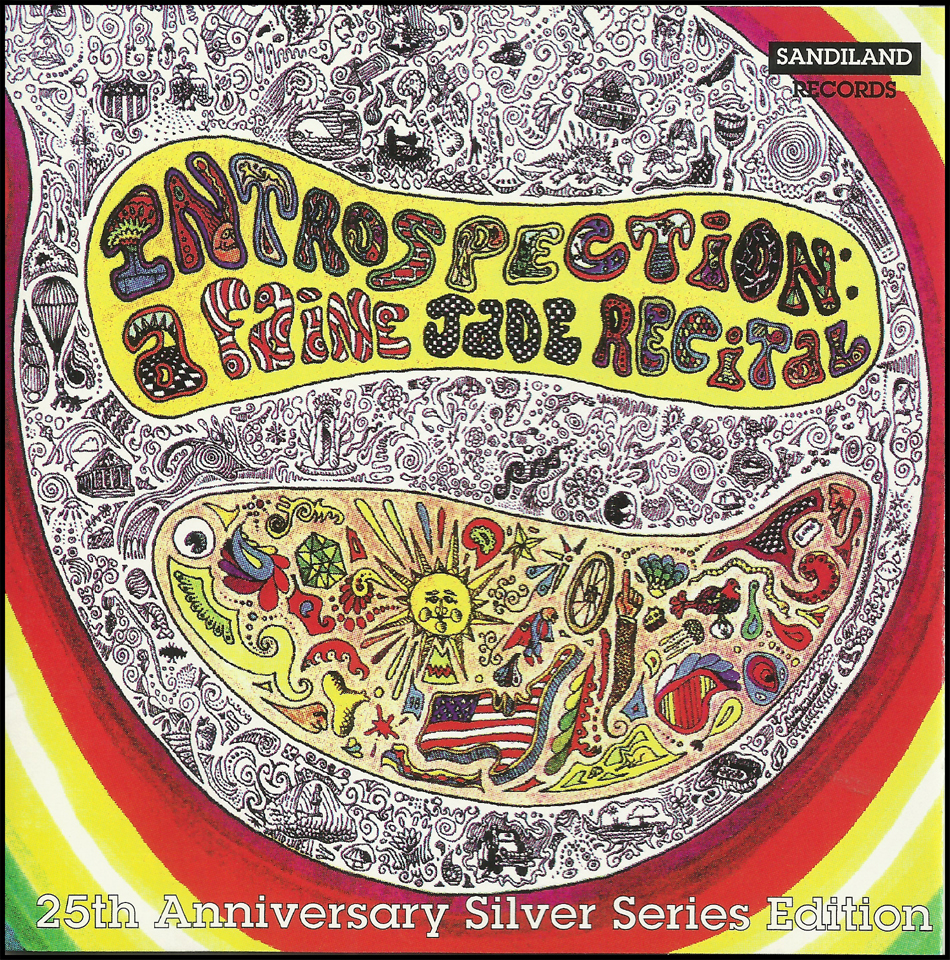
Faine Jade - Introspection: A Faine Jade Recital (1968 us, wonderful trippy psychedelia, 25th anniversary silver series edition with bonus tracks)


One of the highly collectable LPs of the 1960s, Introspection: A Faine Jade Recital .  The Introspection LP comprises 10 songs that make up a minimalist psychedelic masterpiece. Using a few overdubs, the recording relies on the five-piece instrumental lineup behind Jade's decidedly Anglicized Long Island accent. 

The opening "Doctor Paul Overture" sets the stage for an album bursting with curiously of-center British-influenced psychedelic pop. "People Play Games" reveals Jade's hippie-era lyricism magic lanterns, scarlet scissors, and crystal cornucopia, while its percussive intro and jungle play-out suggests The Beatles' "Tomorrow Never Knows." "Ballad Of The Bad Guys" has a garage attack that benefits its title; A Brand New Groove" features a guitar riff that could have worked for the Rolling Stones; "Don't Hassle Me" proclaims the generation- gap chorus; "No-o-o! Don't you hassle me/ I'm trying to be young/ I'm trying to be free." 

The title track "Introspection" leans toward a catchy folk rock, while "Cold Winter Sun" allows Manzi to repeat a lick echoing "Than He Kissed Me" before launching into a clearly mismatched power trio vamp. Jade enshrines his Brit-pop-folk-garage rock influences in the imaginative "I Live Tomorrow Yesterday," an upbeat number that sounds like a hit single. "Grand Finale", a five-minute instrumental experiment, closes the LP with a layered mix of effects, backward tracking, and studio dissonance.

The brilliant psychedelic rock 'n' roll of Faine Jade passed through the orange-colored skies of 1968 like a pink and lavender comet, then was gone... Fortunately Jade left behind a wondrous album to detail his amazing, one-way voyage through the night skies. Introspection: A Faine Jade Recital details every deliciously enigmatic, Syd Barrett-inspired twist and turn of the short but sweet career of this mysterious artist. 

Since the hideously rare original LP now requires a mortgage from your bank, Sundazed, with the full cooperation of the artist, presents the perfect Faine Jade package, taken from the absolute master tapes with rare photos and liner notes based on a recent interview with Faine Jade, himself.

This 1994 CD 25th Anniversary Silver Series Edition (this copy is No #28) on Jade's Sandiland label was remastered from the first generation tapes by Faine himself. It also adds a few bonus cuts: backing instrumental demo tracks for a few of the songs, the previously unreleased brief instrumental "Piano Interlude," and a 1993 "reunion" performance. 


Tracks
1. Tune Up (Non-music Work) - 0:23
2. Doctor Paul Overture - 2:40
3. People Games Play (Faine Jade, Nick Manzi, Bruce Bradt) - 4:11
4. Cold Winter Sun Symphony In D Major - 3:14
5. I Lived Tomorrow Yesterday - 2:34
6. Ballad of the Bad Guys (1956 A.d.) - 4:23
7. Piano Interlude - 1:38
8. Introspection (Faine Jade, Nick Manzi, Bruce Bradt) - 3:36
9. In A Brand New Groove (Faine Jade, Jerry Simon) - 3:07
10.On The Inside There's A Middle - 5:39
11.Don't Hassle Me - 2:47
12.Grand Finale (Don't Hassle Me Part 2) - 5:30
13.Stand Together In The End (Theme From An Imaginary Beatles' ReunionOr Woodstock Reprise) - 4:18
14.Doctor Paul - 3:23
15.People Games Play - 3:40
16.Don't Hassle Me (Instrumental) - 6:00
All songs written by Faine Jade and Nick Manzi except where indicated.

Musicians
*Faine Jade - 12-String Hagstrum Solid Body Electric, Rhythm Guitar
*Nick Manzi - Guild Starfire Solid Body Electric, Lead Guitar
*Brian Cooke - Piano, Farfisa Organ, Hammond B-3, Keyboards
*Victor Muglia - Fender Electric, Bass Guitar
*Randy Skrha - Drums, Tamborine, Bongos, Percussion
*Bruce Bradt - Keyboards
*Kevin Chase - Electric Guitar

Related Act
1966-68  Bohemian Vendetta - Enough

Free Text

Tuesday, June 25, 2013

John The Revelator - Wild Blues (1970-72 holland, heavenly overdriven wailing blues licks)


In the mid 60's bassman Tom Huissen lived in London at the time that the blues scene there exploded.He became pals with Peter Green and witnessed the first rehearsals of Pete’s then new band Fleetwood Mac.

Immediately after returning in Holland Tom started to form a blues band modelled after Fleetwood Mac. John the Revelator (after a song by the late great Son House) took off immediately and extensively started gigging the Dutch and European blues circuits that were thriving at the time.

In 1970 they won the prestigious Loosdrecht Jazz Concours. Record label Decca immediately offered them a recording contract, which resulted in the release of the legendary album Wild Blues. It was recorded at the Phonogram studio with producer Tony Vos, who had a great track record with bands like Cuby + Blizzards, Ekseption and the Oscar Benton Blues Band. At that time John the Revelator had grown into a seven-piece band. They had just two days to record the album and one evening to mix it. Most tracks were done in two or three takes, with a bare minimum of overdubs: just vocals and horns.

Wild Blues has since become a highly sought-after collectors’ item. This deluxe set presents the original album in its entirety, plus  extra songs. One Track Mind, all dynamically mastered from the original tapes. The gatefold sleeve features restored cover art, along with rare archival photos and liner notes.

John the Revelator is still alive and kicking and has been on the road now for 45 years. They play all over Europe and toured Australia. 


Tracks
1. John the Revelator - 0:46
2. I Can't Stop Lovin' You (Elmore James) - 3:02
3. Worried Dreams (B.B. King) - 5:41
4. Charlie's Drive Inn - 1:39
5. Talk to Me, Baby (Elmore James) - 5:01
6. Personal Manager (Albert King, David Porter) - 4:35
7. Wild Blues - 1:37
8. Bleeding Heart (Elmore James) - 4:42
9. No Woman - 3:12
10.Homework (D. Clark, Al Perkins) - 3:05
11.Yeah - 3:03
12.Rockin' Squirrel - 3:34
13.One Track Mind - 4:44
14.I Can't Stop Lovin' You (Elmore James) - 3:22
15.Little Red Rooster (Willie Dixon) - 4:17
16.Worried Dreams (Instrumental) (B.B. King) - 4:50
All songs by John The Revelator except where noted.

Musicians
*Tom Huissen - Lead Vocals, Bass
*Frans Ten Kleu - Lead Guitar, Harmonica
*Fred Huissen - Drums
*Charles Van Der Steeg - Tenor, Baritone Sax (Tacks 1-14)
*Henno Van Donselaar - Alto Sax (Tracks 1-11, 14)
*Jos De Wilde - Slide Guitar (Tacks 1-14)
*Charles Van Den Heuvel - Piano (Tacks 1-14)
*Paul Dammers - Rhythm Guitar (Tracks 12,13,15,16)
*Hans Van Hemert - Synthesizer, Mellotron (Tracks 12,13)
*Hille Van Der Galien - Baritone Sax, Congas (Tracks 15,16)

Free Text

Monday, June 24, 2013

Rory Gallagher - Tattoo (1973 ireland, blues rock masterpiece, 2012 promo copy, digipack high audio quality remaster)


Returning quickly to the studio in the summer of 1973 with his Blueprint line-up, Rory was in a prolific and confident mood. Rehearsals for the album began at a rowing club in Cork city, which allowed Rory to develop the musical arrangements of his material at a leisurely, relaxed pace.

Tattoo’d Lady describes the fairground life style that had appealed to Rory since childhood and lyrically, he draws parallels between travelling entertainers and his own profession.

Rory was born, with a touch of irony, at The Rock Hospital, Ballyshannon. Rory rocked literally all of his life and this Cradle Rock is a rockin’ R&B cut that displays his exciting bottleneck style in full flight.

20:20 Vision features Rory on acoustic and highlights his fondness for Davy Graham’s acoustic style.

They Don’t Make Them Like You Anymore has a real cool jazz feel which is underscored with unison guitar and piano and some brilliant harmonics.

Livin’ Like A Trucker was written at a time when the band were increasing their touring activity in America, this number could have been a tour anthem, during his career Rory racked up over thirty long U.S. tours.

Gerry, Rod, Lou and Rory really lock in on Sleep On A Clothes Line which has shades of a riff Rory could have written for Taste.

Who’s That Coming starts with Rory playing his acoustic dobro in slide mode, the riff blends into Rory playing electric slide empahsizing Rory’s ability to play different blues styles from Delta to Chicago blues.

A Million Miles Away became one of the most loved numbers in Rory’s repertoire, it showcases the deep, introverted side of his emotions.

Admit It has a real jack hammer riff and is the perfect vehicle for a stinging Rory solo, Lou Martin lays down some great piano on this rock number.

Tuscon, Arizona by Link Wray (a then Polydor stable mate) is a colourful, laid back country track featuring some captivating lap-steel guitar.
by Donal Gallagher


Tracks
1. Tattoo'd Lady - 4:34
2. Cradle Rock - 6:15
3. 20:20 Vision - 4:02
4. They Don't Make Them Like You Anymore - 4:05
5. Livin' Like a Trucker - 4:19
6. Sleep on a Clothes Line - 5:13
7. Who's That Coming - 7:09
8. A Million Miles Away - 6:55
9. Admit It - 4:19
10.Tucson, Arizona (Bonus Track) - 3:47
All songs by Rory Gallagher except track 10 written by Doug Link Wray.

Musicians
* Rory Gallagher - Guitars, Vocals, Harmonica, Saxophone, Mandolin
* Gerry McAvoy - Bass Guitar
* Lou Martin - Keyboards, Accordion
* Rod de'Ath - Drums, Percussion

1971  Rory Gallagher (Japan Mini Lp replica)
1971  Deuce (Japan Mini Lp replica)
1972  Live In Europe
1973  Blueprint (Japan Mini Lp replica)
with Taste
1970  On The Boards (Japan SHM edition)
1971  Live Taste
1971  Live At Isle Of Wight

Free Text

Sunday, June 23, 2013

Buffalo - Volcanic Rock (1973 aussie, loud, heavy, energy aggressive rock, Aztec digi pack issue)


God bless Aztec Music for re-releasing this. Volcanic Rock's first official release since 1973. Aztec have dug up the 32-year-old original studio tapes and have done a fantastic job on the remastering (some other reissue labels could take a lesson from Aztec ...yes, making your cd SOUND good is important !).

Fans of 1970s pre punk high energy rock need this album pronto!..It's loud, heavy and very aggressive!..Try and imagine the energy levels of Cactus, Black Sabbath, (early) Grand Funk, MC5, and Sir Lord Baltimore etc..add to that some very sinister hard rock riffling, Dave Tice's white version of Howlin Wolf voice, Pete Wells punchy bass styling sounding not too dis-similar to the sound that John Stax got on those early Pretty Things singles plus Jimmy Economou whose drumming recalls the great hit the entire drum kit style of John Bonham and Keith Moon (legend has it that Economou could also rival the two mentioned drummers in the partying department as well)

A Lot of Australian records from this era sounded weak and empty, possibly deliberately with thoughts of radio airplay. "Volcanic Rock" is probably the toughest album to come out in Australia during the early 1970s, certainly beating Billy Thorpe and the Aztecs and Lobby Loyde's Coloured Balls.

Buffalo's secret weapon was their ability to ignore the 12 bar blues/boogie that most hard rock bands of the time favoured and instead opt for creating powerful and sinister sounding hard rock riffs .

This is not to say this album is one-dimensional. For example "Freedom" is a slow heavy track which embraces the spirit of some of those pre rock 'n' roll voodoo blues records (while avoiding the standard 12-bar chord progression) and "Till My Death" is slightly psychedelic Hendrix sounding. It and "Shylock" will both blow your head off with high-energy rifforama.

In a era where Zeppelin , Deep Purple and Sabbath were having chart success it's a damn shame that the opening track on this album "Sunrise (Come My Way)" couldn't do for Buffalo what "Whole Lotta Love" , "Black Knight" or "Paranoid" did for their overseas contemporaries i.e. escalate the band to the worldwide stadiums.

As for the bonus tracks we get a 7" mix/edit of "Sunrise" plus a lo-fi but meaty live version of "Shylock" which despite lack of sound quality would still sending 99 percent of todays mall-metal kiddies running for mummy.

The packaging on this is also excellent: a great triple fold out cardboard cover with a fat 22 page booklet featuring a stack of vintage photos, posters and some informative liner notes from Ian McFarlane. 
by Steve Danno-Lorkin


Tracks
1. Sunrise (Come My Way) - 4:58
2. Freedom - 9:02
3. Till My Death - 5:38
4. The Prophet - 7:24
5. Intro: Pound Of Flesh (Baxter, Peter Wells) - 4:33
6. Shylock - 5:52
7. Sunrise (Come My Way) - 3:42
8. Shylock - 6:01
All tracks written by Dave Tice and John Baxter, unless noted.
Track 7 Single Version
Track 8 Live Recording - Sydney Spring Festival 1973, Hyde Park, Sydney

Buffalo
*Dave Tice - Lead Vocals
*Peter Wells - Bass
*John Baxter - Guitar
*Jimmy Economou - Drums

1972  Dead Forever

Free Text
Text Host

Heavy Cruiser - Lucky Dog (1973 canada / us, strong heavy space psych rock with blues drops)


Neil took the band members from Mama Lion into a studio to demo some songs.They recorded half-dozen songs and a few days later, Mama Lion went on a tour and wound up in New York City to play Central Park with Billy Preston.

The engineer in LA made an acetate of Neil’s songs and sent it to Neil in care of Famous Music. The band went to a meet and greet at Famous Music and Neil played the acetate at the party. The head of A&R loved the music and bought it from Artie Ripp.

Neil called the project “Heavy Cruiser”. When Mama Lion returned to LA, Neil took the band back into the studio and they recorded a few more tracks to complete the “Heavy Cruiser” record.

Artie Ripp stopped the band from putting their names on the record cover because he didn’t want it to interfere with his main act, Mama Lion.

The same thing happened when Neil did more of his songs with the band and produced a second “Heavy Cruiser” album called “Lucky Dog” – band members’ names were left off the cover.


Tracks
1. Everytime I Hear Your Music - 2:41
2. Mirrors In Your Eyes - 3:55
3. Where You Gonna Run To - 3:06
4. Gotta Get Away - 4:23
5. Open Your Eyes - 3:38
6. You Really Got Me (Ray Davies) - 2:49
7. Freefall Glider - 5:34
8. Concrete Jungle - 3:44
9. Supergirl - 3:52
10.I'll Receive You - 3:11
All songs by Neil Merryweather except where noted

Heavy Cruiser
*Neil Merryweather – Vocals, Bass, Acoustic Guitar
*James Newton Howard – Organ And Piano
*Coffi Hall – Drums And Percussion
*Alan Hertz - Guitar

1971  Neil Merryweather And Lynn Carey - Vaccum Cleaner

Just Paste
Free Text
Text Host