Marie "Queenie" Lyons is the sort of artist soul collectors salivate over -- she paid her dues on the Southern chitlin' circuit, shared stages with the likes of King Curtis, Jackie Wilson, and James Brown, scored a record deal with the King Records subsidiary DeLuxe Records, and after a few singles cut an album, 1970's Soul Fever, that sank without a trace.
As far as anyone can tell, Lyons never made another record after Soul Fever, making her obscure enough to please even the most finicky British R'n'B archivist, and as luck would have it Lyons was also a gifted singer whose sole LP is a fine piece of work. Lyons manages to show a very Southern variety of passion and fire along with a big city sense of showmanship and control, and her vocals reveal an impressive balance of sass and skill, knowing when to play it subtle and when to open up and wail. Lyons was well served in the studio on these sessions; the production and arrangements are solidly soulful but imaginative, with just the right amount of sweetening from string and horn arrangements that don't undercut the steady groove of the rhythm section.
And while Lyons didn't write her own material, she and her handlers knew how to pick songs that fit her talents, and from the lean funk of "See and Don't See" to the gospel-influenced Black Power anthem "I Want My Freedom" and the polished heartache of "We'll Cry Together," every song on this set fits her like a glove. Soul Fever is a better than average soul obscurity that will please fans of the golden age of R&B, but while this is a good album, it's not a great one, and more casual observers may want to give it a listen before they invest.
by Mark Deming
Tracks
1. See And Don't See (Rose Marie McCoy) - 3:20
2. Daddy's House (Helen Miller, Rose Marie McCoy) - 3:14
3. You Used Me (Don Pullen) - 3:38
4. You're Thing Ain't No Good Without My Thing (Don Pullen) - 2:27
5. Snake In The Grass (Don Pullen) - 2:42
6. Your Key Don't Fit It No More (Alecia Evelyn, Henry Glover) - 2:38
7. Fever (Eddie Cooley, John Davenport) - 3:02
8. I Don't Want Nobody To Have It But You (Don Pullen) - 2:03
9. We'll Cry Together (Helen Miller, Rose Marie McCoy) - 3:16
10.I'll Drown In My Own Tears (Henry Glover) - 3:00
11.I Want My Freedom (Don Pullen) - 2:31
12.Try Me (James Brown) - 2:38
The roots of Mick Abrahams' musical career were typical of aspiring guitarists in the mid-sixties, taking in stints with R&B groups like The Hustlers, The Toggery Five, Screaming Lord Sutch, Neil Christian's Crusaders (replacing Jimmy Page) and his own McGregor's Engine.
By late 1967 Mick had become a founder member of Jethro Tull, and throughout 1968 the band built up a reputation based on the already distinctive blues guitar of Abrahams and the flute playing and wild stage persona of Ian Anderson. The band's unique blend of blues, jazz and rock was reflected in their first album This Was, an immediate UK chart hit. However, having two such strong personalities as a twin focus was always going to be a recipe for musical incompatibility, and at the end of 1968 Abrahams jumped ship.
After quitting Jethro Tull Mick formed his own band, called Blodwyn Pig. They released two albums "Ahead Rings Out" (1969) and "Getting To This" (1970). At that stage Blodwyn Pig looked destined for great things - but the old ogre of musical differences reared its ugly head, and Abrahams left his own band. Blodwyn Pig soldiered on for a while, but Mick's presence had been too vital a factor in their success, and the Pig died.
The early seventies saw Mick on 'Top Of The Pops' and 'In Concert' on Radio One with The Mick Abrahams Band, showcasing two fine guitar-driven rock albums in (A Musical Evening With) Mick Abrahams and At Last. The band enjoyed success throughout Europe but record company support was less encouraging and, after a short-lived Blodwyn Pig reunion in 1974 (immortalised via another Radio One live broadcast), a disillusioned Mick Abrahams effectively quit the music business.
Tracks
1. Greyhound Bus - 4:50
2. Awake - 8:49
3. Winds Of Change - 4:50
4. Why Do You Do Me This Way (Abrahams, Sargeant) - 3:31
5. Big Queen - 4:28
6. Not To Rearrange (Abrahams, Sargeant) - 3:26
7. Seasons - 15:03
All songs by Mick Abrahams except where stated
Steve Hillage's music really has moved with the times. We've seen him progress from the seventies sound to the eighties 'pop' to the nineties 'techno' (System 7). So if you dig that late seventies funky sound then this could be the album for you. I would place it on a par with Green, but whereas Green takes you to another world, this recording stays in this one but turns your world into a paradise.
Talking to the Sun climaxes in what I call 'aural orgasm'. How can anybody write a tune that sounds that good? This really is music to put you in a good mood. If you're feeling low, these songs just say to you, "everything's going to be alright." 1988 Aktivator is a bit out of place, being very manic, but Open is just Love. Definite Activity and Don't Dither Do It are good for getting that motivation back into your life. Then there are some more mellow instrumental tracks but very pleasant listening nonetheless. Those spacey keyboard sounds are just great. This is feel good music.
by Marty (Sydney)
Tracks
1. Talking to the Sun - 5:59
2. 1988 Aktivator - 2:29
3. New Age Synthesis (Unzipping the Zype) - 8:52
4. Healing Feeling - 6:05
5. Earthrise - 8:34
6. Open - 5:17
7. Definite Activity - 4:43
8. Getting Better - 2:59
9. Day After Day - 6:19
10.Getting in Tune - 3:15
11.Don't Dither Do It - 5:04
12.The Fire Inside - 6:14
13.Don't Dither Do It (1974 Power Trio Backing Track) - 4:46
After a stint with Gong as their trippy, hippy, new agey guitar guru of cosmically and extremely raga-esque trance rock and improv heaven, Steve Hillage went solo. He branched out to carry his own version of the Gong gospel of personal freedom via his special blend of cosmic brotherhood, Eastern religion, new age, pyramids, ley lines, crystals, and some ferocious jazz fusion and progressive rock guitar blended with space rock synths.
Hillage reinterprets some well-known tunes by other artists like Donovan and George Harrison here as well as penning some of his more memorable sonic treats. His awesome riffing and speedy solos on his Fender Strat rival those of Hendrix and Frank Marino but go further compositionally via exotic scales from other cultures. Add in Todd Rundgren's engineering and production genius, his Utopians guesting, and several others like Don
Cherry on brass and Tibetan trumpet along with a 15th century Hurdy Gurdy and you have a wild romp into eclectic rock. The 12-minute-long "Lunar Musick Suite" is the pinnacle moment of the release and "Om Nama Shivaya" comes in a close second for Hillage's most blissed-out trance rock. Both Gong and Hillage's solo career have brought such superb musical echoes and legends such as veteran space rockers, the Ozric Tentacles.
by John W. Patterson
A Passing Fancy was born out of Toronto's Yorkville Village scene in the mid sixties. In 1967 the band released its debut single I'm Losing Tonight, which immediately became a hit and scored high on the east coast charts. In 1968, A Passing Fancy released a self titled album on the independent Boo Records label that was well received and gathered good reviews. The Boo label, formed by two record store owners, only released the album in the Toronto area, so national fame and exposure eluded the band.
The music on the album, A Passing Fancy, was British influenced pop with elements of psychedelia and an American garage sound. The band went through a couple of line up changes while recording the album but all musicians that worked on the album were credited in the album liner notes. The main songwriters in the band were Jay Telfer and brothers Fergus and Greg Hambleton. The songs were well written and the music was well played. Shortly after the release of the album, one more single followed, I Believe In Sunshine, which was also a hit.
This single broke out across Canada and attracted interest south of the border as well as with some major labels but unfortunately it was too late and the band folded. Telfer and the Hambletons, in particular Fergus (as he went by for a time) went on to write more songs and record with other bands in the 70's. They also made a couple of solo albums that were well received and are still active today on the Canadian music scene. Greg Hambleton went on to form Axe Records while Fergus Hambleton continues to perform with his reggae band the Satellites.
This reissue of the original Boo Records album by Pacemaker Records in association with the U.S. reissue label Timothy's Brain, is housed in a beautiful digipack case with original album artwork. Although this album contains no bonus tracks as none were available or additional liner notes, the sound quality is superb and is taken from the original master tapes. An exciting and long lost piece of the early Canadian music scene that has thankfully been restored and made available once again for all to hear and a new generation to discover.
by Keith Pettipas
New York City based, hard-rock band with progressive ideas. They released this self titled album in early 1970. The sound is dominated by hard rock tunes who are typical of the time, like Sabbath or Mountain, with backbreaking heavy fuzzy guitars. The progressive moments are quite nice, long tracks relying on Hammond organ and guitar interplay with extended instrumental stretches.
Real heavy dudes with a mean attitude and some wicked guitar - above-par hard rock. A couple of tracks on their album were written by Larry West, formerly of the legendary Vagrants and younger brother of guitar colossus, Leslie Mountain' West. The album was produced by Shadow Morton, aka Shadow Mann. Mayo and Polott still play together in an outfit called Blue Lagoon.
Tracks
1. Spoiler (Deborah Mayo, Mark Pollot, Mark Mayo) - 3:30
2. The Children Of Heaven (Lloyd Landesman, Mark Mayo) - 3:06
3. Bruce's Twist (Bruce Scott, Mark Babani, Mark Mayo) - 2:42
4. Auburn Queen (Lloyd Landesman, Mark Mayo) - 9:11
5. Sticky Finger (Deborah Mayo, Larry West, Mark Babani, Mark Mayo) - 5:14
6. Ode To The Silken Men (Lloyd Landesman, Mark Mayo) - 8:49
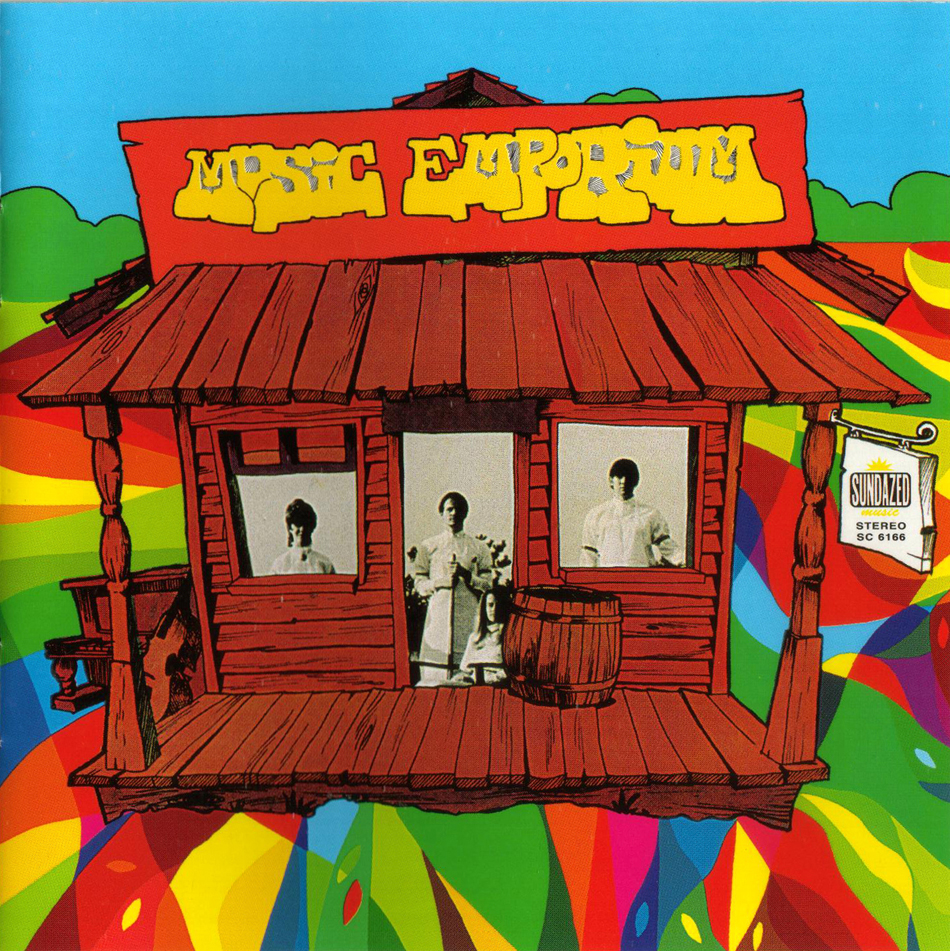
The Music Emporium was a venturesomely creative quartet, comprised of Dora Wahl, their only non-vocalist, but an accomplished girl drummer - one of only a few in rock at the time (Jan Errico of the Vejtables, and later, the Mojo Men, as well as Maureen Tucker of the Velvet Underground, also come to mind); Carolyn Lee, another nimble femme, who made the bass guitar hum (also played piano and sometimes, organ); Dave Padwin, a master of both wispy and agitating chops, on guitar; and Bill "Casey" Cosby, the organ playing wizard, who could blend wedding and funeral music (psychedelia is often awash with contradictions) to evoke a new, sonic vocabulary and who also wrote or co-wrote, with Thom Wade (guitarist/vocalist from a previous group he played in), the lion's share of material for the band.
With all of the aforementioned virtuosic qualities, the Music Emporium's signature could range anywhere from grinding eeriness to luscious wistfulness, even taking one into the twilight zone, at times.
The lyricism in all of the songs on "Music Emporium" are philosophical poetry, pursuing--through apocalyptic crescendos and chanting sound bites--poignant issues that were the embodiment of the 60s: peace, love and brotherhood; ultimate knowledge and truth; the celestial; the wearisomeness of work; and fate.
This brings me to the matter of five bonus cuts on this expanded CD reissue by the Music Emporium: instrumental versions of half of the ten numbers heard previously that were on the original album.
I found that their music here, divorced from lyrics, can depict impeccable images.Yes, the incessant intensity in the mellifluous mystique they engender is like the sight and redolence of incense, wafting forever through the air of an open window on a dreamy midsummer's dusk.
All in all, this CD by the Music Emporium is a veritable masterwork. If they possessed a slightly larger oeuvre like, say, what the Left Banke or the Strawberry Alarm Clock (who they bore some resemblance to) had, they might have been a contender for the most underrated group in rock history accolade.
Indulge yourself then; go out and snap up this CD now, for in this opus by the Music Emporium the dance of hypnotic keyboards brightens whispering darkness.
by David Chirko
Tracks
1. Nam Myo Renge Kyo (W. Casey Cosby, T. Wade) - 2:37
2. Velvet Sunsets (W. Casey Cosby, T. Wade) - 2:35
3. Prelude (W. Casey Cosby) - 2:07
4. Catatonic Variations (W. Casey Cosby) - 1:58
5. Times Like This (M. Bulian) - 2:00
6. Gentle Thursday (W. Casey Cosby, T. Wade) - 3:46
7. Winds Have Changed (W. Casey Cosby, T. Wade) - 2:12
8. Cage (W. Casey Cosby) - 5:09
9. Sun Never Shines (D. Padwin) - 4:01
10. Day Of Wrath (W. Casey Cosby) - 3:25
11. Nam Myo Renge Kyo (W. Casey Cosby, T. Wade) - 2:41
12. Velvet Sunsets (W. Casey Cosby, T. Wade) - 3:08
13. Winds Have Changed (W. Casey Cosby, T. Wade) - 2:14
14. Sun Never Shines (D. Padwin) - 4:04
15. Gentle Thursday (W. Casey Cosby, T. Wade) - 4:17
The sixties are remembered as a very fertile time for music, when bands were actually encouraged to take risks, be different, try something new and write their own material. With so many talented acts around, it's easy to see how some of the less-commercial bands might be forgotten. Sometimes the most interesting music is the kind you have to seek out and dig for, like a lost treasure- SRC are a perfect example of this. With musical barriers and restrictions being torn down then, it allowed bands across the country to do something original. Detroit specifically, from the mid sixties to the early seventies, had a budding scene where bands were producing harsher sounds and pushed the musical limits. This was the atmosphere in which the heavy psychedelic rock of SRC would flourish. It's important to make clear that SRC shouldn't be confused with the Nuggets bands, most of whom could only produce one or two songs of merit. SRC wrote a lot of strong material, pushed boundaries and still sounds fresh to new ears today. This is their story.
The band started when the Fugitives consisting of Gary and Glenn Quackenbush (guitar and organ) and drummer E.G. Clawson took the lead singer Scott Richardson from another local band, the Chosen Few (their past notoriety being opening up the Grande ballroom in Detroit with the MC5). Then after adding Robin Dale on bass and Steve Lyman on rhythm guitar, they formed the Scott Richard Case (later shortened to SRC so as not to have emphasis on any individuals in the group) and released their 1967 debut single (A-Square Records), a cover of Skip James “I'm So Glad." No doubt SRC first heard the song off of Cream's debut record, but they don't do a by-the-numbers retread of it. Their version has more energy and feeling to it. The guitars get a raw sound, the lyrics are sung with conviction and it has a nice fuzzed-out solo that only hints at Quackenbush's talent. The song became a hit locally that summer and with help of their future producer John Rhys, they met the V.P. of Capitol records and signed a contract with them.
SRC had their own distinct sound and unique vision- heavy psychedelic rock mixed with hard rock overtones with Quackenbush's lead guitar style really contributing to their overall sonics. Quackenbush's technique was incredible, especially the way he used feedback and incorporated it into searing solos that are so expressive and can range from melodic to chaotic in a matter of seconds in the same song. This made the band stand out, although the other band members shouldn't be underestimated since it's when they all got together that the songs took form. Their music is the kind you get lost in, you forget yourself and your surroundings just melt away. Their sound reflected influences like Cream, The Pretty Things, The Who and The Yardbirds and other British bands. They mixed that influence with the sound of peers from the local music scene (the Stooges,MC5 and the Amboy Dukes) to come up with something very unique and creative.
SRC's self-titled debut record (1968) is a classic of first rate psychedelic music and should be put alongside other classic from that era. The album is filled with great melodies and harmonies, outbreaks of raw noise and incredible ripping guitar solos that make you stretch your head back in amazement. The guitar sounds like it has a personality of its own throughout the record. The lead off track, "Black Sheep," is their best-known song and an anthem for outcasts. The song starts with a melodic organ carrying the tune along, punctured by bursts of huge sustained feedback guitar that crackle through the speakers, giving it a heavy stomp tempo to it. In the song, Richardson sings about how few black sheep they are and celebrates their fearlessness of the Unknown and their mission to do something unconventional. "Black sheep, outcast, misfit, Ishmael" the chorus goes, then seemingly out of nowhere comes a heavy intense sustained guitar lead that bends and wails. “Daystar" ups the intensity in a driving melody with responding feedback, interplaying the vocals with Quackenbush, who stretches out some fuzzy electric notes only to explode into a shredding noisy solo. “Exile" tells a spacey story set to music and ends with Quackenbush's wild guitar howling like some kind of demented animal. “Paragon Council" gets building with its melody going along with the commanding lead guitar that changes into a searing, powerful catchy riff that compliments each other and then goes completely mental. “Refugeve," a very innovative track, opens with the feeling of exhaling a deep breath. It has numerous parts that don't follow a standard song format, staring with high, atonal notes, and progressing until it evolves into a fuzzed out power chord Mudhoney-like groove. They even do a psychedelic cover version of the classical chestnut "Morning Mood" (from Grieg's "Peer Gynt") on the album. The music on this record, filled with distortion and loud manic solos, challenged mainstream listeners. Like many fresh, innovative ideas, most people couldn't grasp it- although it sold well locally, it had little impact outside of the Midwest.
Before the start of the second record, they switched bass players, with Robin Dale being replaced by Al Wilmot, and dropped their second guitarist Steve Lyman. Whether the line up change or pressure from Capitol to write something more commercial due to low sales effected them is uncertain, but their sound became different. Milestones (1969), SRC's second record, finds them mixed between expanding on their earlier heavy sound and trying out new styles that they might not be suited for, making the record inconsistent. “No Secret Destination" kicks the record off with a flurry of urgency coming from the organs and a siren-like guitar lead that give way to a rising melody that eventually goes into a scorching, cacophonic noisy solo that attacks your ears. “Eye of The Storm", another highlight, starts slow, dissonant and menacingly, erupting into a moving rhythm and distorted guitar lead.
The chorus has a great simple melody while Richardson sings “somewhere it's quiet, somewhere its warm, it's peaceful and calm in the eyes of the storm" as if he'd found tranquility within a hectic storm. Unfortunately, the album is marred with mediocre and awful attempts at easy listening pop ("Show Me," "I Remember Your Face," "Our Little Secret"). "Checkmate" balances out the bad with a throbbing, thumping bassline throughout the song, with crunchy guitar and an explorative organ solo. “Up All Night" shows them letting loose with tons of energy. There's rocking melody, bouncy bassline and Quackenbush injecting real aggressive attitude into the guitar making it growl and spit out screaming feedback notes.
It's interesting to note that the band chose to put the easy listening songs at the beginning of the record while “Up All Night" one of the best tracks is the second to last on the album. “Turn Into Love" shows the band trying to incorporate both styles in the same song as it has a fat R&B vibe to it with back up soul singers and Quackenbush giving a tearing fury guitar storm. The album ends on a good ambitious note with the lengthy and atmospheric “Angel Song" that tells a story of an angel who wishes to be able to dream while an empathetic and fuzzy lead are played over it, showing that they were still trying to stretch their neck out and try something different .
When Milestones was released in March '69 with no promotion, it still sold much more than their debut. EMI even picked it up and re-released it in Europe because of it getting airplay there. With Milestones getting them recognized, SRC were able to do a West coast tour but there was a large contrast between their sound and the hippie music there. It ended up making SRC re-evaluate their sound- ultimately, they kicked out Gary Quackenbush out of the band. Richardson stated “It got to the point where we couldn't completely carry on with Gary. It was like another plateau that we were building up to. We'd been to San Francisco and gotten it into our heads what our next level of working should be. We just had to make another step and he couldn't make it with us."
As Quackenbush no longer fit in with the band's sound, the less talented Ray Goodman took his place and SRC started recording their third album Traveler's Tale (1970), which lacks the bite and energy that gave SRC its appeal. The songs were longer with more prog rock passages and came off sounding generic and faceless with Goodman trying to match Quackenbush's abilities. One track, “The Offering," has the band playing with a large orchestra and comes out as a failure. Although a few shorter songs ("By Way of You," "Midnight Fever") redeem it from being complete garbage, you can't help but imagine how much better they'd sound if Gary could have contributed something instead of someone else doing an imitation of him. There's a reason why when they made an SRC compilation later on, this album had the fewest tracks taken from it.
When Traveler's Tale came out, it didn't sell well. Goodman left and SRC asked Quackenbush to return to the band. SRC recorded a few new songs with new bass player Richard Haddad, but were dropped from Capitol in 1971 due to lack of sales. The band decided to have one more go at it by changing their name to Blue Scepter and getting a new record label. They released a single “Out in The Night" (a Pretty Things cover) featuring horns, backed with an original called “Gypsy Eyes" that reinstated Quackenbush's intense guitar playing. They recorded enough for an album but it was shelved when the single flopped.
Over the next few decades, SRC's albums went out of print until 1987, when a skimpy best-of compilation was put together by the Bam Caruso label (The Revenge of the Quackenbush Brothers). One Way Records went a step further and did a small scale re-issue of their three studio albums and compiled an album of leftovers called Lost Masters. Its first half is made up of Blue Scepter songs, sounding like a better follow-up to Milestones with a more stripped down sound but plenty of acid rock solos from Quackenbush. The second half comes from their last days at Capitol and has them doing covers and playing different genres like psychedelia, blues and R&B but this time, they match up strongly with the solos, still leaving a strong effect on the listener. A better compilation was done in 2000 by the RPM label (Black Sheep)- there were more tracks and it was made more widely available than any of their other releases, introducing a whole new generation to their music.
SRC's music has crept up as an influence to other bands over the years. Bands like Hawkind, Dinosaur Jr, Mudhoney and other heavy rock bands with insane psychedelic leads share traits with SRC's sound. Even if some of these bands never heard SRC, there's still a correlation. When SRC's music came out, they was ahead of its time and suffered for it. But by doing it their way, they broke ground. The use of jaw-dropping distortion and noise became more acceptable over the years for many musicians after numerous bands like SRC broke the mold. It's a crime their records aren't in print again, but thanks to the Internet, more people can hear them now than ever (myself included). Hopefully, this article will turn more people onto this wonderful, amazing band.
by Tim Shannon
Tracks
1. Black Sheep - 4:46
2. Daystar - 4:24
3. Exile - 4:20
4. Marionette - 3:58
5. Onesimpletask - 5:32
6. Paragon Council - 4:00
7. Refugeve - 3:38
8. Interval - 5:07
9. Black Sheep - 3:50
All songs by Scott Richardson, Gary Quackenbush, Elmer George Clawson, Glenn Quackenbush, Steve Lyman, Robin Dale
Bonus Tracks 8,9
Track 9 recorded Live in a school Adrian Michigan 1968
SRC
*Steve Lyman - Second Guitar and Voice
*Glenn Quackenbush - Hammond Organ
*Scott Richardson - Lead Voice
*E.G. Clawson - Drums
*Robin Dale - Bass and Voice
*Gary Quackenbush - Lead Guitar
One of the group's better albums, despite coming so late in their history that it was ignored by almost everyone. "Hope," "Fire Brothers," and "Don't Cry for My Lady Love" are among the best songs the group ever cut, and "I Found Love" is one of the prettiest, most upbeat songs ever to come from any classic San Francisco band.
Some of the rest is self-indulgent, but that's what this era of music was about -- the guitar pyrotechnics of "Song for Frisco" and "Play My Guitar" make them both more entertaining than their somewhat bland melodies; the latter song, in particular, sounds like a Marty Balin/Jefferson Airplane outtake that would have been right on target about four years before the release date of this album.
The whole record feels that way, a throwback to the psychedelic era circa late 1967. It's also very much a folk-rock record, with a rich acoustic guitar texture on many of the songs. For the record, since the CD reissue has no personnel information, the band at this point was Dino Valenti (guitar, vocals), Greg Elmore (drums), Gary Duncan (vocals, guitar), Mark Ryan (bass), Mark Naftalin (keyboards), and Chuck Steaks (keyboards).
If you ever wondered what the Airplane might have done as a follow-up to Surrealistic Pillow with Marty Balin still singing lead, this is it.
by Bruce Eder
Tracks
1. Hope – 3:01
2. I Found Love – 3:56
3. Song for Frisco - 4:58
4. Play My Guitar – 4:38
5. Rebel – 2:02
6. Fire Brothers – 3:12
7. Out of My Mind – 4:34
8. Don't Cry My Lady Love – 5:12
9. "The Truth – 6:58
Band
* Dino Valenti – vocals, guitar, flute, percussion
* Gary Duncan - vocals, guitar
* Mark Ryan – bass
* Greg Elmore – drums, percussion
* Chuck Steaks – piano, organ
The Chambers Brothers started out as a gospel vocal group that eventually drifted into folk music. With their 1968 single “Time Has Come Today” they created one of the greatest psychedelic rock songs of all time.
The album that spawned “Time Has Come Today” was called “The Time Has Come,” and it accurately depicted The Chambers Brothers’ versatility/identity crisis. People expecting the entire album to be a full-out psych/funk throw-down were met with a mix of soul, R&B and rock that was even more eclectic than the then current work of Sly & The Family Stone.
“All Strung Out Over You” is a hard-edged soul number that was a precursor of the Temptation’s “Papa Was A Rolling Stone”. Predictable but well executed covers of “People Get Ready” and “In The Midnight Hour” are included, but an epic version of “What The World Needs Now” veered into territory that would also be inhabited by Chicago and Blood, Sweat and Tears.
The hidden gem of the album is the eerie “So Tired,” which is a great example of The Chamber’s Brothers uncanny harmony vocals. This slow, minor-key dirge is stark and powerful and should have been a massive commercial hit. The rest of the album is pleasant enough, but other than the big hit single, “So Tired” is unquestionably the winner of the silver medal.
As for the massive single that is “Time Has Come Today,” it’s presented here in it’s original 11 minute glory. While the edited radio version is potent (and accessible via several greatest hits collections), the full album-length version is simply awesome. Lester Chambers powerful lead vocals are front and center, joined by an effect-laden cowbell impersonating a clock and torrential drumming by Brian Keenan.
“Time Has Come Today” was undoubtedly a product of 1960s unrest, but nearly five decades later it doesn’t sound hippy-dippy at all. Bands are still covering it, radio is still playing it, and corporations still use it to sell stuff. Unscrupulous management ended up derailing The Chambers Brothers, but what they were able to accomplish during their short spot in the sun has proven to be endlessly inspirational and influential.
by Jon Dawson
Tracks
1. All Strung Out over You (Rudy Clark) - 2:31
2. People Get Ready (Curtis Mayfield) - 3:52
3. I Can't Stand It (Lester Chambers) - 2:43
4. Romeo and Juliet (Lester Chambers) - 4:32
5. In the Midnight Hour (Steve Cropper, Wilson Pickett) - 5:33
6. So Tired (Andre Goodwin, Chambers Brothers) - 4:06
7. Uptown (Betty Mabry) - 2:57
8. Please Don't Leave Me (George Chambers) - 3:01
9. What the World Needs Now Is Love (Burt Bacharach, Hal David) - 3:20
10.Time Has Come Today (Joe Chambers, Willie Chambers) - 11:07
11.Dinah (G. Chambers, J. Chambers, L. Chambers, W. Chambers) - 2:24
12.Falling in Love (Willie Chambers) - 2:19
13.Love Me Like the Rain (Brian Keenan) - 2:51
14.Time Has Come Today (Joe Chambers, Willie Chambers) - 2:33
Sacred Mushroom -- led by future Pure Prairie League member Larry Goshorn (guitar/vocals) and featuring brother Danny Goshorn (vocals) -- were a short-lived rock/blues quintet based in Cincinnati, OH. Their efforts coalesce on this, the band's self-titled debut (and only) long-player.
The album contains a blend of proficient originals as well as a pair of well-chosen cover tunes, such as the blues standard "Mean Old World" and the Kinks' "I'm Not Like Everybody Else." While their name conjures images of late-'60s psychedelic or acid rock, Sacred Mushroom's roots were decidedly more bluesy than trippy.
Likewise, their harder-edged performance style is well served by the tight and somewhat pop-driven arrangements, resembling artists such as the Allman Joys, Kak, or the pre-Blue Oyster Cult Stalk-Forrest Group. A few of the Larry Goshorn-penned tunes are certifiably lost classics. These include the up-tempo rocker "Catatonic Lover," which features some lyrical chord changes reminiscent of "3/5's of a Mile in 10 Seconds" by Jefferson Airplane, and the Chicago blues-style waltz "All Good Things Must End." The latter is highlighted by some inspired harp playing from Rusty Work.
The opening track, "I Don't Like You," is a funky rocker spotlighting the Goshorn Brothers' tight harmonies as well as Larry's distinctive lead electric guitar licks. Another standout is their reworking of "I'm Not Like Everybody Else." The track retains a timeless pop sensibility that incorporates interweaving acoustic and electric guitar lines.
"Lifeline," the most extended track on the disc, recalls the electric blues of seminal Fleetwood Mac or Stan Webb's Chicken Shack. Along the same lines is the blues boogie rendering of "Mean Old World," which might easily be mistaken for an obscure version by a mid-'60s lineup of John Mayall's Bluesbreakers.
Tracks
1. I Don't Like You (Larry Goshorn, Doug Hamilton) - 2:53
2. You Won't Be Sorry (Larry Goshorn) - 2:19
3. Catatonic Lover (Larry Goshorn) - 3:03
4. All Good Things Must Have An End (Larry Goshorn) - 4:41
5. I'm Not Like Everybody Else (Ray Davies) - 4:35
6. I Take Care (Larry Goshorn) - 4:59
7. Mean Old World (Otis Rush) - 4:38
8. Lifeline (Larry Goshorn) - 6:35
The Sacred Mushroom
*Rusty York - Harp
*Larry Goshorn - Guitar, Vocals
*Danny Goshorn - Vocals
*Joe Stewart - Bass
Clouds were a promising psychedelic-cum-prog-rock band who never found the commercial success to match their critical raves. In contrast to most of their contemporaries and rivals who hailed from England, the trio's roots were in Scotland and trailed back to the mid-'60s. Ian Ellis (vocals) and Harry Hughes (drums) originally teamed up as part of a Brit-beat band called the Premiers, formed in Edinburg in 1964. They were a conventionally configured quintet with bass, two guitars, and drums behind Ellis' vocals. Sometime later, they added Billy Ritchie on the organ, and they were good enough.
It was decided that an organ would help the sound of the band, and Billy Ritchie joined. Bandleader/producer Cyril Stapleton recorded a few sides with the group in London but was unable to interest any record companies in their work, and it was at that point that the band disintegrated, leaving Ellis, Ritchie, and Hughes, who decided to go it alone as a trio, with Ellis taking over on bass in addition to his singing. They also took on a new name, 1-2-3, and began writing their own material, all in a decidedly psychedelic mode -- coupled with their new sound, they soon found themselves lacking an audience in Edinburg, and headed for London, believing (correctly) that they'd get a better hearing there.
They began building a cult audience among general listeners and a respectful following among their fellow musicians after a series of shows at the Marquee Club. At the time, there weren't too many organ-based trios around -- even the Nice still had a lead guitarist when they started out, but Ritchie's playing and their overall sound began to attract serious critical attention. And they were signed up by Brian Epstein's NEMS management company in the spring of 1967, an event that got them as much exposure as their music. The NEMS connection died with Epstein that summer, however, and it was back to the London clubs for the trio.
Lightning struck a second time when Terry Ellis, a young, aspiring manager and producer, saw them at a gig and signed them up. Ellis and his partner Chris Wright had a management company called Chrysalis, which would eventually turn into a record label as well (subsequently sold to EMI), but at that time they didn't have a label. As a result, the group -- now rechristened Clouds -- was signed to Island Records. They also got to tour America, where the critical reception was more than enthusiastic, coming off of shows in Chicago and New York (the latter at the Fillmore East). Their debut album on Island, entitled Scrapbook, was a quasi-concept album, with beginning and end pieces and an array of songs that ranged from psychedelic pop to spaced-out, highly progressive and experimental art rock. Island put their work out in front of the British public throughout 1969, on singles and sampler albums, and heavily promoted their debut, and the critical response was highly favorable, as were their concert reviews.
All wasn't well between the trio and its management, however -- Chrysalis had made a decision to devote its efforts and promotional budget to a rival act, Jethro Tull. Gradually, Clouds got lost in the shuffle and their recording activity was somewhat confused, between England and America -- in the U.S., an album called Up Above Our Heads appeared on the Deram label, while in England a second LP, Watercolour Days, was issued, showing up in 1971. Clouds called it quits late that year, their moment having past. Their albums lingered in cut-out bins well into the 1970s, however, and based on the CD reissue activity of the 1990s and beyond, including a collection from Universal Music in 2007, indications are that someone out there is still interested in their work, 30 years after their debut release. ~
by Bruce Eder
Tracks
1. Introduction - Scrapbook (Billy Ritchie) - 1:08
2. The Carpenter (Billy Ritchie, Harry Hughes, Ian Ellis) - 3:29
3. The Colours Have Run (Billy Ritchie, Valdemar Ellis) - 3:00
4. I'll Go Girl (Billy Ritchie) - 3:21
5. Grandad (Billy Ritchie) - 2:10
6. Ladies And Gentlemen (Billy Ritchie) - 3:09
7. Humdrum (Billy Ritchie, Harry Hughes, Ian Ellis) - 1:07
8. Union Jack (Billy Ritchie) - 1:31
9. Old Man (Ian Ellis) - 3:25
10.Waiter There's Something In My Soup (Billy Ritchie) - 7:01
11.Scrapbook (Billy Ritchie) - 2:51
12.Watercolour Days (Billy Ritchie) - 5:28
13.Cold Sweat (Billy Ritchie, Ian Ellis) - 3:36
14.Lighthouse (Ian Ellis) - 5:03
15.Long Time (Billy Ritchie, Ian Ellis) - 4:38
16.Mind Of A Child (Billy Ritchie, Harry Hughes, Ian Ellis) - 2:51
17.I Know Better Than You (Billy Ritchie, Harry Hughes, Ian Ellis) - 4:53
18.Leavin' (Billy Ritchie) - 3:25
19.Get Off My Farm (Billy Ritchie) - 3:27
20.I Am The Melody (Billy Ritchie) - 2:44
Corporal Gander’s Fire Dog Brigade were a German outfit who recorded one album ‘On The Rocks’ in 1970 which featured a mixture of cover versions and originals. They then changed their name to Wind and released two further albums for the budget label Plus Records. Both Wind albums are now hugely sought-after and highly-prized artefacts.
Tracks
1. Paranoid (Ward, Butler, Osbourne, Iommi) - 2:40
2. I Hear You Knocking (Bartholomew, King) - 2:54
3. Come Back Here (Scott, Talby) - 3:48
4. On The Rocks (Scott) - 3:28
5. Hey You (Talby) - 3:57
6. Stealer (Fraser, Kossoff, Rodgers) - 2:45
7. Run For Your Life (Talby) - 5:48
8. Do You Think It's Right (Talby) - 2:08
9. Love Song (Talby) - 3:17
10.Don't Tell Me (Talby) - 3:36
The quietly intense "Soldier In Our Town" (on Metamorphosis), addresses the hypocrisy of war heroism with the lines: 'There's a statue in the square / But the things they're hiding, it ain't fair / ...'Cause beneath the stone / The greatest man is all alone' - a potent shift from the image of the monument to the gravestone. With its soul wrenching vocal (Ingle's best ever performance) and a rare use of earthy acoustic guitar, Iron Butterfly delivers one of the most heart-felt antiwar statements of the early '70's.
In the 1993 liner notes to the Rhino compilation Light and Heavy, Ingle said the composition concerns 'war in general and our culture's inbred thought that people have to fight. And it's about the few elite at the top that control the masses.' This particular recording (essentially an Ingle solo session) exemplifies the internal dissension that befell Iron Butterfly after scoring their mega-success.
Erik Brann, stressed out from the endless touring, departed the year prior. In an 1988 interview with the Los Angeles Times, he recalled the grueling tours with Iron Butterfly, saying 'My first vacation I bought a car, a Jaguar, and parked it outside the hospital where I spent two weeks for ulcers and gastroenteritis.' It required two guitarists to fill his shoes. These new members (Mike Pinera, of "Ride Captain Ride" fame, and Larry 'Rhino' Reinhardt) quickly asserted themselves and, refusing to follow Ingle in search of a mellow (yet idiosyncratic) muse for the band, shifted the sound towards mainstream rock (along with bassist Lee Dorman, they refused to perform on "Soldier In Our Town").
After another tour, Ingle quit the band. Presaging this development, the LP cover for what would be the last (authentic) Iron Butterfly album, Metamorphosis (1970), prominently displays a coffin on a barren mountaintop (who, save Donovan, could have kept the Butterfly alive?).
by Barry Stoller
Tracks
1. Free Flight - 0:40
2. New Day - 3:08
3. Shady Lady (Robert Woods Edmonson, Iron Butterfly) - 3:50
4. Best Years of Our Life - 3:55
5. Slower Than Guns (R. W. Edmonson, Iron Butterfly) - 3:37
6. Stone Believer - 5:20
7. Soldier in Our Town (R. W. Edmonson, Iron Butterfly) - 3:10
8. Easy Rider (Let the Wind Paythe Way) (R. W. Edmonson, Iron Butterfly) - 3:06
9. Butterfly Bleu - 14:03
All song by Iron Butterfly unless otherwise written.
Iron Butterfly
* Doug Ingle - Lead Vocals, Organ
* Mike Pinera - Lead Vocals, Guitar
* Larry "Rhino" Reinhardt - Guitar
* Lee Dorman - Bass
* Ron Bushy - Drums
* Richard Podolor - Sitar, Twelve String Guitar
* Bill Cooper - Twelve String Guitar
This album is unique. More precisely, it is the first of its kind — a music that takes elements of rock, jazz, straight blues, R&B, classical music and almost anything else you could mention and combines them into a sound of its own that is "popular" without being the least bit wattered down.
That Blood, Sweat and Tears is a band and not merely a melange whose diverse constituents (a trumpet player from Maynard Ferguson's college-dance-and-concert big band, a drummer who has gigged with Eric Anderson and whose elder brother is Thelonious Monk's personal manager, several young white New York jazz horn men who were technologically unemployed by the New Thing revolution and physically unemployed by the shrinkage of available nightclub and record jobs, an L.A. bass player out of the Mothers of Invention and a pair of old Blues Project-ers) are at war with each other is greatly to the credit of Al Kooper, its organist, pianist, vocalist, arranger and general head honcho Child is even more complex than that, what with the addition of a string section, a "soul chorus" and asorted sound effects on several of the cuts. But Kooper and the other musicians involved knew the sound they were after, and having achieved it, they kept the effects strictly secondary.
Two of the songs, "I Love You More Than You'll Ever Know" and "Somethin' Goin' On" are very nearly perfect, self-contained masterpieces. Both written by the leader, they are extremely bluesy, but without the credibility gap that afflicts almost all white blues performances. This is because these are Al Kooper's blues, Blood, Sweat and Tears' blues and not anyone else's, not Robert Johnson's or B. B. King's or Wilson Pickett's blues or, on the other side, Hank Miller's blues — just as "She Belong to Me" is Bob Dylan's blues and Gerry Mulligan playing "Blueport" is the blues, and those are two pale cats. They are big city blues, New York blues, too much happening blues, they are the blues used as a frame for deeply felt experiences and that's what the form, any form, is all about anyway. If you use it your way.
Musically these cuts are tight where they should be tight, loose etc. What they do is swing, a term or honorable antecedents (see Duke Ellington) that is too little heard these days. For a working definition Fred Lipsius's alto solos are more than just adequate; they are, quite frankly, better saxophone playing or just plain better anything playing than one would expect to hear on a rock and roll record. Lipsius blows right up to the limits of the form and even makes them bulge a little, but he neither pierces nor transcends them. He doesn't need to and it is doubtful that he wants to. What he sets out to do is play the blues, and a booting, exciting pair of blues solos they are.
It would have been a minor miracle if the entire album had maintained that level. Most of it is merely very good. Steve Katz's vocals, and his choice of material does nothing to minimize the dull graininess of his voice: Tim Buckley's "Morning Glory" and Katz's own "Meagan's Gypsy Eyes" are the two folkiest songs on the record. They make pretty limp vehicles for the horn section — and why did Kooper and Lipsius chose to frame "Morning Glory" with the corniest kind of Ferguson over-arranged opening and closing riffs? Probably this, like the animal sound effects, will be forgotten by the time they record again.
by Rolling Stone, April 27, 1968
Tracks
1. Overture (Kooper) - 1:32
2. I Love You More Than You'll Ever Know (Kooper) - 5:57
3. Morning Glory (Larry Beckett, Tim Buckley) - 4:16
4. My Days Are Numbered (Kooper) - 3:19
5. Without Her (Harry Nilsson) - 2:41
6. Just One Smile (Randy Newman) - 4:38
7. I Can't Quit Her (Kooper, Levine) - 3:38
8. Meagan's Gypsy Eyes (Steve Katz) - 3:24
9. Somethin' Goin' On (Kooper) - 8:00
10.House In The Country (Kooper) - 3:04
11.The Modern Adventures Of Plato, Diogenes And Freud (Kooper) - 4:12
12.So Much Love/Underture (Gerry Goffin, Carole King) - 4:47
13.Refugee From Yuhupitz (Instrumental) (Al Kooper) - 3:45
14.I Love You More Than You'll Ever Know (Album Version) (Al Kooper) - 5:54
15.The Modern Adventures Of Plato, Diogenes And Freud (Album Version) (Al Kooper) - 4:48
Bonus Tracks 13-15
Blood, Sweat And Tears
* Randy Brecker - Trumpet, Flugelhorn
* Bobby Colomby - Drums, Percussion, Vocals
* Jim Fielder - Bass Guitar, Fretless Bass Guitar
* Dick Halligan - Trombone
* Steve Katz - Guitar, Lute, Vocals
* Al Kooper - Organ, Piano, Ondioline, Vocals
* Fred Lipsius - Piano, Alto Saxophone
* Jerry Weiss - Trumpet, Flugelhorn, Vocals Guest Musicians
* Anahid Ajemian - Violin
* Fred Catero - Sound Effects
* Harold Coletta - Viola
* Paul Gershman - Violin
* Al Gorgoni - Organ, Guitar, Vocals
* Manny Green - Violin
* Julie Held - Violin
* Doug James - Shaker
* Harry Katzman - Violin
* Leo Kruczek - Violin
* Harry Lookofsky - Violin
* Charles Mccracken - Cello
* Melba Moorman - Choir, Chorus
* Gene Orloff - Violin
* Valerie Simpson - Choir, Chorus
* Alan Schulman - Cello
* John Simon - Organ, Piano, Conductor, Cowbell
* The Manny Vardi Strings
During the progressive music revolution in the late 60s, one of the most surprising successes was that of Iron Butterfly. The band was formed by Doug Ingle, who added Ron Bushy, Lee Dorman and briefly, Danny Weiss. Together, they were arguably the first to amalgamate the terms 'heavy' and 'rock', following the release of their debut album called "Heavy" in 1968.
Later that same year, Weis left the band and guitarist Erik Braunn stepped in. When Iron Butterfly relocated from San Diego to Los Angeles, the band started to gain a live following and soon was gigging with the likes of The Doors and Jefferson Airplane.
Ball, - which surpassed "Vida", was less of a success, despite being a better collection of songs, notably the invigorating 'It Must Be Love' and the more subtle 'Soul Experience', turning "Gold" record, climbed to No. 1 and remained on the charts for 44 weeks. Classic-Bands
Tracks
1. In the Time of Our Lives (Ingle, Bushy) - 4:46
2. Soul Experience (Ingle, Bushy, Brann, Dorman) - 2:50
3. Lonely Boy (Ingle) - 5:05
4. Real Fright (Ingle, Bushy, Brann) - 2:40
5. In the Crowds (Ingle, Dorman) - 2:12
6. It Must Be Love (Ingle) - 4:23
7. Her Favorite Style (Ingle) - 3:11
8. Filled With Fear (Ingle) - 3:23
9. Belda-Beast (Brann) - 5:46
Iron Butterfly
* Doug Ingle - Organs, Lead Vocals
* Erik Brann - Lead Guitar, Vocals
* Lee Dorman - Bass, Vocals
* Ron Bushy - Drums
A band known for their formation during the sixties with helping the onset of the psychedelic scene, Quicksilver Messenger Service’s seventh album (first with keyboard player Chuck Steaks), Comin’ Thru is brain child of guitarists Dino Valente and Gary Duncan. Although the band’s most notable albums such as their self-titled album (1968) and Happy Trails (1969) show progressive notions of San Francisco’s psychedelic scene, Comin’ Thru shows more of the band’s musical influences of blues, jazz and folk. This album doesn’t follow a typical Quicksilver song montage of jamming then losing your mind for an allotted amount of time, but don’t get me wrong, it holds true to the psychedelic rock ideas of say the Dead or Jefferson Airplane.
The album’s front runner, Doing Time in the U.S.A., a song chronicling different themes regarding the law being broken has an almost Dicky Betts southern rock feel to it. Doing Time in the U.S.A. has somewhat of an ode to the Rolling Stones when Dino Valente recites in his most Jagger-esque voice, “…I can’t get no, satisfaction;” this being ironic seeing as how the band’s former organist, Nicky Hopkins, was doing work with the Rolling Stones at the time. Whether or not this is an actual response to the Stones classic is unknown, but in a genre where underlying song connections run wild, one can only imagine.
Quicksilver’s jazz influences are recognizable within moments of the first horn solos found on Chicken. Sonny Lewis (saxophone) and Pat O’hara lay down a dueling solo of lows and highs that make this soulful jam extremely tight. As always twang blues guitar riffs are found throughout, most present on Mojo and Changes. Mojo, a song about what else than a man’s swagger, libido, has that psychedelic song formation found in their earlier albums. Ending the song via a line-up of solo’s starting from guitar to trumpet to bass then on to keyboard the band obtains a type of “jam feeling” usually only found in live performances. Stressing the difference between this album and their popular titles is the production of keyboard player Chuck Steaks. His approach to keyboard is much more up tempo and “wild” compared to a more classically trained Mark Naftalin.
The albums organ solo’s reflect this greatly with a Bernie Worell style to them, most recognizable on Doing Time in the U.S.A and Don’t Lose It. Many regard Comin’ Thru as a lesser work of Quicksilver Messenger Service since the band would fall apart near the end of the decade and many of the original members were not part of the album’s production (John Cippollina, David Friedberg & Jim Murray).
An album that holds two sides of the love, hate spectrum: Some feel the horn work is used to compensate for a less talented band, then others feel it was innovative thinking (the band looking for a new sound). Some feel as though the use of a less classically trained pianist was by default (due to the band is disarray), while others feel it adds an element unknown style (coming from the school of thought that, the less classically trained you are, the more unique your style is). Let’s not hang signs, just listen.
Tracks
1. Doin' Time in the U.S.A. (Gary Duncan) 4:15
2. Chicken (Traditional, Arrangement by Dino Valenti) 4:03
3. Changes (Dino Valenti) 4:15
4. California State Correctional Facility Blues (Dino Valenti, Gary Duncan, Greg Elmore, Chuck Steaks) 6:10
5. Forty Days (ino Valenti, Gary Duncan, Greg Elmore) 5:31
6. Mojo (Dino Valenti) 5:34
7. Don't Lose It (Dino Valenti, Gary Duncan) 5:57
QMS
* Dino Valenti – Vocals, Guitar, Congas
* Gary Duncan – Guitar, Vocals
* Greg Elmore – Drums
* Chuck Steaks – Organ
* Mark Ryan – Bass Guest Musicians
* Ken Balzell – Trumpet
* Dalton Smith – Trumpet
* Bud Brisbois – Trumpet
* Pat O'Hara – Trombone
* Charles C. Loper – Trombone
* Sonny Lewis – Saxophone
* Donald Menza – Saxophone